
What's an Onion? How to Match Day Length and Size the Bulb
Allium cepa Amaryllidaceae
Most failed Onion crops are not a watering mystery.
They are a day-length mismatch or a late start. Pick the right type for your latitude, build strong leaves early, and then dry the bulbs down on purpose when harvest time comes.
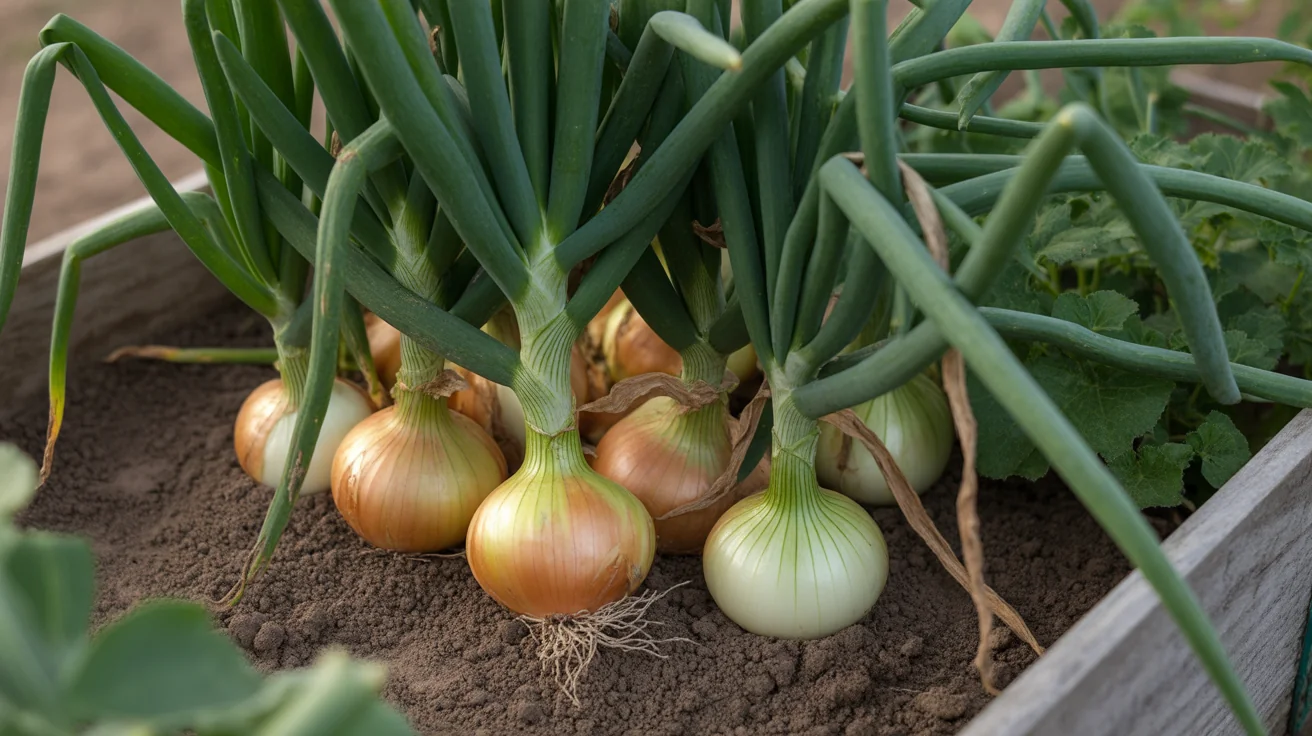
Care snapshot
Why Does an Onion Form a Bulb at All?
Because the plant is not finished. Onion is Allium cepa, a true biennial in Amaryllidaceae, the same family as Garlic and Chives.
A bulb is the plant banking energy for a flower stalk it intends to send up in its second year.
That single fact explains almost every rule on this page. The bulb is a storage organ rather than a fruit, so the plant only starts filling it when its own signal says the storing phase should begin, and that signal is day length.
It also explains the shape of the crop. Each healthy leaf becomes one ring inside the bulb, so leaves grown before the trigger arrives are the whole yield.
Bolting is the same fact read backwards. A plant that believes it has already lived through a winter skips storage and goes straight to the flower stalk it was saving for.
Onion is among the oldest cultivated vegetables on record, grown for well over 5,000 years, which is why so many distinct regional day-length types still exist.
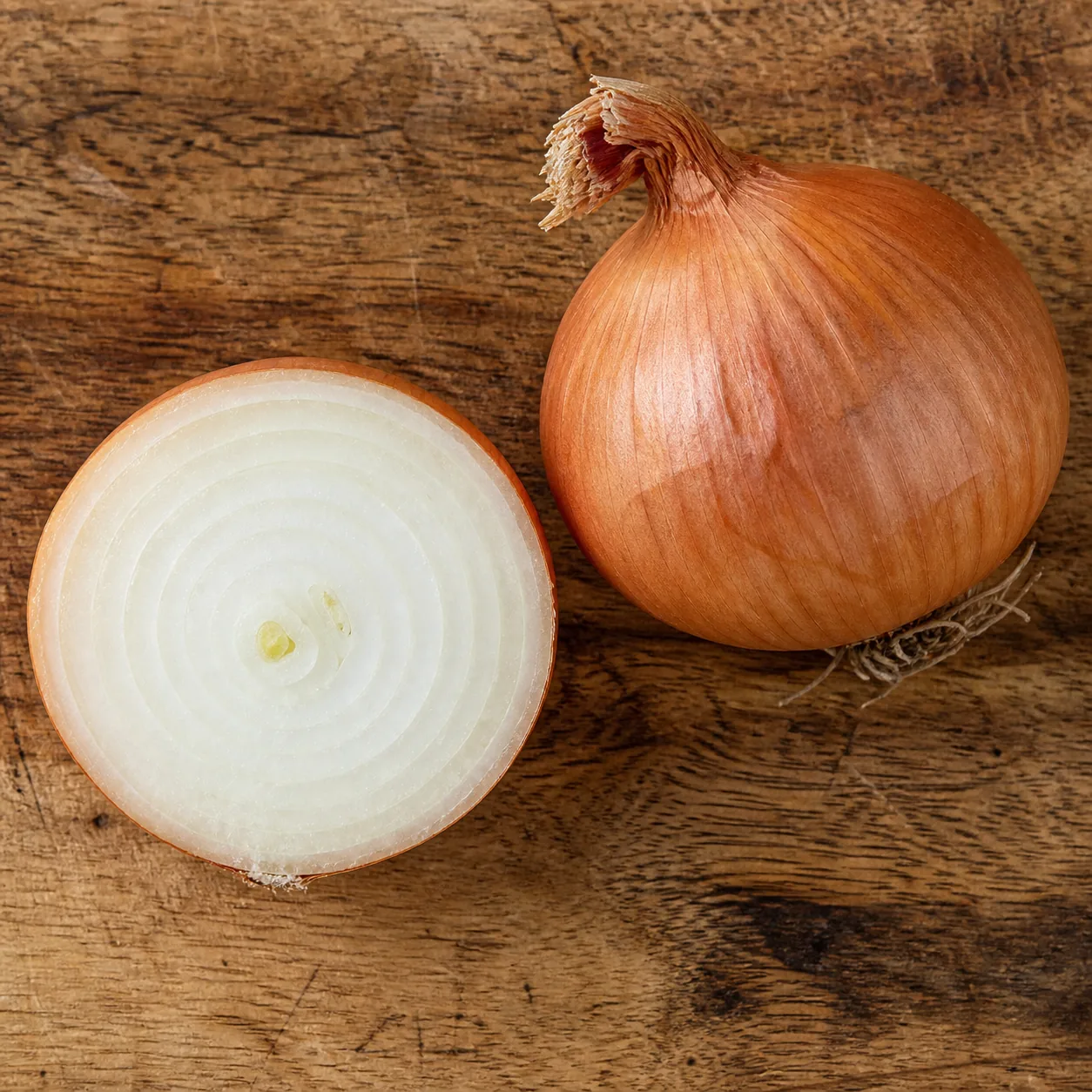
Plant profile
- Botanical name
- Allium cepa
- Family
- Amaryllidaceae, the allium family
- Plant type
- True biennial, grown as an annual for the bulb
- The bulb is
- A storage organ for next year's flower stalk, not a fruit
- Bulbing trigger
- Day length, which is why latitude decides the type
- Rotates with
- Garlic, Chives, and other alliums as one group
Which Onion Type Matches Your Latitude?
The first Onion decision is not red or yellow. Day length comes first.
Bulbs size up when day length hits the trigger for that type, so the wrong choice gives you strong tops and disappointing bulbs.
Short-day types suit the South. Intermediate-day works through the middle.
Long-day types are for northern summers with long daylight. This is the rule that keeps Onion separate from garlic, where fall planting and winter chill matter more than day length for home gardeners.
If a catalog tells you the storage quality and color but not the day-length group, the listing is incomplete for a home grower. Bulb size depends on that daylight fit more than the sales copy.
That daylight trigger is not arbitrary. Onion is truly biennial, and forming a bulb is really the plant banking stored energy for the flower stalk it plans to send up in year two, so day length is the plant's own signal that the storage phase should begin.
- Short-day Onions
- Best for southern gardens; bulb when days reach about 10-12 hours
- Intermediate-day Onions
- Best through the middle zones; more flexible where seasons overlap
- Long-day Onions
- Best for northern gardens; need about 14-16 hours of day length
- What the wrong type does
- Makes small bulbs even when plants looked healthy beforehand
Should You Grow Onions From Seed, Sets, or Transplants?
Sets are the fastest way to get plants in the ground, but they are not the best route for every goal. They work well for quick green Onions or smaller bulbs, yet they can bolt if weather swings hard.
That bolting risk is not random.
A set is really a tiny bulb the plant already started and stopped growing the previous year, and if that little bulb is oversized or gets hit by an unusual cold snap right after planting, it can misread the whole situation as having already lived through a full winter and jump straight ahead to flowering.
Seedlings or transplants are better when you want full-size storage bulbs. Starting your own plants with a seed-starting setup also gives you access to the exact day-length type you need instead of whatever the garden center happened to stock.
That access matters more for Onion than for most vegetables.
A local garden center often stocks whatever day-length group sells best regionally, which is usually correct for that general area, but a gardener living near a day-length boundary line, or trying an unusual latitude crop, may genuinely need seed to get the exact correct type at all.
Seed takes the longest lead time but gives the best choice and usually the biggest payoff in cold-winter regions. Sets are still handy when the season is short or you simply need a quick row without indoor work.
If your real goal is storage, that extra planning is usually worth it. Sets win on speed, but transplants or seed usually win on finished bulb quality.
Onion ranks among the oldest cultivated vegetables on record, grown for well over 5,000 years.
Egyptian tomb art shows onions placed alongside pharaohs, likely because the concentric rings inside a freshly cut bulb were read as a symbol of eternal life, a long cultural head start that helps explain how many distinct regional types still exist today.
Fastest planting method; easiest for beginners; higher bolting risk if oversized or weather shocked
Best balance of speed and bulb size for most home gardens
Best choice and best long-day performance. Needs the earliest planning
Why Do Onions Need Such an Early Start?
Each good leaf becomes one ring in the bulb. That is why early growth matters so much.
If the plant is still small when the day-length trigger arrives, the bulb stays small too.
This is also why weeds hurt Onion yields so badly. Shallow roots and upright tops do not compete well.
Plant shallowly in full sun and give the row space to dry after rain, because a cramped, damp line of Onions behaves more like weak scallions than a real bulb crop.
Carrots make a genuinely useful neighbor here, not just a tidy pairing.
The strong scent of onion foliage can genuinely mask the smell carrot rust flies use to find their target crop, while carrots quietly return the same favor against the onion fly, so interplanting the two rows together can noticeably reduce pressure from both pests at once.
- Start long-day types early enough that they have real top growth before summer length kicks in.
- Keep the row clean from the start instead of trying to rescue it once bulbs are swelling.
- Set transplants just deep enough to anchor them; burying bulbs too deeply slows them down.
- Give each bulb plant enough room that leaves do not lock together into a wet mat.
How Much Water Do Onions Need, and When Do You Stop?
Young and bulbing Onions want steady moisture because their roots stay near the surface. If the bed dries hard, the plant pauses.
Use the logic from deep watering habits, but remember the root zone is shallow. You are soaking the top layer well, not trying to send roots feet underground.
Then the rule flips near harvest. Once tops start falling naturally, drier soil is an advantage.
That is very different from crops such as lettuce, which lose eating quality as soon as steady moisture stops.
Should You Fertilize Onions, and When?
Rich soil and early nitrogen help build the leaf engine, but late nitrogen keeps the plant acting leafy when you need it to finish the bulb. Work compost in before planting and follow a modest vegetable fertilizing plan while the tops are still building.
Timing that feeding correctly matters more than the total amount applied over the whole season.
Loose, stone-free soil matters just as much as fertility. Stop pushing leafy growth once bulbing is underway, or you get flat-sided bulbs, thick necks, and weaker storage even when the tops looked strong above ground.
Soil sulfur content quietly shapes flavor too.
Famously sweet, mild types like Vidalia or Walla Walla owe much of their reputation to naturally low-sulfur soil in the regions where they are traditionally grown, since a bulb pulls more of its pungent compounds from sulfur available in the ground than from the variety name on the seed packet.
- Best soil texture
- Loose, open soil that lets bulbs swell without hitting hard clods
- Best pH range
- About 6.0-7.0 for easy nutrient uptake
- When nitrogen helps
- Early while leaves are building
- When nitrogen hurts
- Late when the crop should be tightening for storage
When Are Onions Ready to Harvest and Cure?
Ready Onions tell you with the tops. When a good share of them flop naturally and the bulbs have reached size, the finish line is close.
Bending tops are not a problem to fix.
That collapse is the plant's own signal that leaf growth has finished and stored energy has moved fully into the bulb, so resist the urge to prop the tops back up or read the sight as disease.
Pull on a dry day if you can. Then cure the bulbs in shade with moving air until the necks are dry and the skins tighten.
Sweet onions finish faster and store shorter than hardier keepers, just as garlic types also differ in storage life by type.
That same sulfur chemistry is behind the tears at the cutting board later. Slicing ruptures onion cells and releases a gas called syn-propanethial S-oxide, which reaches your eyes and triggers a reflex tear response.
Chilling a bulb thoroughly before cutting slows the enzyme reaction that produces that gas, which is the real reason a properly cold onion cuts easier on the eyes than a warm one.
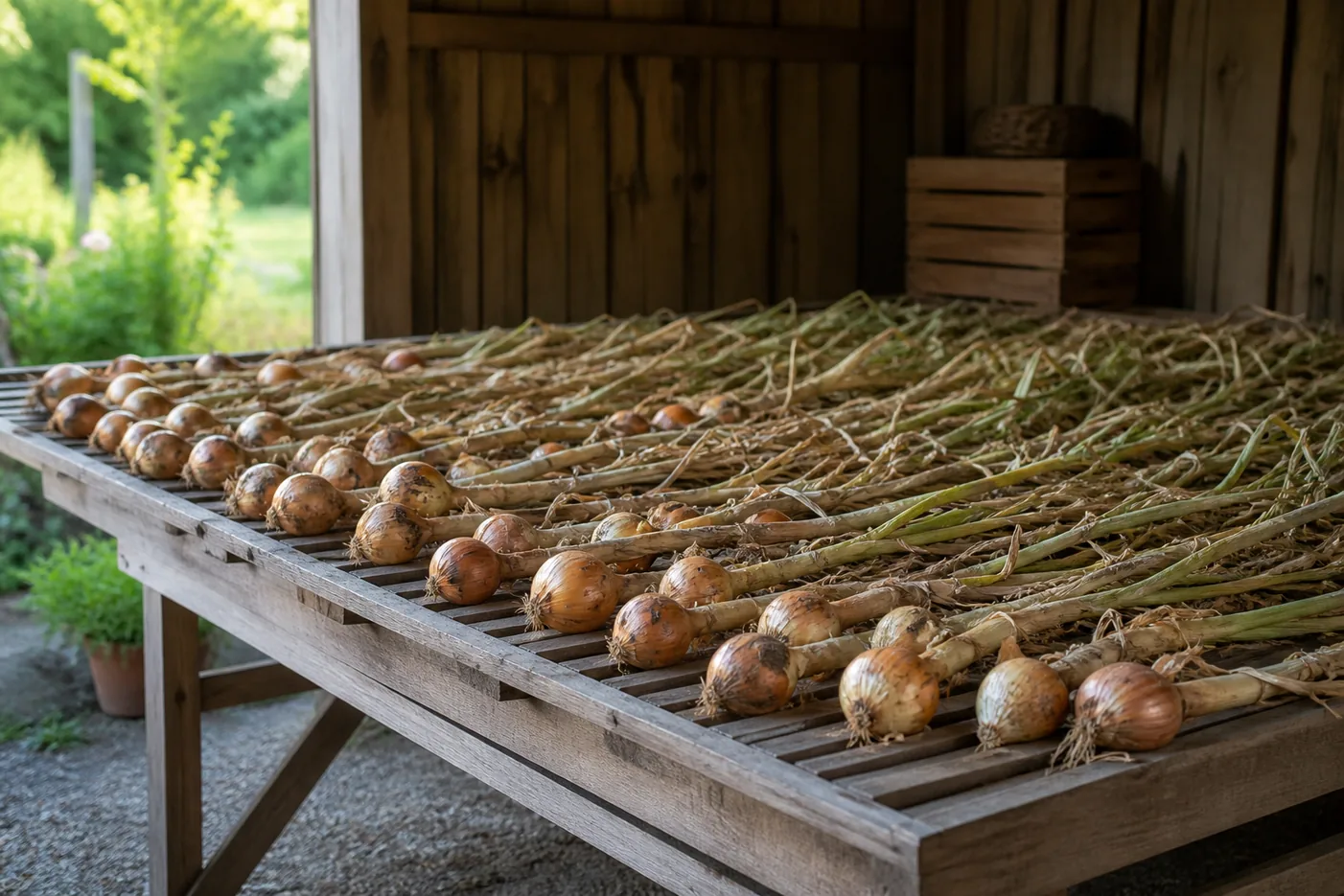
- Stop irrigating when the tops begin to fall and the bulbs are full size.
- Lift the crop in dry weather whenever possible.
- Spread bulbs where air can move around them but direct sun cannot cook them.
- Store only the fully cured bulbs; eat the soft or thick-necked ones first.
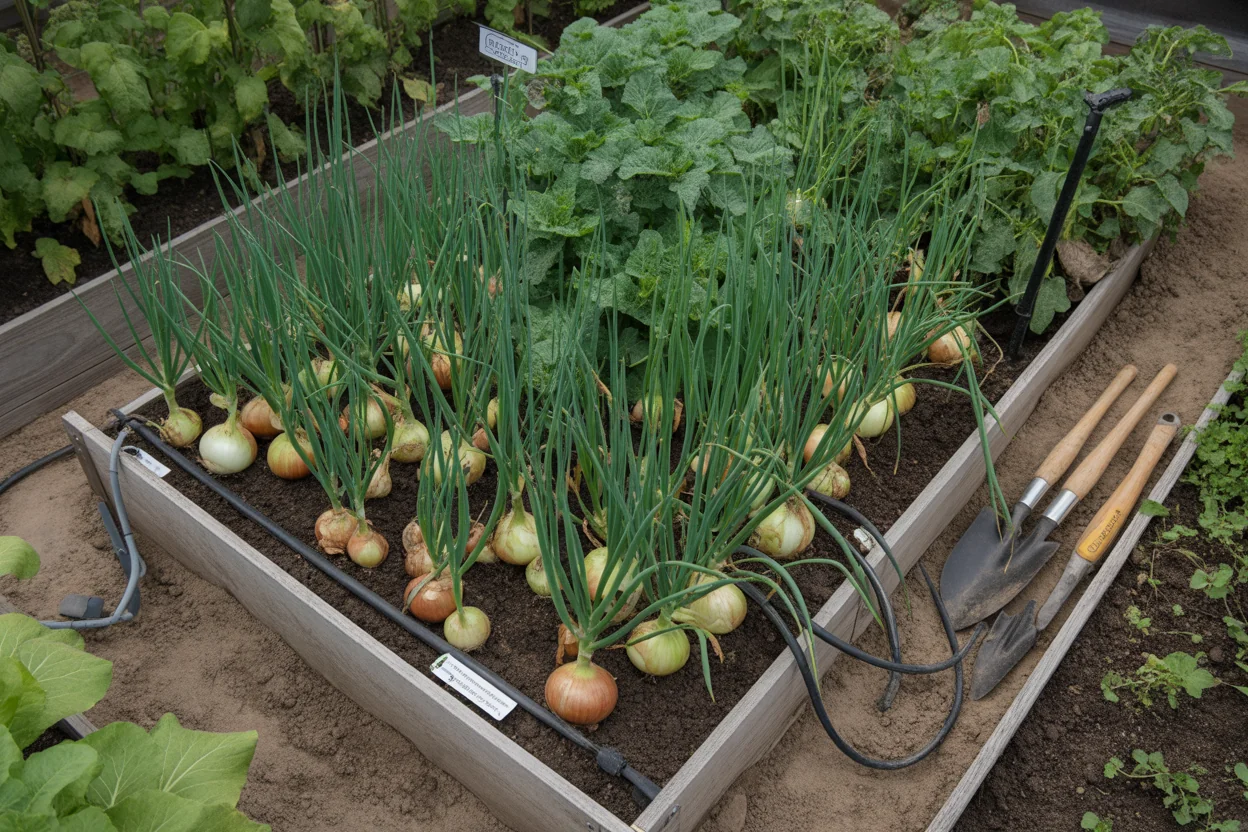
Why Are My Onions Small, Split, or Bolting?
Small bulbs usually trace back to one of four causes, the wrong day-length type, a late start, weed competition, or crowding. The plant did not have enough leaf engine before bulbing time arrived.
Thick necks usually mean late nitrogen, late watering, or an immature crop that never tightened down. Those bulbs can still be eaten, but they are poor storage material.
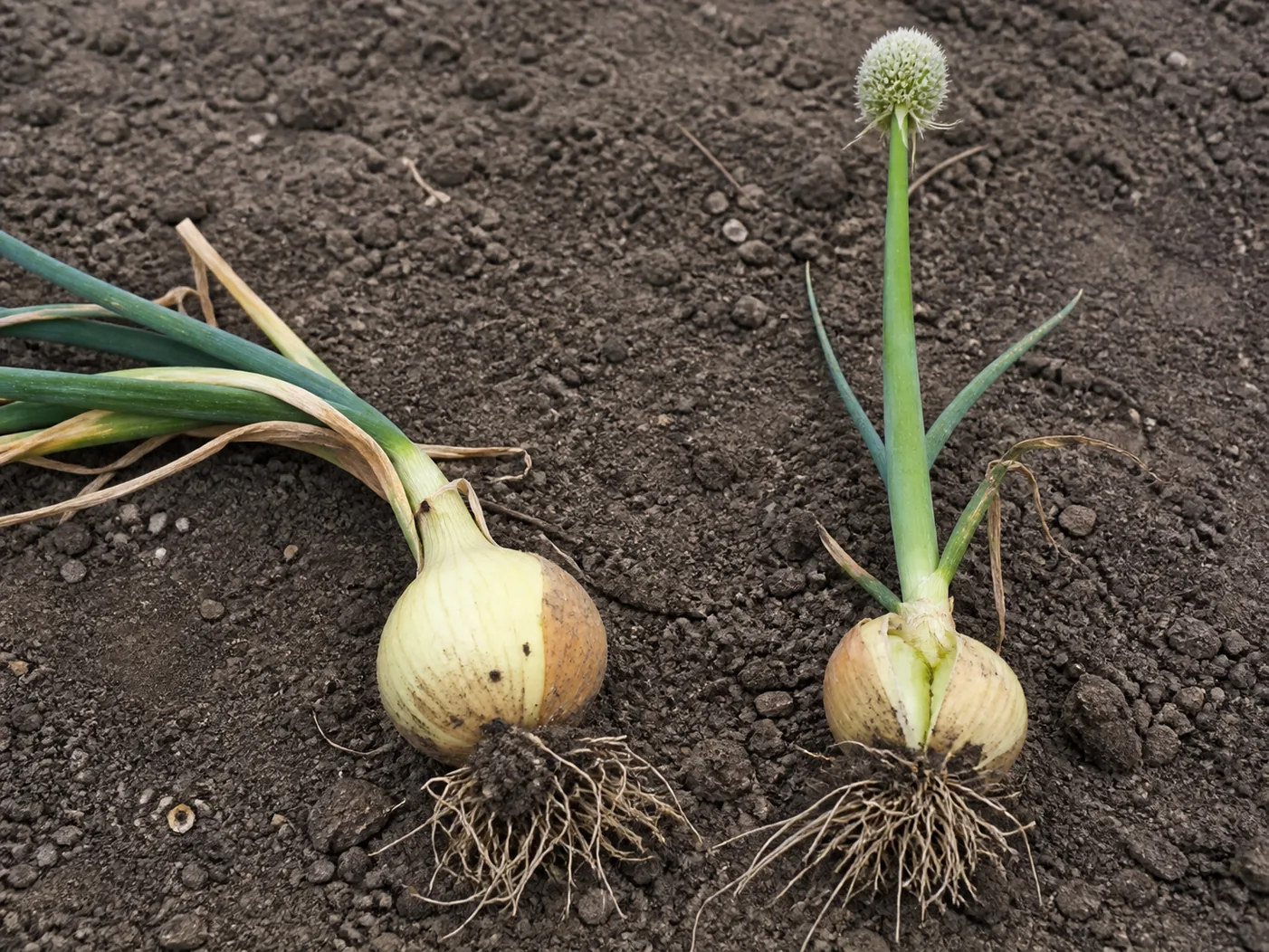
Split or misshapen bulbs point somewhere else entirely.
Uneven moisture during active bulb swelling can crack the outer layers open, and a bed full of hard clods or buried stones does the exact same thing mechanically, so the real fix is usually about soil texture and watering rhythm rather than variety choice.
A flower stalk means bolting. That can happen when sets were oversized or weather shocked the plant.
Once a stalk rises, pull that Onion and use it first.
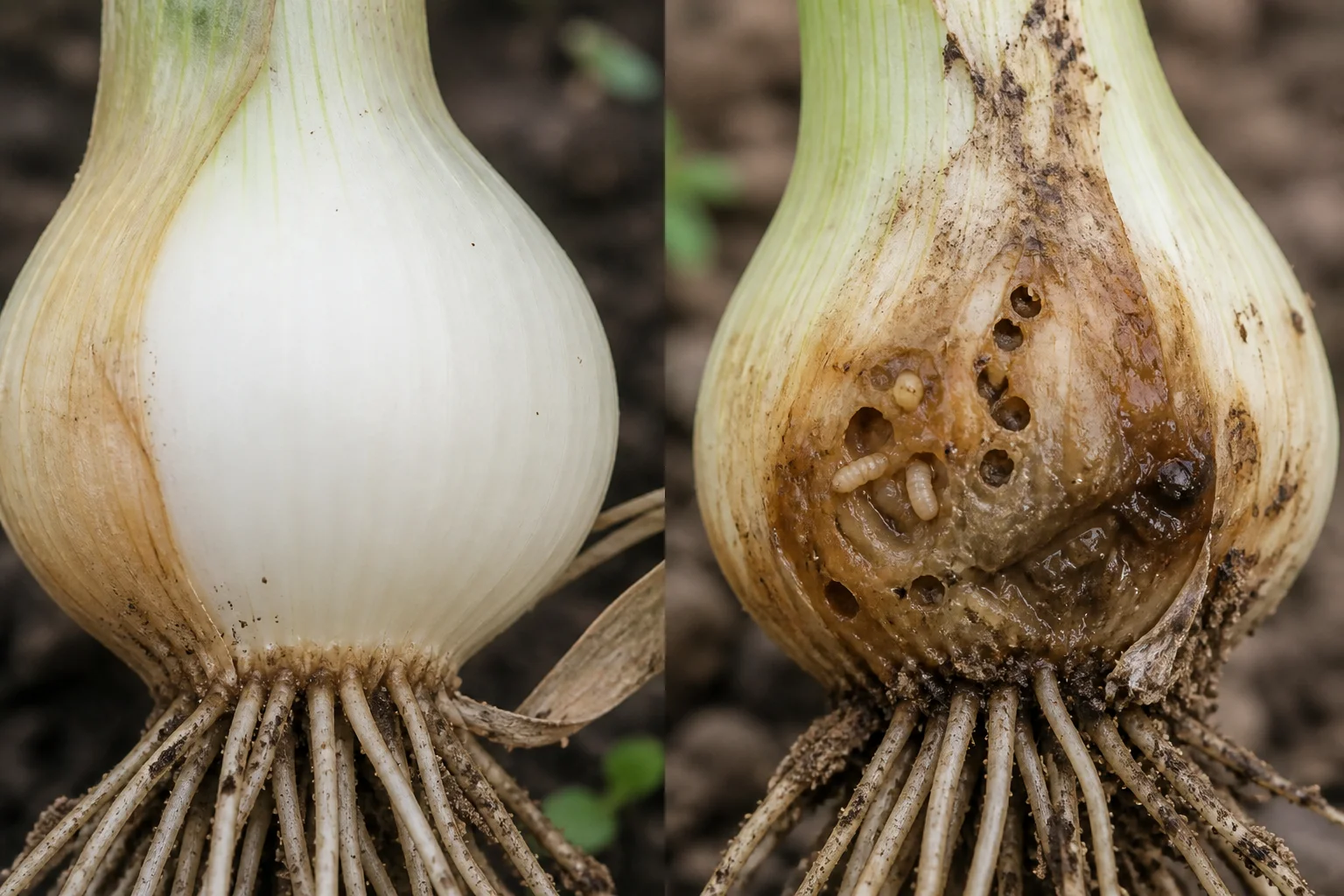
Wilting seedlings or otherwise perfectly healthy-looking young bulbs that suddenly rot from below point to a different, far more specific culprit entirely.
Onion maggots tunnel into the base of the plant, strongly favor cool wet spring soil conditions, and can wipe out an entire young row before the damage ever becomes visible above ground. Floating row cover placed from transplant onward, along with the same natural pest control habits that help other nearby crops, keeps the egg-laying adult flies off the row in the first place.
Usually the wrong day-length type or a crop that started too late
Usually uneven moisture or a bed with hard clods and stones
Usually too much late growth and not enough dry-down before harvest
Are Onions Toxic to Dogs and Cats?
Onion bulbs and trimmings are not pet-safe. Dogs and cats can get sick from eating fresh bulbs, dried pieces, or food scraps that contain Onion.
The compounds behind that risk are the same sulfur-based ones that make a bulb pungent to people.
In dogs and cats those same compounds can steadily damage red blood cells and lead to genuine anemia over time, and cooking or drying the Onion does not remove that underlying danger, so a cooked kitchen scrap is exactly as risky as a raw one.
The riskiest moment is not the row itself. It is the cull pile, the curing shelf, or the kitchen scraps bucket.
Keep those out of reach instead of assuming pets will ignore them.
For bed health, rotate out of the allium family after harvest and follow with a different crop such as carrots. A later row of beans also helps break the cycle and use the bed well.
That rotation earns its keep against a specific soil-borne threat.
White rot, a fungal disease that slowly rots bulbs from the roots upward, produces resting spores that can survive quietly in soil for well over a decade, so a bed that ever shows it needs a genuinely long break from alliums rather than just one single season off.
Frequently Asked Questions
How do I know which Onion type fits my area?
Match the crop to your latitude first, short-day in the South, intermediate through the middle, and long-day in the North. That day-length fit matters more for bulb size than the color or brand name.
Are Onions better from seed or from sets?
Sets are faster and easier, but seed or transplants usually give better choice and often better full-size storage bulbs. The best method depends on how much lead time you can manage.
Why did my Onions stay tiny?
Tiny bulbs usually mean the wrong day-length type, a late start, crowding, or early weed pressure. Once the bulbing trigger arrives, the plant cannot make up for lost leaf growth.
When should I stop watering Onions?
Keep moisture steady while the bulbs are sizing, then back off once tops begin to fall and harvest is close. That dry finish helps skins tighten and improves storage.
Can Onions grow in containers?
Yes, as long as the container is wide enough for real spacing and drains well. Full-size bulbs still need sun, early feeding, and a dry finish before harvest, just like in-ground crops.
Are Onions safe around dogs and cats?
No, Onions are toxic to pets, especially the bulbs and kitchen scraps. Keep harvests, cured bulbs, and culls where animals cannot reach them.
Sources & References
- Growing Onions in Home Gardens
- Onions
- Onion Profile - University of Georgia Extension Home Garden Series
- Toxic and Non-toxic Plants: Onion | ASPCA
- Growing Onions in Home Gardens
- Allium cepa (Green onion, Onion, Onions, Scallion, Shallot, Spring onion) | North Carolina Extension Gardener Plant Toolbox
Related Plants
Garlic
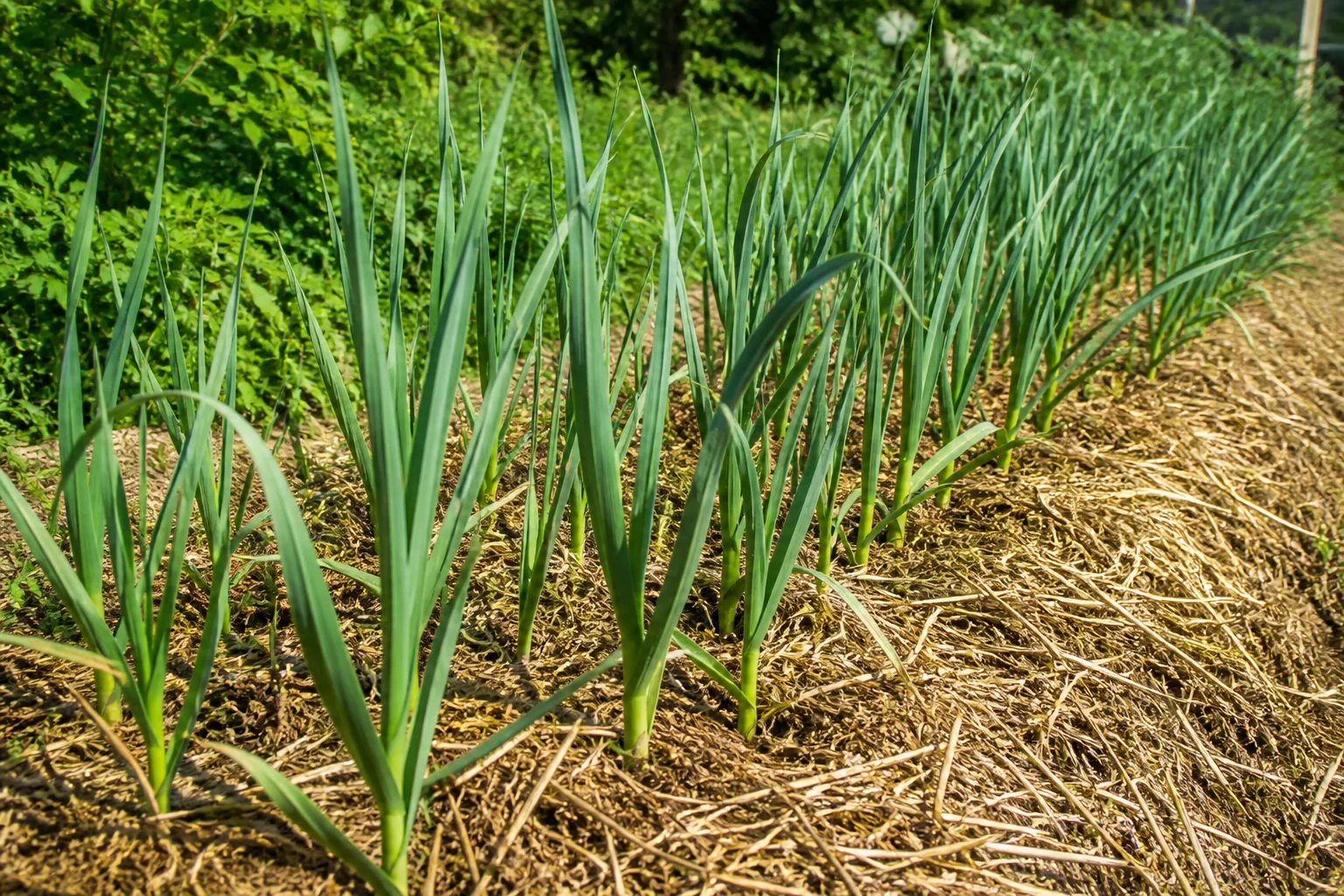
Closely related bulb crop with similar soil needs but different planting season.
Carrot
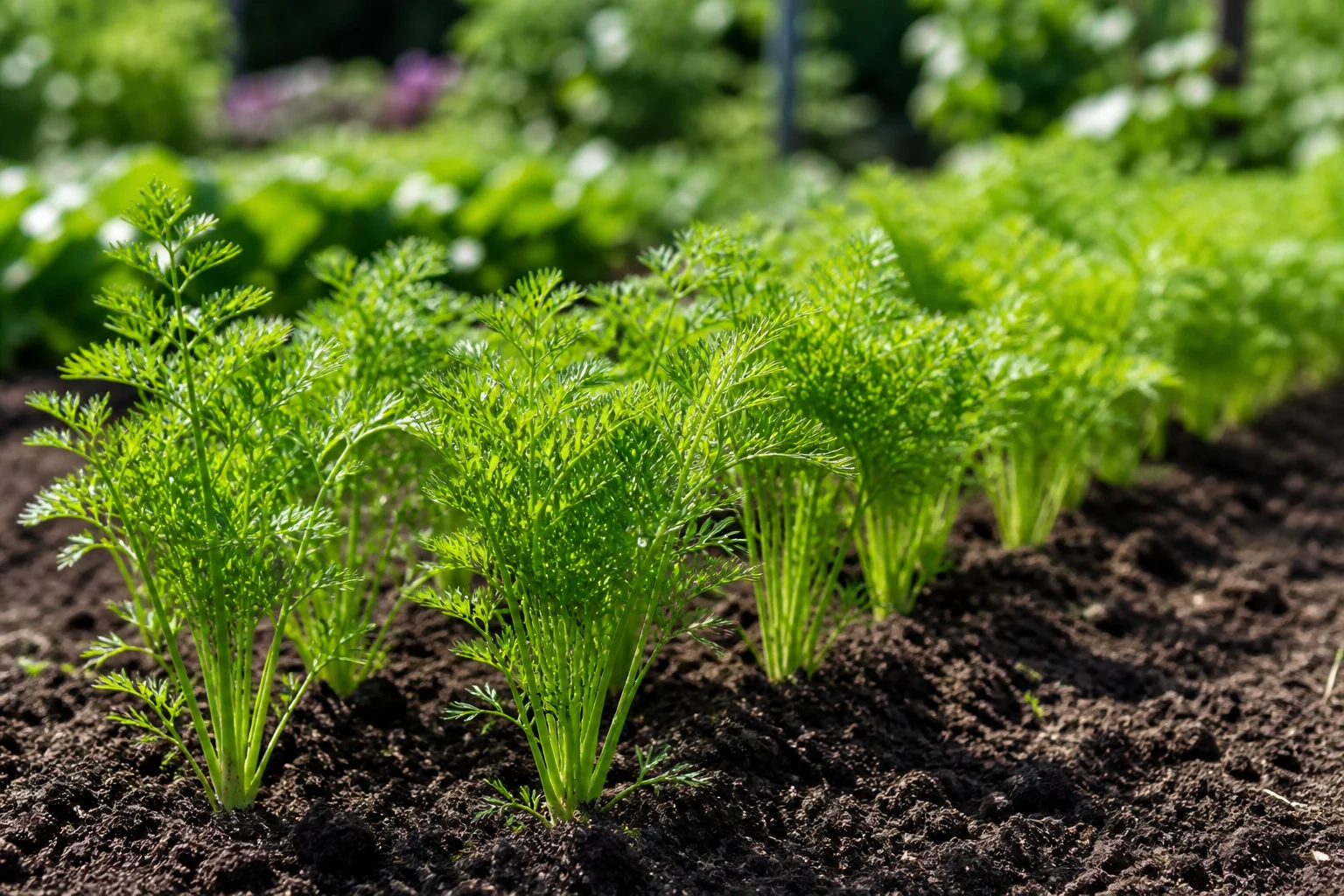
Root crop that shares bed space well with Onions to confuse pests.
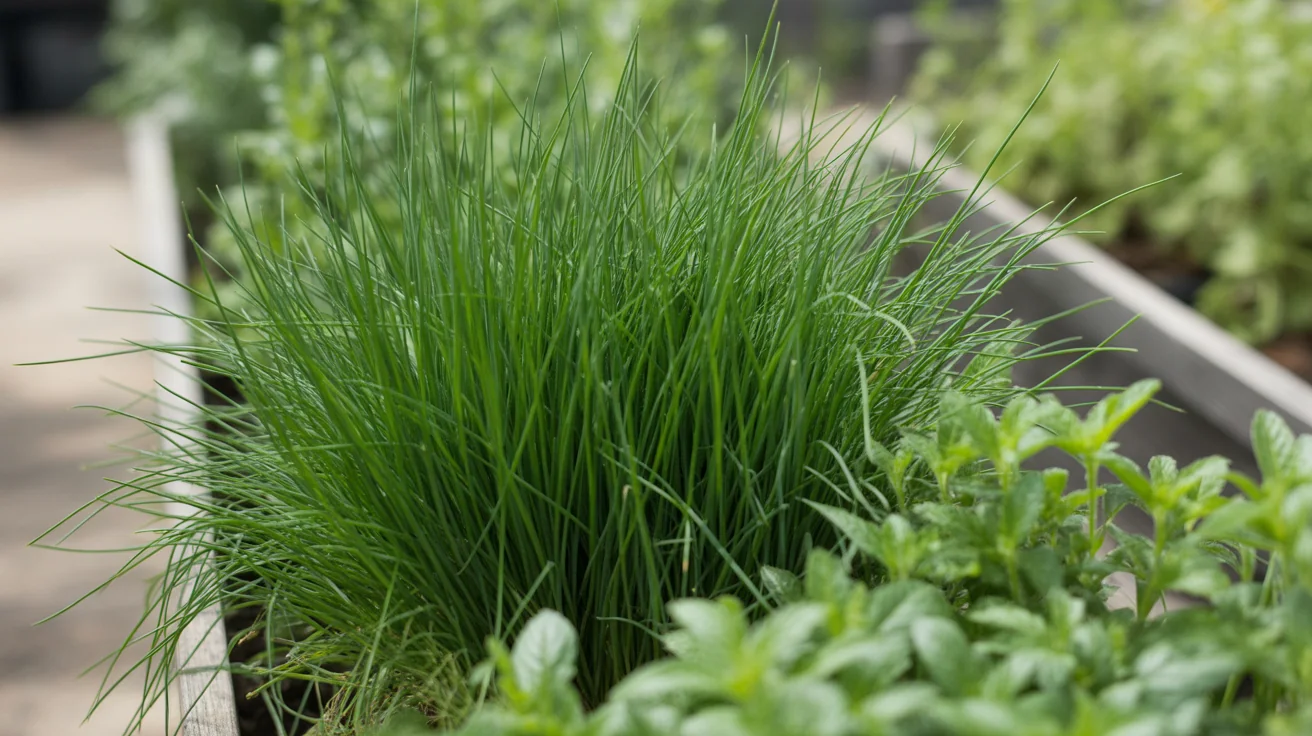
Chives
Perennial allium with mild Onion flavor for repeat harvests.
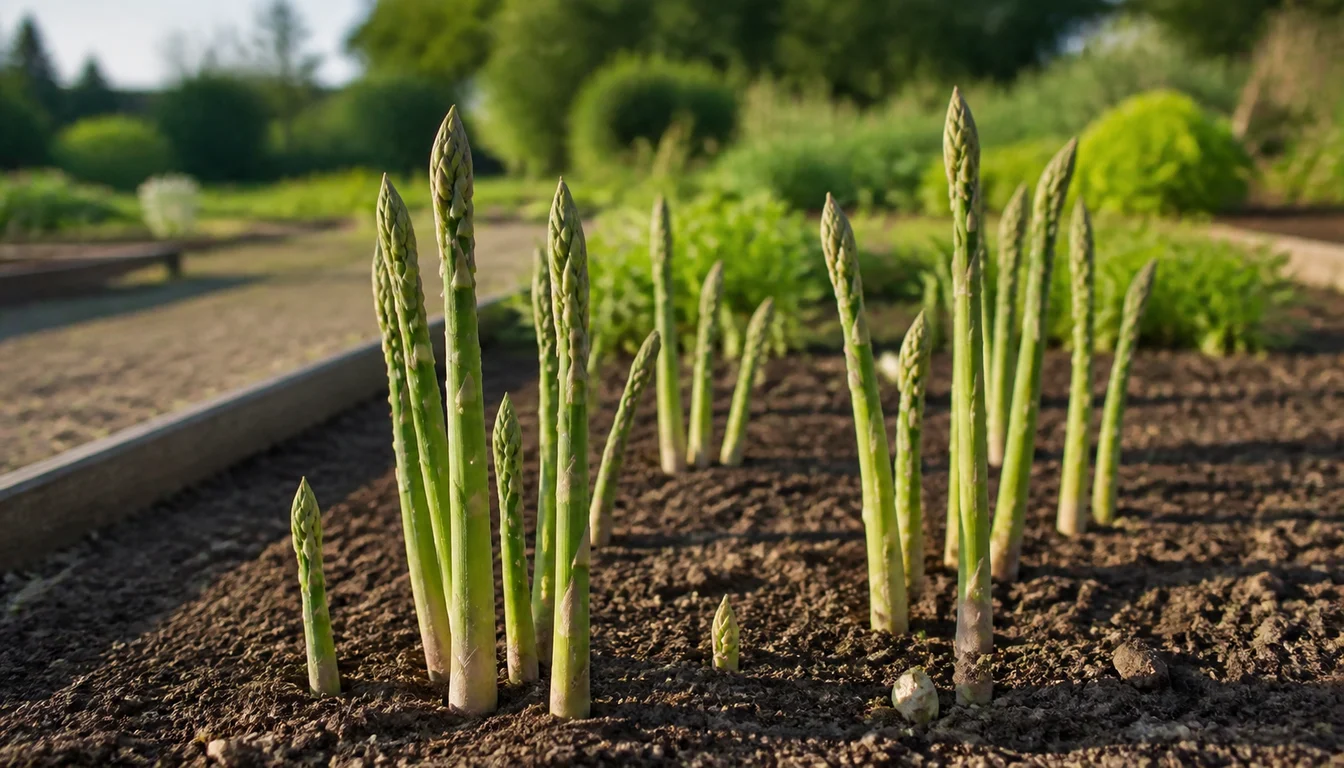
Asparagus
Asparagus rewards careful establishment with spring harvests for many years.
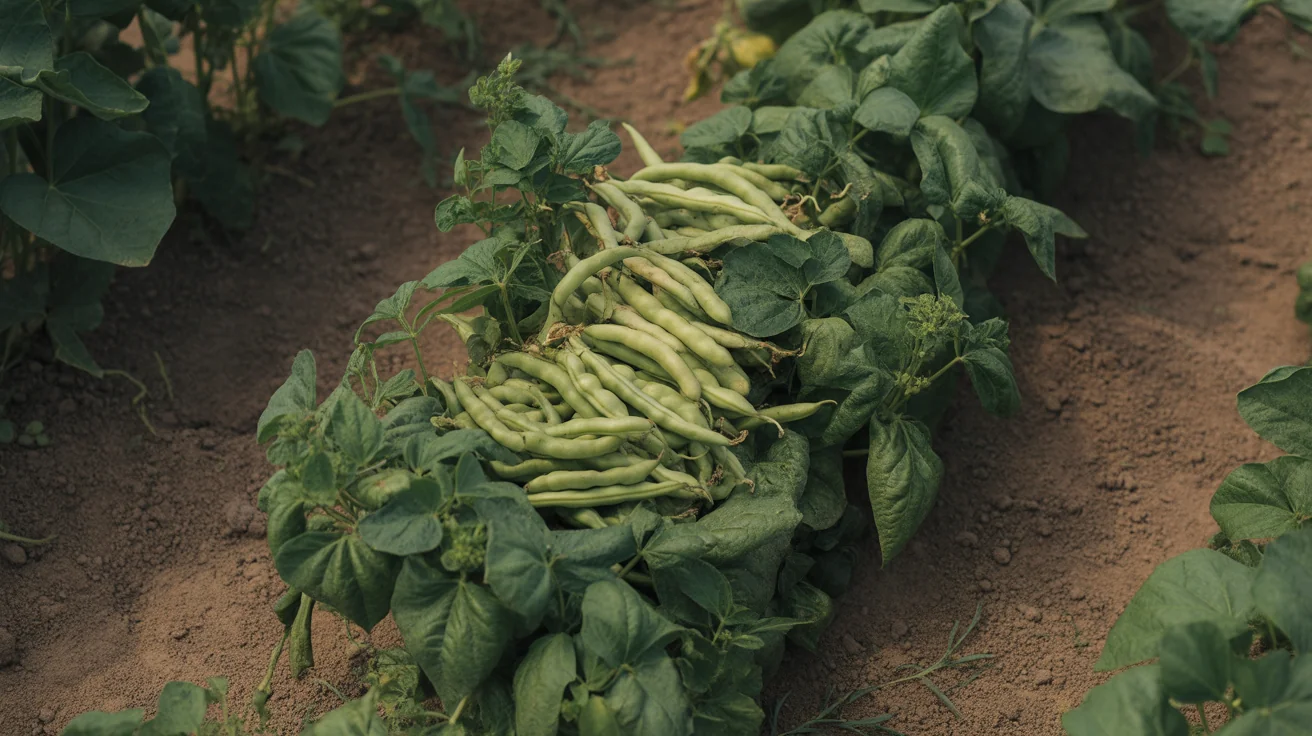
Beans
Two different plants share the name bean, one that stays knee-high and gives most of its crop inside two or three…
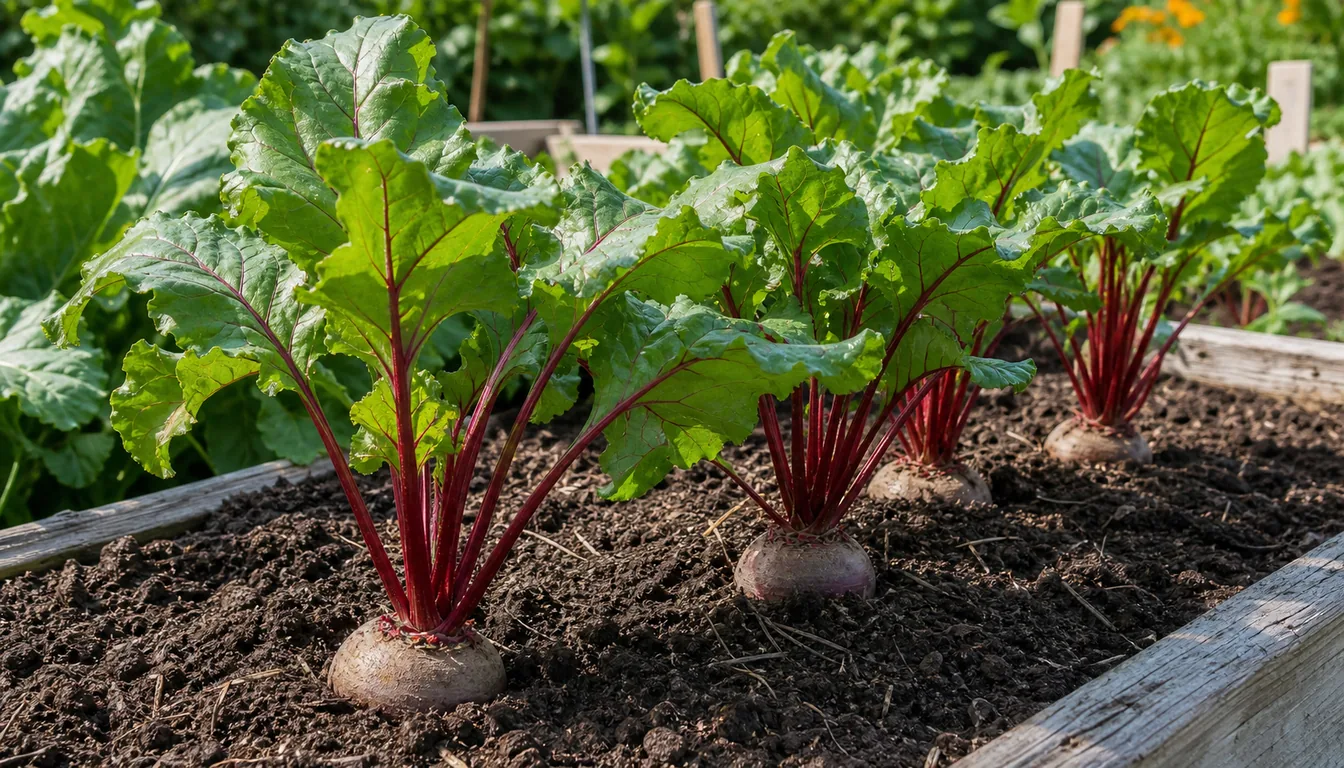
Beet
Beet care starts with one unusual fact. Each seed ball can make several seedlings, so the crop needs early thinning…