
Trace Raspberry Cane Dieback to Its Starting Point
Raspberry cane dieback can mark a spent fruiting cane, a winter-killed top, a wound infection, a node disease, an insect tunnel, or failure at the crown. Follow the dead section downward, identify the first abnormal point, and match the cut to the cane's age and the tissue that remains alive.
Quick diagnosis
Normal floricane death or winter injury unless a lesion, tunnel, or failing crown shows where dieback began
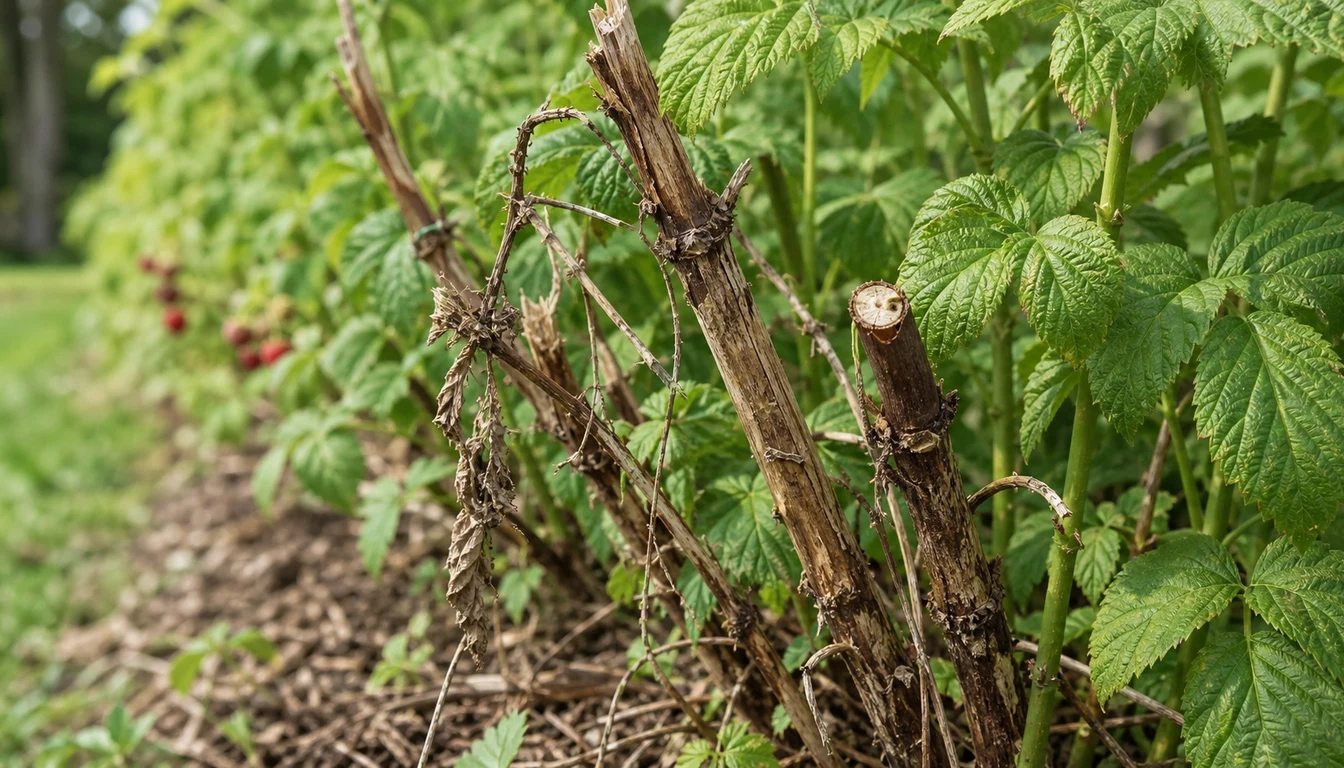
A cane that already fruited and then declines is usually just finishing its life, while winter injury leaves dead wood above a common snow line and live buds below.
Wound-centered cankers, purple node lesions, pale pits between nodes, tip tunnels, or brown crown tissue move the diagnosis toward disease, borers, or root failure.
Open the full diagnosisWhat You Are Seeing
The word dieback describes a direction rather than a cause.
Raspberry canes fail from the tip, above a single lesion, along several nodes, or from the crown upward, and each starting point leads somewhere different.
Cane history matters before color. Primocanes are first-year canes, floricanes are the second-year fruiting canes on summer-bearing raspberries, and a floricane dies after its crop without threatening the living crown.
Inspect new green primocanes in late summer and early fall while the disease markings are still visible.
By spring, uniformly brown bark hides the lesion that separated cane blight, spur blight, or anthracnose months earlier.
Common Causes
01 Common after harvest
A floricane completing its normal cycle
A summer-bearing floricane dies after producing fruit, and that is the plant working normally.
Fall-bearing plants also lose the upper portion of a primocane once it has fruited, while the lower cane can stay alive for a later crop.
How to identify it
- The cane carried berries during the most recent harvest.
- Browning follows fruiting rather than a distinct lesion.
- Fresh green primocanes rise from the same healthy crown.
- No crown softening, tunnel, frass, or spreading wound canker is present.
What to do
- Cut a fully spent floricane at soil level after harvest.
- Keep unfruited replacement primocanes needed for the next crop.
- Remove the old cane from the row to improve light and airflow.
- Confirm the bearing type before mowing an entire planting.
02 Climate dependent
Winter injury above protected cane tissue
Cold and swinging winter temperatures kill raspberry tips first. Snow insulates the lower cane, so several floricanes may leaf out below the old snow level while their exposed tops stay dead.
How to identify it
- Several canes die back to a similar horizontal height.
- Healthy buds or laterals grow below the dead section.
- The top few inches or feet are affected after winter.
- No lesion or tunnel marks the transition into living wood.
What to do
- Wait for bud break to reveal the living boundary.
- Cut dead tops back to firm living cane above a healthy bud.
- Retain productive lower laterals when the cane remains sound.
- Choose cultivars hardy for the site when winter loss repeats.
03 High likelihood with rubbed or cut primocanes
Cane blight entering through a wound
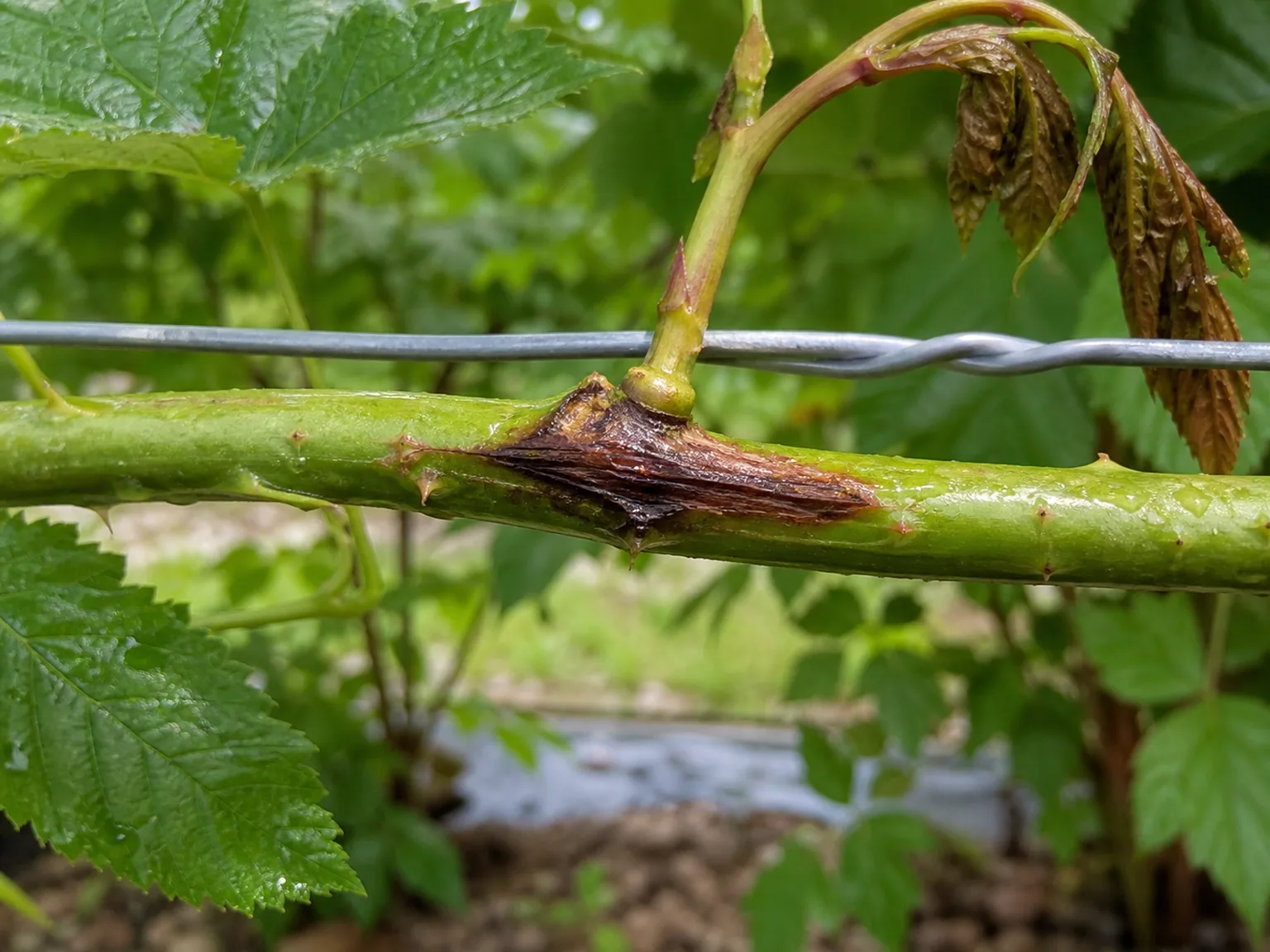
Cane blight gets in through a wound on a young cane.
Reddish-brown tissue then spreads lengthwise from the rubbing, trellis injury, or pruning cut and can girdle the cane, wilting everything above it.
How to identify it
- A long reddish-brown canker begins at a visible wound.
- Laterals above the canker wilt while lower tissue stays alive.
- Canes rub against wire or each other at the infection point.
- The canker extends several inches along the cane.
What to do
- Remove a girdled or extensively cankered cane at soil level.
- Avoid injuring green primocanes during tying, cultivating, and harvest.
- Thin the row so canes do not abrade each other.
- Remove infected wood before wet weather produces more spores.
04 High likelihood in dense red raspberry rows
Spur blight moving from a leaf into its node
Spur blight starts on lower mature leaves and travels through the petiole into the node. A chocolate-brown or purple lesion forms just below the leaf attachment and can stop nearby buds growing the following spring.
How to identify it
- Purple-brown tissue is centered immediately below a node.
- A dead leaf drops but its petiole remains attached.
- Lower nodes are affected more often than young upper growth.
- Overwintered bark peels and may show tiny black fruiting bodies.
What to do
- Remove clearly diseased primocanes after harvest.
- Keep the fruiting row narrow and control weeds.
- Avoid excess nitrogen that creates a dense humid canopy.
- Remove old floricanes promptly so they cannot supply spores.
05 Higher on black raspberry
Anthracnose pits between raspberry nodes
Anthracnose infects young green cane tissue and leaves scattered round pits between the nodes.
Pale sunken centers ringed in raised purple weaken the cane and make winter death much more likely.
How to identify it
- Small round sunken lesions occur on internodes.
- Centers become pale tan or gray with purple-red margins.
- Numerous lesions merge into gray rough bark late in the season.
- Black raspberries or susceptible red cultivars show the strongest damage.
What to do
- Remove severely pitted canes after harvest.
- Reduce splash and shorten the time canes remain wet.
- Keep wild and neglected brambles away from the managed row when practical.
- Inspect young primocanes before brown mature bark hides the pits.
06 Localized
A cane borer killing the tip
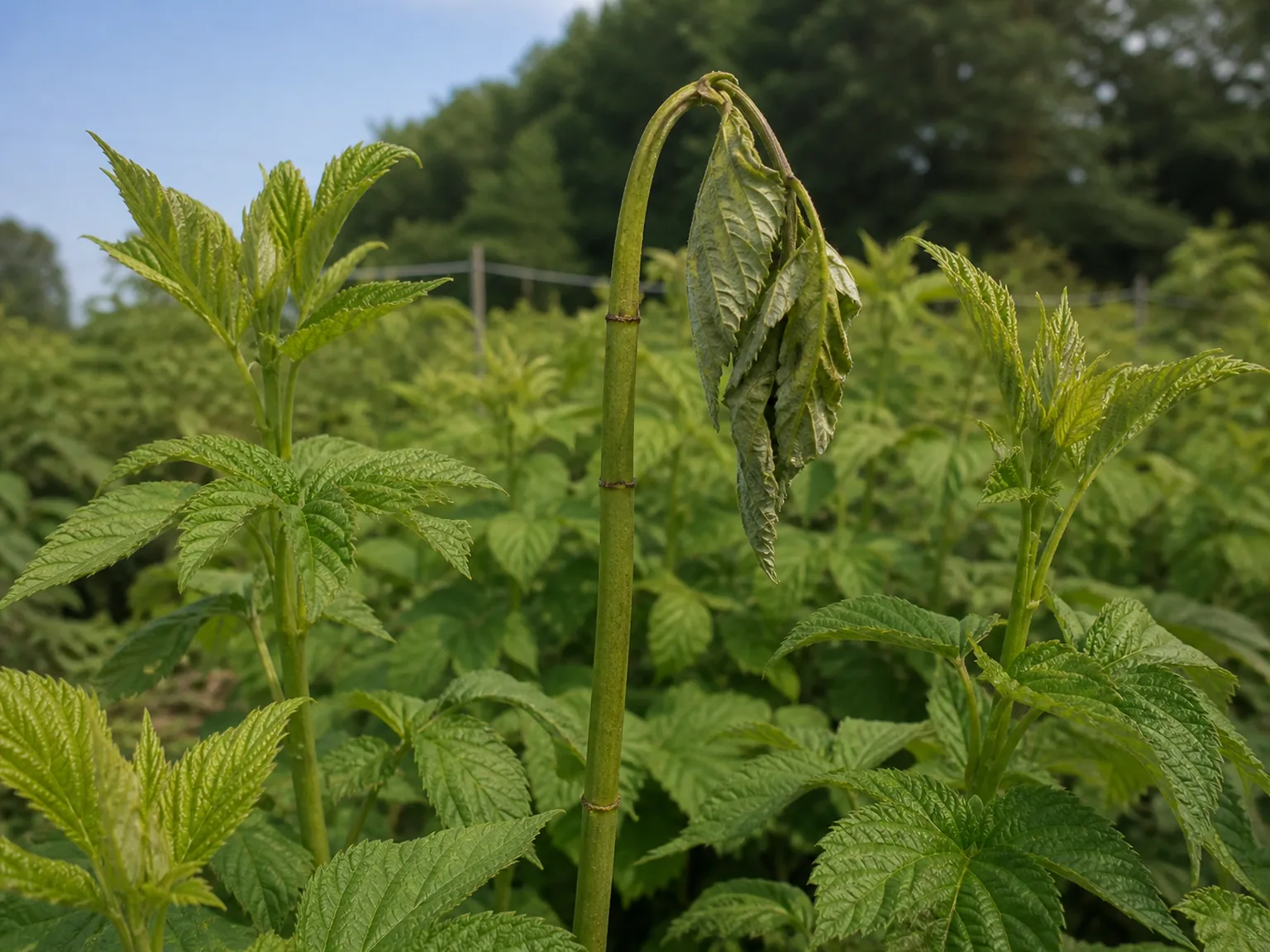
Several cane-boring insects cut a raspberry stem off above the point where they are feeding.
Tip wilt during the growing season, paired girdles, a swelling, a hole, a tunnel, or a larva separates insect injury from an unmarked weather-killed tip.
How to identify it
- One shoot tip wilts while neighboring canes remain green.
- A hole, girdle, swelling, or frass sits below the wilt.
- Splitting the failed section reveals tunneling.
- Dieback advances from the tip toward the insect site.
What to do
- Cut below confirmed tunneling into solid cane.
- Split the removed piece to verify the insect before treating the row.
- Destroy the infested section rather than leaving it beside the planting.
- Monitor new primocanes during the season when local borers are active.
07 Regional and gradual
Raspberry crown borer in lower canes and roots
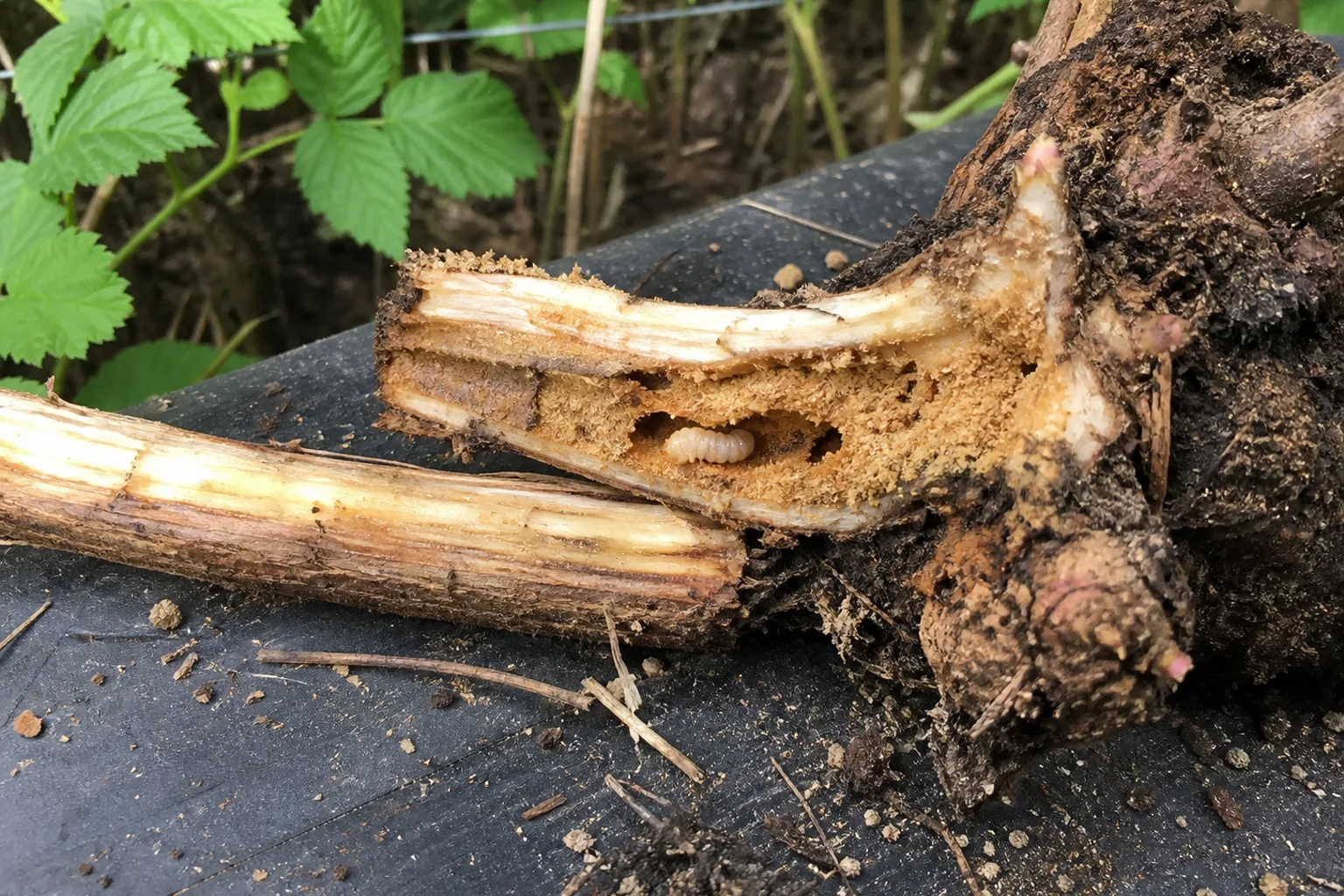
Raspberry crown borer larvae spend a long cycle tunneling through the lower canes, the crown, and the upper roots. Whole canes wilt or snap at the base as the hidden injury builds, often across more than one season.
How to identify it
- A whole cane weakens or breaks close to the crown.
- Sawdust-like frass surrounds lower-cane or crown tunnels.
- A cream larva occupies a hollowed crown or root.
- The planting loses vigor gradually as individual crowns fail.
What to do
- Dig and destroy a crown with confirmed larval tunneling.
- Do not divide or move canes from an infested patch.
- Buy clean planting stock for replacements.
- Use only locally recommended, crop-labeled controls at the life stage named by the label.
08 High likelihood in persistently wet sites
Phytophthora crown and root rot
Phytophthora damages roots and crown tissue in saturated soil, so every cane on the failing plant loses its water supply.
The decline follows low spots and poorly drained sections rather than a wound on one stem.
How to identify it
- Several canes from one crown wilt or grow weakly.
- The affected area follows a wet depression or drainage path.
- Crown tissue under the bark is brown instead of healthy pale tissue.
- Roots are reduced or discolored without an insect tunnel.
What to do
- Remove a dead crown and inspect the site before replanting.
- Redirect water and improve drainage beyond the crown zone.
- Do not move soil or plants from the affected wet patch.
- Choose tolerant stock and a better-drained location for replacement.
09 Weather dependent
Drought or heat stress affecting soft tips
Shallow raspberry roots can lose access to water during fruiting heat, especially in sandy soil or a weedy row.
Tender tips flag first, and the cane carries no lesion, no tunnel, and no brown crown boundary to find.
How to identify it
- Several exposed tips wilt during the same hot period.
- Soil is dry through the active root zone.
- Canes recover partly after thorough irrigation.
- No wound canker, node lesion, pit, frass, or crown decay is present.
What to do
- Rewet the root zone evenly without flooding the crown.
- Maintain a mulch layer that does not bury cane bases.
- Control weeds competing for shallow moisture.
- Recheck for structural evidence if one cane continues declining after moisture returns.
The first abnormal point reveals the cause
Begin at the dead tip and work toward the crown until the bark, buds, nodes, or pith first change.
A clean transition after winter tells a different story from a canker at a wound, a lesion below a node, or a tunnel inside the stem.
Cane diseases do not infect raspberry roots. When every cane from one crown weakens in wet soil, take the investigation below ground instead of treating a visible cane fungus as the cause.
One planting can carry more than one problem at a time.
Anthracnose can weaken a cane before winter, and a dense wet row can support spur blight while old floricanes are dying on schedule.
Locate the first abnormal point on the cane
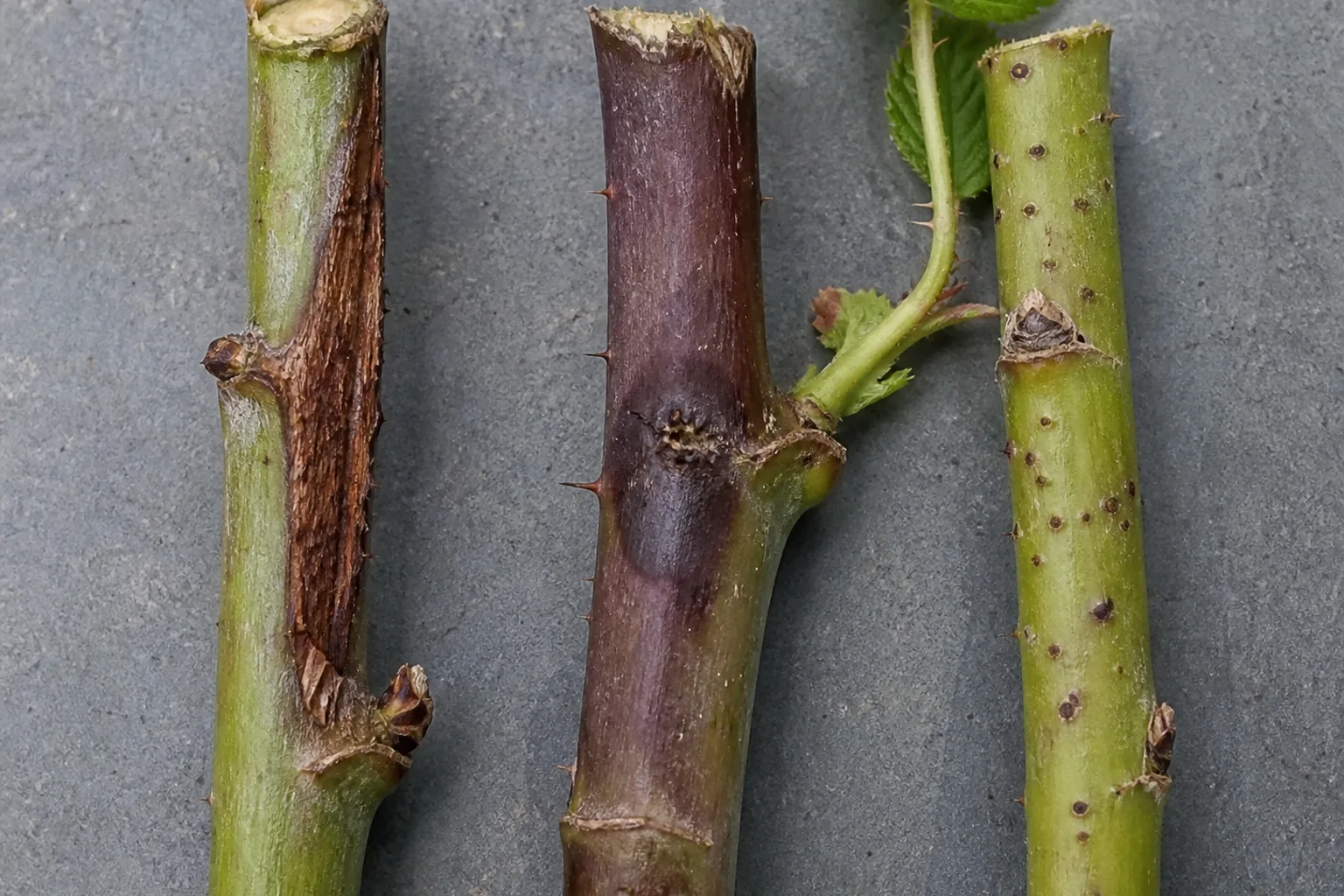
Trace the cane downward from the dead leaves and stop at the first structural change. Do not let the brown top dictate a cut before you find whether the boundary sits at a wound, a node, an internode pit, or the crown.
A long canker growing from rubbed or cut tissue supports cane blight. A chocolate-purple patch just below a leaf attachment supports spur blight, especially when the dead leaf's petiole stays fixed at that node.
Small pale sunken pits scattered between nodes support anthracnose. Firm unmarked cane below a weather-killed top supports injury rather than any of these three fungi.
Use fruiting history before calling a cane diseased
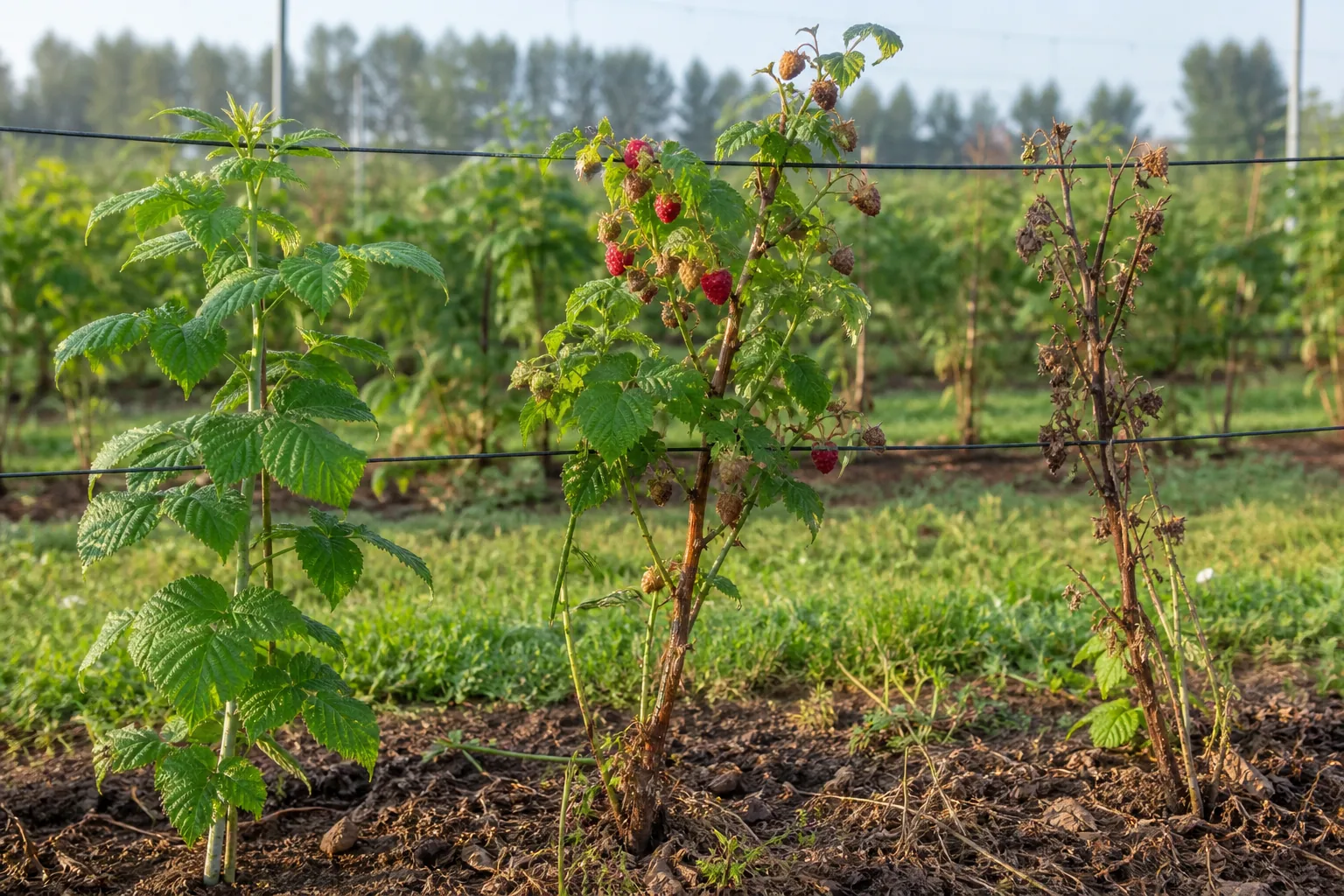
A brown cane beside green growth is not automatically diseased. First ask whether that cane already carried berries, because a summer-bearing floricane dies after its crop while an unfruited green primocane supplies the next one.
Fall-bearing raspberries use the same cane differently. The upper section can fruit and die while living lower tissue remains capable of another crop, so partial browning follows the harvested portion rather than a spreading lesion.
Read the snow line after spring bud break
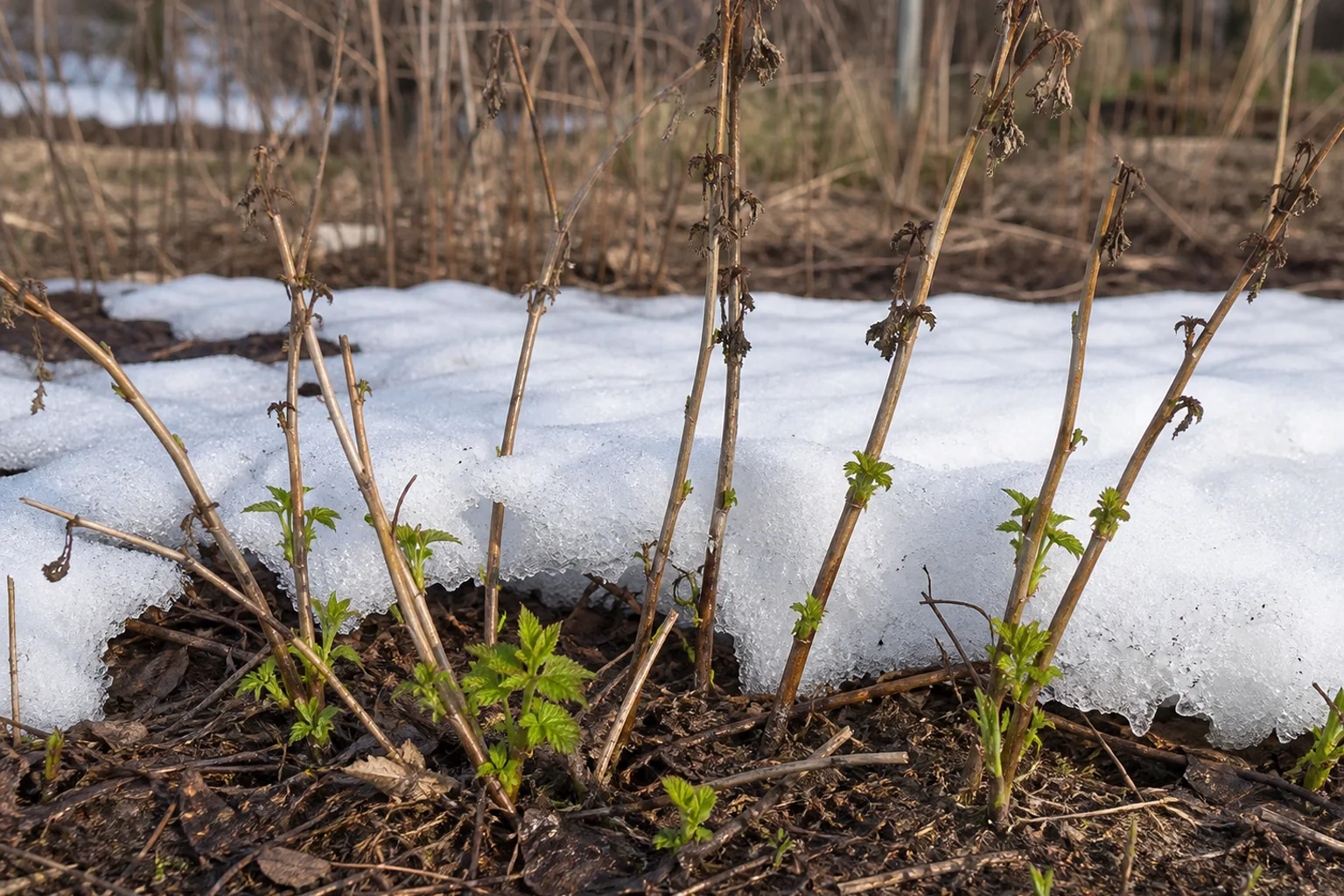
Winter injury creates a shared boundary that fruiting history cannot explain. Several dead tops may end near the former snow line while buds below it open normally, because snow insulated the lower cane from colder air.
Wait until bud break exposes that boundary before shortening the canes. Firm tissue and living lower laterals can still carry fruit, while an isolated lesion or tunnel at a different height sends the diagnosis back to disease or borers.
Open one cane only when outside clues justify it
Choose one newly failed cane with a hole, girdle, swelling, frass, or abrupt tip wilt. Cut below the suspicious point and split only the removed piece so healthy canes remain undisturbed.
A defined tunnel, compacted frass, or larva confirms borer activity. Normal raspberry pith can look hollow or soft, so an empty center without feeding evidence does not justify treating the whole row.
Move to the crown when entire canes break at their bases or several canes from one plant weaken. Crown-borer tunnels contain frass, while Phytophthora leaves brown crown tissue and reduced roots in a persistently wet site without an insect gallery.
Excavate one failing crown only after the pattern points below ground. Digging healthy plants destroys evidence and adds wounds before the cause is known.
- Select one cane whose outside clues match the failure pattern.
- Cut below the suspected insect site and split the removed section.
- Look for a continuous tunnel, frass, larva, or discolored vascular tissue.
- Inspect the crown only when whole-cane or clustered decline begins at the base.
Match the cut to cane type and failure point
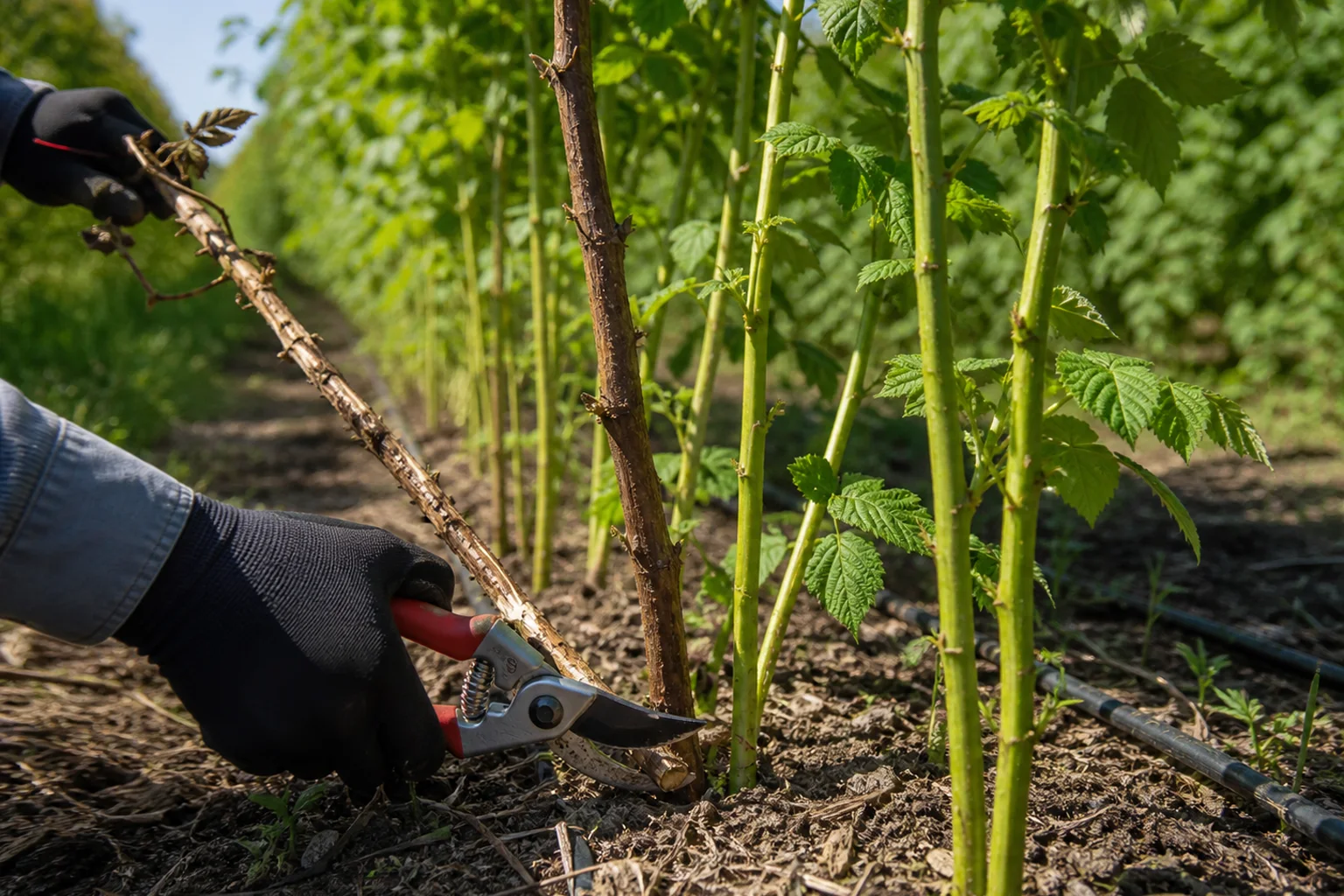
Cut a spent floricane, a fully girdled diseased cane, or a cane dead from the crown at soil level. Cut a winter-killed or borer-killed top only back to firm living cane when useful buds and laterals remain below.
Do not apply one arbitrary distance below every symptom. A visible tunnel must be removed completely, a wound canker may require the whole cane, and a dead top can stop at its confirmed living boundary.
Mowing has different consequences by bearing type. A fall-bearing row can produce a primocane crop after all canes are removed, while mowing a summer-bearing row removes the floricanes that would carry the next summer crop.
Carry removed canes out of the row and keep the planting narrow enough to dry after rain. Watch the retained primocanes for new lesions while their green bark still makes disease patterns visible.
Recovery Plan
Mark the living boundary
Trace each failed cane to its first lesion, tunnel, snow-line boundary, or crown symptom before you cut anything.
Remove spent and diseased canes
Take out the old floricanes and any confirmed diseased primocanes, then open the row up without sacrificing healthy replacements.
Judge the crown by new canes
Firm vigorous primocanes mean the crown is alive. Repeated clustered weakness sends the diagnosis back to drainage, roots, or crown borers.
Keep raspberry rows narrow, remove floricanes promptly after harvest, control weeds, avoid wounding green primocanes, and irrigate without prolonged cane wetness. Inspect young canes before bark matures because wound cankers, node lesions, and anthracnose pits are easier to distinguish then.
Sources
- Raspberry cane diseases, University of Minnesota Extension
- Growing raspberries in the home garden, University of Minnesota Extension
- Raspberry Crown Borer, Utah State University Extension
- Anthracnose in Home Plantings of Brambles, Penn State Extension
- Growing Raspberries in Your Home Garden, Oregon State University Extension