
Elephant Ear Is a Wet-Soil Perennial or a Corm You Lift
Colocasia esculenta Araceae
Elephant Ear is a tropical aroid grown for oversized, shield-shaped leaves. It behaves like a wet-soil foliage perennial in warm zones and like a tender corm you lift and store in cold zones.
Care snapshot
Know Which Elephant Ear You Are Growing
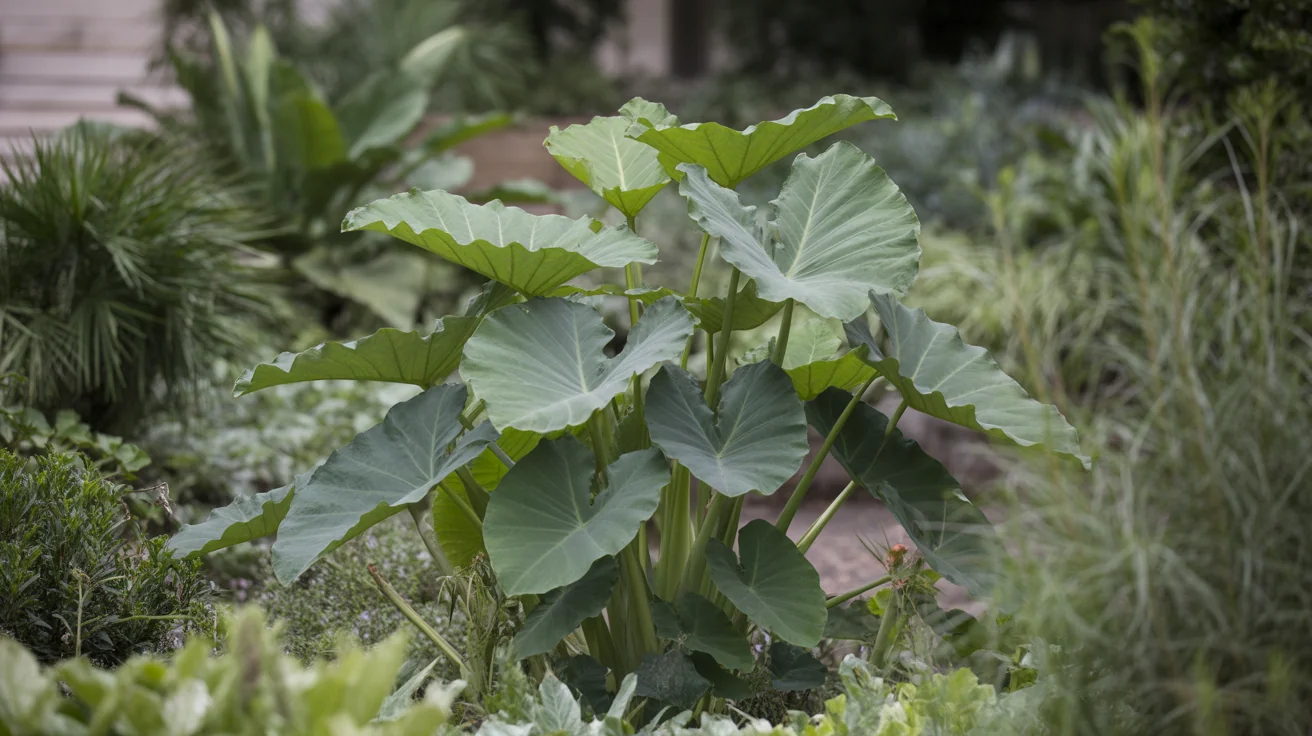
Elephant Ear is a common name, not one single plant. This profile covers Colocasia esculenta, a tropical aroid in the Araceae family that grows from a swollen underground corm and is grown mainly for huge, downward-leaning leaves.
Colocasia is often confused with Alocasia, another 'elephant ear' genus, but the leaves tell them apart, since Colocasia leaves droop downward and attach near the notch, while Alocasia leaves point upward and attach at the leaf edge.
That identity matters before you buy a tuber. Colocasia tolerates wetter soil than many garden perennials, wants real summer heat, and stores next year's growth in the corm.
If winter freezes that corm, the plant is gone even if the leaves looked perfect in August.
- Plant part you keep alive
- The underground corm, not the leaf stalks
- Main display
- Large shield-shaped leaves held on thick petioles
- Garden role
- Wet-soil tropical foliage for borders, pots, pond edges, and rain-garden style beds
- Cold-zone rule
- Lift and store the corm before a hard freeze
If you want a hardy shade leaf that sleeps through winter in the ground, start with hosta. If you want a softer woodland texture instead of one giant tropical leaf, ferns fit that job better.
Elephant Ear earns its space when you want dramatic summer foliage and can manage water plus winter storage.
The genus name Colocasia comes from an ancient Greek word for the plant, reflecting how long people have cultivated it as a food crop long before it became a garden ornamental.
Choose for Leaf Size, Wet Soil, and Winter Handling
The best Elephant Ear choice is not always the largest one. A six-foot leaf plant looks great beside a patio or pond, but the corm is heavier to lift, the pot is harder to move, and the leaves shred faster in wind.
Green Colocasia esculenta types are usually the safest first pick because they grow fast in warm, wet soil. Dark cultivars such as Black Magic need more heat to color well, while speckled or chartreuse types often look better with filtered afternoon light.
Leaf size in a given Colocasia cultivar is strongly shaped by water and heat, so the same variety can look dramatically different in a lush, warm site than in a marginal one.
- Pick standard green types for the fastest summer mass in borders and rain-garden edges.
- Pick dark-leaf types for contrast against pale walls, light gravel, or bright foliage.
- Pick compact types for containers you must move before frost.
- Skip giant types in narrow walkways because wet leaves flop into paths after storms.
Elephant Ear is not a permanent woody anchor like hydrangea. You are buying a summer leaf engine, so choose the size you can water, shelter, and store.
Variegated and speckled cultivars often revert toward plain green over a few growing seasons if propagated from offsets rather than tissue culture, which is worth knowing before paying a premium for a patterned type.
Give the Corm a Warm, Wet Seat First
Elephant Ear gets big only when the corm wakes in warm soil and the roots never have to chase moisture. In cool Zones 3-5, give it more sun so the soil warms fast, while in hot Zones 8-10, morning sun with afternoon shade keeps the leaf surface from scorching.
The useful test is not "sun or shade" by itself. Ask whether the spot stays damp after a deep watering, whether wind can tear the leaves, and whether reflected heat from paving will dry the pot by evening.
A dry shade bed under thirsty tree roots usually fails, even if shade plants like hosta survive there.
Wind is a bigger threat to Elephant Ear than to most perennials, since the huge leaf surface acts like a sail and can snap a petiole that looked perfectly healthy the day before.
- Use pond edges and rain-garden rims only where water moves or refreshes.
- Use wide containers when the bed is too dry or root-filled.
- Use afternoon shade in hot climates where reflected heat burns leaf edges.
Plant the Corm After the Soil Is Truly Warm
Cold, wet soil is the mistake that ruins many Elephant Ear starts. Wait until the soil is about 60°F or warmer before planting outdoors, or start the corm in a pot indoors so roots are active before the bed is ready.
A corm planted upside down or sideways sprouts slowly or not at all, so finding the growing point, usually the pointed or slightly raised end, before planting saves a season of confusion.
Set the corm with the growing point up and cover it with about 2-4 inches of soil. In heavy clay, stay closer to shallow planting and improve the bed with compost, while in sandy soil, plant a little deeper so the corm stays evenly moist.
- Outdoor timing
- After frost danger and after soil warms, not just after the calendar says spring
- Planting depth
- 2-4 inches of soil over the corm
- Spacing
- 24-36 inches for full-size types; tighter only for short-season container displays
- Pot size
- At least 14-18 inches wide for one vigorous corm
If you start it indoors, move it outside gradually. The same hardening-off habit used for tender vegetables helps leaves adjust to sun and wind without tearing or bleaching.
Multiple offset corms often cluster around the original mother corm after one full growing season, and each viable offset can be separated and grown as its own plant the following year.
Water Like a Pond-Edge Plant, Then Feed the Leaf Factory
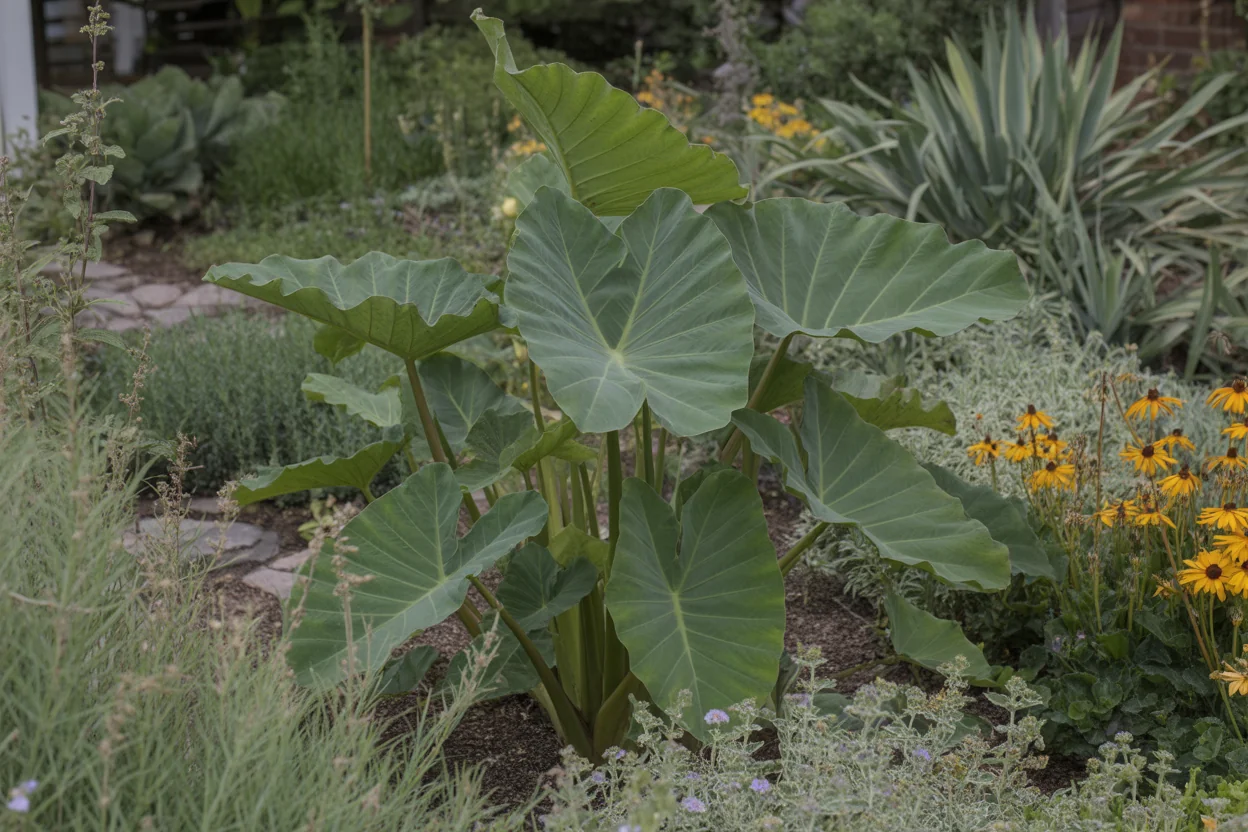
Elephant Ear is not drought-tough once it is pushing leaves. Keep the root zone evenly moist, since in midsummer containers, that can mean water every warm day, while in-ground plants often need a slow soak whenever the top inch starts to dry.
Colocasia specifically tolerates standing water a few inches deep at a pond edge, a wet-soil trait most garden perennials cannot handle, which is why it fits rain gardens and boggy corners other plants avoid.
Deep watering matters because the leaf mass pulls a lot from the root zone. A quick splash wets mulch and leaves the corm dry underneath, so use the same slow-soak logic explained in deep watering guides.
Feeding is useful only after warmth and water are solved. Use compost at planting, then a balanced fertilizer every 4-6 weeks during active growth if leaves are small, pale, or slow compared with the size of the corm.
- Drooping by late afternoon with dry soil means the plant needs more water or a larger pot.
- Yellow lower leaves with sour soil smell point to poor drainage, not hunger.
- Small leaves on a firm plant usually mean cool soil, low fertility, or too little summer light.
- Crisp brown edges after hot wind mean exposure changed faster than roots could supply water.
This wet-soil habit is closer to taro and rain-garden plants than to dry-border perennials. It also explains why a patio pot may need more attention than a thirsty houseplant such as fiddle leaf fig.
Yellowing on the oldest, lowest leaves while new growth stays green is usually just the plant shedding spent leaves as it grows, not a sign of a problem the way yellowing on new leaves would be.
Save the Corm Before Frost Turns It Soft
The winter decision is the main reason this page is not a normal perennial profile. In Zones 8-10, a protected Elephant Ear corm can often stay in the ground.
In Zones 3-7, cold soil can kill it, so lifting is the safer plan.
The size of the corm at digging time roughly predicts next year's plant size, so an undersized corm from a short or stressed season often grows a smaller plant the following summer.
Let a light frost collapse the leaves, then cut stems back to a few inches and lift the clump carefully. Do not wash the corm until it is soaked, but brush off loose soil, cure it in a warm airy place for a day or two, and store it where it stays cool but not freezing.
- Cut dead foliage back after frost, leaving short handles so you can lift the clump.
- Dig wide enough to avoid slicing the main corm or attached offsets.
- Dry the corm for 24-48 hours out of direct sun.
- Store in peat, coir, wood shavings, or paper at about 45-55°F.
- Check monthly and discard any corm that turns soft, moldy, or hollow.
The storage goal is dormancy, not growth. Treat the corm more like sweet potatoes waiting for warm soil than like an evergreen houseplant that keeps drinking all winter.
A cardboard box with air holes works about as well as a specialty container for winter corm storage, since airflow and a stable cool temperature matter far more than the material itself.
Read Leaf Damage Before You Spray
Because the leaves are huge, Elephant Ear makes small problems look dramatic. One torn leaf after a storm is not a pest outbreak, but repeated holes, speckling, sticky residue, or collapse tell a better story.
Start with the pattern and the timing. Damage that appears after wind or hail is usually mechanical, while damage that expands on sheltered leaves over several nights usually points to insects, slugs, or a soil problem.
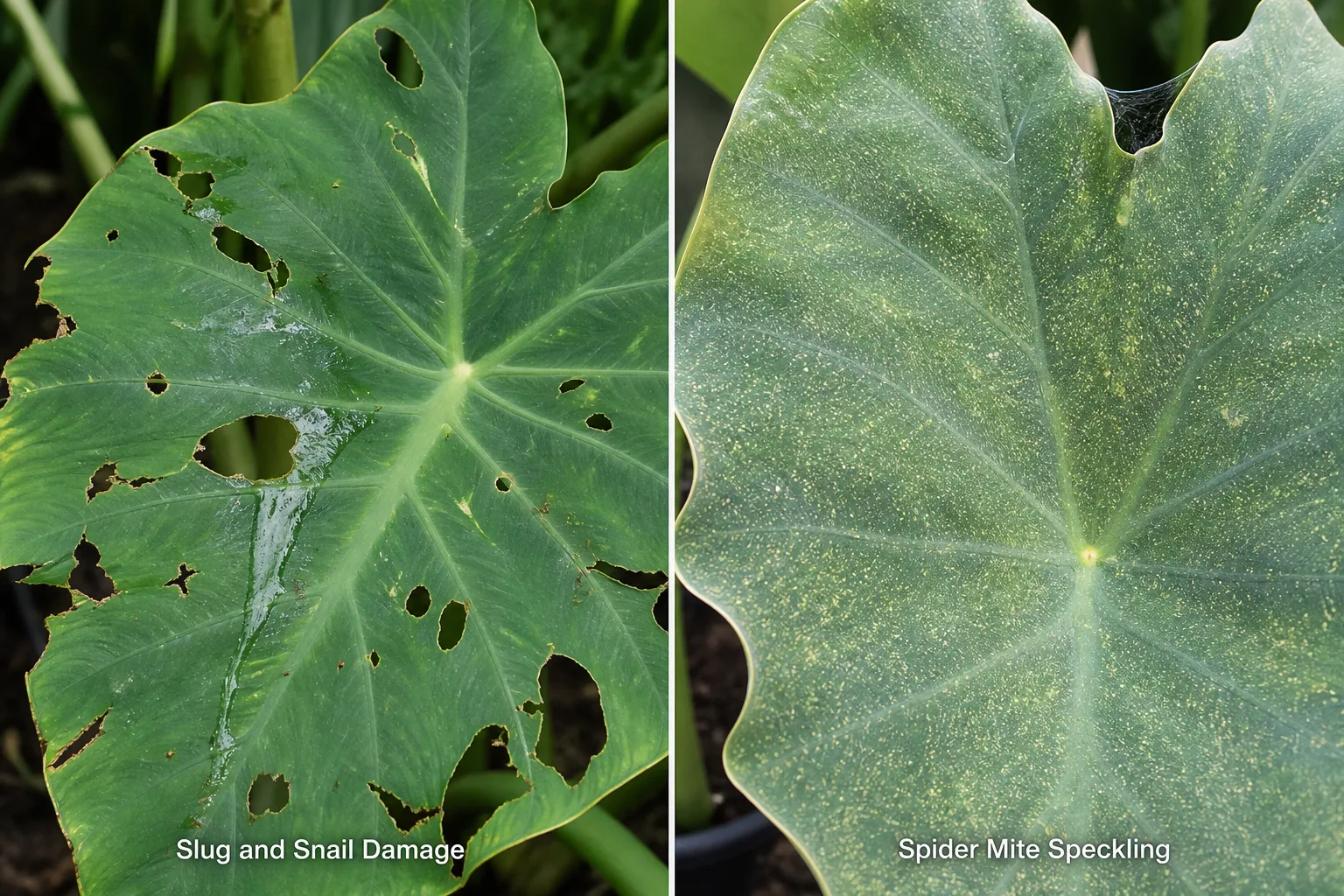
Ragged holes
- Check for slugs, snails, caterpillars, and leaves touching wet mulch
- Look at night or under leaf bases before spraying
Dusty speckles
- Check for spider mites on container plants in hot, dry air
- Rinse leaf undersides before the colony spreads
Yellow collapse
- Check soil smell, drainage, and corm firmness before blaming insects
- Watch for fungus gnats if pots stay wet indoors
Slugs and snails usually leave slime and uneven holes between veins. Caterpillars leave chewed edges and small pellets of frass.
Newly unfurling leaves are more vulnerable to cold and mechanical damage than mature, hardened ones, which is why fresh damage often clusters on the newest growth near the center of the plant.
Spider mites leave fine stippling, especially when a container spends winter inside near dry heat, so compare that pattern with spider mite care before spraying.
If the pot smells sour or gnats hover around damp mix, step back from pest sprays and fix drainage first. The fungus gnat problem often starts with soil that stays wet after the roots slow down.
Treat It as Ornamental Unless You Know the Taro Source
Colocasia esculenta is also the species behind taro, but that does not make every ornamental Elephant Ear a safe kitchen crop. Raw plant parts contain calcium oxalate crystals that can burn the mouth and throat.
The calcium oxalate crystals in raw Colocasia are needle-shaped and physically puncture soft tissue, which is exactly why thorough cooking, which breaks the crystals down, makes prepared taro safe while raw plant material is not.
For a home landscape article, the safe rule is simple, since you should grow this plant for leaves unless you bought an edible taro cultivar from a food-crop source and know the local preparation method. Do not taste leaves, stems, or corms from ornamental nursery stock.
Pets and kids are the practical concern. A dog that chews a stem or a child who mouths a leaf can drool, vomit, or show swelling, so place pots away from play paths and from pets that already nibble plants like spider plant.
In very warm wet regions, also check local guidance before planting near waterways. Elephant Ear can persist and spread where winters stay mild, so Zone 9 gardeners should keep clumps out of drainage ditches and natural wet areas.
Frequently Asked Questions
Is Elephant Ear the same as taro?
Colocasia esculenta is the species used for taro, but ornamental Elephant Ear plants should not be treated as food crops. Raw plant parts can irritate the mouth and throat, and edible use depends on the right cultivar and proper cooking.
Can Elephant Ear survive winter outside?
Elephant Ear can often overwinter outdoors in Zones 8-10 if the corm stays protected and the soil does not freeze. In Zones 3-7, lift the corm after frost and store it cool and dry until spring.
Does Elephant Ear need full sun?
It needs bright warmth more than harsh all-day sun. Cooler zones can use more direct sun, while hot zones usually grow better with morning sun and afternoon shade so the large leaves do not scorch.
Why are my Elephant Ear leaves drooping?
Drooping usually means the leaf mass is losing water faster than the roots can replace it. Check soil moisture first, then pot size, wind exposure, and heat, though if the soil is sour and wet, check the corm for rot instead.
How deep should I plant Elephant Ear corms?
Cover the corm with about 2-4 inches of soil. Use the shallower end in heavy soil and the deeper end in sandy soil, and wait until the soil is about 60°F before planting outdoors.
Can Elephant Ear grow in a pot?
Yes, use a wide pot, rich mix, and steady water. A pot at least 14-18 inches wide suits one vigorous corm, but large cultivars may need a heavier container so wind does not tip the plant.
Sources & References
- Elephant Ear, North Carolina State Extension Gardener Plant Toolbox
- Elephant Ear (Colocasia) in the Garden and Home, Clemson Cooperative Extension
- Colocasia esculenta, University of Florida IFAS Extension
- Taro (Colocasia esculenta) Profile, Missouri Botanical Garden
- Taro (Colocasia esculenta) Growing in Home Gardens, University of Hawaii CTAHR
- Toxic and Non-toxic Plants: Elephant Ears (Colocasia esculenta) | ASPCA
Related Plants
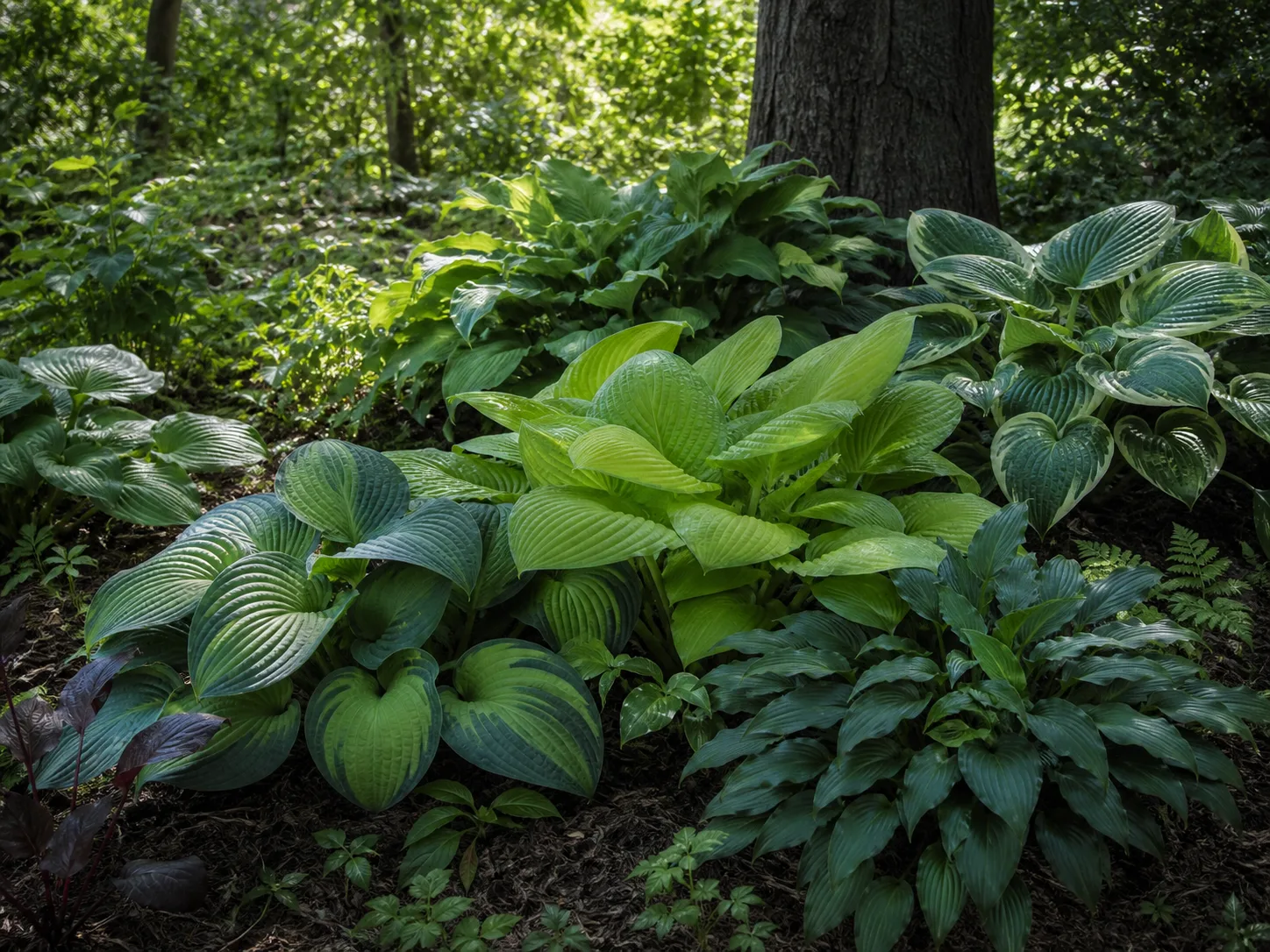
Hosta
A hardy shade perennial for bold foliage where elephant ear is too tender.
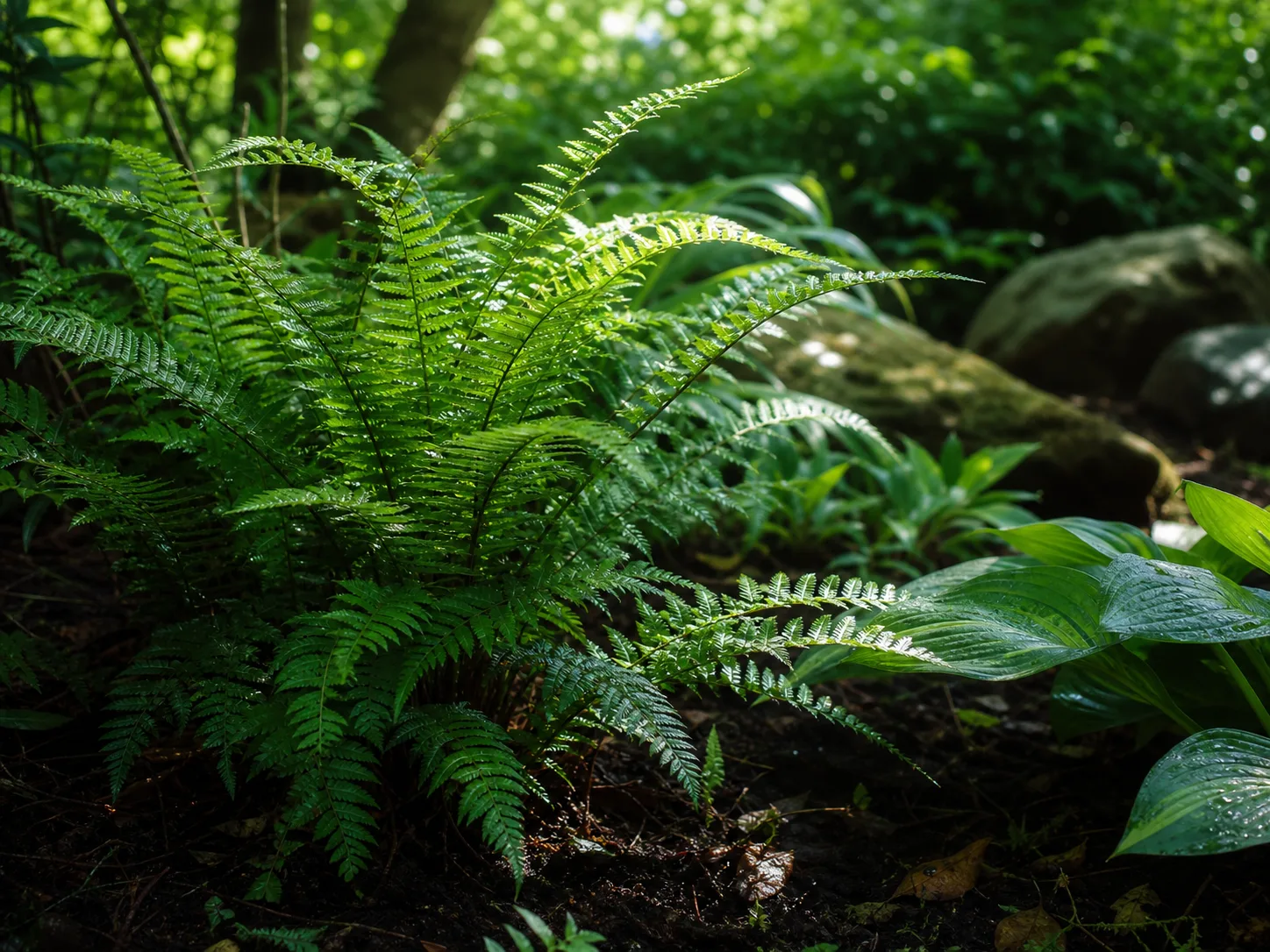
Fern
A shade foliage plant for moist beds without the tropical corm routine.
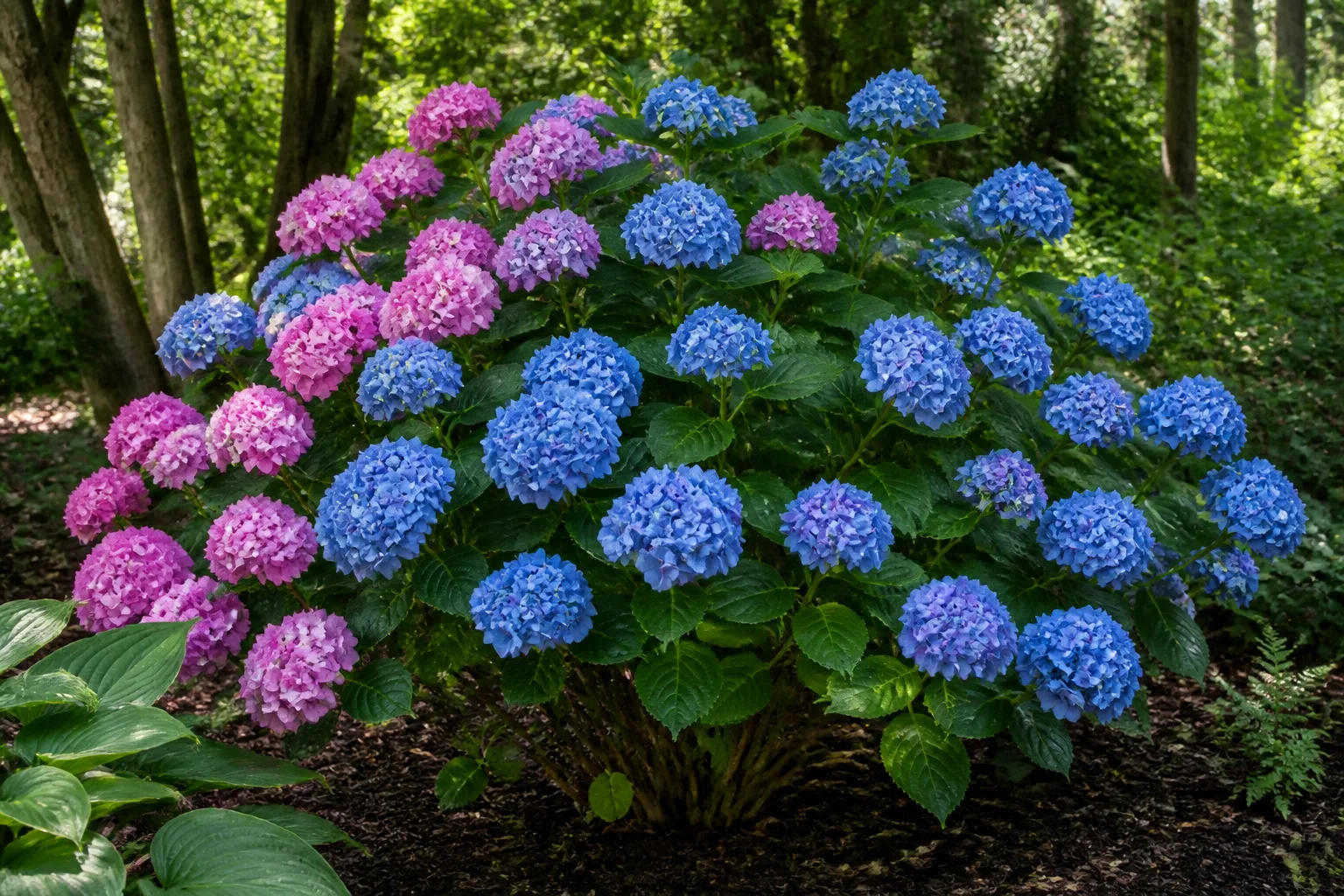
Bigleaf Hydrangea
A large garden presence with flowers instead of corm-grown tropical leaves.
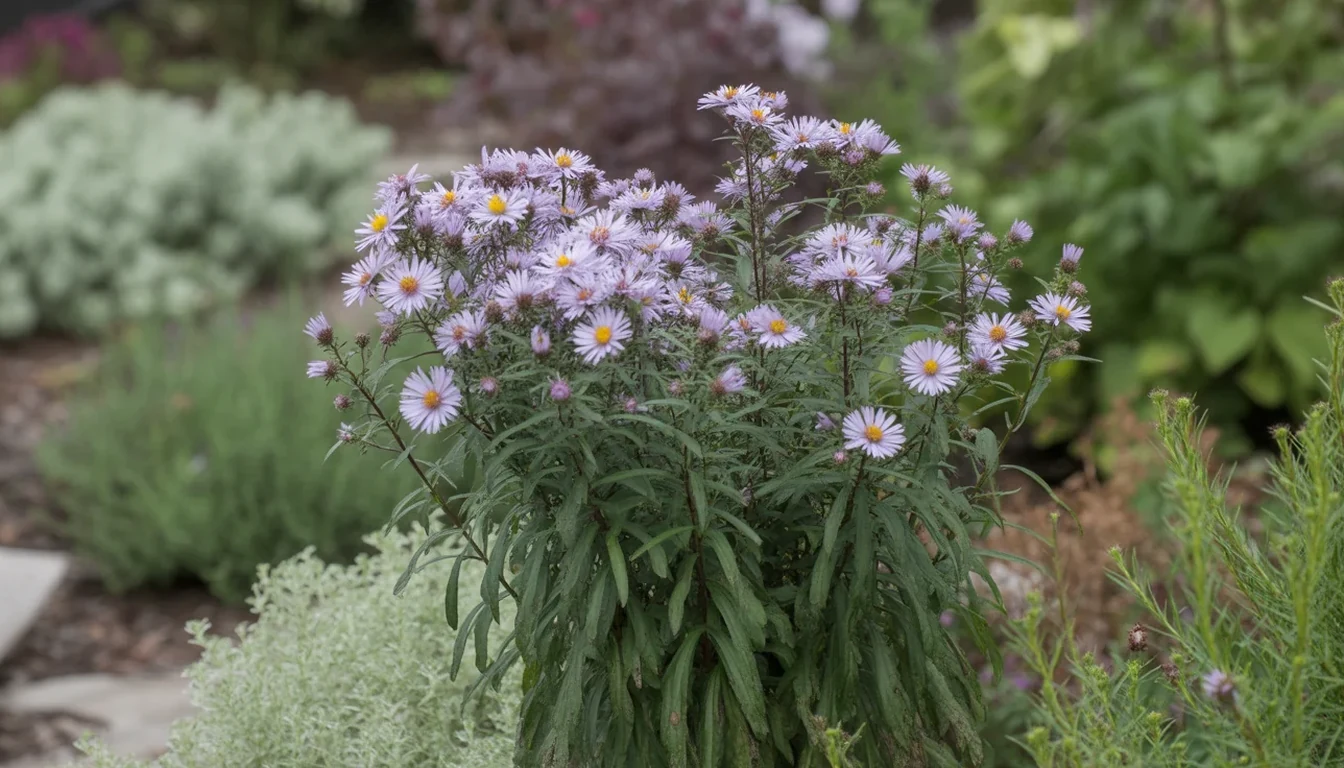
Aster
Gardeners blame the weather when an Aster splits open in September, but the shape was decided in early summer.
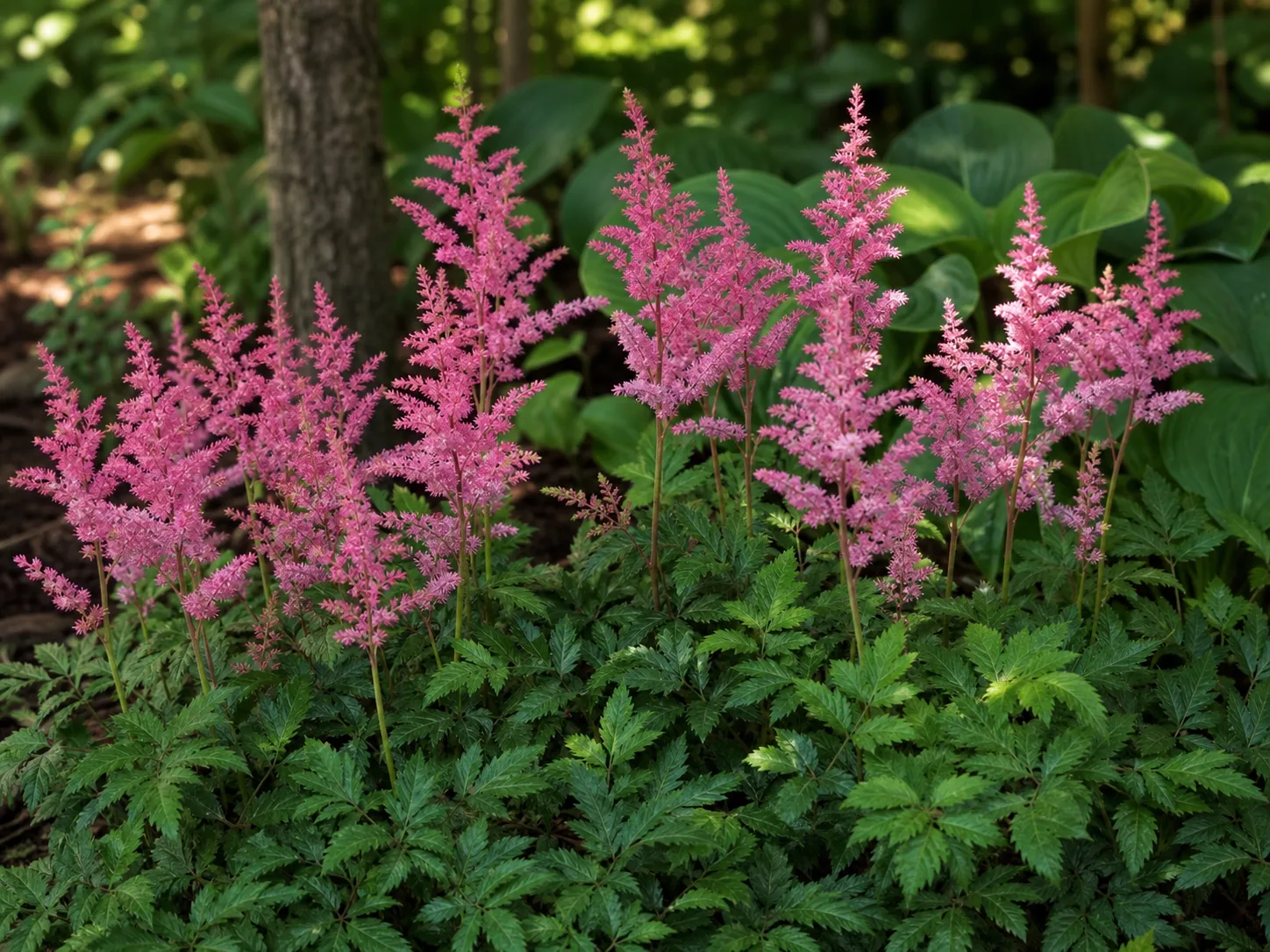
Astilbe
An Astilbe puts real color into a shade bed that would otherwise be green on green, but its shallow roots hold no…
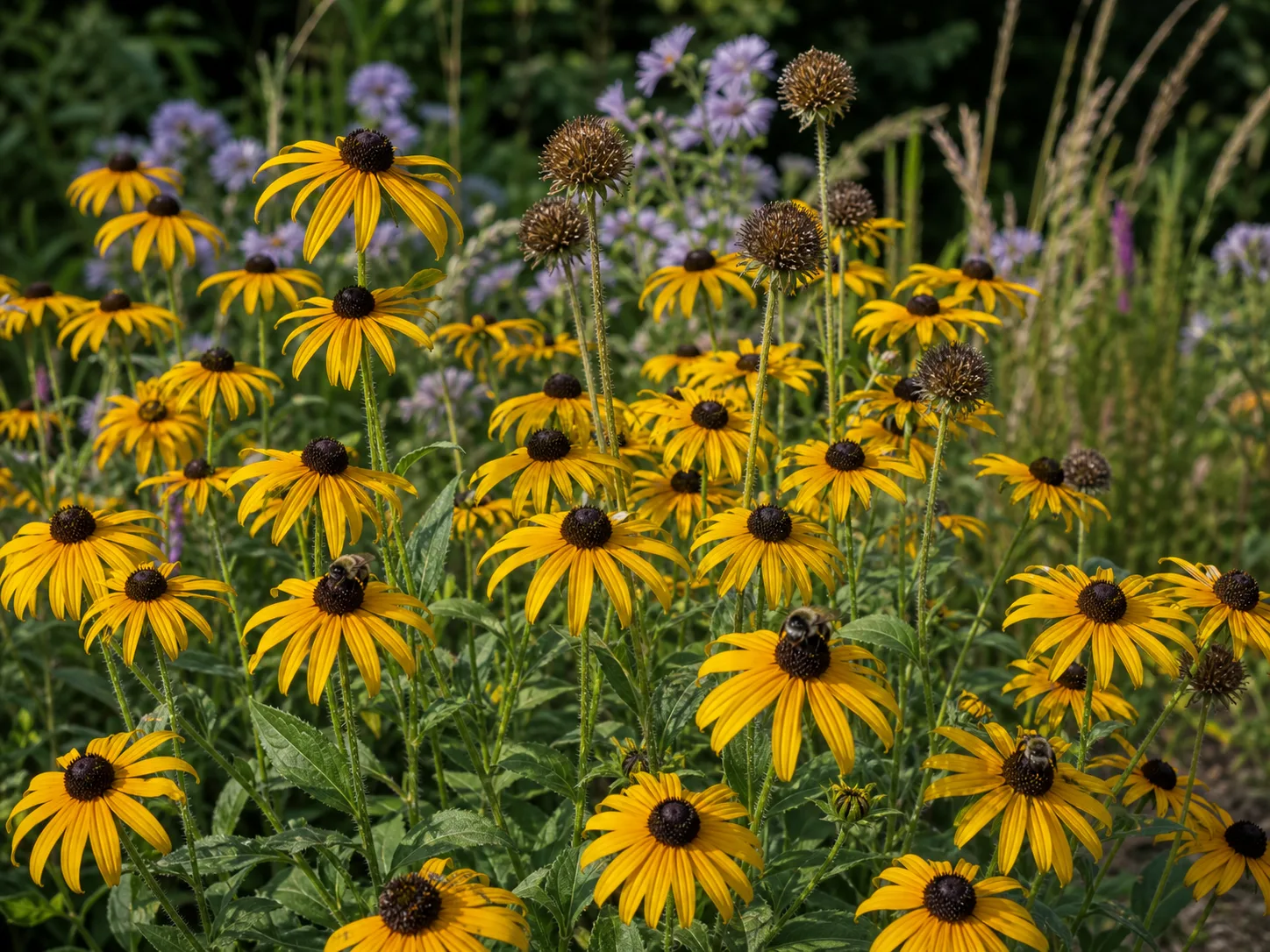
Black-Eyed Susan
A Black-Eyed Susan patch outlives the plants in it. The common garden species lives one to three years and restocks…