
Best Privacy Trees for a Living Screen
The best privacy tree is one that reaches the required height and density without outgrowing the available soil, light, or overhead space.
A narrow evergreen may suit a side yard, while a layered mix of trees and shrubs is safer along a long boundary because one pest or disease is less likely to open the entire screen.
Measure the view from the place where privacy matters, check utilities and property limits, then compare mature height and width rather than the size of the nursery pot. Design for the adult plants and use a fence or temporary panel when you need immediate cover.
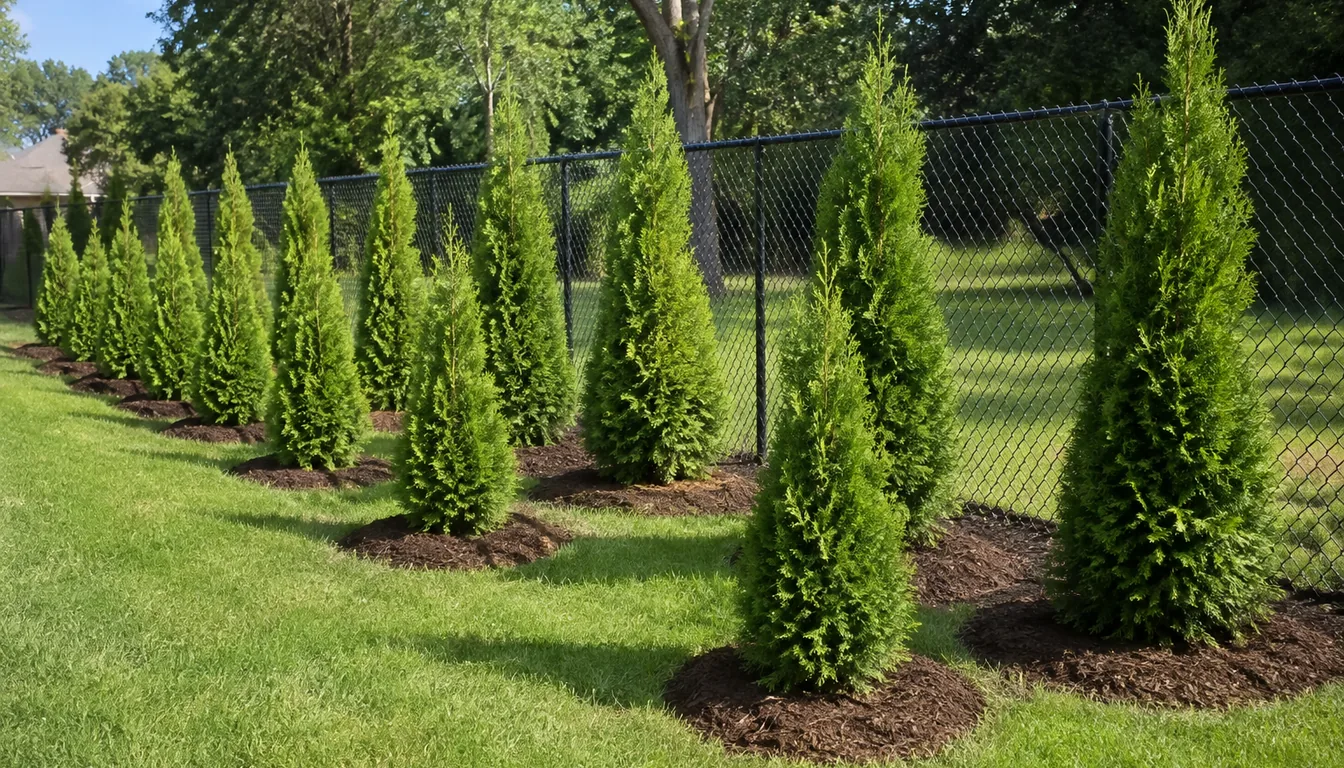
At a glance
What Must the Screen Block, and in Which Seasons?
Map the sight line from the patio chair, kitchen window, pool, or road-facing room where the problem occurs.
A screen that only needs to hide a seated neighbor may be much lower than one intended to block an upstairs window.
Decide whether foliage must remain through winter. Evergreens provide year-round cover, while deciduous trees and shrubs can work for a summer-only patio and may offer flowers, fall color, or a lighter winter edge.
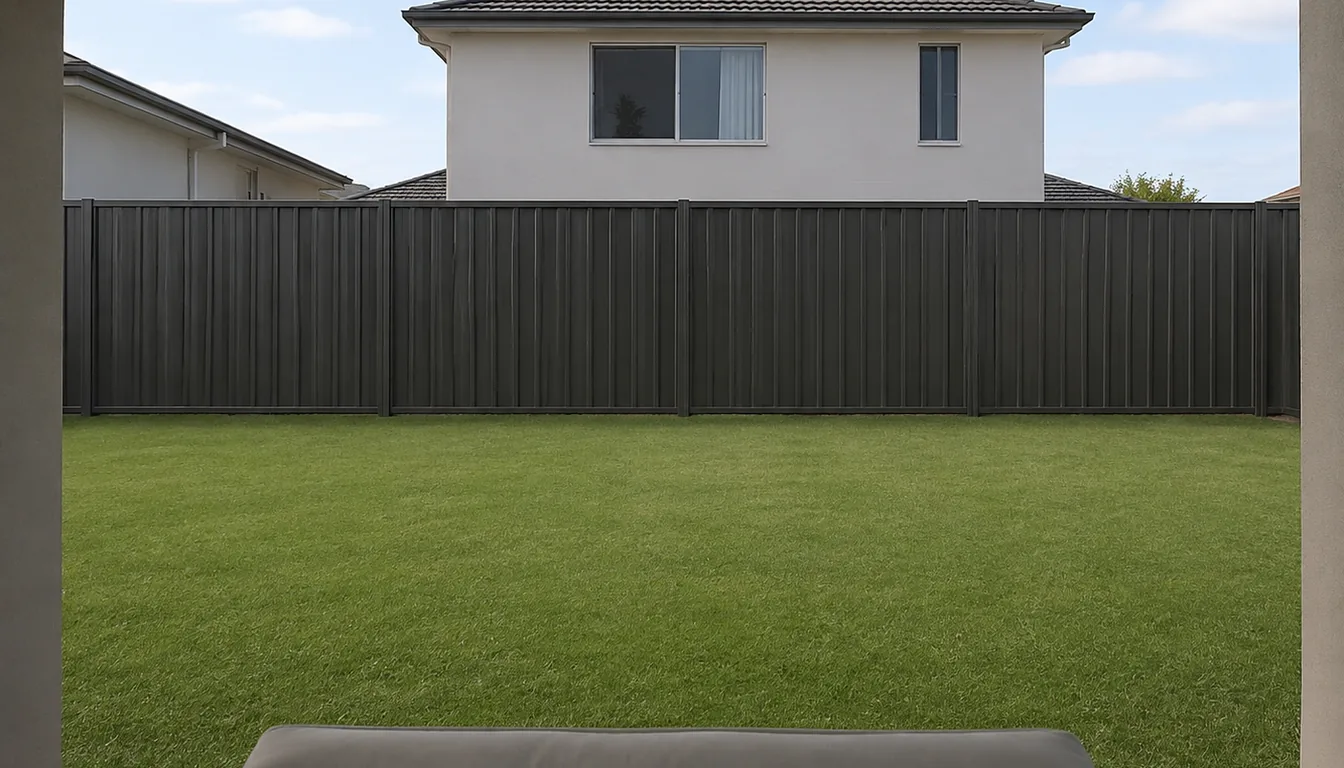
- Mark the exact viewing points on both sides of the boundary
- Measure the length and useful height of the blocked view
- Note winter privacy, glare, headlights, wind, and pedestrian movement
- Record daily sun, drainage, soil test results, and irrigation access
- Locate overhead wires, buried utilities, gates, drains, and easements
- Confirm the property line and any local planting or fence rules
- Choose how much pruning, watering, and leaf cleanup you can maintain
A plant screen can soften a view and reduce glare, but do not promise silence from a thin hedge. Meaningful noise reduction usually needs a deep, dense barrier, and a solid fence or wall may do more in a narrow yard.
If privacy is urgent, Clemson Extension recommends combining a fence with shrubs and trees rather than crowding plants for instant closure. The hard barrier works now while the planting develops at a healthy spacing.
Which Privacy Trees Fit the Site You Actually Have?
Begin with the site, then choose a species or cultivar.
USDA hardiness is only one filter because summer heat, salt, shade, wet soil, drought, deer, and local pest pressure can rule out a plant that survives the average winter minimum.
Mature dimensions must refer to the exact cultivar. Green Giant arborvitae and narrow DeGroot's Spire arborvitae share a genus but occupy very different amounts of ground.
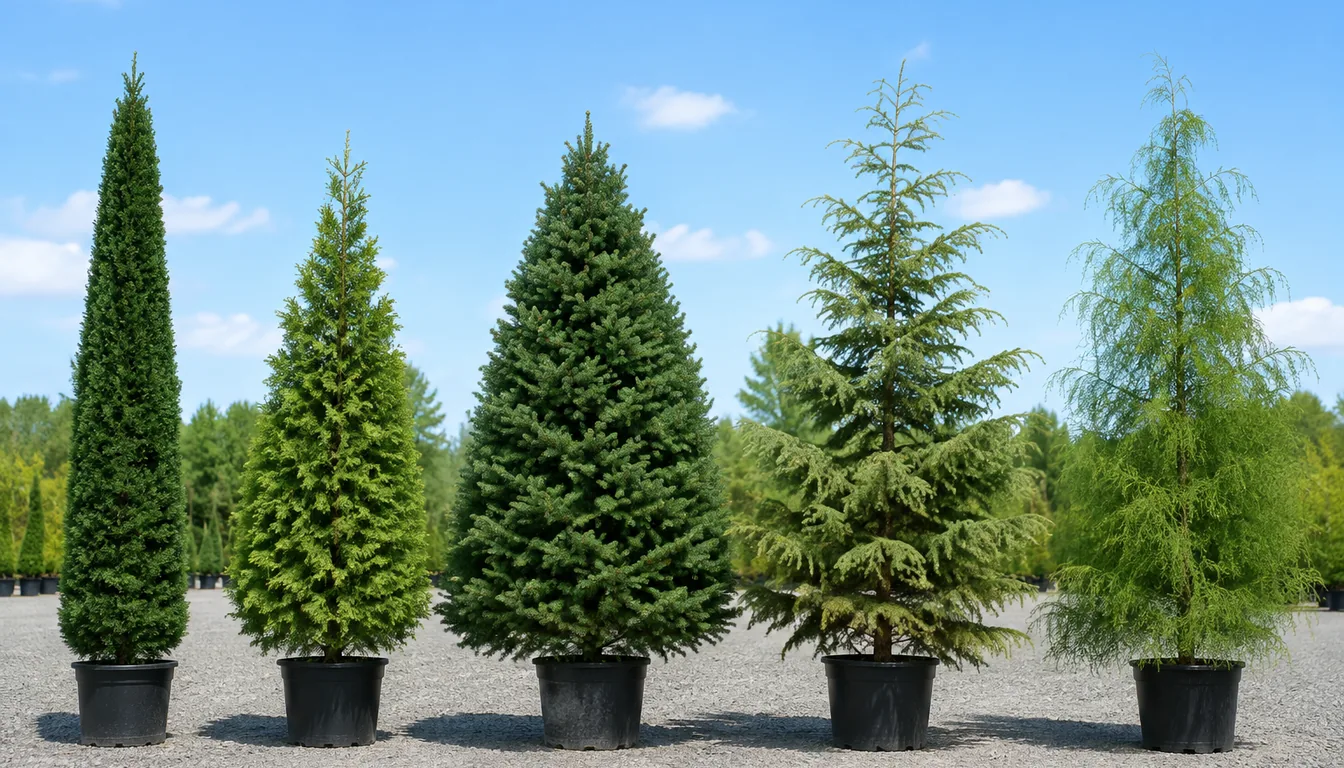
| Screen condition | Plant form to evaluate | Critical check |
|---|---|---|
| Tight sunny side yard | Columnar evergreen | Mature width and overhead wires |
| Part shade | Shade-tolerant broadleaf evergreen | Winter wind and soil drainage |
| Long open boundary | Mixed conifers, broadleaf evergreens, and shrubs | Irrigation and room for layers |
| Seasonal patio view | Deciduous small trees and tall shrubs | Branch density before leaf-out |
| Deer pressure | Locally resistant species mix | Browsing history, not a generic list |
| Wet low ground | Plants rated for wet soil | Water depth and duration after rain |
Use arborvitae, upright juniper, holly, and other familiar names as categories to investigate rather than automatic recommendations. Check the cultivar with a local extension office or reputable nursery before purchasing a row.
Clemson Extension recommends diversity in a mixed screen because a pest, disease, or cultural problem can move easily through a one-species row. A layered planting may combine evergreen structure with deciduous flowering plants without giving up year-round cover.
Arborvitae
A dense year-round screen for a narrow or long boundary
- Mature fit
- Choose the cultivar by mature width and required height
- Main tradeoff
- Deer pressure and two-year watering access can decide success
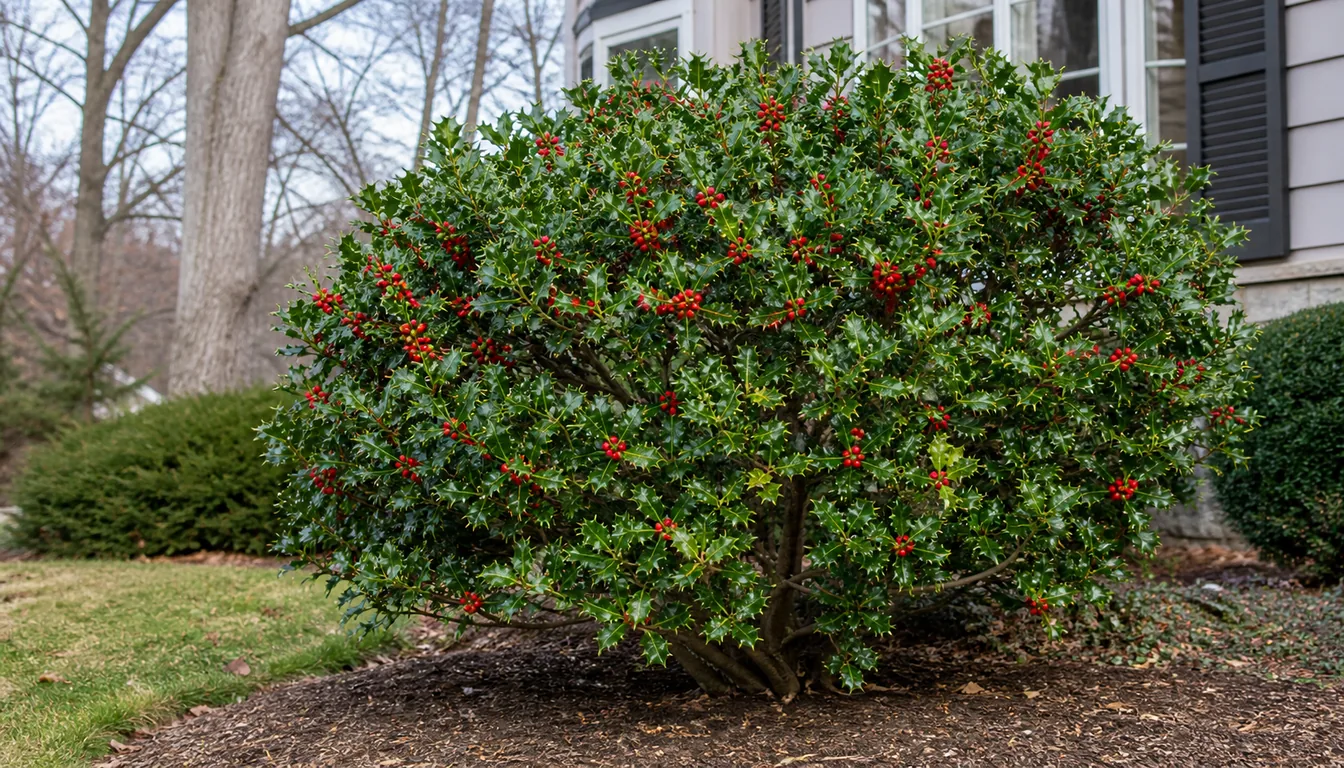
Holly
Broadleaf evergreen privacy with optional winter berries
- Mature fit
- Match cultivar size and plant sex to the available space
- Main tradeoff
- Spiny foliage and pollination needs may not suit every boundary
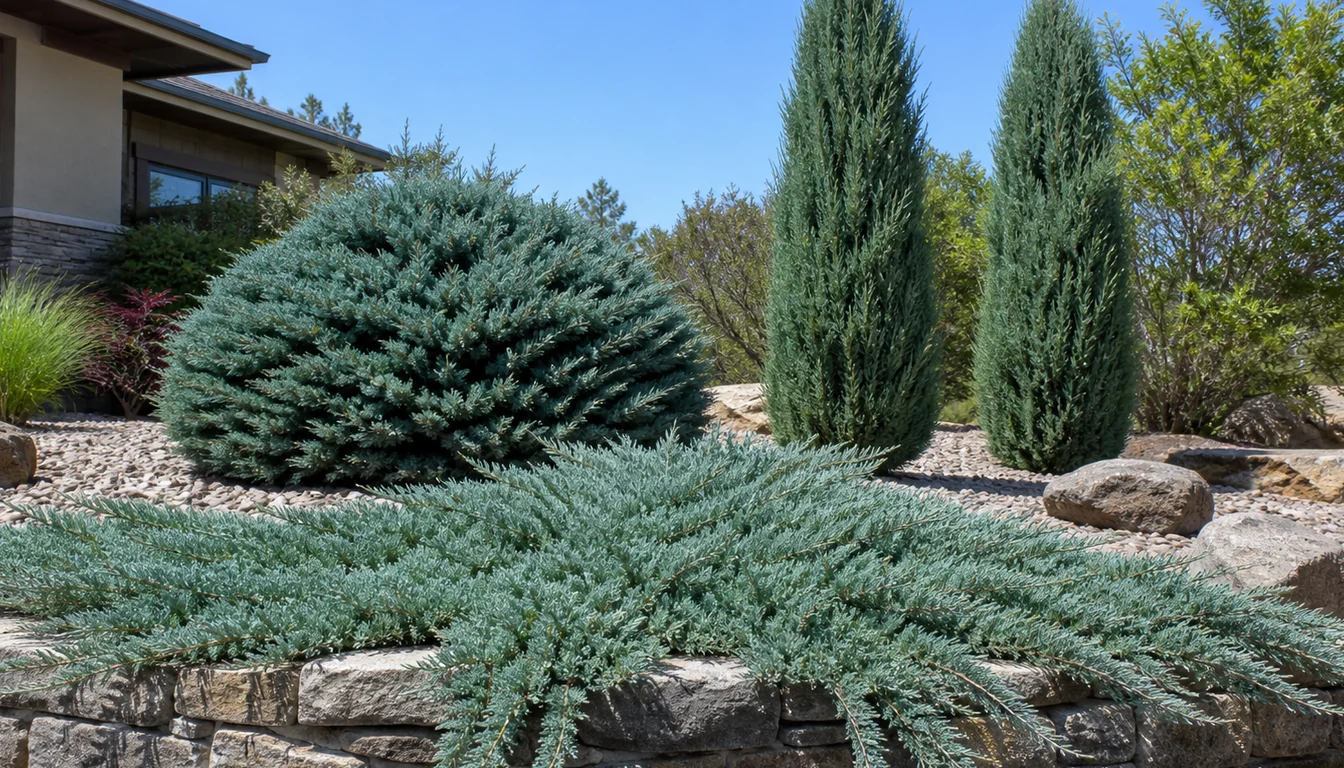
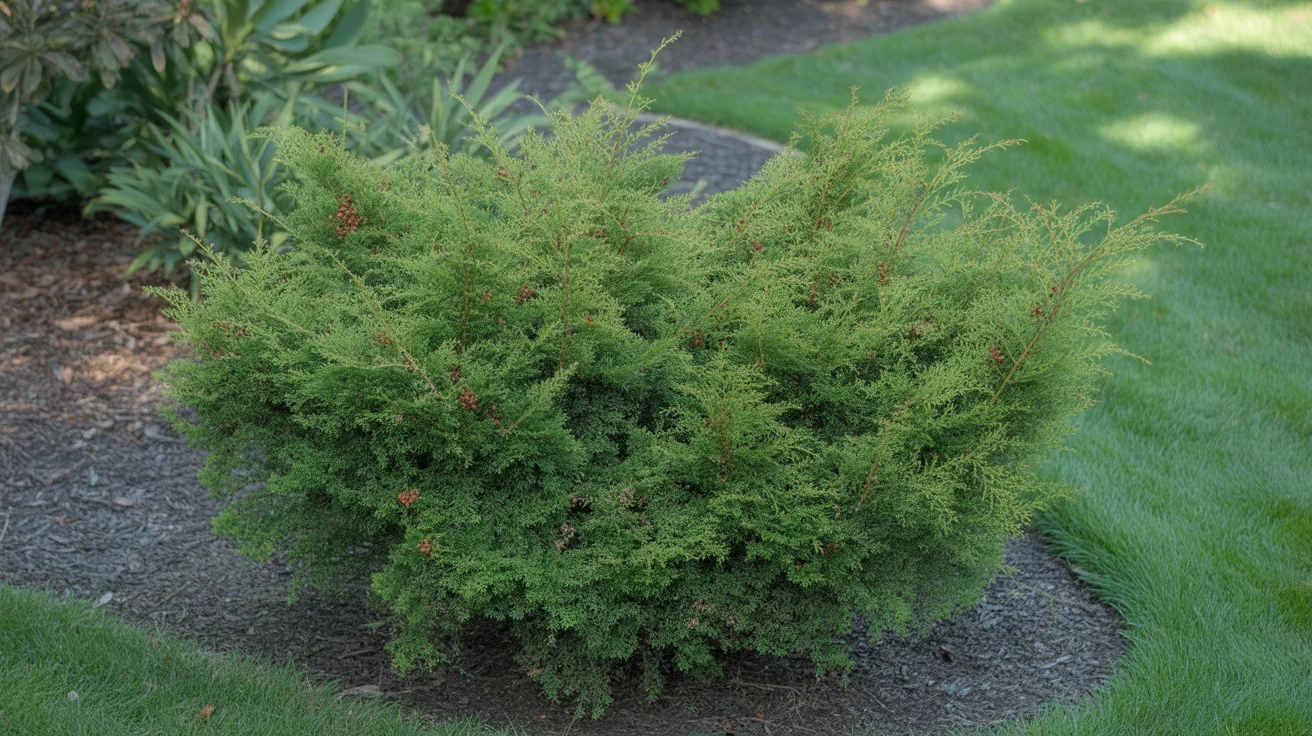
Juniper
Sun-tough evergreen structure where drainage is sharp
- Mature fit
- Forms range from groundcover to tall tree, so the label is decisive
- Main tradeoff
- It will not regrow from cuts made beyond the green foliage
How Far Apart Should Privacy Trees Be Planted?
There is no reliable universal formula such as 60 or 75 percent of mature width.
Clemson's mixed-screen guidance says spacing should follow each plant's size at maturity and warns that close planting causes crowding, shade, poor air circulation, and competition for water and nutrients.
Draw each adult plant as a circle or oval on a scaled plan. Let neighboring forms meet enough to interrupt the view, but keep trunks, foundations, pavement, drainage structures, and maintenance paths outside the mature spread.
- Draw the boundaryAdd the property line, fence, buildings, pavement, utilities, drains, and access gates.
- Plot the blocked viewConnect the viewer to the window, road, or activity you want to hide.
- Add mature plant footprintsUse cultivar width and height, not the container size.
- Offset the gapsPlace a second row or shrub layer behind openings where space allows.
- Walk the maintenance routeKeep access for watering, pruning, replacement, and utility work.
- Check the view at full sizeConfirm the design blocks the target without covering wanted light or space.
Staggered rows close diagonal sight lines without forcing plants into one crowded trench. Clusters can solve one specific view with fewer plants, while a layered screen usually puts taller material behind lower shrubs.
Call 811 or the local utility-location service before digging. Utility marks do not establish a legal property boundary, so use a survey or existing legal markers when ownership is uncertain.
How Do You Plant a Whole Screen Without Root Problems?
Planting depth matters more than adding rich material to every hole.
Set the first major roots or visible root flare at or slightly above the surrounding grade, and never bury the trunk to make container trees appear stable.
Clemson Extension advises a broad hole at least twice the diameter of the root ball with sides that slope toward the existing grade. The hole should be no deeper than the root ball because loosened soil beneath it can settle and pull the flare below grade.
- Remove trunk wrap, labels, and ties that could girdle the plant
- Find the root flare and remove excess soil from the root-ball surface
- Correct circling or matted container roots before backfilling
- Set the root ball on firm undisturbed soil at the proper height
- Backfill mainly with the excavated native soil
- Water the filled hole to settle soil around roots
- Spread mulch in a wide shallow ring without touching bark
- Stake only a root ball that moves in the wind
Do not create an amended pocket in clay or poorly drained ground. A rich isolated hole can change water movement and discourage roots from entering the surrounding soil.
Plant one tree completely before repeating the method down the row, then sight the group from the important viewing points. A gentle irregular line often fits a mixed screen better than forcing every trunk onto one ruler-straight mark.
How Should a New Privacy Screen Be Watered and Fed?
New roots occupy the original root ball first and expand into nearby soil over time.
Water the root ball and the surrounding backfill slowly enough that both become moist, then check below the mulch before repeating.
University of Minnesota Extension gives establishment periods that increase with trunk diameter. A one-inch-caliper tree may take about one and a half years, while a four-inch-caliper tree may need about six years of establishment care.
- Watering target
- Root ball plus surrounding soil
- Decision method
- Check moisture rather than watering by calendar alone
- Best delivery
- Slow ground-level application with even coverage
- Mulch
- Wide and shallow, with bark and trunk flare exposed
- Fertilizer
- Use only for a diagnosed need or soil-test recommendation
- Emitter check
- Confirm every plant receives water as roots spread
A long screen can fail from uneven delivery even when the irrigation runs on schedule. Inspect the far end of a drip line, clogged emitters, low spots, and soil beside both healthy and stressed plants.
Fertilizer cannot correct drought, waterlogging, buried roots, or a cultivar poorly matched to the site. Avoid routine high-nitrogen feeding that pushes soft top growth while the root system is still limited.
Refresh mulch as it decomposes, but keep the trunk exposed. A cone of mulch against bark holds moisture where trunk tissue needs air and hides damage from rodents or decay.
What Pruning Keeps a Screen Dense From the Ground Up?
Privacy plants need foliage low enough to block the view, so pruning must preserve light at the base.
A formal hedge should be slightly wider at the bottom than at the top instead of forming a top-heavy rectangle.
Begin shaping while plants are young, but follow the biology of the species. Some conifers do not produce new shoots from old bare wood, and cutting a central leader can permanently change a naturally pyramidal tree.
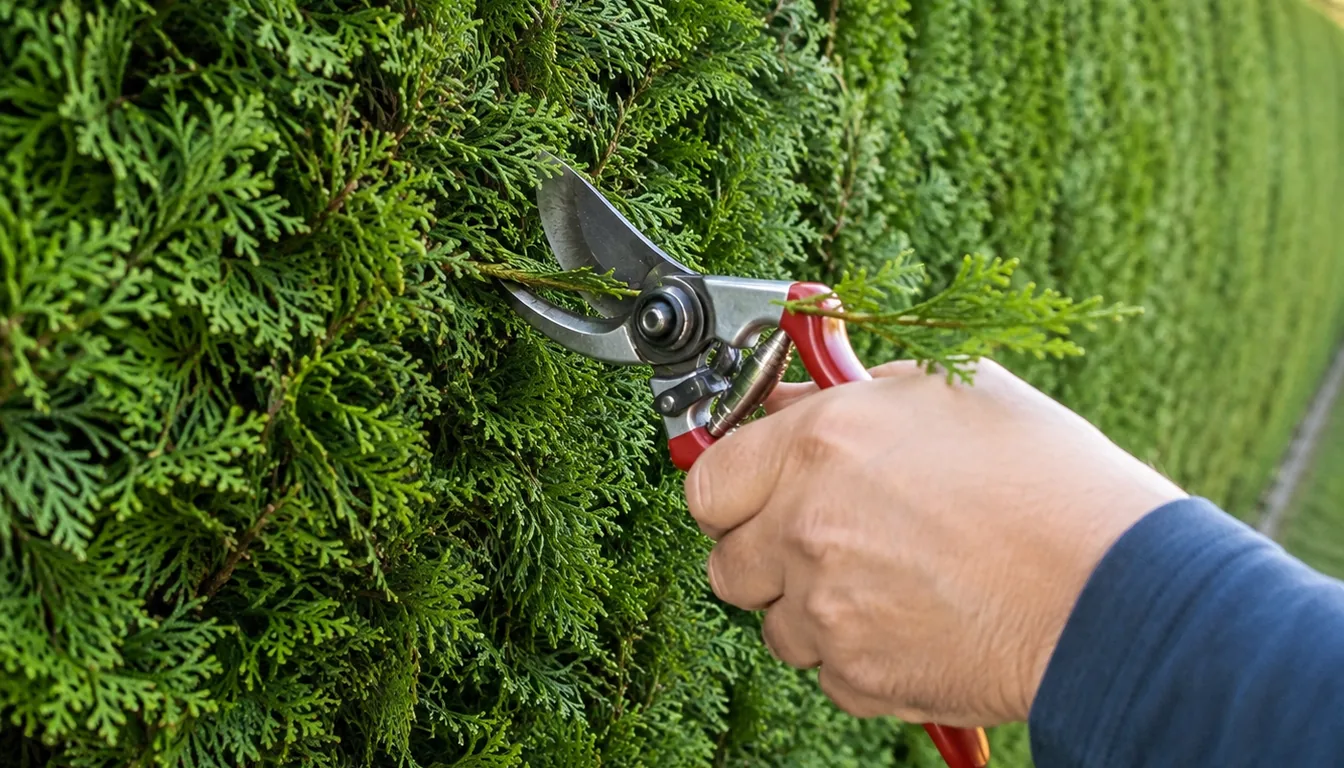
| Planting form | Useful pruning | Main risk |
|---|---|---|
| Formal hedge | Clip green new growth and keep a broad base | Bare shaded lower branches |
| Informal mixed screen | Remove dead, damaged, crossing, or crowded wood | Turning diverse plants into one wall |
| Single-leader evergreen | Correct competing leaders while young | Topping the main leader |
| Spring-flowering shrub | Prune after bloom when needed | Removing next season's flower buds |
| Replacement plant | Give it light and water from neighboring mature plants | Being swallowed by the old screen |
Use hand pruners or loppers sized for the branch and make clean cuts at the proper branch collar. Do not disinfect tools on a fixed ritual when plants are healthy, but clean them when moving away from tissue with a suspected contagious disease.
Shearing only the outer shell can leave dense tips over a shaded hollow interior. Selective cuts that admit light and redirect growth may preserve a thicker screen over time.
Boxwood and other shrubs can form low layers, but their pruning schedule should not be copied onto arborvitae, pine, holly, or flowering trees. Identify the plant before choosing the cut.
How Do Wind, Snow, Heat, and Drainage Change the Plan?
Exposure can differ along one property line. A corner may receive salt spray, reflected pavement heat, roof runoff, or winter wind while the middle of the row remains protected.
Broadleaf evergreens lose water through foliage during sunny winter weather, and frozen or dry soil may not replace it. Wind protection, fall watering where needed, and a suitable species matter more than wrapping every screen by default.
Winter wind
Choose tolerant plants, protect the exposed side while young, and avoid late soft growth.
Heavy snow
Preserve natural branch structure and remove broken limbs with correct cuts.
Reflected heat
Increase soil-volume and irrigation checks near walls and pavement.
Salt exposure
Select salt-tolerant plants and keep deicing spray away from roots and foliage.
Wet ground
Measure how long water stands and use plants adapted to that duration.
Dry slope
Build a wide mulch zone and deliver water across the expanding root area.
Burlap can serve as a wind screen, but material wrapped tightly against foliage may collect snow, rub branches, or trap moisture. Put a barrier on stakes where it breaks the wind without binding the plant.
After storms, inspect root-ball movement before pulling a trunk upright. A newly planted tree that rocks needs the soil and anchoring problem corrected, while a permanently leaning established trunk may require an arborist.
Why Do Gaps, Brown Trees, and Leaning Trunks Appear?
One failed plant is evidence about that location. Compare its root depth, soil moisture, drainage, light, irrigation, and trunk condition with the healthy plants on both sides before buying a replacement.
Brown foliage does not name the cause. Drought, saturated roots, winter injury, salt, spider mites, root damage, buried flares, and several diseases can produce similar color changes.
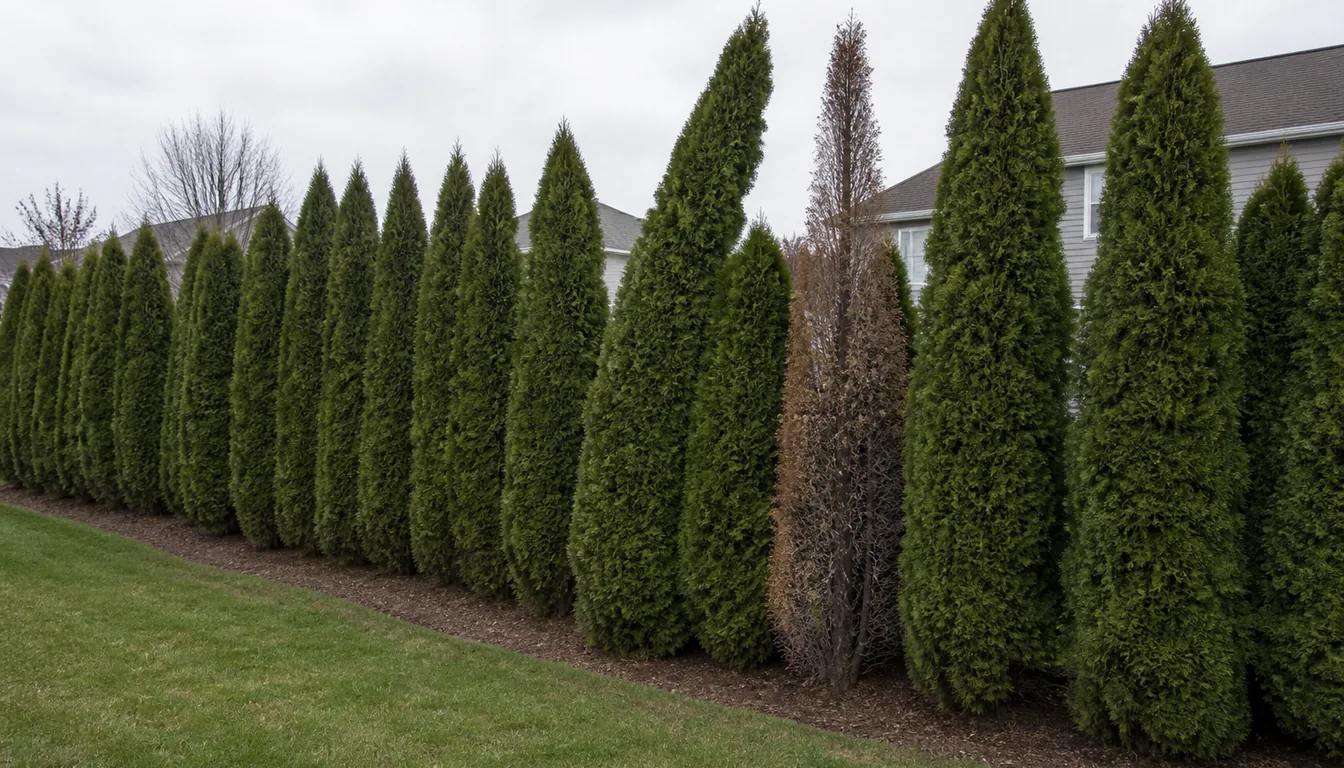
| Pattern | First check | Next decision |
|---|---|---|
| One wet low spot | Soil moisture and odor below mulch | Correct drainage or change the plant |
| Several dry plants at line end | Drip output at each emitter | Repair delivery before replanting |
| Brown outer face after winter | Wind and sun exposure | Protect while young or choose a tougher species |
| Bare lower branches | Shade from top growth or crowding | Adjust pruning; do not expect old wood to refill |
| Loose or leaning new tree | Root-ball movement and planting depth | Reset only while roots are still establishing |
| Repeated same-species losses | Pest, disease, and site match | Replace with a compatible different species |
Expose a buried root flare by removing excess soil and mulch, but do not yank a leaning trunk against anchored roots. Large trees, decay, root damage, and work near buildings call for a certified arborist.
A replacement planted inside a mature screen receives less light, water, and root space than the originals did. Open enough room for the young plant or use a shade-tolerant lower layer rather than repeating the same failure.
Keep mower and string-trimmer damage out of the diagnosis by maintaining a continuous mulch bed. Mechanical wounds around a row can explain decline that appears to be a spreading disease.
How Long Will a Living Screen Take to Provide Privacy?
The nursery's annual growth estimate does not tell you when privacy will arrive. Starting size, transplant stress, local growing season, irrigation, browsing, pruning, and the width of the view all change the result.
Use two milestones instead. First ask when foliage will interrupt the critical sight line, then ask when the plants can maintain that function without crowding or constant correction.
Pros
- A fence or panel provides immediate cover while plants mature
- A staggered mixed screen can close sight lines without one dense row
- Smaller plants often establish with less transplant stress and cost
- Adult-size planning reduces later removals and severe pruning
Cons
- Oversized nursery stock still needs a long establishment period
- Close spacing trades a quick first impression for future competition
- A fast growth label does not guarantee density near the ground
- One-species screens can lose several adjacent plants to the same problem
Inspect the screen at least each spring and after severe weather. Record gaps, irrigation problems, root-flare burial, pest symptoms, and branches moving into utilities or neighboring space.
Temporary shrubs or a fence can leave once the permanent canopy performs the job, but removal should be part of the original plan. Waiting until fillers are trapped between trunks makes the work harder and damages roots.
A strong living screen develops at the pace its site can support. Buying plants that fit the adult space is usually faster in the long run than replacing a crowded row.
Pro Tips
- Dry-fit trees in their spots, still in pots, and check privacy from your deck before you dig.
- Mix two or three species so a single pest or disease cannot wipe out the whole screen.
- Use a long hose or string as a visual guide to keep rows gently curved and natural looking.
- In windy spots, stake only the trees that rock in the hole, and remove stakes after one year.
- Water new privacy trees deeply, then check moisture in the root ball and surrounding soil before watering again.
- Skip heavy fertilizer the first year and focus on water and mulch for strong root growth.
- Prune lightly in early years to encourage branching, not height at all costs.
Frequently Asked Questions
How far apart should privacy trees be planted?
Use the mature width of the exact cultivar and a scaled plan instead of a universal percentage. Leave room for air circulation, roots, access, pavement, utilities, and any second row.
Are mixed privacy screens better than one-species rows?
A mix reduces the chance that one pest, disease, or site problem opens the entire screen. Choose species with compatible site needs and adult sizes rather than mixing plants only for appearance.
What is the fastest way to get backyard privacy?
Use a fence or temporary panel for immediate cover, then plant trees and shrubs at healthy mature spacing. Crowding large plants may look full early but creates competition and removal work later.
Should newly planted privacy trees be fertilized?
Do not fertilize automatically. Correct water, drainage, planting depth, and root problems first, then follow a soil-test or diagnosed nutrient recommendation.
Do all privacy trees need staking?
No. Stake only when the root ball moves or the site is unusually exposed, use flexible ties, and remove the support after the roots can hold the tree.
Sources & References
- Clemson Cooperative Extension, "Planting Trees Correctly"
- University of Minnesota Extension, "Watering Newly Planted Trees and Shrubs"
- NC State Extension, "Pruning Trees and Shrubs"
- University of Illinois Extension, "Selecting Trees for Your Home"
- Clemson Cooperative Extension: Mixed Screens
- Clemson Cooperative Extension: Leyland Cypress Alternatives
- NC State Extension: Woody Ornamentals
- Clemson Cooperative Extension: Pruning Shrubs
Related Guides
Best Butterfly Garden Plants for a Complete Habitat
The best butterfly garden plants do two different jobs. Host plants feed caterpillars, while nectar…
15 min read
Best Fall-Blooming Flowers for Color Near Frost
A bed that still carries flowers in October usually was planned before temperatures fell.
9 min read
Best Fast-Growing Trees for Shade and Privacy
The best fast-growing tree is the one whose mature crown, roots, climate range, and maintenance…
16 min read
Best Fragrant Flowers for Every Yard and Season
The best fragrant flowers depend on climate, light, space, and the hours you use the yard.
15 min read
Best Full-Sun Perennials for Hot, Bright Beds
The best full-sun perennials are the ones that match the bed's soil moisture and drainage, local…
14 min read
Best Ground Cover Plants for Sun, Shade, and Slopes
The best ground cover is a plant that survives the site and performs the job without escaping into…
18 min read