verifiedSource Reviewed
Rose of Sharon: Late-Summer Hibiscus Bloom Without Seedling Mess
Hibiscus syriacus
Family: Malvaceae
wb_sunnyLight
Full sun to light afternoon shade
water_dropWater
Moderate while young; some drought tolerance once established
heightHeight
8-12 ft tall depending on cultivar
publicZone
USDA Zones 5-9, sometimes protected Zone 4
Native Region
East Asia
wb_sunnyUse It for the Late-Summer Gap
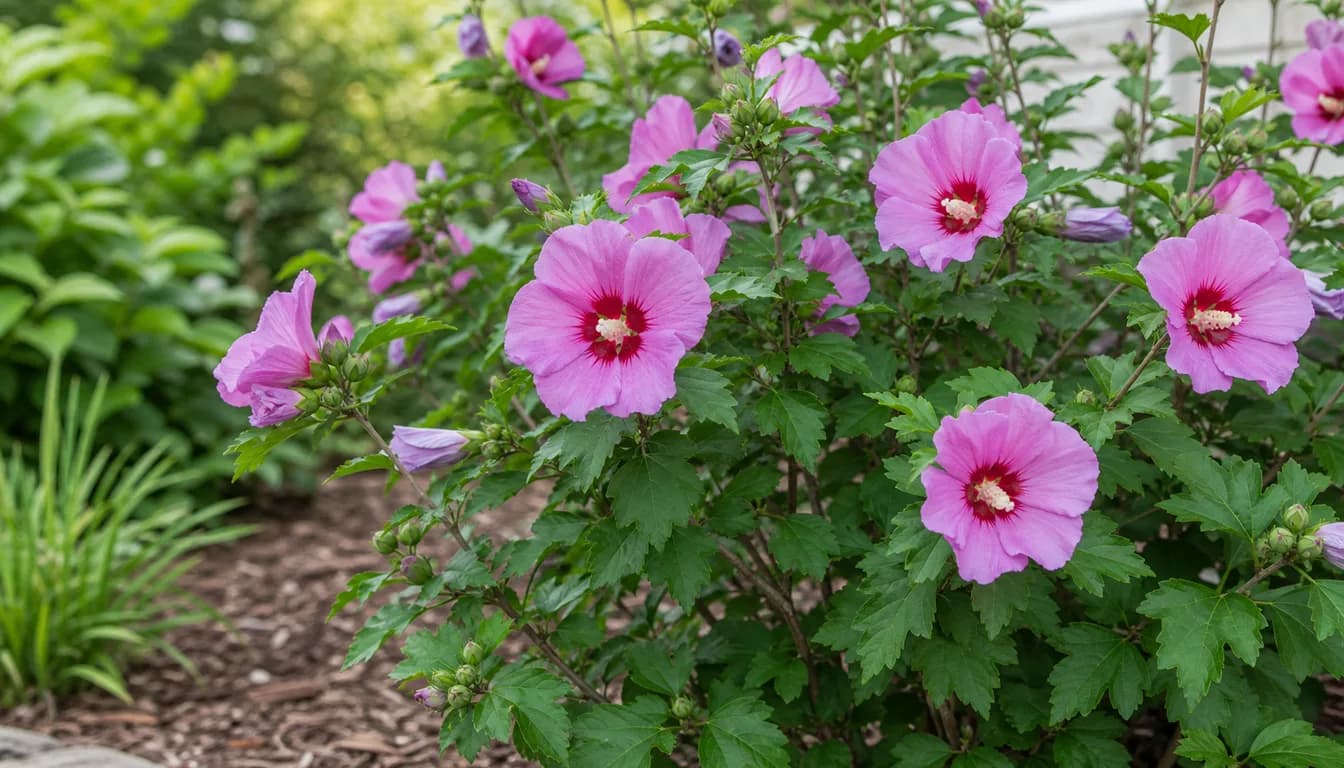
The first answer: Rose of Sharon is valuable because it blooms when many spring shrubs are finished. It is a late-summer woody hibiscus, not a lilac-style spring fragrance shrub.
That timing changes the care. Flower buds form on new growth, so spring pruning and summer sun matter more than protecting old wood.
This page differs from Lilac spring bloom and Rhododendron bud care. Rose of Sharon asks for heat, sun, new shoots, and seed control.
If your garden already has spring color but goes flat in July and August, this shrub can solve that gap without needing tropical hibiscus treatment.
fact_checkChoose for Flower Form and Seed Control
Older Rose of Sharon seedlings can sprout everywhere. Modern sterile or low-seed cultivars are usually the better choice for small yards, especially where nearby open beds already grow loose shrubs such as Spirea.
Single flowers feed pollinators more easily. Double flowers look fuller, but some are less useful for insects and may hold spent petals longer after rain.
Columnar forms fit narrow spaces, while rounded forms need room to spread. Buy for mature width before flower color.
Low seed messSterile or low-seed named cultivars
Pollinator accessSingle or open-centered flowers
Small yardColumnar or compact selections
AvoidUnnamed seedlings where volunteers are already a problem
Guide — See AlsoAir Purifying Plants for Cleaner Indoor AirLearn how to pick, place, and care for air purifying plants so they help your indoor air instead of just looking pretty.
chevron_rightlight_modeFull Sun Makes the Buds Count
Heavy bloom needs 6+ hours of direct sun. In shade, Rose of Sharon grows tall and leafy but sets fewer flowers.
Light afternoon shade can help in very hot sites, but too much shade stretches the stems and delays bloom.
The shrub pairs well with summer bloomers such as Crepe Myrtle where climate overlaps. Both need sun, but Rose of Sharon handles colder winters better.
- check_circleUse full sun for strongest bud count.
- check_circleGive light afternoon shade only in hot reflected sites.
- check_circleAvoid planting under dense trees where bloom drops.
Email Updates
Join the KnowTheYard update list
Zone-specific advice, seasonal reminders, and new plant guides — no filler.
water_dropWater Young Plants, Then Avoid Overfeeding
Young Rose of Sharon plants need steady water while roots establish. Established shrubs can handle short dry spells, but drought during bud development reduces flower quality.
Average well-drained soil is enough. Rich feeding pushes leafy growth and can make the shrub larger without giving better bloom.
Water deeply during dry summer stretches, especially in the first two years. Mulch helps keep the root zone even without turning the soil soggy.
If the same bed holds hydrangea, remember that Rose of Sharon usually needs less water once established. Do not water both on the hydrangea’s wilt signal.
Guide — See AlsoBest Herbs to Grow Indoors for Real Harvests, Not Spindly PotsChoose indoor herbs that can actually produce in your light, temperature, and container setup, then match each one to th
chevron_right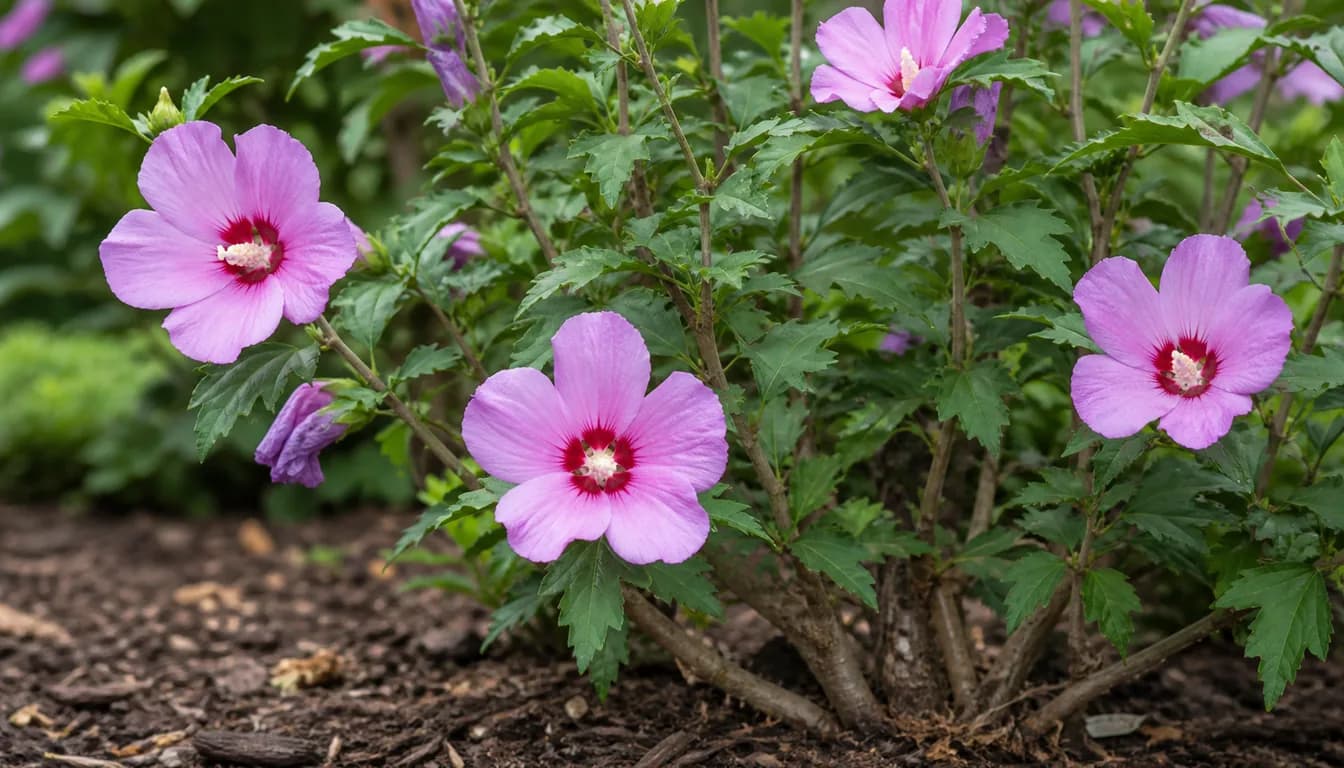
content_cutPrune for New Wood in Late Winter
Rose of Sharon blooms on new wood, so late-winter or early-spring pruning fits the bloom cycle. You are not cutting off old-wood flower buds the way you would on Forsythia.
Remove dead, crossing, or inward stems first. Then shorten long stems if you want fewer, larger flowers and a tidier outline.
Hard annual pruning is not required. Too much cutting can create tall water shoots and a stiff shape.
For tree-form plants, keep one clean trunk and remove low suckers early. Waiting until they thicken creates larger wounds.
Best pruning windowLate winter to early spring before growth starts
Bloom woodCurrent-season shoots
Main goalOpen shape and strong new stems
AvoidRepeated hard shearing into a tight ball
grassControl Seedlings Before They Become Chores
Seedlings are the complaint that turns Rose of Sharon from loved to resented. Catching them small is easy; ignoring them for two seasons is not.
Low-seed cultivars reduce the problem, but they do not replace observation. Check mulch edges, fence lines, and open soil under the shrub.
Deadheading can reduce seed pods on smaller plants, though it is unrealistic on tall shrubs. In small yards, cultivar choice matters more than a deadheading promise.
lightbulbSeedling rule
Pull volunteers while they are pencil-thin or smaller. Once a seedling forms woody roots, removal takes tools and disturbs nearby plants.
Guide — See AlsoBest Indoor Plants for Every Room and Light LevelA practical guide to choosing the best indoor plants for your home, covering beginner-friendly picks, low light champion
chevron_rightpest_controlJapanese Beetles and Bud Drop Need Different Reads
Japanese beetles often chew Rose of Sharon flowers and leaves during bloom season. The damage is visible, but a healthy shrub usually keeps growing.
Aphids can cluster on tender buds, while leaf spot increases where airflow is poor. Bud drop can come from drought, heat stress, or heavy insect feeding.
Handpick beetles early in the day or use targeted controls when pressure is high. Avoid broad spraying while pollinators are working open flowers.
If beetles are a recurring garden problem, compare timing with Japanese beetle planting advice and choose open flower forms that still serve pollinators.
pest_controlChewed petals
Check Japanese beetles during active bloom.
pest_controlSticky buds
Look for aphids on new growth.
pest_controlBud drop
Check drought and heat before blaming disease.
pest_controlLeaf spots
Improve spacing and avoid wet foliage at night.
yardPlace the Flowers Where Summer Needs Height
Rose of Sharon is a vertical summer accent. Use it where a bed needs height after spring shrubs finish and before fall color starts; Viburnum can carry the earlier shrub mass while this plant waits for heat.
It can work behind perennials, near fences, or as a loose flowering screen. Keep it away from tiny foundation strips unless you choose a compact or columnar cultivar.
It is not known for the same life-safety risk as Oleander, but pets and children still should not eat ornamental shrubs. Use common-sense placement and clean up pruning debris.
For a softer mixed border, pair it with Salvia or late perennials so the hibiscus flowers do not stand alone in a bare summer bed.
pest_controlBest view
Place it where late flowers are seen from a patio, fence line, or kitchen window.
pest_controlBad fit
Avoid tiny entry beds where seedlings, width, or hard pruning would become a yearly chore.
pest_controlSoft landing
Underplant with sturdy perennials so fallen petals and seed checks do not leave bare soil.
Guide — See AlsoFragrant Flowers for Every Yard and SeasonStep-by-step guide to choosing, placing, and caring for fragrant flowers so your yard smells good from spring through fa
chevron_righteco
Keep Exploring
Related Plants
 Shrubs
Holly
Holly can give evergreen structure and winter berries, but berries are not automatic. Choose the right species, plant a compatible male nearby when needed,
 Shrubs
Lilac
Lilac is a cold-climate fragrance shrub, not a generic flowering hedge. Give it full sun, alkaline-to-neutral well-drained soil, and post-bloom renewal prun
 Shrubs
Oleander
Oleander is a tough flowering shrub for hot, dry sites, but safety owns the decision. Every part is highly toxic, so it belongs only where children, pets, l
quiz
Frequently Asked Questions
When does Rose of Sharon bloom?expand_more
Rose of Sharon blooms in summer to early fall, often after many spring shrubs are finished. It is useful for filling the late-season color gap.
Should I prune Rose of Sharon in spring?expand_more
Yes. Rose of Sharon blooms on new wood, so late winter or early spring pruning fits its bloom cycle.
How do I stop Rose of Sharon seedlings?expand_more
Choose low-seed cultivars, remove seed pods where practical, and pull seedlings while they are still small.
Why are bugs eating my Rose of Sharon flowers?expand_more
Japanese beetles commonly chew Rose of Sharon flowers and leaves. Handpick early or use targeted controls while protecting pollinators.
menu_book
Sources & References
- 1.Hibiscus syriacus, Rose of Sharonopen_in_new
- 2.Rose-of-Sharon for the Home Landscapeopen_in_new
- 3.Hibiscus syriacus, Rose-of-Sharon Profileopen_in_new
- 4.Hibiscus syriacus, Missouri Botanical Garden Plant Finderopen_in_new
- 5.Rose of Sharon, Clemson Cooperative Extensionopen_in_new
- 6.Shrubs for Summer and Fall Flowering, Penn State Extensionopen_in_new
- 7.Japanese Beetles in the Urban Landscape, University of Minnesota Extensionopen_in_new