
Natural Pest Control for Gardens That Actually Works
Bugs chewing holes in your vegetables and slime trails across the mulch usually push people toward harsh sprays. We can do better. Natural pest control starts with healthier plants, smart layout, and a few simple barriers and baits, not mystery chemicals.
The practical steps are prevention, scouting, and targeted treatments that spare bees and soil life. We will talk about tactics that work in backyard kitchen beds. The same approach also works for containers of basil and beds of front-yard roses. You should finish with a clear sense of which pest issues need action and which ones are safe to watch.
Start With Prevention, Not Sprays
Most pest problems blow up because plants are stressed and easy targets. Tight spacing, constant moisture, and heavy fertilizer create soft growth that aphids, mites, and beetles love.
Healthy soil is your first pest control tool. Mix in compost every year, rotate where you grow leafy crops, and avoid overdoing nitrogen on beds of backyard tomatoes. Do the same for beds of sweet peppers. Fast, tender growth invites sucking insects and disease.
Diversity slows pests down; mix flowers and herbs into beds of edible plants so a single pest species does not find a giant block of its favorite food. A row of marigolds is not magic, but mixed planting makes it harder for pests to spread.
Water habits matter too. Wet leaves overnight invite slugs and fungal issues, which then attract more pests. Water early in the day, aim for the soil, and think in terms of deep, infrequent soakings.
- Soil health focus: Add 1 to 2 inches of compost to beds every spring.
- Rotate crops: Move families like tomato, pepper, and eggplant transplants yearly.
- Mix plant types: Combine flowers, herbs, and vegetables in every bed.
- Tidy stressors: Remove yellowed leaves and weak plants quickly.
- Adjust watering: Keep foliage dry overnight whenever you can.
That small routine usually prevents the outbreaks people later blame on one bad season.
Overfeeding with high-nitrogen fertilizer can cause more pest issues than it solves.
That is why steady prevention usually beats a bigger spray shelf.
A stressed plant is a pest magnet long before you ever see damage.
Scout Weekly So Problems Stay Small
Catching pests early is worth more than any spray. A five-minute walk through the beds once or twice a week lets you spot issues while they still fit on one leaf.
Check the undersides of leaves on favorites like garden roses and hydrangea shrubs. Do the same on tender crops such as young spinach. You are looking for clusters of soft-bodied insects, tiny webs, stippling, or distorted new growth.
Use your hands first. Knock beetles into a bowl of soapy water, pinch off leaves loaded with aphids, and squash small caterpillars. On potted plants and indoor foliage, wiping leaves with a damp cloth removes many pests before they settle.
For soil-dwelling pests like fungus gnats, sticky traps help you see what is flying around. Yellow cards near seedling trays or indoor pots will quickly show whether you need extra gnat control beyond letting soil dry out.
- Pick a routine: Walk the garden the same day each week.
- Carry tools: Take pruning snips, a bucket, and gloves.
- Focus spots: Inspect new growth and leaf undersides closely.
- Use traps: Sticky cards reveal flying pests early.
- Record finds: A simple notebook helps track repeat problems.
This habit matters because most outbreaks still start on one stressed plant or one neglected corner.
Many outbreaks start on just one stressed plant, so removing that plant can protect the rest.
Invite Beneficial Insects and Predators
Lady beetles, lacewings, parasitic wasps, and birds do free pest control if we give them food and shelter. Heavy broad-spectrum sprays wipe them out and leave you babysitting the garden alone.
Plant nectar-rich flowers among crops. Clumps of alyssum, cosmos, and salvia clumps support tiny wasps that quietly parasitize caterpillars and aphids. Umbel flowers like dill and blooming parsley are magnets for these helpers.
Some herbs are double duty. A hedge of lavender near blueberry bushes draws pollinators close to the crop. Nearby woody rosemary and backyard apples add scent, bloom timing, and structure. A mixed border around fruit trees works better than bare mulch.
Avoid yard-wide insecticide use. Spot treating with gentle options when pests truly threaten a harvest protects beneficial populations. Leave a few aphids and you keep lady beetles from moving on.
- Provide blooms: Keep flowers in the garden from early spring to frost.
- Layer structure: Mix groundcovers, mid-height perennials, and shrubs.
- Skip clean sweeps: Leave some leaf litter and hollow stems for overwintering.
- Limit spraying: Treat only problem spots, never whole beds.
That balance keeps predators fed without letting one pest run the whole bed.
If you never see a few pests, you probably do not have enough beneficial insects either.
Use Physical Barriers Before Sprays
Thin fabric and simple fencing solve far more pest problems than most bottled products. Barriers keep pests from reaching plants, so you treat the cause instead of chasing damage.
Floating row cover over hoops blocks cabbage moths, beetles, and leaf miners from laying eggs. Use it on beds of cabbage, broccoli heads, and carrot rows right after planting. Secure the edges well so pests cannot crawl under.
Fine mesh bags over ripening fruit protect clusters on grape vines and trees like pear trees from birds and wasps. Hardware cloth or strong wire fencing around beds blocks rabbits, while taller fencing helps against deer.
Slug and snail problems often drop when you switch to rough mulch and add simple traps. Crushed eggshells, coarse bark, and copper tape around raised beds make crossings unpleasant.
- Row cover weight: Choose lightweight cover that lets in light and rain.
- Secure edges: Bury or pin down all sides firmly.
- Size fencing right: Use 2 by 4 inch openings or smaller near ground level.
- Protect fruit: Bag clusters or individual fruits as they color.
- Slug traps: Sink shallow dishes of beer or yeast water at soil level.
That barrier-first habit is what keeps sprays as a backup instead of your weekly routine.
Never leave row cover on insect-pollinated crops once they flower, or you block pollinators along with pests.
Match Controls to Each Pest, Not Just the Damage
Chewed leaves, yellowing, or sticky residue can come from several pests that need different controls. Spraying random "organic" products wastes money and still knocks back your helpful insects.
Lock in a habit of identifying the actual pest before you act. Flip leaves over, inspect stems at night with a flashlight, and look for frass, webbing, or trails.
Soft bodied insects like aphids and young caterpillars respond well to soaps, oils, and handpicking. Hard shelled beetles or borers usually need traps, exclusion, or pruning out damaged wood.
Use a simple flow: identify, choose the least disruptive option, then spot treat. Most natural pest control failures come from skipping the ID step and spraying everything in sight.
- Sap suckers: Aphids, whiteflies, spider mites, leafhoppers
- Leaf chewers: Caterpillars, beetles, grasshoppers
- Root feeders: Grubs, root maggots, wireworms
- Borers and miners: Insects tunneling inside stems, trunks, or leaves
That simple sort keeps you from using a soft-bodied pest spray on a problem that needs exclusion or pruning instead.
If you are not sure which pest you have, treat only a small section first and watch for 3 to 5 days.
Aphids clustered on tender tips of backyard roses rinse off with a hose blast and one or two rounds of insecticidal soap.
Squash vine borer inside zucchini vines calls for surgery or replanting, while the same soap would barely touch them.
Use Organic Sprays Strategically, Not Weekly
Even safe products like neem or insecticidal soap can burn leaves or hit bees if you use them wrong. Treat them as tools for hot spots, not as a standing weekly chore.
Time matters more than brand. Spray in the early morning or late evening when bees are not flying and temperatures stay below 85°F.
Coverage matters too. Soap and oil sprays kill by contact, so you must hit the insect directly, including leaf undersides on plants like indeterminate tomatoes. A quick mist from above is basically decorative.
Keep the target narrow and the timing calm; that does more for safety than adding a second product too soon.
Never drench open blooms with any spray, even organic ones. Aim for foliage and stems, not flowers.
Here is a simple rotation that keeps pests guessing while protecting beneficials:
- Round 1: Strong hose blast to knock pests off foliage
- Round 2: Insecticidal soap on remaining soft bodied clusters
- Round 3: Light horticultural oil or neem on foliage, not flowers
- Round 4: Take a week off and reassess damage and pest levels
On thick leaved crops like sweet peppers or eggplant transplants, test any spray on a few leaves first. Wait 24 hours to check for spotting or scorch before treating the whole row.
If a pest returns hard after two careful treatments, step back and look at plant stress, soil health, and nearby weeds instead of just reaching for stronger products.
Time Controls With Pest Life Cycles and Seasons
Most garden pests show up on a schedule. You see the adult beetle in June because you had grubs in the soil earlier. If you line up controls with that calendar, you break the cycle with far less work.
Write down first sightings in a notebook for one season. Next year you will know that cucumber beetles hit your trellised cucumbers around the same week your lilacs bloom.
Beneficial releases like lady beetles or lacewings work best just as pests appear, not after the plants are dripping with honeydew. The same goes for row covers over brassica seedlings before cabbage moths start fluttering.
- Early spring: Check soil for grubs, remove old plant debris, install new row cover
- Late spring: Net berries, scout for aphids and flea beetles twice weekly
- Summer: Monitor caterpillars, handpick beetles, add a second mulch layer
- Fall: Remove diseased crops, solarize small beds, turn compost frequently
A calendar reminder beats a spray bottle because it puts you in front of the problem instead of behind it.
A calendar reminder beats a spray bottle every time. Set phone alerts for the two or three worst pests in your yard.
Zone affects timing, not the basic pattern. Gardeners in Zone 5 may fight squash bugs on sprawling pumpkins in July, while Zone 9 growers deal with them months earlier.
If you are not sure about timing, your local extension or a neighbor with healthy apple trees can usually pinpoint when key pests show up in your area.
Fix Underlying Stress So Plants Can Defend Themselves
Healthy plants tolerate some feeding without collapsing. Stressed plants become bug magnets, especially in hot summers and compacted beds.
If the same bed gets hammered every year, do a stress check before blaming the pests. Look at soil texture, water patterns, and plant crowding.
Over fertilized growth on sweet corn blocks or heavy blooming hydrangeas can attract aphids and leafhoppers. On the flip side, hungry plants struggle to outgrow minor chewing.
Aim for steady nutrition using compost and light applications of balanced organic fertilizer rather than big synthetic hits.
- Soil health: Add 1 to 2 inches of compost yearly, avoid constant tilling
- Watering: Deep soak once or twice weekly instead of daily sprinkling
- Spacing: Give air flow, especially around disease prone roses
- Diversity: Mix in herbs and flowers to disrupt pest "buffets"
That is usually the line between a bed that shrugs off feeding and one that keeps calling for rescue sprays.
Thin crowded plants instead of keeping every seedling. Extra airflow often knocks down mildew and soft bodied pests better than any spray.
Rotate crops in your food beds, even if space is tight. Following tomato vines with nitrogen fixing beans or quick greens cuts disease carryover and evens out nutrition.
Container plants, from patio blueberries to potted lavender, dry out and stress faster than in ground beds. Check their moisture and repot schedule before blaming every yellow leaf on insects.
If your garden constantly fights spider mites, look at your watering style and mulch depth, then review advice in the deep versus frequent watering guide to dial things in.
Common Natural Pest Control Mistakes To Avoid
Natural products and tricks get marketed as harmless, but they can still backfire. A few common habits undo a lot of the good work you do with scouting and habitat.
Overusing diatomaceous earth is a big one. A light dust at soil level around slug prone shade hostas might help, but coating every bloom will slice up bees and predatory beetles too.
Homemade sprays need caution as well. Strong dish soap, vinegar, or alcohol mixes burn foliage on tender crops like young cucumbers and soft basil plants, especially in sun.
A quick test patch saves a lot of foliage when you are using any homemade mix for the first time.
Test any homemade mix on a few leaves first and avoid recipes that read more like cleaning solutions than garden treatments.
Here are mistakes we see over and over in home gardens:
- Full bed spraying: Treating the whole yard for a small hot spot on one crop
- Ignoring labels: Doubling rates on organic products "for extra power"
- Nighttime lights: Bright security or patio lighting that disorients moth predators
- Blanket netting: Heavy net on fruit trees that traps birds and beneficial insects
Chemical free does not mean risk free. Even handpicking hornworms off indeterminate vines goes smoother with gloves for folks with sensitive skin.
If you are moving between your yard and indoor plants like big monstera leaves or sturdy snake plants, clean tools and hands. That simple step keeps outdoor pests from setting up camp on your favorite houseplant collection.
Pro Tips
- Start with the least toxic option that will solve the problem, not the strongest.
- Target specific pests and plants instead of spraying the entire yard at once.
- Check the undersides of leaves weekly so you can hand-pick pests before they explode.
- Let soil dry slightly between waterings to avoid fungus gnat and root-rot friendly conditions.
- Keep a simple garden notebook that tracks which pests show up and when each season.
- Plant nectar flowers and herbs near vegetables so beneficial insects always have food.
- Use floating row cover on brassicas from day one to avoid most caterpillar damage.
- Confirm that damage is still active before applying any treatment or homemade spray.
Frequently Asked Questions
Is neem oil safe for bees and other pollinators?
Neem oil is less harmful than many synthetic sprays, but it can still affect bees if you coat open flowers or spray when they are active. Apply in early morning or evening, target foliage instead of blooms, and avoid unnecessary repeat treatments.
Can I get rid of pests without killing beneficial insects?
You will never avoid every casualty, but you can keep most helpers safe by spot treating only affected plants, spraying outside bee hours, skipping broad spectrum products, and focusing on prevention, habitat, and physical barriers first. Identification before spraying also reduces collateral damage.
Do homemade soap sprays really work on garden pests?
Mild insecticidal soaps work well on soft bodied insects like aphids, mites, and whiteflies. Dish soap mixtures are riskier and can burn foliage. Whatever you use, soaps must contact the insect directly and may need repeating every few days for heavy infestations.
How do I know when damage is bad enough to treat?
Most healthy plants can lose 10 to 20% of their leaf area without trouble. Treat when new growth is getting hit, damage keeps increasing over a week, or fruit and flower buds are at risk. Cosmetic damage late in the season often is not worth a spray.
Will beneficial insects stick around if I buy and release them?
They only hang around if your yard offers food, water, and shelter. Store bought lady beetles and lacewings disperse quickly from bare, monocrop beds. Mixed plantings, flowering herbs, and minimal broad spraying give them a reason to stay and keep working for you.
Sources & References
Related Guides
Companion Planting Pest Control for Any Garden
Most gardens rely on sprays once bugs show up. Companion planting flips that around so the plants…
11 min read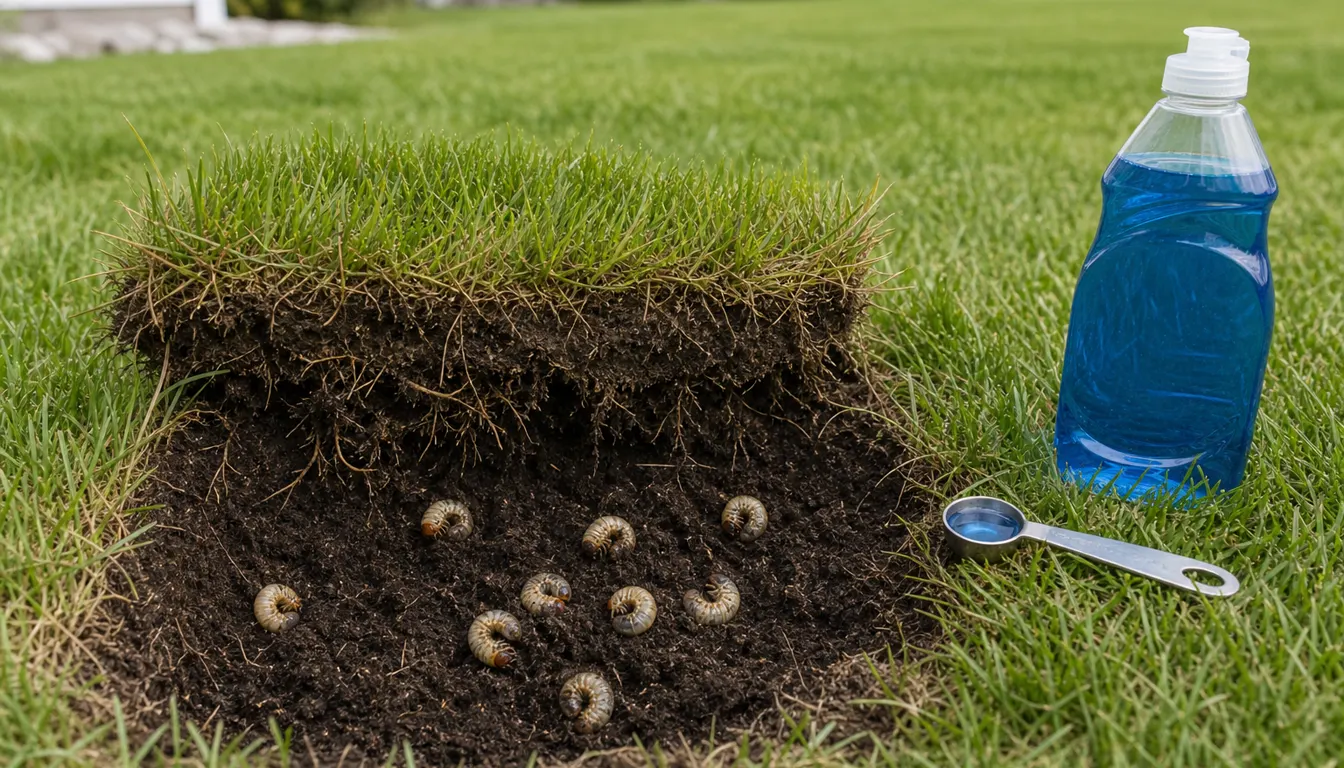
Dawn Dish Soap for Grubs: What Actually Works
Soap solutions can help you spot-check for grubs and knock back a few pests, but they are not…
10 min readDo Marigolds Keep Squirrels Away From Your Garden?
Squirrels can strip a bed of seedlings or freshly planted bulbs in a single morning. Plenty of…
11 min read