yard
KnowTheYard

databasePlant Database

Browse by category

potted_plant

Houseplants

Indoor & tropical species

nutrition

Vegetables

Edible garden crops

spa

Herbs

Culinary & medicinal

local_florist

Flowers

Ornamental blooms

water_drop

Succulents

Drought-tolerant species

park

Trees

Arboreal species

forest

Shrubs

Bushes & hedges

nature

Perennials

Garden flowers

grass

Lawn Grasses

Turf varieties

local_dining

Fruits

Fruit-bearing plants

Best Indoor Plantsarrow_forwardBest Shade Plantsarrow_forward

menu_bookGarden Guides

Step-by-step guides by task type

grass

Lawn Care

Seasonal checklists and year-round maintenance guides for a championship lawn.

yard

Planting

When, where, and how to plant — from seed to transplant for every garden type.

water_drop

Watering

Deep-watering techniques, schedules by plant type, and drought management.

compost

Fertilizing

Feeding schedules, NPK ratios, and organic vs synthetic options by plant.

pest_control

Pest Control

Identify, prevent, and treat common garden pests without harming beneficial insects.

content_cut

Pruning

Pruning timing, techniques, and tools for trees, shrubs, and flowering plants.

Popular Guides

parkFall Lawn Carelocal_floristSpring Lawn Carecalendar_monthFull Calendar
All Guidesarrow_forwardLawn Care Hubarrow_forward
ToolsCompareRegional GuidesPlant ProblemsPet SafetyAbout
searchPlant Finder
yardKnowTheYard

Published plant profiles, practical care guides, problem diagnosis pages, and side-by-side comparisons for home gardeners.

chatphoto_camera

databaseBrowse Plants

  • arrow_forwardHouseplants
  • arrow_forwardVegetables
  • arrow_forwardHerbs
  • arrow_forwardFlowers
  • arrow_forwardTrees

menu_bookResources

  • arrow_forwardGarden Tools
  • arrow_forwardRegional Guides
  • arrow_forwardPlant Problems
  • arrow_forwardPet Safety
  • arrow_forwardCare Calendar
  • arrow_forwardPlant Finder

infoCompany

  • arrow_forwardAbout Us
  • arrow_forwardOur Team
  • arrow_forwardMethodology
  • arrow_forwardEditorial Policy
  • arrow_forwardContact Us

mailEmail Updates

Join the list for new guides, seasonal notes, and launch updates.

No spam. Request removal anytime.

fact_check

Reviewed Pages

77 pages currently attributed to public review lanes

public

USDA Zone Coverage

Zone-aware recommendations and regional growing context

database

230 Published Plant Profiles

555 public pages across profiles, guides, comparisons, and problem pages

© 2026 KnowTheYard. All rights reserved.

Privacy PolicyTerms of ServiceContactSitemap
Home/shrubs/Boxwood Shrubs for Hedges and Formal Edges/Root Rot
scienceEditorial DiagnosisUpdated Feb 20, 2026

Boxwood Root Rot

A practical diagnosis and action plan for root rot of **boxwood** (Buxus spp.) caused most often by Phytophthora species. Focuses on recognizing symptoms, checking ==**drainage that clears within 12-24 hours**==, cultural sanitation steps, when to remove and replace plants, and realistic recovery expectations.

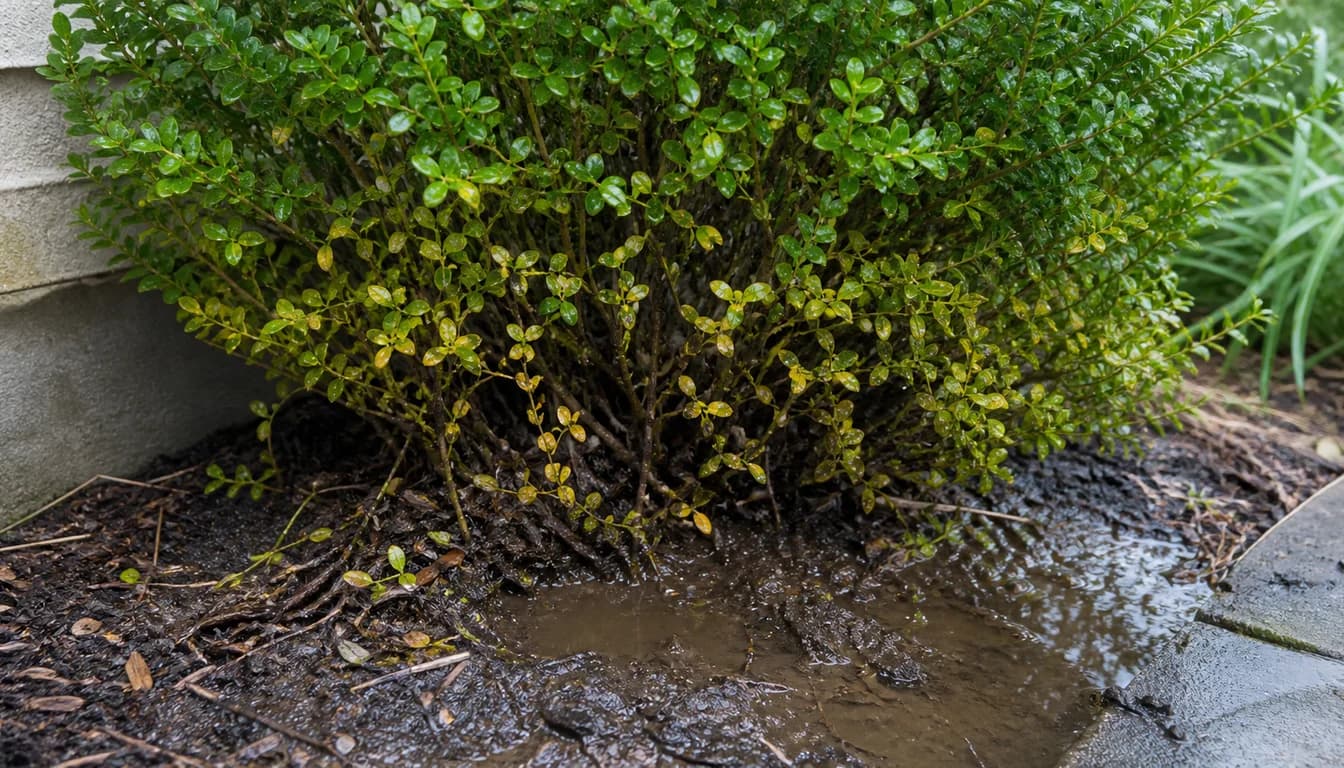
Boxwood shrub with yellowing lower branches and sparse dieback above dark waterlogged soil near the crown.

Boxwood shrub with yellowing lower branches and sparse dieback above dark waterlogged soil near the crown.

lightbulb
bolt

Quick Diagnosis

Most Likely Cause: Phytophthora root rot.

Do not trust the top growth alone; pull soil back at the crown and inspect the roots. On Boxwood, pale foliage plus wilting after wet weather is much more serious when the roots are brown and the lower stem tissue is dark, because that points to Phytophthora rather than temporary drought stress. Start that check with waterlogged-soil troubleshooting before you assume the shrub only needs a drink.

Jump to fix steps arrow_downward

Boxwood root rot is usually a drainage problem before it is a pathogen problem. Once soil stays saturated, Phytophthora can strip feeder roots and discolor the crown, which is why old shrubs often decline after grade changes, downspout discharge, or repeated shallow irrigation; if foliage is spotting and dropping instead, compare the pattern with boxwood blight.

This problem shows up as a gradual decline rather than a single catastrophic event: stressed plants lose fine roots, then larger roots rot, foliage yellows and wilts, and entire plants may die over months. Because the same aboveground symptoms can come from winter injury, herbicide damage, or pests, pairing root inspection with a site drainage assessment is the quickest way to confirm root rot.

We’ll walk through how to tell Phytophthora root rot apart from other problems, practical drainage fixes you can do without heavy equipment, sanitation and removal steps to limit spread, and when replacement is the sensible choice versus attempting rehabilitation.

pest_control
Plant Problem - See AlsoBoxwood Winter Bronzing
chevron_right
psychology

How root rot develops and why drainage matters

Phytophthora doesn’t need constant flooding - it needs saturated, low-oxygen conditions to attack roots. Once fine roots decline, plants can’t move water and nutrients; foliar symptoms follow. Improving aeration and reducing the time soil stays saturated are the two practical levers you control.

Because the pathogen can persist in wet soil and move with water, site-level fixes and strict sanitation reduce both immediate losses and the chance of spreading the pathogen to healthy boxwoods or other susceptible shrubs.

Cultivar choice matters: some boxwood selections tolerate stress better and rebuild roots more readily, so if you plan to replant, pick cultivars known for better drainage tolerance.

thermostat

Environmental Baseline

Before diagnosing specific failures, confirm your Boxwood Shrubs for Hedges and Formal Edges's environment matches its core care requirements.

forestBoxwood Shrubs for Hedges and Formal Edges Care Needs

  • Light: Full sun to partial shade
  • Water: Moderate, consistent moisture, hates soggy soil
  • Temp: Hardy to about -20°F once established

homeTypical Indoor Home

  • Humidity: 30-50% (Low)
  • Temp: 65-72°F variable
  • Light: Often too dim or direct
biotech

Possible Causes

Sorted by likelihood

1. Phytophthora spp. in saturated soils

Likelihood: High

A water-loving pathogen that decays roots when soil stays waterlogged. It spreads in surface and subsurface water and thrives after prolonged wet weather or poor drainage.

Identification

  • remove_circle_outlineProgressive yellowing and wilting despite recent rain or watering
  • remove_circle_outlineBrown, soft, slimy or brittle roots with loss of fine feeder roots
  • remove_circle_outlineCrown discoloration at the soil line and dark, water-soaked root collars
  • remove_circle_outlineSymptoms worsen after heavy rains or in low-lying planting beds

The Fix

  1. 1Confirm by excavating a plant and inspecting roots; rotten, mushy roots point to Phytophthora
  2. 2Improve surface and subsurface drainage (see Environment section) and stop supplemental irrigation until soil dries to near field capacity
  3. 3Remove severely affected plants and soil in a focused radius, then replace soil or raise the bed before replanting
  4. 4If available, send a root/soil sample to a lab for Phytophthora confirmation before chemical treatments
  5. 5Avoid moving contaminated soil to other parts of the yard

2. Poor site drainage and heavy clay soil

Likelihood: Medium

Compacted or clay-rich soils hold water and limit oxygen to roots, creating an environment for root rot even without a high pathogen load.

Identification

  • remove_circle_outlineWater pools on the surface after storms or stays wet for days
  • remove_circle_outlineSoil crusts and is slow to absorb water when you pour it on
  • remove_circle_outlinePlants in low spots or at the base of a slope show symptoms while higher neighbors look fine
  • remove_circle_outlineHistorical issues in the bed (previous plant losses after wet winters)

The Fix

  1. 1Test drainage by digging a 12-inch hole and filling with water; if it drains slower than 12-24 hours, drainage is poor
  2. 2Amend soil with coarse sand and organic matter when reworking beds or install a raised mound for replanting
  3. 3Consider installing a subsurface gravel drain or rerouting downspouts that concentrate water above the planting
  4. 4Limit heavy traffic or compaction in the planting area and avoid excessive surface mulching that traps water against the crown
  5. 5Choose a new planting site on well-drained soil if remediation would be too costly

3. Overwatering and irrigation mismanagement

Likelihood: Low

Frequent shallow irrigation or automated systems on short cycles keep the root zone wet and favor Phytophthora. The pathogen’s spores move with irrigation runoff.

Identification

  • remove_circle_outlineSymptoms begin after irrigation cycles were increased or after new irrigation was installed
  • remove_circle_outlineNearby plants on the same irrigation line show similar symptoms
  • remove_circle_outlineSoil near emitters or sprinkler heads is consistently wet or soggy
  • remove_circle_outlinePlants decline despite no obvious standing water, indicating repeated saturation

The Fix

  1. 1Switch to deep, infrequent watering to encourage deeper rooting and let the top 2-3 inches dry between cycles
  2. 2Reduce or temporarily suspend irrigation on affected zones until the soil dries
  3. 3Reposition emitters or change sprinkler heads to avoid concentrating water at the plant crown
  4. 4Use a moisture meter or probe to check soil moisture before each automated cycle
  5. 5Install drip irrigation with properly spaced emitters if you must irrigate regularly
compare_arrows
Comparison - See AlsoBoxwood vs Privet
chevron_right
potted_plant

Root Health Examination

A direct inspection of the root system distinguishes root rot from drought stress - saving weeks of guesswork.

check_circleHealthy Roots

  • Firm to the touch
  • White or light tan color
  • Earthy, pleasant smell

cancelCompromised Roots

  • Mushy or slimy texture
  • Dark brown or black color
  • Sour, rotting odor

Inspection Step: Gently slide the pot off while supporting the base of the stems. The outer root ball gives sufficient clues without disturbing all the soil.

gpp_bad
warning

When to Worry

A few yellow leaves are normal. If more than 20% of foliage turns yellow within a week, or new growth is affected, act immediately - check the roots first.

timeline

Recovery Protocols

Recovery takes time. Once the root cause is corrected, implement a 30-day stabilization window.

Immediate (0-2 weeks)Stop spread and stabilize site

Cease supplemental watering to affected zones, stop mowing or compacting the bed, and flag plants that need root inspection. Remove surface mulch that holds moisture against crowns and sanitize tools between cuts.

Short term (2-12 weeks)Assess and implement drainage fixes

Excavate a representative plant to inspect roots; improve surface grading, install temporary sand/organic amendments, or reroute water. Remove plants with >50% root loss and dispose of them; smaller losses may be managed in place if drainage improves quickly.

Medium term (3-9 months)Watch for regrowth or decline

If drainage is improved and remaining root mass is healthy, expect to see slowed decline and new shoot growth within ==**2-3 months**==; full canopy recovery often takes ==**6-9 months**==. If decline continues, plan for replacement and site rework.

compare_arrows
Comparison - See AlsoHolly vs Boxwood
chevron_right
shield

Preventing Future Issues

Prevent recurrence by prioritizing well-drained planting sites, adjusting irrigation to deep, infrequent cycles, monitoring after heavy rains, and selecting more tolerant boxwood cultivars when replanting; when you must irrigate regularly, compare drip versus sprinklers so you avoid saturating crowns. Sanitation and avoiding soil movement from infected beds are essential to stop pathogen spread. Root rot is a moisture-driven disease. If the root zone stays wet, symptoms will worsen even with light watering.

menu_book

Related Reads

pest_control
Plant ProblemBoxwood Winter Bronzing
chevron_right
compare_arrows
ComparisonBoxwood vs Privet
chevron_right
compare_arrows
ComparisonHolly vs Boxwood
chevron_right
menu_book
GuideAir Purifying Plants for Cleaner Indoor Air
chevron_right
menu_book
GuideBest Herbs to Grow Indoors for Real Harvests, Not Spindly Pots
chevron_right
menu_book
GuideBest Indoor Plants for Every Room and Light Level
chevron_right
Boxwood Shrubs for Hedges and Formal Edges (Buxus sempervirens) - full care guideBuxus sempervirens

Boxwood Shrubs for Hedges and Formal Edges

Buxaceae Family

wb_sunny

Light

Full sun to partial shade

water_drop

Water

Moderate, consistent moisture, hates soggy soil

thermostat

Temp

Hardy to about -20°F once established

yardFull Care Guide

On This Page

boltQuick DiagnosispsychologyUnderstandingthermostatEnvironment CheckbiotechPossible Causespotted_plantRoot ExamwarningWhen to WorrytimelineRecovery PlanshieldPreventionmenu_bookRelated Reads