
Lawn Careschedule11 min read
When to Aerate Your Lawn for Real Results
Learn exactly when to aerate your lawn based on grass type, soil conditions, and season so you get thicker turf instead of stressing it.
Aeration timing is the difference between a lawn that thickens up and one that thins out and weeds move into. You are poking holes into living roots, so the calendar matters. Use grass type, climate, and soil condition together; the right month is the one your turf can actually recover from.
Cool-season lawns like home fescue lawns want an early fall aeration window. Warm-season grasses such as bermuda in hot summers usually need late spring or early summer instead. Simple soil tests will tell you if your yard even needs it this year.
quizKnow Why You Are Aerating First
Compacted soil chokes roots and keeps water near the surface where it evaporates. Aeration opens that soil back up so air, water, and fertilizer can move down where roots live.
If your lawn feels like concrete by August, or water pools instead of soaking in, compaction is likely your main problem. Lawns with heavy foot traffic, dogs, and kids are nearly always due for aeration.
A second reason to aerate is thatch, the spongy brown layer between soil and grass blades. A little is fine, but more than 0.5 inch starts to block water and nutrients.
You can cut a small wedge out of the lawn and measure thatch depth, or use a narrow trowel. Aeration breaks that layer up and helps microbes decompose it faster.
Aeration only helps if grass is actively growing and ready to repair the root damage you cause. Timing around growth, not your free weekend, is what makes it work.
If your lawn has thin spots as well, plan aeration the same day you overseed bare patches. Open soil plus seed contact is a big reason fall lawn makeovers succeed.
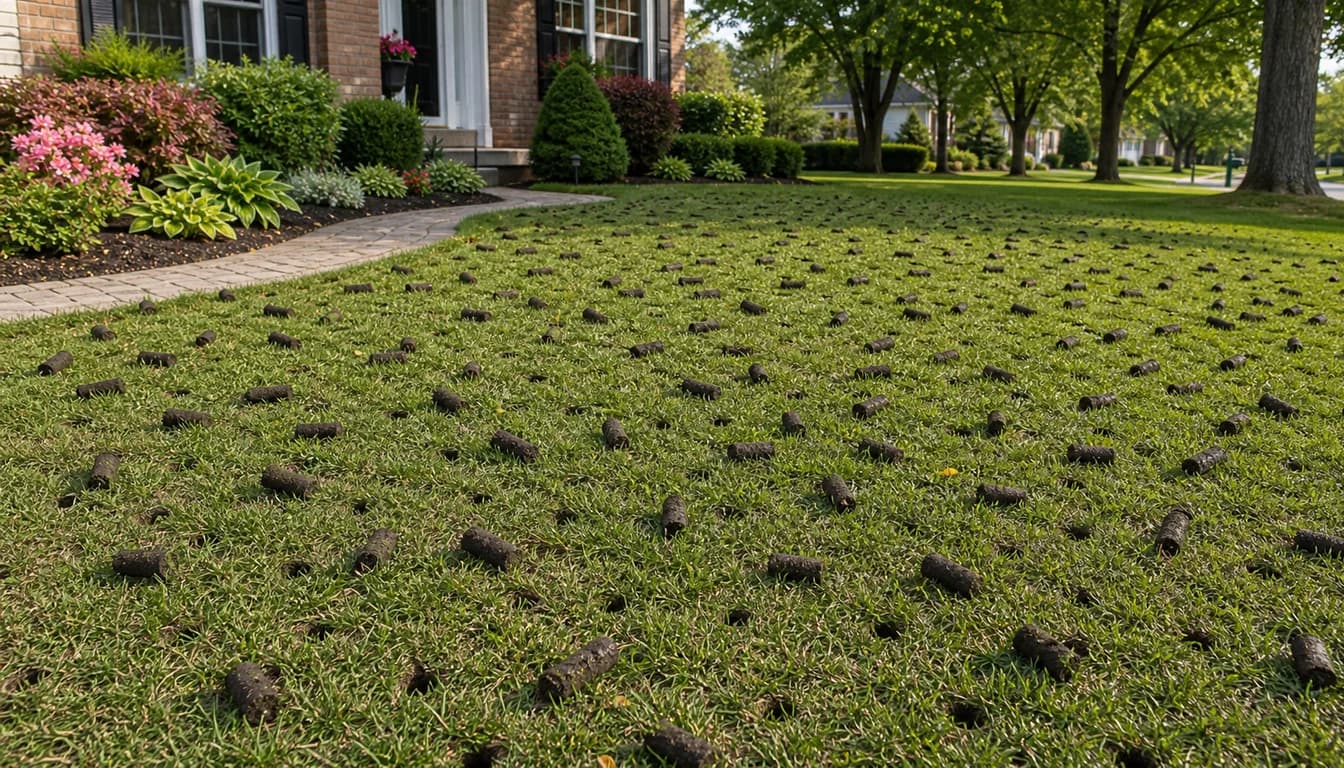
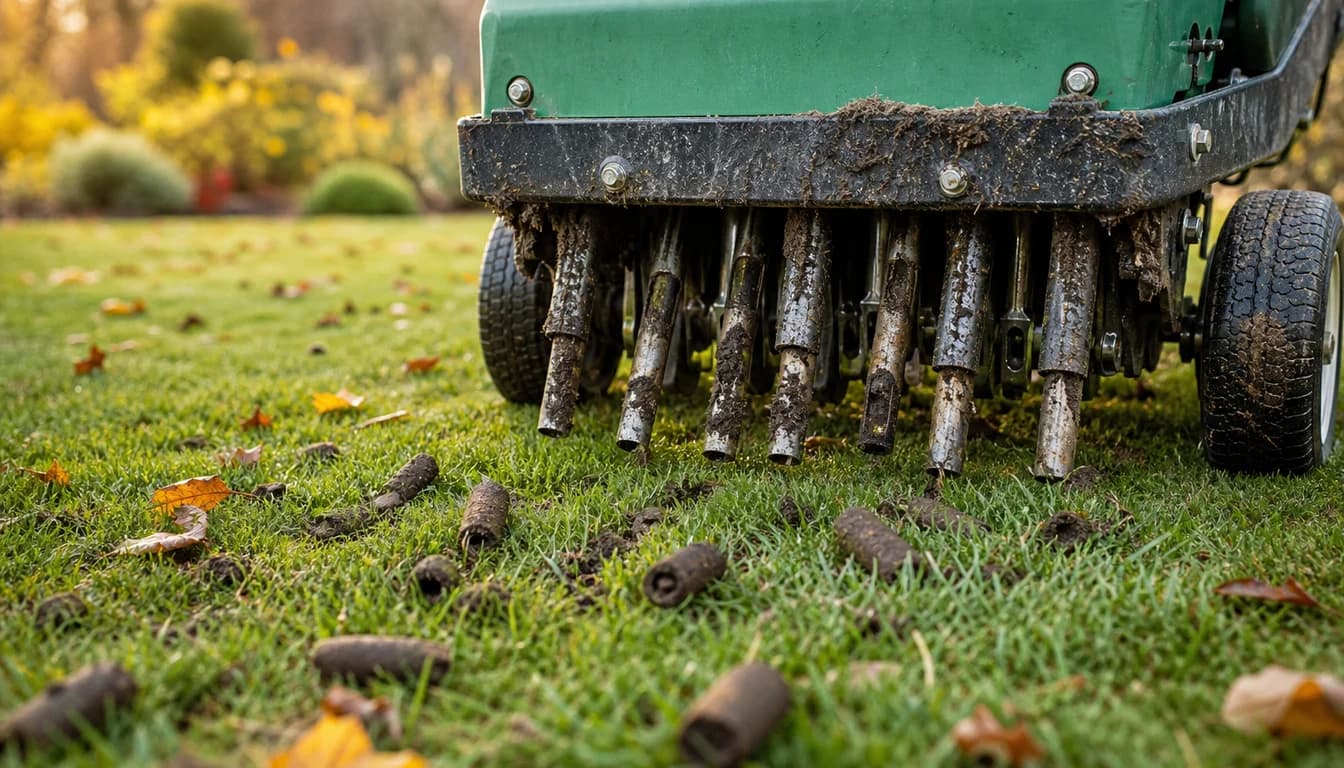
Core plugs on the surface are a sign you are actually relieving compaction.
calendar_monthBest Time to Aerate Cool-Season Lawns
Cool-season grasses include kentucky bluegrass, perennial ryegrass, and all the fescue types. These lawns grow hardest in cool weather, roughly 50–75°F soil temps.
In most zones 3–7, early fall is the prime aeration window. Think late August through September in many areas, or when daytime highs drop back into the 70s.
Spring aeration for cool-season lawns is a backup option, not the first choice. It can help if the soil is badly compacted after construction or heavy traffic.
The catch is that early spring aeration opens the soil right before crabgrass and other weeds sprout. It can also weaken grass going into summer heat if you push it too late.
If you rely on a pre-emergent crabgrass barrier, aerate before you apply it, then water it in. Punching cores later can break that barrier and reduce weed control.
Homeowners who grow cool-season grass in small front yards often copy big athletic fields for timing. Those fields rely on consistent irrigation and professional feeding, so follow your local lawn care calendar instead of stadium schedules.
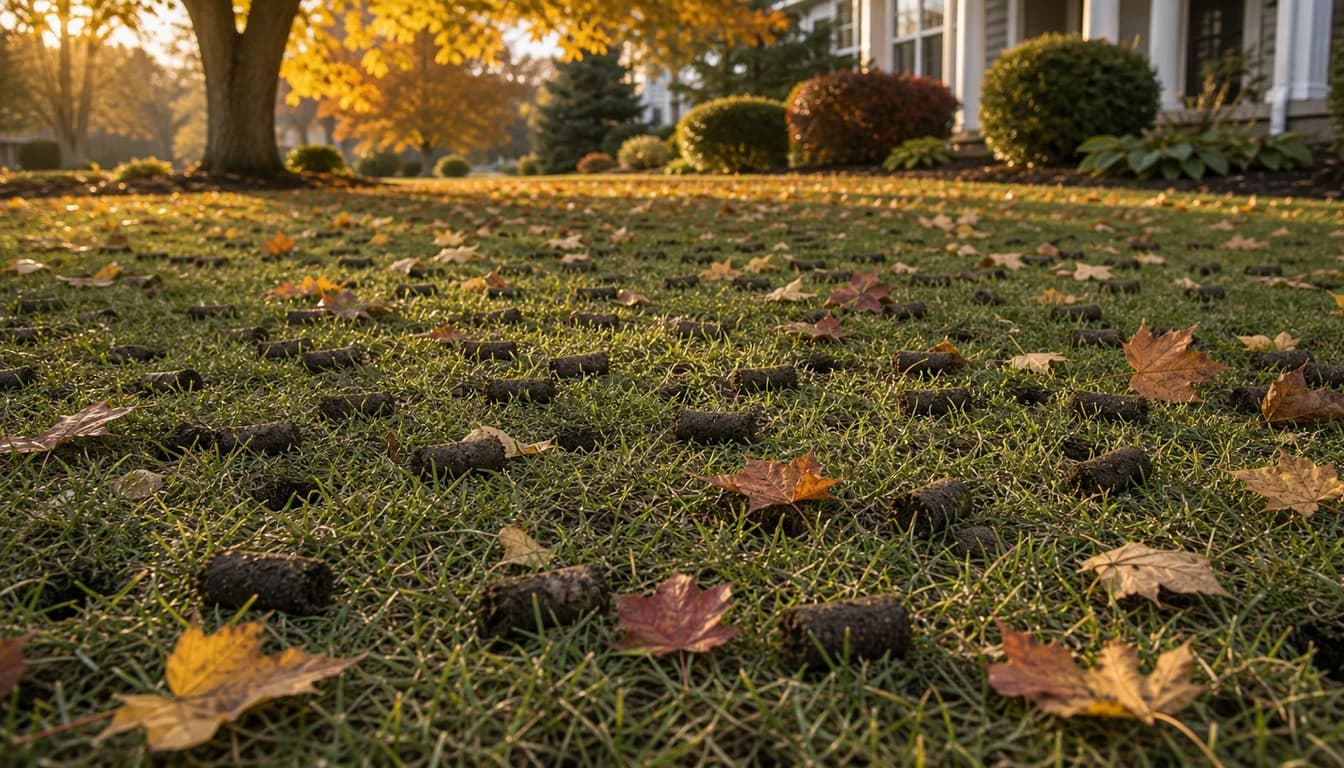
Cool-season lawns recover from aeration fastest in early fall.
Guide — See AlsoWhen to Mow New Grass Without Killing ItLearn exactly when new grass from seed or sod is ready for its first mowing, so you thicken the lawn instead of scalping
chevron_rightthermostatBest Time to Aerate Warm-Season Lawns
Warm-season grasses like bermuda, zoysia, centipede, bahia, and St. Augustine wake up slower, then sprint through late spring and summer.
These lawns hate cold damage around the roots. Aerating too early in spring can expose crowns to late cold snaps and slow green up.
Peak timing is late spring through early summer when the lawn is fully green and actively spreading. Soil should be consistently above 65°F, not just the air during a warm spell.
In much of zone 8–10, that means roughly May through early July. Farther south, earlier dates can work because warm soils arrive sooner and stay stable.
Avoid aerating warm-season grass in fall, even if the soil looks compacted. Roots are heading toward dormancy and repairs will be slow or incomplete.
A good rule is to watch your mowing pattern. When you are cutting every 5–7 days because growth is strong, the lawn is ready to recover from aeration.
Homeowners often try to fix thin bermuda by poking holes when the lawn is still half brown. You will get more from proper fertilizing timing once soil is warm and growth is vigorous.
Email Updates
Join the KnowTheYard update list
Zone-specific advice, seasonal reminders, and new plant guides — no filler.
scienceUse Soil And Screwdriver Tests, Not Just The Calendar
Soil compaction and moisture tell you more about aeration needs than the date alone. Your yard can differ from the neighbor’s by a full month due to shade, traffic, and sprinkler coverage.
The simplest tool is a long screwdriver or thin tent stake. Push it into the soil in several spots after a normal watering.
If it slides down 4 inches with moderate pressure, roots already have decent access to air and water. Aeration is less urgent and you can stretch the interval.
If you struggle to get it past 2 inches even when soil is moist, the top layer is too tight. That is your signal to schedule aeration during the next active growth window.
Core plugs themselves are a second test for future years. After aeration, healthy soil cores break down within 2–3 weeks with normal mowing and rain.
If cores sit on top for over a month, your soil likely has a lot of clay or organic buildup. Plan to aerate every year instead of every second year until structure improves.
Never aerate bone-dry soil, you can damage tines and barely open the ground. Lightly water the lawn the day before so soil is soft but not muddy.
Thick thatch and compacted soil also show up as uneven color, similar to some nutrient problems in potted plants. The difference is that aeration fixes the root environment in the whole yard at once.
Guide — See AlsoBest Time to Overseed a Northeast Lawn for Thick TurfLearn exactly when to overseed cool-season lawns in the Northeast, how soil temperature and frost dates affect timing, a
chevron_rightgrassWhat To Do Right After Aerating
The first few hours after you aerate are when you lock in most of the benefit. Open holes dry out quickly if you ignore them.
Water the lawn lightly right after aeration so the cores soften and the soil profile rehydrates. Aim for about 0.25 inch of water, not a deep soaking.
If you are overseeding, spread grass seed within 24 hours of pulling cores. Seed that falls into the holes has far better soil contact, especially for cool season types like Kentucky bluegrass seedlings.
Fertilizer timing matters too. A gentle starter or balanced product, applied right after seeding, speeds root growth more than heavy feeding weeks later.
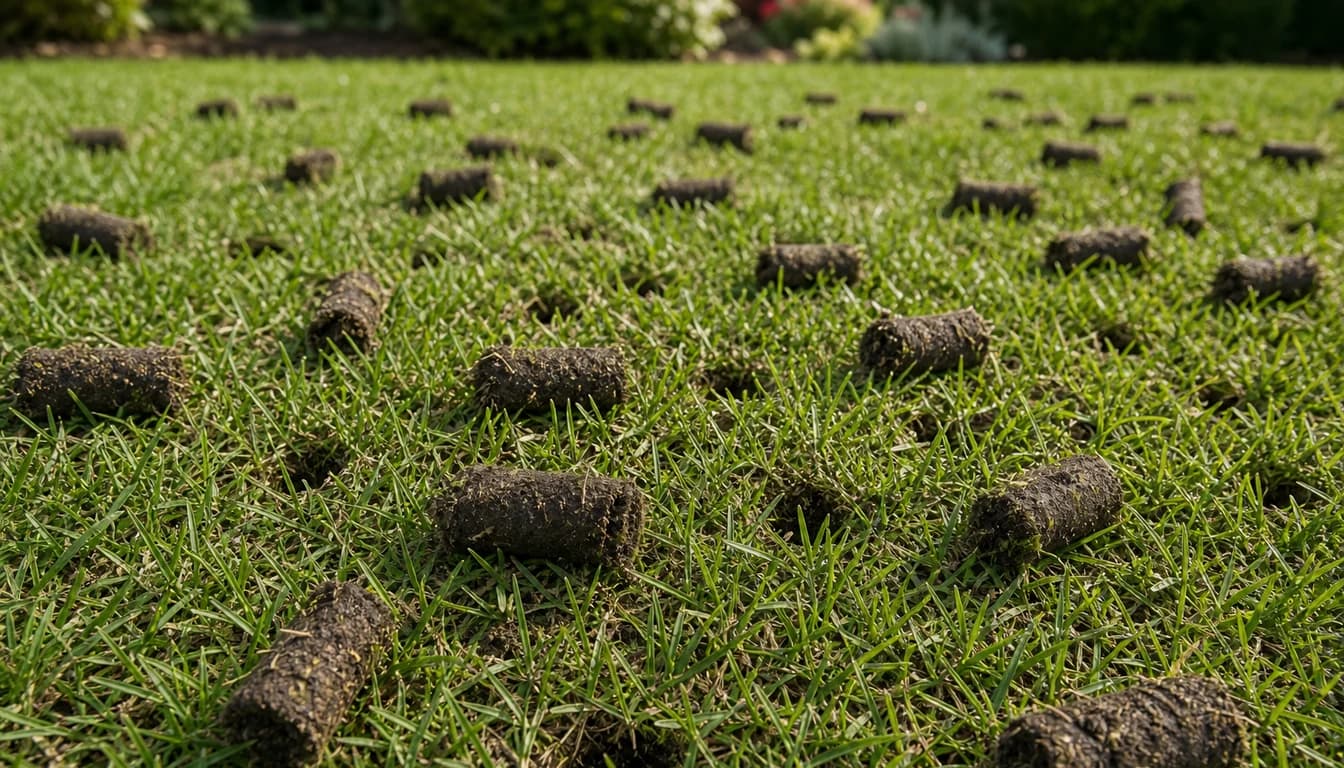
Those messy soil plugs are free topdressing for your lawn.
- fiber_manual_recordWater depth: About 0.25 inch immediately after aeration
- fiber_manual_recordSeeding window: Within 24 hours for best contact
- fiber_manual_recordFertilizer type: Light starter or balanced, not high nitrogen
- fiber_manual_recordTraffic: Keep heavy foot traffic off for 3 to 5 days
Those soil plugs lying on top look messy but they are useful. Leave them alone so rain and irrigation can break them down into free topdressing.
Never rake up the cores unless you heavily thatched first and created big clumps that will smother spots.
If your lawn is bumpy, aeration is a good time to level small lows. Brush a thin layer of sand or compost across the surface so it falls into holes instead of burying grass blades.
Thin spots respond well to this combo of aeration, seeding, and light topdressing. It is the same basic recipe you would use when you fill in a patchy yard in fall.
Expect the lawn to look a little rough for a week. In zone 5–7 with cool season turf, new growth usually hides the plugs within two mowings.
ecoPairing Aeration With Overseeding And Fertilizer
Aeration by itself improves roots. Aeration plus overseeding and fertilizer can completely change how your lawn looks next season.
Cool season lawns in zone 4–7 benefit most from this combo in early fall. Soil is warm enough for quick germination, but air is cool enough that tall fescue seedlings are not stressed.
Start with aeration, then overseed at the high end of the normal rate. For tired lawns, that is often 6 to 8 pounds of seed per 1,000 square feet for mixtures.
Next, apply a starter fertilizer that lists phosphorus if your local rules allow it. It feeds new roots pushing down through the aeration holes.
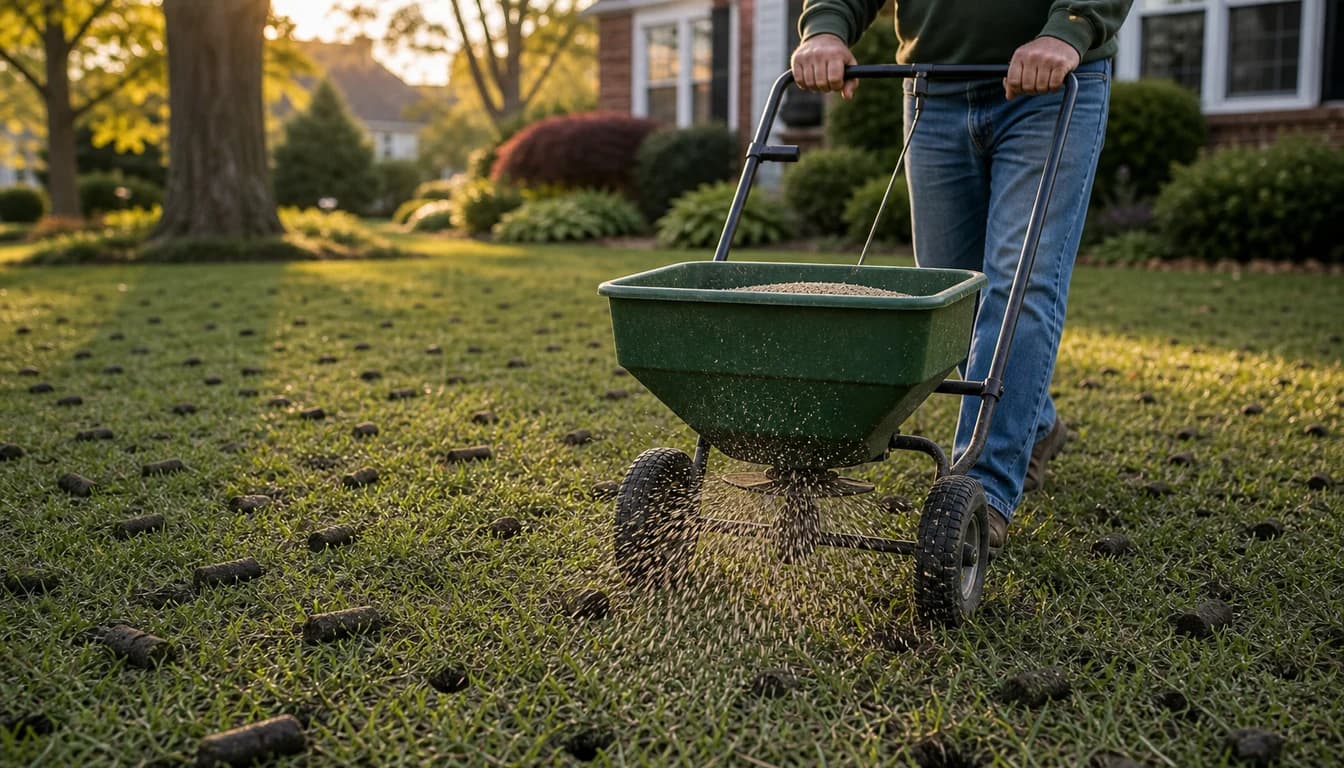
Aeration holes give new seed protected spots to root.
- fiber_manual_recordOrder of steps: Aerate, seed, fertilize, then water
- fiber_manual_recordSeed type: Match existing turf species when possible
- fiber_manual_recordSpreader setting: Calibrate using the seed bag, then test on a small area
- fiber_manual_recordWatering: Keep the top inch damp until germination
Warm season lawns like bermuda in full sun also pair well with this stack, but timing shifts to late spring or early summer.
Do not apply high nitrogen fertilizer if you are aerating a heat stressed summer lawn that is already browning.
If you already follow a program such as the ultimate lawn calendar, shift one feeding to line up right after aeration. You do not need extra nitrogen, just better timing.
Gardeners already feeding trees and shrubs can use the same soil test results they used for woody plant nutrition to pick the right NPK ratio for turf.
Over a couple of seasons, this stacked approach thickens the canopy so much that weeds and crabgrass have fewer open spots to invade.
Guide — See AlsoHow to Overseed a Lawn Without Aerating or Heavy EquipmentStep-by-step guide to overseed your lawn without renting an aerator. Learn how to prep the turf, choose seed, and get go
chevron_rightthermostatAdjusting Timing For Weather And Soil Type
Soil type and weather patterns matter as much as grass species. A calendar date that works for your neighbor may be wrong for you.
Heavy clay that cracks in summer needs aeration when it is moist but not soggy. For many zone 5 yards with clay, that means after a good fall rain, not during a dry spell.
Sandy soil under centipede lawns drains so fast that aeration is less urgent. You can wait for ideal timing around active growth without worrying about compaction as much.
Soil moisture on aeration day should feel like a wrung out sponge, never mud.
Watch extended forecasts before booking rental gear. A stretch of cooler, cloudy days after aeration helps cool season grasses like fine fescue blends recover faster.
- fiber_manual_recordClay soils: Favor fall or early spring in cool climates
- fiber_manual_recordSandy soils: Aerate less often, focus on irrigation habits
- fiber_manual_recordLoam soils: Stick close to classic fall or late spring windows
- fiber_manual_recordNew builds: Often need yearly aeration for the first 3 to 5 seasons
Neighbors in the same suburb can still have different timing needs. A shady yard backed by large oaks stays wetter than a sunny slope that bakes.
Skip aeration right before heavy storms. Holes can channel water and wash seed downhill.
If you follow a regional schedule like a month by month plan, use it as a starting point, then tweak dates based on how quickly your soil dries after rain.
Take notes each season on what timing produced the quickest recovery. After two or three years you will have a custom aeration window for your yard.
warningCommon Aeration Mistakes To Avoid
Most aeration problems trace back to timing or equipment use. Avoiding a few classic mistakes saves you from torn turf and wasted effort.
The most common error is aerating bone dry soil. Hollow tines can barely penetrate, and you are left with shallow holes that do not reach the compaction layer.
On the flip side, muddy soil smears along the hole walls. Roots have a hard time pushing through that glazed layer, similar to problems seen in compacted beds of shaded hosta plantings.
Many of us also rush the job. A single pass in one direction barely scratches the surface when compaction has built up over years.
- fiber_manual_recordToo dry: Water the day before if soil is dust dry
- fiber_manual_recordToo wet: Postpone if footprints fill with water
- fiber_manual_recordToo fast: Make at least two passes, at right angles
- fiber_manual_recordWrong tool: Spike shoes do not remove soil cores
Another mistake is stacking stressful tasks together. Aerating, dethatching, and using strong herbicides in the same week beats up grass crowns.
Never aerate during peak summer stress on cool season lawns that are already going dormant.
Homeowners with underground dog fences or shallow irrigation sometimes skip marking lines. A broken wire or sprinkler head turns a cheap rental into an expensive repair.
If you are newer to yard care, skim a broader lawn feeding guide so you are not aerating right after applying weed and feed products that restrict seeding.
Finally, do not chase perfection every year. Moderate traffic lawns on deep loam might only need aeration every 2 to 3 years, especially if you keep mower weight and traffic reasonable.
Guide — See AlsoDirect Sow vs Transplant: Choose the Right MethodLearn when to direct sow seeds and when to start transplants so you do not waste time, seed, or bed space.
chevron_rightquizSigns You Waited Too Long Or Aerated Too Often
Your lawn tells you if your aeration schedule is off. You just need to know what to watch for between seasons.
Waiting too long often shows up as puddling, especially where downspouts hit. Water that sits for more than 30 minutes after normal rain usually means compaction is back.
Thin, off color strips where your mower wheels track are another hint. Constant weight in the same path compacts soil underneath, just like wheelbarrow ruts around intensively gardened areas.
Aerating too frequently can be an issue on sandy or fragile soils. If you see many small bare spots around the holes that never fill in, you may be overdoing it.
- fiber_manual_recordToo rare: Water puddles, heavy thatch, mower ruts stay visible
- fiber_manual_recordToo often: Bare pockmarks, roots exposed in shallow soils
- fiber_manual_recordHealthy gap: Firm but not hard soil, cores disappear quickly
- fiber_manual_recordCheck interval: Every 1 to 3 years, based on traffic
Homeowners with sports crazy kids or dogs that run laps usually need yearly aeration. Lawns that just frame shrub borders and flowering beds might be fine on a longer cycle.
If your plugs are less than 1 inch long, adjust moisture and make another pass, not another whole year.
Grab a small trowel mid season and inspect root depth in both high traffic and quiet corners. Roots staying above 2 inches despite good watering are a strong sign you waited too long.
If root depth is good and water drains well, shift aeration money into overseeding or weed control that season. Compaction is not your bottleneck every year.
tips_and_updates
Pro Tips
- check_circleTime cool-season lawn aeration for early fall when daytime highs drop back into the 70s.
- check_circleAerate warm-season lawns only after they are fully green and growing fast in late spring.
- check_circleWater the lawn lightly the day before aeration so tines can pull full cores instead of just punching.
- check_circleMake at least two passes in different directions on compacted areas like play zones or footpaths.
- check_circleFollow aeration the same day with overseeding and topdressing if you want to thicken bare spots.
- check_circleSkip pre-emergent weed control until after aeration, or apply it once the holes start closing.
- check_circleAvoid aerating during summer drought stress, focus on deep watering and mowing higher instead.
quiz
Frequently Asked Questions
Should I aerate my lawn every year?expand_more
High traffic or clay heavy lawns often benefit from yearly aeration, especially in newer subdivisions. If water drains well, roots reach 4 inches deep, and the lawn is dense, every 2 to 3 years is usually enough.
Is it better to aerate in spring or fall?expand_more
For cool season grasses, fall is usually best because soil is warm and weed pressure drops. Spring aeration helps if compaction is severe, but avoid doing it right before summer stress on cool season lawns.
Can I mow right after aerating?expand_more
You can mow if needed, but many people wait a few days so plugs dry and crumble a bit. If you overseeded, set the mower high and avoid sharp turns that could tear shallow new roots.
Do I need to pick up the plugs after core aeration?expand_more
No, leave the soil plugs on the lawn. Rain, irrigation, and mowing will break them down within a couple of weeks, returning soil and microbes to the surface like a light topdressing.
Should I water before aerating my yard?expand_more
Yes, watering the day before aeration usually helps, especially on dry or compacted soil. Aim for a normal irrigation cycle so the top few inches are moist but not muddy when you start.
menu_book
Sources & References
- 1.Penn State Extension, Core Aeration of Cool-Season Lawnsopen_in_new
- 2.University of Minnesota Extension, Lawn Care Practices and Core Aerationopen_in_new
- 3.Colorado State University Extension, Lawn Care: Aeration and Compactionopen_in_new
- 4.University of Missouri Extension, Establishing a New Lawn and Renovationopen_in_new
Related Guides
Best Time to Aerate and Overseed for a Thicker Lawn
Learn when to aerate and overseed your lawn by season and grass type so every pass of the machine leads to thicker, greener turf instead of wasted seed.
11 min read
Best Time to Overseed a Midwest Lawn for Thick Turf
Learn the best time to overseed a Midwest lawn based on soil temperature, grass type, and hardiness zone so your new seed fills in thin spots.
11 min read
Best Time to Overseed a Northeast Lawn for Thick Turf
Learn exactly when to overseed cool-season lawns in the Northeast, how soil temperature and frost dates affect timing, and what to do before and after seeding for a thicker, greener yard.
11 min read