yard
KnowTheYard

databasePlant Database

Browse by category

potted_plant

Houseplants

Indoor & tropical species

nutrition

Vegetables

Edible garden crops

spa

Herbs

Culinary & medicinal

local_florist

Flowers

Ornamental blooms

water_drop

Succulents

Drought-tolerant species

park

Trees

Arboreal species

forest

Shrubs

Bushes & hedges

nature

Perennials

Garden flowers

grass

Lawn Grasses

Turf varieties

local_dining

Fruits

Fruit-bearing plants

Best Indoor Plantsarrow_forwardBest Shade Plantsarrow_forward

menu_bookGarden Guides

Step-by-step guides by task type

grass

Lawn Care

Seasonal checklists and year-round maintenance guides for a championship lawn.

yard

Planting

When, where, and how to plant — from seed to transplant for every garden type.

water_drop

Watering

Deep-watering techniques, schedules by plant type, and drought management.

compost

Fertilizing

Feeding schedules, NPK ratios, and organic vs synthetic options by plant.

pest_control

Pest Control

Identify, prevent, and treat common garden pests without harming beneficial insects.

content_cut

Pruning

Pruning timing, techniques, and tools for trees, shrubs, and flowering plants.

Popular Guides

parkFall Lawn Carelocal_floristSpring Lawn Carecalendar_monthFull Calendar
All Guidesarrow_forwardLawn Care Hubarrow_forward
ToolsCompareRegional GuidesPlant ProblemsPet SafetyAbout
searchPlant Finder
yardKnowTheYard

Published plant profiles, practical care guides, problem diagnosis pages, and side-by-side comparisons for home gardeners.

chatphoto_camera

databaseBrowse Plants

  • arrow_forwardHouseplants
  • arrow_forwardVegetables
  • arrow_forwardHerbs
  • arrow_forwardFlowers
  • arrow_forwardTrees

menu_bookResources

  • arrow_forwardGarden Tools
  • arrow_forwardRegional Guides
  • arrow_forwardPlant Problems
  • arrow_forwardPet Safety
  • arrow_forwardCare Calendar
  • arrow_forwardPlant Finder

infoCompany

  • arrow_forwardAbout Us
  • arrow_forwardOur Team
  • arrow_forwardMethodology
  • arrow_forwardEditorial Policy
  • arrow_forwardContact Us

mailEmail Updates

Join the list for new guides, seasonal notes, and launch updates.

No spam. Request removal anytime.

fact_check

Reviewed Pages

77 pages currently attributed to public review lanes

public

USDA Zone Coverage

Zone-aware recommendations and regional growing context

database

230 Published Plant Profiles

555 public pages across profiles, guides, comparisons, and problem pages

© 2026 KnowTheYard. All rights reserved.

Privacy PolicyTerms of ServiceContactSitemap
Home/vegetables/Squash: Choose Summer or Winter Before the Vine Runs/Vine Borer Zucchini
scienceEditorial DiagnosisUpdated Feb 20, 2026

Squash Vine Borer on Zucchini

Practical guide to identify, stop, and manage Squash Vine Borer (Melittia cucurbitae) on **Zucchini** and other cucurbits. Learn how to spot adult clear-winged moths, read entry holes and internal tunneling, time row covers and interventions, and remove or protect vines to save the crop.

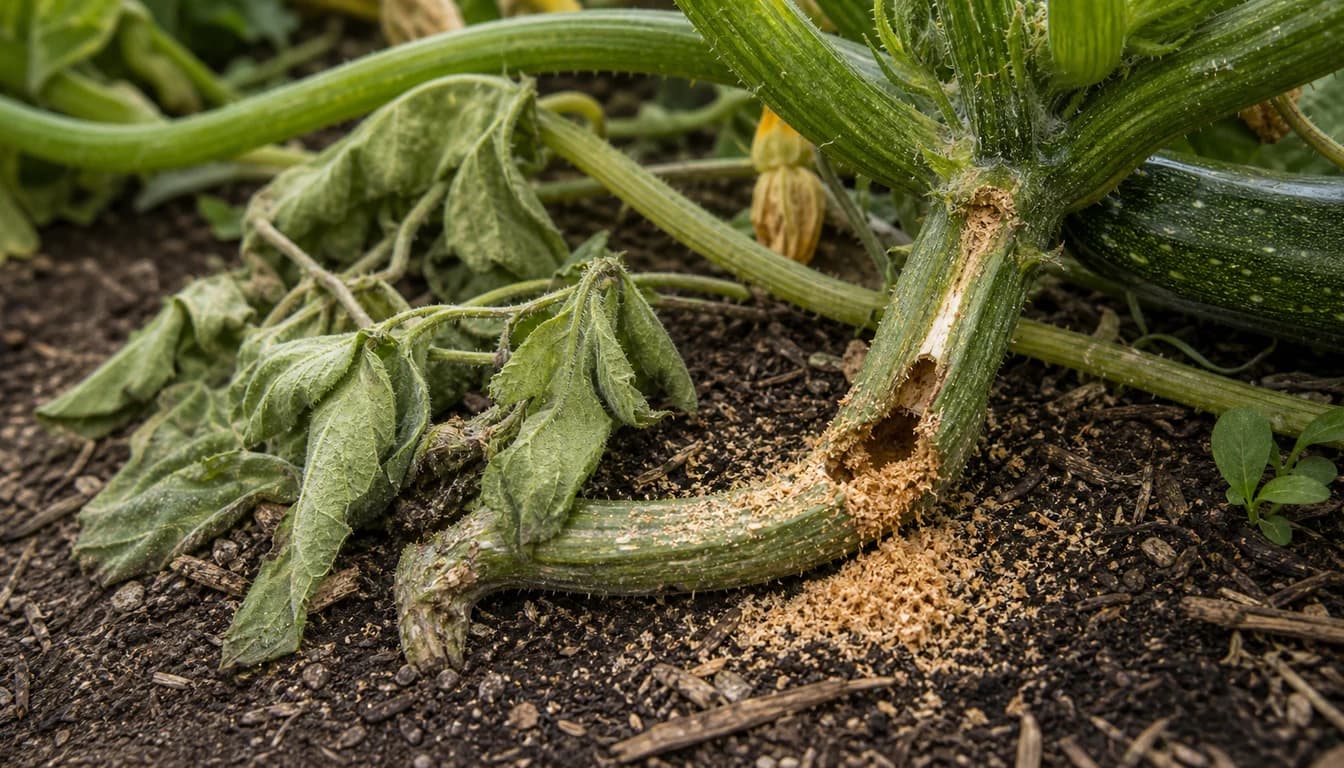
Zucchini stem base with squash vine borer frass and wilting leaves nearby

Zucchini stem base with squash vine borer frass and wilting leaves nearby

lightbulb
bolt

Quick Diagnosis

Most Likely Cause: Larvae of Squash Vine Borer (Melittia cucurbitae) boring inside zucchini stems.

When one vine collapses while the rest of the bed still looks fine, inspect the stem base before you reach for more water. Zucchini hit by squash vine borer usually show sawdust-like frass and entry holes near the crown, which separates them from ordinary drought wilt or root-zone water stress.

Jump to fix steps arrow_downward

Squash vine borer damage turns dramatic because the larva tunnels inside the stem where water should be moving. A healthy-looking Zucchini plant can go from normal to limp in a day once that internal plumbing is compromised.

The adult moth looks like a small hornet with clear wings and is active during warm daylight hours; eggs hatch into larvae that bore immediately into the plant. Once inside the stem, larvae chew a tunnel and feed until they pupate - this internal feeding often causes rapid wilting and can kill individual vines within days.

Because the insect attacks inside the plant, visible damage is deceptive: leaves can look fine until larval feeding severs the water column. Early diagnosis and quick action save vines; late detection often means the vine must be removed to protect the bed and future plantings, especially if you are already managing other cucurbit pest pressure nearby.

menu_book
Guide - See AlsoAir Purifying Plants for Cleaner Indoor Air
chevron_right
psychology

How Squash Vine Borer attacks and why timing matters

Adults fly in warm daylight and deposit eggs singly near the stem base; eggs hatch in about 7-10 days depending on temperature and then larvae bore immediately. Because larvae are inside the stem, contact sprays applied after boring are usually ineffective.

Early-season exclusion - especially using row covers before flowers open - is the most reliable cultural defense. If the vine is already wilted and you find a tunnel or caterpillar, that vine will rarely fully recover unless the larva is removed promptly and the stem repaired.

Chemical and biological options must be timed to target newly hatched larvae before they enter the stem. Local extension services track regional flight times and can advise on the correct spray window and product recommendations.

thermostat

Environmental Baseline

Before diagnosing specific failures, confirm your Squash: Choose Summer or Winter Before the Vine Runs's environment matches its core care requirements.

forestSquash: Choose Summer or Winter Before the Vine Runs Care Needs

  • Light: Full sun, ==**6-8+ hours**==
  • Water: Consistent moisture at the root zone
  • Temp: Best growth in ==**70-90 F**== weather

homeTypical Indoor Home

  • Humidity: 30-50% (Low)
  • Temp: 65-72°F variable
  • Light: Often too dim or direct
biotech

Possible Causes

Sorted by likelihood

1. Adult moths laying eggs at vine bases

Likelihood: High

Clear-winged adult moths land on the stems and lay small eggs at the soil line. One female can lay many eggs over a few weeks in mid to late season; eggs are tiny and hard to see, so obvious damage often appears only after larvae enter the stem.

Identification

  • remove_circle_outlineDaytime sighting of wasp-like, clear-winged moths flying and landing on cucurbit stems
  • remove_circle_outlineTiny, flat, oval eggs on stems near the soil line when closely inspected
  • remove_circle_outlineFirst wilting begins on a single vine while surrounding plants remain healthy
  • remove_circle_outlineLook for small round or oval entry holes at the base of stems with coarse, sawdust-like frass around them

The Fix

  1. 1Apply row covers at transplant and keep covers on until flowering begins to block egg-laying adults
  2. 2Inspect stems every 2-3 days from transplant through mid-summer for eggs and frass
  3. 3Hand-remove eggs when you find them by scraping into a jar of soapy water
  4. 4When adults are present, avoid mowing or disturbing the area around plants during peak flight, which can reduce attraction
  5. 5Consult local timing data from your county extension to know when to install and remove covers

2. Larvae boring inside stems and crowns

Likelihood: High

Once eggs hatch, the grub tunnels into the stem and feeds inside where sprays don’t reach well. Internal feeding severs the vascular tissue, causing sudden wilting of the affected vine and often producing frass-filled tunnels.

Identification

  • remove_circle_outlineSudden wilting of a single vine that started healthy the same morning
  • remove_circle_outlineSplitting the stem at the base reveals a tunnel and an orange-brown caterpillar up to an inch long
  • remove_circle_outlineFrass (sawdust-like) extruding from the hole at the stem base
  • remove_circle_outlineIf multiple plants collapse quickly, check the crowns for several larvae or repeated entry points

The Fix

  1. 1Cut and remove the infested vine below the site of boring immediately, bury or bag the removed tissue to prevent re-infestation
  2. 2If the caterpillar is reachable, slit the stem lengthwise and remove the larva, then cover the wound with soil or garden paste to encourage regrowth
  3. 3Rotate cucurbits the following season and avoid planting new squash or zucchini in the exact spot for at least one season
  4. 4Monitor nearby volunteer squash and pumpkins and remove them; they can host overwintering pupae
  5. 5Use targeted Bt kurstaki injections into the stem only if recommended by local extension and timed precisely for small larvae

3. Garden practices that increase vulnerability

Likelihood: Medium

Dense planting, continuous cucurbit cropping, or bare-soil stems invite egg-laying and make infestations worse. Late-season transplants can coincide with peak moth flight and increase risk.

Identification

  • remove_circle_outlineSquash planted in the same bed year after year with little rotation
  • remove_circle_outlineCrowded vines with poor airflow and exposed stem bases
  • remove_circle_outlineTransplants set late into the adult flight window
  • remove_circle_outlineHigh numbers of volunteer or wild cucurbits near the garden

The Fix

  1. 1Practice crop rotation away from cucurbits for a season to reduce local borer populations
  2. 2Mulch heavily to reduce exposed stem contact with soil and to hide stems from egg-laying moths
  3. 3Space plants for better airflow and inspect volunteers regularly
  4. 4Plant early transplants so vines are larger before peak adult flight and less likely to be devastated by a single larva
  5. 5Prune and clear old vines and debris in fall to remove pupation sites
menu_book
Guide - See AlsoBest Herbs to Grow Indoors for Real Harvests, Not Spindly Pots
chevron_right
potted_plant

Root Health Examination

A direct inspection of the root system distinguishes root rot from drought stress - saving weeks of guesswork.

check_circleHealthy Roots

  • Firm to the touch
  • White or light tan color
  • Earthy, pleasant smell

cancelCompromised Roots

  • Mushy or slimy texture
  • Dark brown or black color
  • Sour, rotting odor

Inspection Step: Gently slide the pot off while supporting the base of the stems. The outer root ball gives sufficient clues without disturbing all the soil.

gpp_bad
warning

When to Worry

A few yellow leaves are normal. If more than 20% of foliage turns yellow within a week, or new growth is affected, act immediately - check the roots first.

timeline

Recovery Protocols

Recovery takes time. Once the root cause is corrected, implement a 30-day stabilization window.

Immediate (0-3 days)Diagnose and isolate

Confirm by checking the stem base for holes and frass, then remove or isolate the affected vine. Quick removal within this window prevents larvae from spreading to nearby stems and lowers pupation in the soil.

Short term (3-14 days)Remove larvae and protect remaining vines

If you can access the larva, slit the stem, remove it, and mound soil or apply garden paste over the wound. Keep row covers in place on unaffected plants and monitor daily; new eggs or larvae may appear.

Medium term (2-6 weeks)Monitor and replant decisions

Recovered vines may resprout from the crown but yields can be reduced. If multiple vines collapse, consider replanting only if the season allows and only after sanitation and protective measures are in place.

menu_book
Guide - See AlsoBest Indoor Plants for Every Room and Light Level
chevron_right
shield

Preventing Future Issues

Preventing squash vine borer focuses on timing and exclusion: install row covers from transplant until flowering, rotate crops, remove vine debris in fall, and use mulch to mask stems, and consider companion planting that deters pests as part of a broader cultural plan. Pair that with a quick review of cucurbit spacing and airflow basics if your Zucchini patch is crowded; for region-specific flight calendars and approved treatments, contact your county extension and follow their recommended timing and pesticide choices. What to check at a glance: base-entry holes, interior tunnels, sudden wilting without root-drought signs. If you find multiple infested vines, treat the patch quickly to protect the rest of the crop.

menu_book

Related Reads

menu_book
GuideAir Purifying Plants for Cleaner Indoor Air
chevron_right
menu_book
GuideBest Herbs to Grow Indoors for Real Harvests, Not Spindly Pots
chevron_right
menu_book
GuideBest Indoor Plants for Every Room and Light Level
chevron_right
menu_book
GuideWhen to Harvest Butternut Squash for Best Flavor
chevron_right
menu_book
GuideDeep Watering vs Frequent Watering for Strong Roots
chevron_right
menu_book
GuideHow Often to Water a Vegetable Garden by Season and Soil
chevron_right
Squash: Choose Summer or Winter Before the Vine Runs (Cucurbita spp.) - full care guideCucurbita spp.

Squash: Choose Summer or Winter Before the Vine Runs

Cucurbitaceae Family

wb_sunny

Light

Full sun, ==**6-8+ hours**==

water_drop

Water

Consistent moisture at the root zone

thermostat

Temp

Best growth in ==**70-90 F**== weather

yardFull Care Guide

On This Page

boltQuick DiagnosispsychologyUnderstandingthermostatEnvironment CheckbiotechPossible Causespotted_plantRoot ExamwarningWhen to WorrytimelineRecovery PlanshieldPreventionmenu_bookRelated Reads