yard
KnowTheYard

databasePlant Database

Browse by category

potted_plant

Houseplants

Indoor & tropical species

nutrition

Vegetables

Edible garden crops

spa

Herbs

Culinary & medicinal

local_florist

Flowers

Ornamental blooms

water_drop

Succulents

Drought-tolerant species

park

Trees

Arboreal species

forest

Shrubs

Bushes & hedges

nature

Perennials

Garden flowers

grass

Lawn Grasses

Turf varieties

local_dining

Fruits

Fruit-bearing plants

Best Indoor Plantsarrow_forwardBest Shade Plantsarrow_forward

menu_bookGarden Guides

Step-by-step guides by task type

grass

Lawn Care

Seasonal checklists and year-round maintenance guides for a championship lawn.

yard

Planting

When, where, and how to plant — from seed to transplant for every garden type.

water_drop

Watering

Deep-watering techniques, schedules by plant type, and drought management.

compost

Fertilizing

Feeding schedules, NPK ratios, and organic vs synthetic options by plant.

pest_control

Pest Control

Identify, prevent, and treat common garden pests without harming beneficial insects.

content_cut

Pruning

Pruning timing, techniques, and tools for trees, shrubs, and flowering plants.

Popular Guides

parkFall Lawn Carelocal_floristSpring Lawn Carecalendar_monthFull Calendar
All Guidesarrow_forwardLawn Care Hubarrow_forward
ToolsCompareRegional GuidesPlant ProblemsPet SafetyAbout
searchPlant Finder
yardKnowTheYard

Published plant profiles, practical care guides, problem diagnosis pages, and side-by-side comparisons for home gardeners.

chatphoto_camera

databaseBrowse Plants

  • arrow_forwardHouseplants
  • arrow_forwardVegetables
  • arrow_forwardHerbs
  • arrow_forwardFlowers
  • arrow_forwardTrees

menu_bookResources

  • arrow_forwardGarden Tools
  • arrow_forwardRegional Guides
  • arrow_forwardPlant Problems
  • arrow_forwardPet Safety
  • arrow_forwardCare Calendar
  • arrow_forwardPlant Finder

infoCompany

  • arrow_forwardAbout Us
  • arrow_forwardOur Team
  • arrow_forwardMethodology
  • arrow_forwardEditorial Policy
  • arrow_forwardContact Us

mailEmail Updates

Join the list for new guides, seasonal notes, and launch updates.

No spam. Request removal anytime.

fact_check

Reviewed Pages

77 pages currently attributed to public review lanes

public

USDA Zone Coverage

Zone-aware recommendations and regional growing context

database

230 Published Plant Profiles

555 public pages across profiles, guides, comparisons, and problem pages

© 2026 KnowTheYard. All rights reserved.

Privacy PolicyTerms of ServiceContactSitemap
Home/vegetables/Cucumber for Home Vegetable Gardens/Beetle Damage
scienceEditorial DiagnosisUpdated Feb 20, 2026

Cucumber Beetle Damage

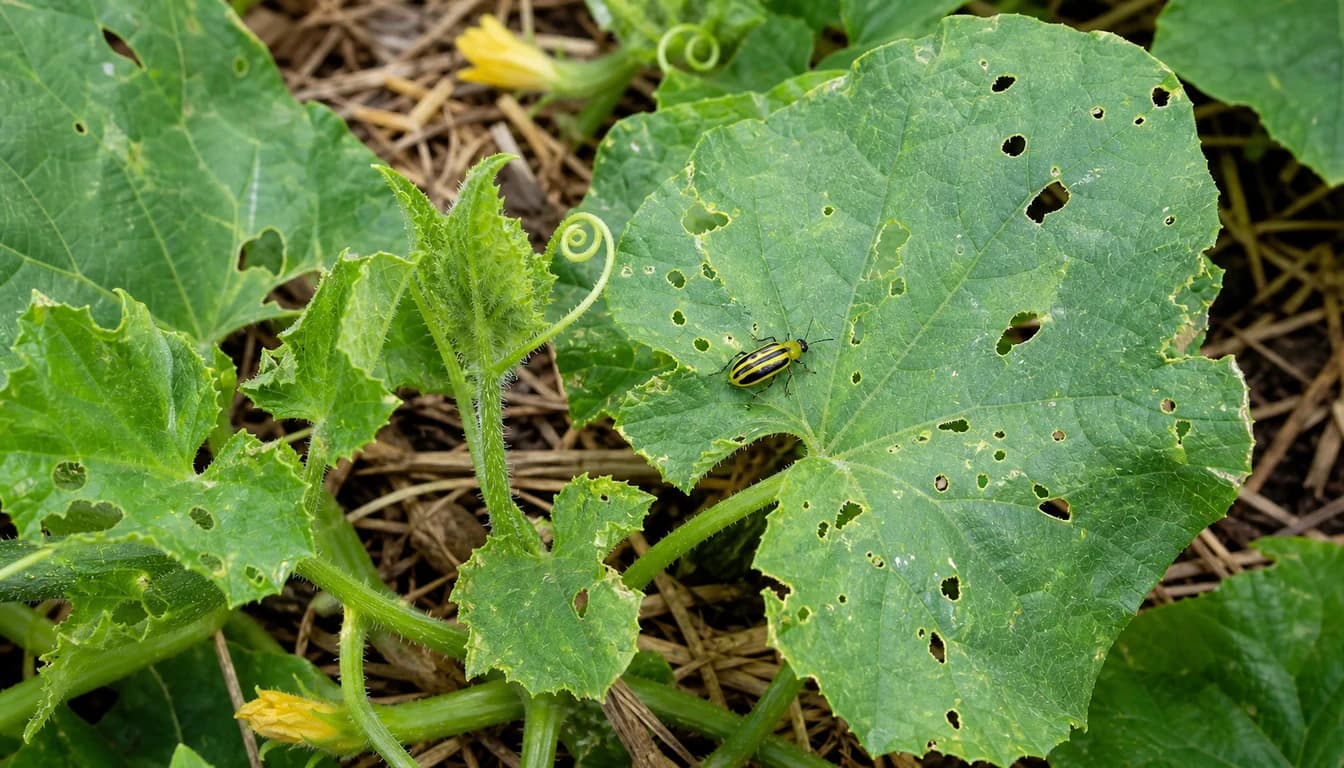
**Cucumber** beetle damage starts as chewing on cotyledons, young leaves, flowers, and fruit, but the bigger risk is bacterial wilt carried by striped and spotted beetles. A few holes are manageable; repeated feeding on young vines can stunt plants and transmit disease that makes vines collapse.

Cucumber vine leaves with ragged chewing holes and a yellow black-striped cucumber beetle in a vegetable bed.

Cucumber vine leaves with ragged chewing holes and a yellow black-striped cucumber beetle in a vegetable bed.

lightbulb
bolt

Quick Diagnosis

Most Likely Cause: Adult striped or spotted beetle feeding.

Check cotyledons, flowers, and the stem base on the same visit. Cucumber beetles are not just chewing pests; heavy feeding on seedlings and their ability to spread bacterial wilt make them a different problem from ordinary leaf nibbling on cucurbits.

Jump to fix steps arrow_downward

With Cucumber seedlings and vines, these beetles are dangerous early because they injure young plants and can vector bacterial wilt while the crop is still trying to establish. Later in the season, the same beetles may scar flowers and fruit without killing the plant outright, so your fix depends on plant age and symptom mix.

The route-owned problem is pest feeding plus disease risk. Powdery white coating belongs on powdery mildew on Cucumber; dark sunken fruit ends belong somewhere else. Here, look for small holes, ragged edges, scarred young fruit, beetles in flowers, and sudden wilt after feeding.

Early control matters because beetles can carry Erwinia tracheiphila, the bacterial wilt pathogen. Protect young plants with row cover until flowering begins, then remove or manage covers so pollinators can reach blooms.

menu_book
Guide - See AlsoAir Purifying Plants for Cleaner Indoor Air
chevron_right
psychology

Read the holes, then read the wilt risk

The visible damage is chewing; the hidden risk is disease transmission. Adult beetles make the holes you can see, but each feeding wound also gives bacterial wilt a chance to enter a susceptible Cucumber vine.

Seedlings deserve the most protection because they have little spare leaf area. A mature vine can outgrow light feeding, but a two-leaf seedling can be set back hard before it ever reaches the trellis.

Do not confuse this with a leaf disease pattern. Beetle damage removes tissue and may leave scarred fruit; natural pest control timing matters because controls work best before beetles spread from plant to plant.

thermostat

Environmental Baseline

Before diagnosing specific failures, confirm your Cucumber for Home Vegetable Gardens's environment matches its core care requirements.

forestCucumber for Home Vegetable Gardens Care Needs

  • Light: Full sun (6-8+ hours)
  • Water: Consistently moist, not soggy
  • Temp: Best fruit set at 70-85°F

homeTypical Indoor Home

  • Humidity: 30-50% (Low)
  • Temp: 65-72°F variable
  • Light: Often too dim or direct
biotech

Possible Causes

Sorted by likelihood

1. Adult beetle feeding on leaves, flowers, and fruit

Likelihood: High

Striped and spotted beetle adults chew cotyledons, young leaves, blossoms, and fruit skin. This is the most common reason gardeners notice holes and rough scars on Cucumber vines.

Identification

  • remove_circle_outlineSmall round or ragged holes appear on cotyledons and first true leaves.
  • remove_circle_outlineYellow beetles with black stripes or spots are visible on foliage, inside flowers, or near young fruit.
  • remove_circle_outlineFruit develops shallow scarring, pits, or rough feeding marks instead of clean cracks.
  • remove_circle_outlineSeedlings stall because beetles removed too much early leaf area.

The Fix

  1. 1Scout vines 2-3 times per week while seedlings are small and hand-pick beetles into soapy water when numbers are low.
  2. 2Cover seedlings with lightweight row cover right after planting; uncover or hand-pollinate once female flowers need pollination.
  3. 3Use trap crops or yellow sticky cards only as monitoring support, not as the whole control plan.
  4. 4Apply labeled organic controls only when beetles are active and pollinators are not visiting flowers.
  5. 5Replace destroyed seedlings if the growing season still has enough warm weeks for a new vine to crop.

2. Bacterial wilt carried by beetles

Likelihood: Medium

These beetles can move Erwinia tracheiphila into feeding wounds. Once bacterial wilt is inside a susceptible vine, water movement fails and the plant can collapse even when the soil is moist.

Identification

  • remove_circle_outlineOne runner or the whole vine wilts suddenly during warm weather while nearby soil is not dry.
  • remove_circle_outlineWilt follows a period of visible beetle feeding on the same plant or nearby cucurbits.
  • remove_circle_outlineLeaves flag, yellow, and fail to rebound overnight.
  • remove_circle_outlineA cut stem may show sticky strands when the cut ends are touched together and pulled apart.

The Fix

  1. 1Remove badly wilted vines from the garden and discard them; do not leave collapsing tissue where beetles can keep feeding.
  2. 2Lower adult beetle pressure on neighboring vines before more feeding wounds appear.
  3. 3Keep row cover on young plants until flowering begins so beetles cannot infect seedlings early.
  4. 4Do not rely on fertilizer or extra water to cure wilted vines; prevention is the real control.
  5. 5Plant the next cucurbit crop away from heavy beetle pressure when bed space allows.

3. Larval root feeding and repeat cucurbit beds

Likelihood: Low

Beetle larvae can feed on cucurbit roots, especially where cucurbits return to the same bed. Root feeding usually adds stress rather than explaining every visible hole, but it can weaken transplants.

Identification

  • remove_circle_outlinePlants stay stunted even after top growth is protected from adult feeding.
  • remove_circle_outlineRoots near the crown look reduced or chewed when a failed plant is lifted.
  • remove_circle_outlineThe same bed has grown cucurbits repeatedly and beetle pressure returns every season.
  • remove_circle_outlineLeaf holes are mild, but the vine lacks vigor compared with protected plants.

The Fix

  1. 1Rotate cucurbits out of the same bed for at least one season when pressure has been heavy.
  2. 2Remove old vines and volunteer cucurbits that keep pests near the bed.
  3. 3Build steady soil moisture and organic matter so roots recover from minor feeding.
  4. 4Use beneficial nematodes only when larval pressure is confirmed, not as a default treatment.
  5. 5Plan cucurbit placement within a broader vegetable garden rotation instead of repeating the same row.
menu_book
Guide - See AlsoBest Herbs to Grow Indoors for Real Harvests, Not Spindly Pots
chevron_right
potted_plant

Root Health Examination

A direct inspection of the root system distinguishes root rot from drought stress - saving weeks of guesswork.

check_circleHealthy Roots

  • Firm to the touch
  • White or light tan color
  • Earthy, pleasant smell

cancelCompromised Roots

  • Mushy or slimy texture
  • Dark brown or black color
  • Sour, rotting odor

Inspection Step: Gently slide the pot off while supporting the base of the stems. The outer root ball gives sufficient clues without disturbing all the soil.

gpp_bad
warning

When to Worry

A few yellow leaves are normal. If more than 20% of foliage turns yellow within a week, or new growth is affected, act immediately - check the roots first.

timeline

Recovery Protocols

Recovery takes time. Once the root cause is corrected, implement a 30-day stabilization window.

0-3 daysConfirm the beetles and protect seedlings

Check leaf undersides, flowers, and mulch around the crown. Remove beetles you can reach, cover young plants, and pull vines that are already collapsing from suspected bacterial wilt.

1-2 weeksWatch for new feeding and wilt

Healthy vines should push new growth if feeding stops. If a vine keeps wilting despite good moisture, treat it as a disease risk and remove it before beetles continue feeding on it.

Next plantingStart protection earlier

Use row cover from planting day, rotate cucurbit beds, and scout before flowers open. Waiting until beetles are already inside blossoms makes control much harder.

menu_book
Guide - See AlsoBest Indoor Plants for Every Room and Light Level
chevron_right
shield

Preventing Future Issues

Prevent Cucumber beetle damage by scouting 2-3 times per week while seedlings establish, covering young plants, rotating cucurbits, cleaning old vines, and using natural controls before beetle numbers explode. Pair that routine with companion planting that supports beneficial insects so young cucurbits are less exposed during beetle flights. Keep this page separate from fruit or mildew problems: if you see beetles, holes, scarred fruit, and sudden wilt, manage the pest first.

menu_book

Related Reads

menu_book
GuideAir Purifying Plants for Cleaner Indoor Air
chevron_right
menu_book
GuideBest Herbs to Grow Indoors for Real Harvests, Not Spindly Pots
chevron_right
menu_book
GuideBest Indoor Plants for Every Room and Light Level
chevron_right
menu_book
GuidePlan and Plant a Productive Cut Flower Garden
chevron_right
Cucumber for Home Vegetable Gardens (Cucumis sativus) - full care guideCucumis sativus

Cucumber for Home Vegetable Gardens

Cucurbitaceae Family

wb_sunny

Light

Full sun (6-8+ hours)

water_drop

Water

Consistently moist, not soggy

thermostat

Temp

Best fruit set at 70-85°F

yardFull Care Guide

On This Page

boltQuick DiagnosispsychologyUnderstandingthermostatEnvironment CheckbiotechPossible Causespotted_plantRoot ExamwarningWhen to WorrytimelineRecovery PlanshieldPreventionmenu_bookRelated Reads