yard
KnowTheYard

databasePlant Database

Browse by category

potted_plant

Houseplants

Indoor & tropical species

nutrition

Vegetables

Edible garden crops

spa

Herbs

Culinary & medicinal

local_florist

Flowers

Ornamental blooms

water_drop

Succulents

Drought-tolerant species

park

Trees

Arboreal species

forest

Shrubs

Bushes & hedges

nature

Perennials

Garden flowers

grass

Lawn Grasses

Turf varieties

local_dining

Fruits

Fruit-bearing plants

Best Indoor Plantsarrow_forwardBest Shade Plantsarrow_forward

menu_bookGarden Guides

Step-by-step guides by task type

grass

Lawn Care

Seasonal checklists and year-round maintenance guides for a championship lawn.

yard

Planting

When, where, and how to plant — from seed to transplant for every garden type.

water_drop

Watering

Deep-watering techniques, schedules by plant type, and drought management.

compost

Fertilizing

Feeding schedules, NPK ratios, and organic vs synthetic options by plant.

pest_control

Pest Control

Identify, prevent, and treat common garden pests without harming beneficial insects.

content_cut

Pruning

Pruning timing, techniques, and tools for trees, shrubs, and flowering plants.

Popular Guides

parkFall Lawn Carelocal_floristSpring Lawn Carecalendar_monthFull Calendar
All Guidesarrow_forwardLawn Care Hubarrow_forward
ToolsCompareRegional GuidesPlant ProblemsPet SafetyAbout
searchPlant Finder
yardKnowTheYard

Published plant profiles, practical care guides, problem diagnosis pages, and side-by-side comparisons for home gardeners.

chatphoto_camera

databaseBrowse Plants

  • arrow_forwardHouseplants
  • arrow_forwardVegetables
  • arrow_forwardHerbs
  • arrow_forwardFlowers
  • arrow_forwardTrees

menu_bookResources

  • arrow_forwardGarden Tools
  • arrow_forwardRegional Guides
  • arrow_forwardPlant Problems
  • arrow_forwardPet Safety
  • arrow_forwardCare Calendar
  • arrow_forwardPlant Finder

infoCompany

  • arrow_forwardAbout Us
  • arrow_forwardOur Team
  • arrow_forwardMethodology
  • arrow_forwardEditorial Policy
  • arrow_forwardContact Us

mailEmail Updates

Join the list for new guides, seasonal notes, and launch updates.

No spam. Request removal anytime.

fact_check

Reviewed Pages

77 pages currently attributed to public review lanes

public

USDA Zone Coverage

Zone-aware recommendations and regional growing context

database

230 Published Plant Profiles

555 public pages across profiles, guides, comparisons, and problem pages

© 2026 KnowTheYard. All rights reserved.

Privacy PolicyTerms of ServiceContactSitemap
Home/flowers/Knock Out Rose: Easy Landscape Roses With Real Limits/Rose Powdery Mildew
scienceEditorial DiagnosisUpdated Feb 20, 2026

Rose Powdery Mildew

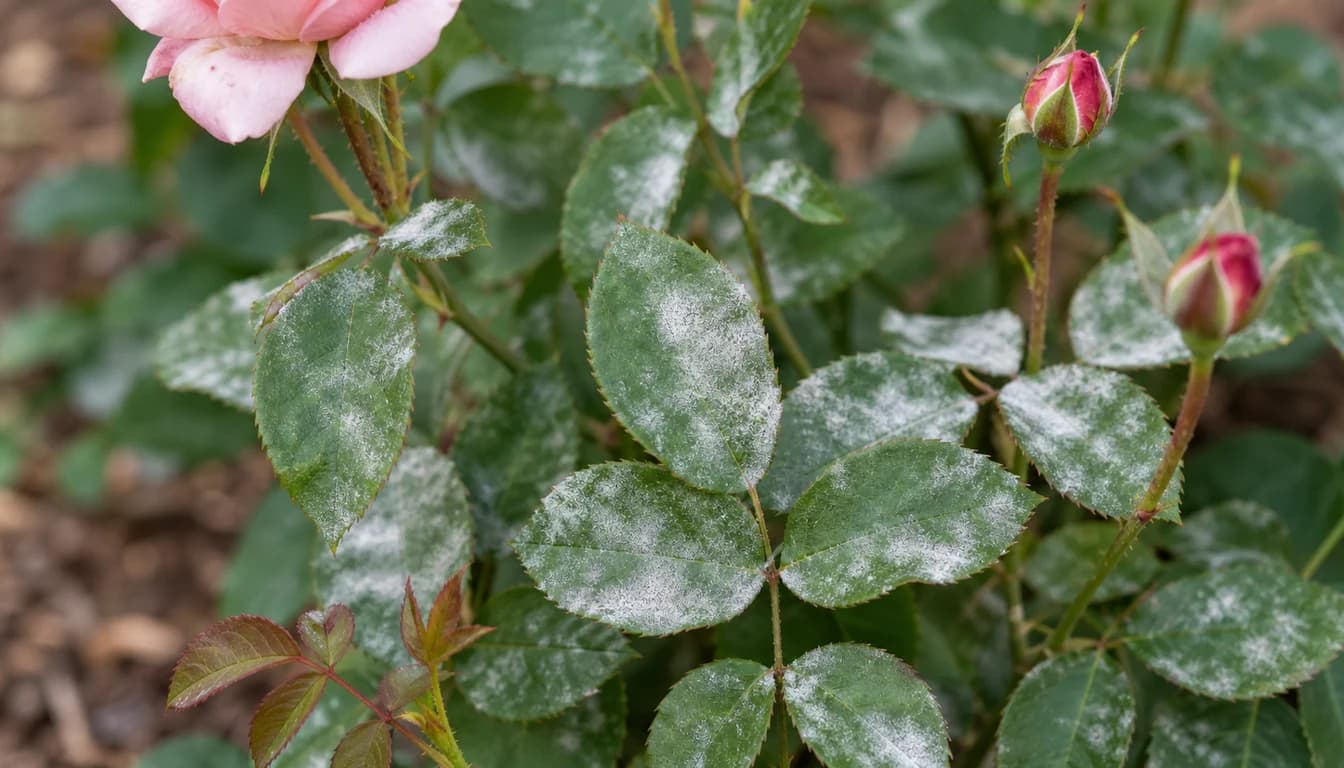
Powdery mildew on **Rose** plantings is a common fungal disease caused by species in the Erysiphales order - most often the Sphaerotheca pannosa complex or related fungi such as Podosphaera xanthii. It shows up as a dry, white, talc-like coating on leaves, shoots, buds, and sometimes flowers. Left unchecked it reduces flowering, causes leaf curl and drop, and can weaken canes over seasons. Management focuses on improving the plant’s microclimate, removing sources of inoculum, and targeted fungicide use when needed, especially where ==**shade and still air**== keep humidity trapped in the canopy.

Rose leaves and buds with white powdery mildew patches on the leaf surfaces

Rose leaves and buds with white powdery mildew patches on the leaf surfaces

lightbulb
bolt

Quick Diagnosis

Most Likely Cause: Powdery mildew (Podosphaera xanthii / Sphaerotheca pannosa complex).

White, talc-like powder on upper leaf surfaces and stems, new shoots distorted or curling, and infections that prefer shaded or poorly ventilated parts of the bush during warm days and cool nights; these symptoms are what we watch for when assessing basic basic rose care problems like powdery mildew so you can confirm the diagnosis quickly.

Jump to fix steps arrow_downward

Powdery mildew is most active from spring through fall where seasons alternate between warm daytime highs and cooler nights or where humidity stays moderate to high in shaded corners. Unlike many foliar fungi, it does not require long free leaf wetness to develop; humid still air with limited sunlight is often enough to allow spores to germinate and spread.

On roses (Rosa spp., family Rosaceae) the disease often begins on new, tender growth: the first sign is a dusting that looks like spilled flour. Severe build-ups stunt shoots, reduce the number and quality of blooms, and make plants look unsightly. The fungus overwinters in infected tissue and debris, so season-to-season sanitation matters.

Risk is highest in beds with poor air movement, tight spacing, and late afternoon shade. Practices that increase sunlight and drying - like selective pruning and raised beds for airflow - reduce risk. Chemical controls help, but pairing them with cultural changes lowers spray frequency and slows resistance risks.

compare_arrows
Comparison - See AlsoKnock Out Rose vs Drift Rose
chevron_right
psychology

How powdery mildew behaves and why it matters

Powdery mildew fungi produce dry, powdery spores that are easily carried by wind; they establish on the surface of leaves and draw nutrients through specialized structures, causing tissue distortion and reduced photosynthetic area. In roses this stress reduces bloom size and quantity and can leave canes weak if infections recur yearly.

Unlike black spot, which needs prolonged leaf wetness and shows dark circular lesions, powdery mildew appears as a dusty white coating and can form in drier conditions. Accurate diagnosis matters because cultural responses differ: improving air and sunlight targets powdery mildew prevention directly.

Because the fungus can overwinter in buds and fallen debris, cleaning up infected parts and applying protective measures the following season is a key part of long-term management. Combining sanitation, site changes, and targeted sprays reduces reliance on fungicides and slows resistance buildup.

thermostat

Environmental Baseline

Before diagnosing specific failures, confirm your Knock Out Rose: Easy Landscape Roses With Real Limits's environment matches its core care requirements.

forestKnock Out Rose: Easy Landscape Roses With Real Limits Care Needs

  • Light: Full sun, at least 6 hours for best bloom
  • Water: Deep weekly soak once established, more in heat
  • Temp: Prune after the worst winter cold has passed

homeTypical Indoor Home

  • Humidity: 30-50% (Low)
  • Temp: 65-72°F variable
  • Light: Often too dim or direct
biotech

Possible Causes

Sorted by likelihood

1. Fungal pathogen: Podosphaera xanthii / Sphaerotheca pannosa

Likelihood: High

Powdery mildew on roses is caused by fungi in the Erysiphales order; the Sphaerotheca pannosa complex and related species like Podosphaera xanthii are commonly identified on roses. These fungi produce powdery spores on exposed surfaces and spread by wind and splashing.

Identification

  • remove_circle_outlineWhite, talc-like fungal growth on upper leaf surfaces and young stems.
  • remove_circle_outlineTendrils of white growth on buds and shoots that can girdle tender tissue.
  • remove_circle_outlineNo black circular lesions, which helps distinguish mildew from Rose black spot.

The Fix

  1. 1Remove heavily infected leaves and thin crowded growth to improve air flow.
  2. 2Sanitize pruners between cuts and dispose of diseased material; do not compost severely infected tissue.
  3. 3Apply an appropriate fungicide early in the season if cultural controls don't keep it in check.
  4. 4Repeat only according to the product label and rotate modes of action if repeated sprays are needed.

2. Poor air circulation and shade

Likelihood: High

Stagnant air and shade prolong leaf wetness and raise localized humidity, creating a microclimate where powdery mildew spores germinate readily even without standing water.

Identification

  • remove_circle_outlineSymptoms concentrated on inner canopy leaves and north-facing sides of the plant.
  • remove_circle_outlineNearby hedges, fences, or tight plant spacing that block breeze.
  • remove_circle_outlineMildew returns quickly after sprays because the canopy stays shaded and still.

The Fix

  1. 1Prune to open the center of the bush and remove crossing canes to increase breeze through the canopy.
  2. 2Space new Rose plants to allow at least 2-3 feet of airflow between bushes depending on variety size.
  3. 3Trim or relocate nearby shrubs that create persistent shade during critical growth months.
  4. 4Keep irrigation and mulch away from the crown so the center dries faster.

3. High humidity with warm days and cool nights

Likelihood: Medium

Powdery mildew prefers moderate to high humidity and performs well during warm daytime temperatures paired with cool nights; this combination stresses young growth and encourages infection.

Identification

  • remove_circle_outlineOutbreaks after stretches of muggy weather with little wind.
  • remove_circle_outlineHeavy infection following cool, damp nights more than after hot, dry spells.
  • remove_circle_outlineNew shoots curl while older leaves carry a white dusting.

The Fix

  1. 1Avoid overhead irrigation late in the day and use morning flower watering so foliage dries quickly.
  2. 2Improve drainage and reduce nearby sources of humid air like irrigation misters.
  3. 3Choose morning sun sites or prune to expose inner canopy to light and heat.
  4. 4Avoid heavy late nitrogen that pushes soft, mildew-prone growth.
menu_book
Guide - See AlsoAir Purifying Plants for Cleaner Indoor Air
chevron_right
potted_plant

Root Health Examination

A direct inspection of the root system distinguishes root rot from drought stress - saving weeks of guesswork.

check_circleHealthy Roots

  • Firm to the touch
  • White or light tan color
  • Earthy, pleasant smell

cancelCompromised Roots

  • Mushy or slimy texture
  • Dark brown or black color
  • Sour, rotting odor

Inspection Step: Gently slide the pot off while supporting the base of the stems. The outer root ball gives sufficient clues without disturbing all the soil.

gpp_bad
warning

When to Worry

A few yellow leaves are normal. If more than 20% of foliage turns yellow within a week, or new growth is affected, act immediately - check the roots first.

timeline

Recovery Protocols

Recovery takes time. Once the root cause is corrected, implement a 30-day stabilization window.

0-1 weekImmediate actions and visible response

Remove heavily infected leaves and thin the canopy now; plants may look immediately cleaner, but existing white growth on stems will not disappear instantly. New growth should begin emerging within a week if environmental stress is reduced.

2-4 weeksRegrowth and reduced spread

With improved airflow and early fungicide applications, expect to see new, healthy leaves replacing damaged ones within two to four weeks. Repeat sanitation during this period to reduce reinfection. Flowering may be reduced but should recover as the plant redirects energy to new shoots.

4-12 weeksFull recovery and monitoring

Recovery depends on severity and the season: roses pruned and managed in spring often regain vigor and bloom later that season, while late-season infections may take until next spring to fully recover. Monitor regularly and plan preventive steps for the next growth cycle.

menu_book
Guide - See AlsoBest Herbs to Grow Indoors for Real Harvests, Not Spindly Pots
chevron_right
shield

Preventing Future Issues

Prevent recurrence by improving air movement, giving Rose beds full sun where possible, adding compost for better soil health benefits, removing and destroying infected debris each fall, avoiding late-season high-nitrogen feedings, and rotating fungicide classes when sprays are necessary to reduce resistance. What is Rose powdery mildew? A fungal disease that creates a white, powdery coating on plant surfaces. Confirm with symptom pattern and look for curling or distortion on new growth.

menu_book

Related Reads

compare_arrows
ComparisonKnock Out Rose vs Drift Rose
chevron_right
menu_book
GuideAir Purifying Plants for Cleaner Indoor Air
chevron_right
menu_book
GuideBest Herbs to Grow Indoors for Real Harvests, Not Spindly Pots
chevron_right
menu_book
GuideBest Indoor Plants for Every Room and Light Level
chevron_right
menu_book
GuideFull Sun Perennials for All-Day Hot Spots
chevron_right
menu_book
GuideLow Maintenance Plants for Hands-Off Gardens
chevron_right
Knock Out Rose: Easy Landscape Roses With Real Limits (Rosa 'Knock Out') - full care guideRosa 'Knock Out'

Knock Out Rose: Easy Landscape Roses With Real Limits

Rosaceae Family

wb_sunny

Light

Full sun, at least 6 hours for best bloom

water_drop

Water

Deep weekly soak once established, more in heat

thermostat

Temp

Prune after the worst winter cold has passed

yardFull Care Guide

On This Page

boltQuick DiagnosispsychologyUnderstandingthermostatEnvironment CheckbiotechPossible Causespotted_plantRoot ExamwarningWhen to WorrytimelineRecovery PlanshieldPreventionmenu_bookRelated Reads