
Rhododendron Bud Blast or Frost Damage? Check the Bud Surface
True rhododendron bud blast leaves brown flower buds attached and later covers them with tiny black bristles. Compare that surface with a smooth frost-killed bud, wet gray mold, and an incompletely formed bud before choosing sanitation or weather protection.
Quick diagnosis
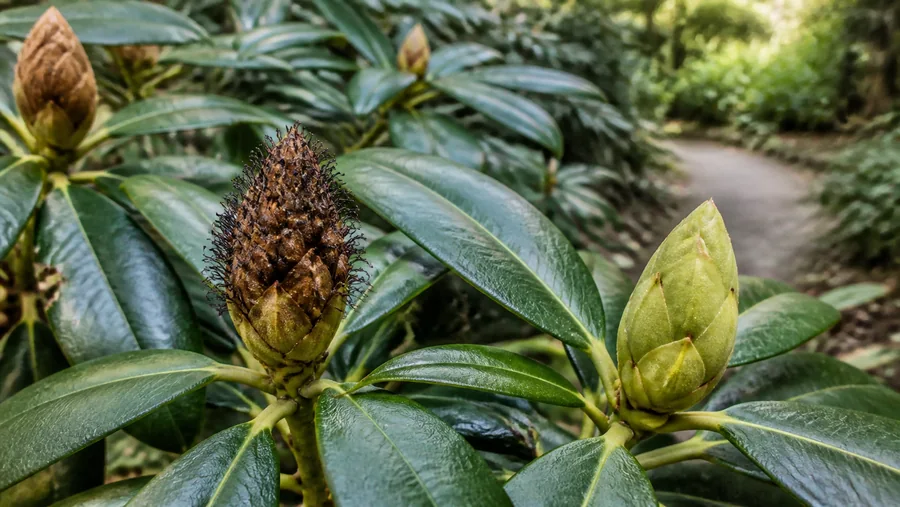
Tiny black bristles support true fungal bud blast
Look closely at several brown unopened flower buds.
A hard bud that stays attached and grows many tiny black pin-like bristles strongly supports bud blast caused by Seifertia azaleae.
A smooth brown or black bud after a freeze points to cold injury instead, especially when the exposed side of the shrub is worst. Soft water-soaked tissue or gray fuzzy growth after long wet weather fits Botrytis, while a narrow pointed bud may simply be a vegetative bud rather than a failed flower.
Open the full diagnosisWhat You Are Seeing
The name bud blast gets used loosely for any rhododendron bud that fails, but the named disease leaves a visible fungal sign.
A brown bud on its own is evidence of dead tissue, not proof of a cause.
Confirm that the failed structure is a flower bud. Rhododendron flower buds are plump and rounded, vegetative buds are narrower and pointed, and a spent truss shows the branched stalks where petals already opened and fell.
Judge the rest of the shrub before focusing on the buds.
Isolated dead buds on firm shoots belong here, while widespread wilt, weak roots, bark damage, or collapsing branches call for a root, crown, or stem diagnosis first.
Common Causes
01 High likelihood when black bristles cover attached buds
True fungal bud blast
Seifertia azaleae, formerly called Pycnostysanus azaleae, infects rhododendron flower buds. The buds turn brown, fail to open, stay attached, and may go silvery gray before dark bristle-like fruiting structures cover the surface.
Those bristles carry spores, which makes the disease far more specific than a smooth dead bud.
Infected buds can hang on the shrub for years, so one old bud may be producing inoculum right beside healthy developing ones.
How to identify it
- Brown flower buds stay sealed and attached beyond the normal bloom period.
- Tiny black pins or hairs project from the bud scales instead of forming a soft gray film.
- Affected buds may be scattered among healthy buds on otherwise firm green shoots.
- The same marked buds remain in place after surrounding healthy flower trusses open and fade.
What to do
- Pick off affected buds when the shrub is small enough to reach without tearing healthy shoots.
- Bag the removed buds for disposal rather than leaving their spore-bearing surfaces beneath the shrub.
- Inspect the plant again after leafhopper activity and before the next bloom because older infected buds are easy to miss inside dense foliage.
- Ask a local extension or plant clinic to confirm uncertain samples before starting any fungicide program, then follow only products labeled for the plant, disease, place, and timing.
02 High likelihood after a sudden cold event
Winter injury or a late freeze
Flower buds lose hardiness during an autumn warm spell, a winter thaw, or spring swelling.
A sudden return to cold kills the flower tissue while the evergreen leaves and woody shoots survive.
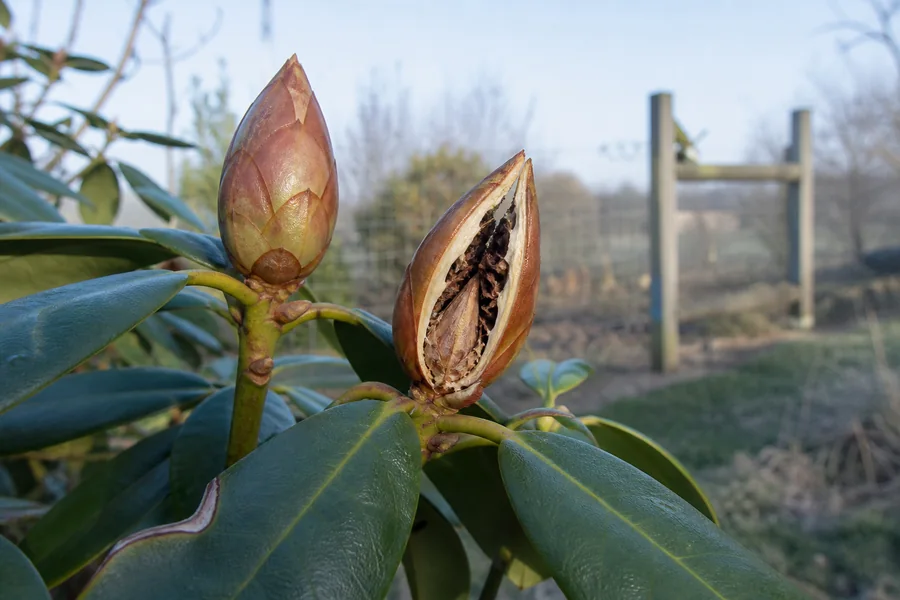
Cold-killed buds turn brown or black, but their scales stay smooth rather than growing the hard black bristles of Seifertia. The damage follows exposure, hitting the top, the windward side, a low frost pocket, or an earlier-swelling cultivar hardest.
How to identify it
- Bud failure follows a documented cold snap after mild weather or visible bud swelling.
- Smooth brown buds contain dark or dry tissue when one sample is split lengthwise.
- Sheltered buds or a later cultivar on the same property survive better than exposed buds.
- Nearby shrubs may show the same event pattern, and rhododendron leaves may also show bark splits or brown exposed margins.
What to do
- Wait until spring growth shows the boundary between living and dead tissue before pruning more than the failed buds.
- Remove a dead bud for appearance, but retain the firm shoot below it because healthy vegetative growth may still emerge.
- Use a breathable frost cover over reachable shrubs during a forecast late freeze and keep the fabric from crushing swelling buds.
- When damage repeats, choose a hardier or later-blooming cultivar and a site protected from winter wind and rapid late-winter warming.
03 Medium likelihood after a dry late summer
Drought interrupted flower-bud formation
Rhododendrons begin forming next spring's flower buds in late summer.
A short dry period at that stage stops the buds forming fully, leaving them small, partly developed, dry, or ready to drop unopened months later.
This pattern is a delayed record of last season, so watering after the buds fail cannot rebuild them. Leaf droop or rolling during the previous summer, dry soil beneath the mulch, and better buds where roots stayed evenly moist all support it.
How to identify it
- The shrub entered late summer drought while terminal buds were developing.
- Failed buds are small or partially formed without black bristles or gray mold.
- Older leaves showed rolling, droop, edge browning, or premature drop during the same dry period.
- Irrigated portions or neighboring shrubs with cooler root zones formed fuller flower buds.
What to do
- Check moisture beneath the surface mulch and water the shallow root zone thoroughly when it begins to dry.
- Spread organic mulch over the root area to slow evaporation while keeping it several inches away from stems and the crown.
- Extend irrigation as the shrub canopy and root spread increase, and check emitters for blocked or uneven delivery.
- Judge recovery by plump new flower buds that form in late summer, not by expecting this spring's dry buds to reopen.
04 Medium likelihood in prolonged cool wet conditions
Botrytis bud or flower blight
Botrytis infects buds, flowers, leaves, and tender shoots wherever moisture persists.
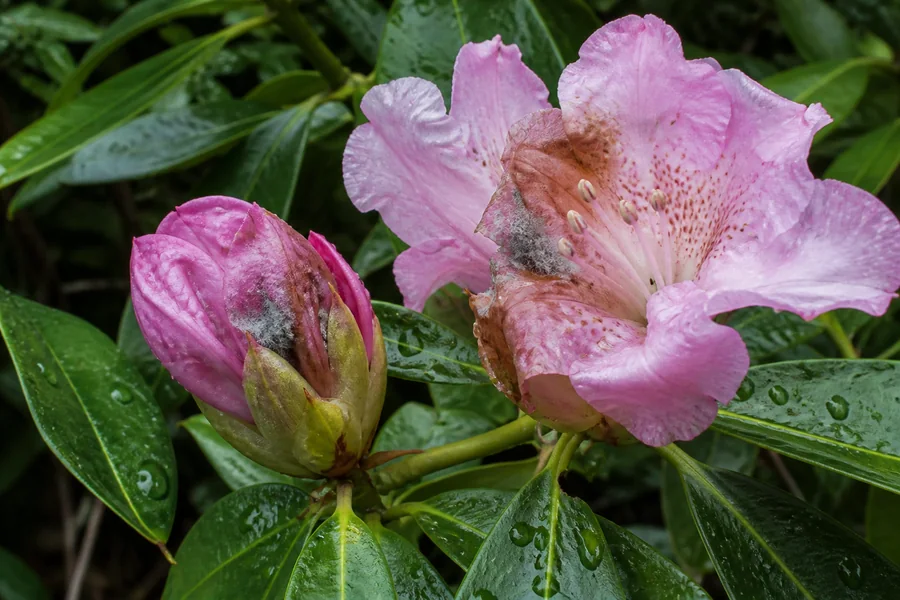
Affected tissue develops water-soaked brown areas and can carry a soft gray powdery or fuzzy spore mass.
Texture and timing separate it from classic bud blast. Botrytis turns up around wet bloom weather and often involves partly opened petals, while Seifertia leaves a firm sealed bud with distinct black bristles.
How to identify it
- Brown areas first look wet or translucent rather than hard and dry.
- Soft gray growth appears on bud scales, injured petals, leaves, or tender shoot tissue.
- Symptoms expand during long periods of rain, condensation, or dense humid shelter.
- Partly opened flowers may spot, mat together, and collapse instead of remaining as one sealed hard bud.
What to do
- Remove badly affected buds, flowers, and fallen flower debris during dry weather without shaking spores across healthy blooms.
- Water the root zone instead of wetting flowers and buds, while recognizing that rain and humidity cannot be eliminated.
- Thin only dead, crossing, or badly congested growth at a suitable time so air can move without stripping the evergreen canopy.
- Seek local diagnosis and label guidance if wet-weather blight continues because product availability and timing vary by location.
05 Possible when the bud remains firm and clean
The bud is vegetative or simply not ready
Rhododendrons carry separate flower and vegetative buds, and the two never open into the same structure. A narrow pointed bud produces leaves or a shoot, while a plumper rounded flower bud holds the coming truss.
Cultivars also bloom at different times, so a firm clean bud can stay closed after a neighboring rhododendron has finished.
Removing it because the scales look naturally tan erases healthy growth or a later flower cluster.
How to identify it
- The bud is firm, evenly colored, and free of black bristles, soft gray growth, or collapsing tissue.
- Narrow buds occur consistently at many shoot tips and begin pushing green leaves.
- Matching shrubs of the same cultivar and exposure have not reached their normal bloom time.
- A plump sample shows healthy green or cream tissue rather than a dry brown interior when professional diagnosis requires a cut check.
What to do
- Compare several buds on the same shrub and wait for the cultivar's normal bloom window before removing firm buds.
- Photograph flower and leaf buds as they open so next year's inspection uses the plant's own evidence.
- Do not cut a healthy shoot merely because it lacks a flower bud because the vegetative bud may build future flowering wood.
- Shift to a no-bloom diagnosis only when the shrub formed few or no flower buds rather than buds that died unopened.
The black bristles are fungal structures, not insect eggs
The tiny black projections on an infected bud are coremia produced by Seifertia azaleae.
They carry spores, which is why a dead bud that stays attached still matters long after its flower is lost.
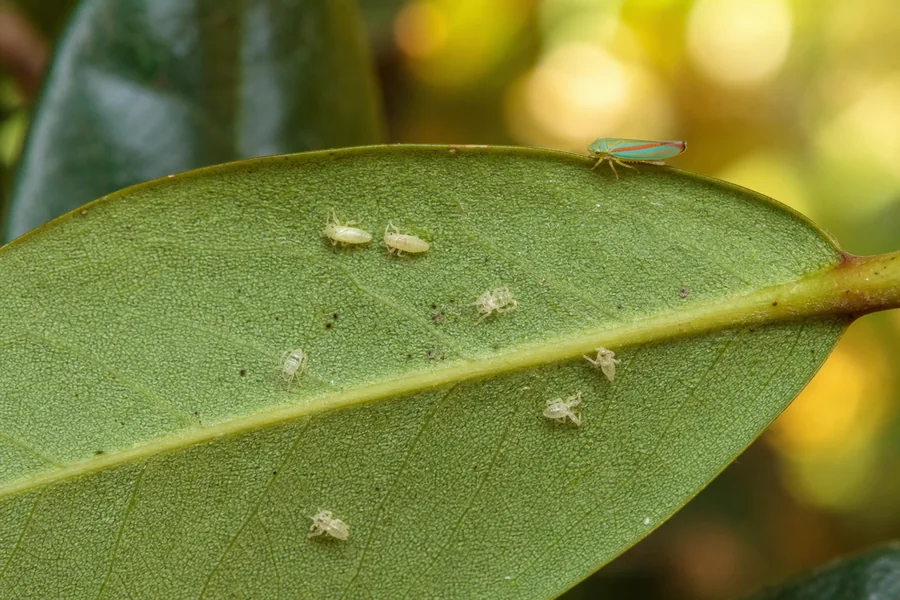
Rhododendron leafhoppers come up in the same conversation because females cut egg incisions into developing flower buds in late summer and autumn. The insects may create entry wounds or help move the fungus, though research has questioned whether their presence alone explains infection.
Creamy white wingless nymphs feed beneath the leaves in spring, and their empty white cast skins stay behind.
Blue-green adults with orange markings become conspicuous later in summer and jump quickly when disturbed.
Finding leafhoppers supports closer bud monitoring rather than an automatic insecticide treatment. Their feeding causes little visible damage to foliage or vigor, and clearing every mobile adult is unrealistic when they return from nearby shrubs.
Black Bristles, a Smooth Bud, or Gray Mold
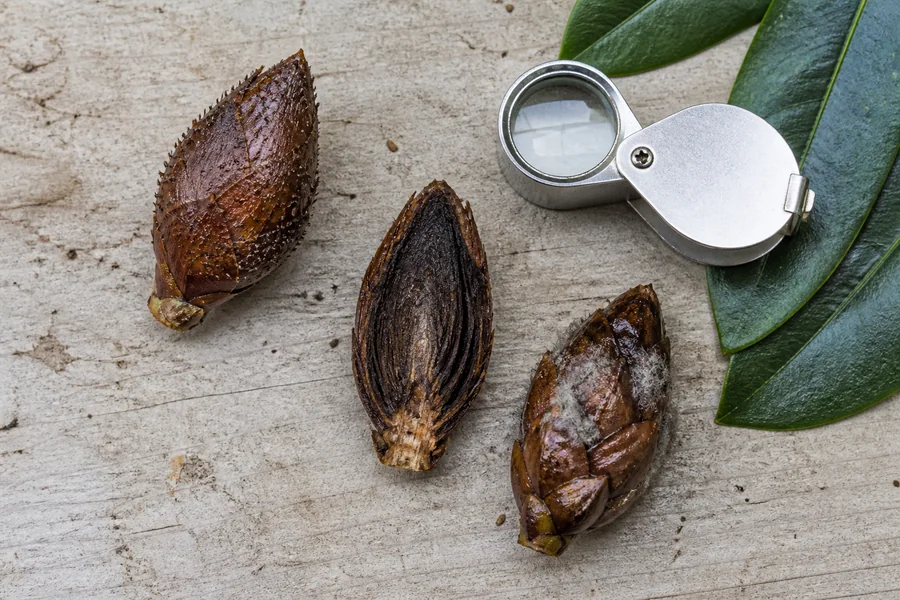
Use color as the starting observation and texture as the stronger evidence. Check at least three failed buds because an old fungal bud, a newly frozen bud, and a wet damaged flower can occur at different times on one large shrub.
- Hard brown bud with tiny black bristles
- True Seifertia bud blast is likely. Remove reachable infected buds, dispose of them away from the shrub, and inspect developing buds later in the season.
- Smooth brown or black bud after cold
- Cold injury is more likely when the cut interior is dark and the exposed side or early-swelling buds are worst. Protect future swelling buds rather than treating a fungus by default.
- Wet brown tissue with soft gray growth
- Botrytis is more likely during prolonged damp weather, especially when partly opened petals, leaves, or shoots also show water-soaked damage.
A hand lens makes the hard black bristles easier to see, while a clean lengthwise cut through one sample can reveal smooth cold-killed tissue. Do not repeatedly cut healthy buds after the pattern is clear.
If none of the three patterns fits, keep one affected shoot and one healthy shoot for a local plant clinic. A sample that preserves both the boundary and the bud surface is more useful than a bag of detached brown scales.
Recovery Plan
Mark the pattern before removing buds
Photograph affected and healthy buds on the same shrub, note which side is worst, and record recent frost or wet weather.
Pick off only buds with clear black bristles or tissue that is fully dead, and keep a sample when the diagnosis is uncertain.
Separate lost flowers from healthy shoots
A dead flower bud cannot reopen this season, though the firm shoot below it may still make leaves and branches. Remove dead twig tissue only once new growth shows its living boundary, and watch whether Botrytis continues on flowers through wet weather.
Monitor leaves and remove old inoculum
Check leaf undersides for leafhopper nymphs and cast skins without treating their presence as proof of disease.
Revisit the shrub for old bristled buds hidden by new foliage, and dispose of any infected material you can reach.
Protect and assess the next flower-bud cycle
Keep root-zone moisture steady while the new flower buds form, then note whether they go into winter plump and clean. The repair has worked when those buds overwinter and open normally, not merely when the shrub pushes a flush of leaves.
Inspect for old bristled buds after bloom and again when foliage thins enough to see the branch tips. Removing reachable infected buds reduces a nearby spore source, but sanitation cannot guarantee that every new infection will stop.
Protect the shallow root zone while next year's flower buds form in late summer. Water during dry periods, maintain a loose organic mulch without piling it against stems, and avoid pushing tender late growth with unnecessary fertilizer.
Reduce cold risk by choosing hardy cultivars with bloom timing suited to the site and by avoiding frost pockets or exposed winter wind. Monitor leaf undersides for rhododendron leafhopper stages, encourage natural predators, and use a pesticide only when local guidance and the product label support a specific need.
Do not use one treatment for every brown bud. Smooth frost injury, incomplete drought-affected buds, and wet gray Botrytis damage each need a different prevention plan, while widespread wilt or shoot decline needs a separate root or stem diagnosis.
Sources
- Rhododendron Bud and Twig Blight, Oregon State University
- Rhododendron Diseases, Royal Horticultural Society
- Rhododendron Leafhopper and Bud Blast, Royal Horticultural Society
- Azaleas and Rhododendrons, Identify and Manage Problems, University of Maryland Extension
- Identifying, Treating, and Avoiding Rhododendron and Azalea Problems, Washington State University Extension