yard
KnowTheYard

databasePlant Database

Browse by category

potted_plant

Houseplants

Indoor & tropical species

nutrition

Vegetables

Edible garden crops

spa

Herbs

Culinary & medicinal

local_florist

Flowers

Ornamental blooms

water_drop

Succulents

Drought-tolerant species

park

Trees

Arboreal species

forest

Shrubs

Bushes & hedges

nature

Perennials

Garden flowers

grass

Lawn Grasses

Turf varieties

local_dining

Fruits

Fruit-bearing plants

Best Indoor Plantsarrow_forwardBest Shade Plantsarrow_forward

menu_bookGarden Guides

Step-by-step guides by task type

grass

Lawn Care

Seasonal checklists and year-round maintenance guides for a championship lawn.

yard

Planting

When, where, and how to plant — from seed to transplant for every garden type.

water_drop

Watering

Deep-watering techniques, schedules by plant type, and drought management.

compost

Fertilizing

Feeding schedules, NPK ratios, and organic vs synthetic options by plant.

pest_control

Pest Control

Identify, prevent, and treat common garden pests without harming beneficial insects.

content_cut

Pruning

Pruning timing, techniques, and tools for trees, shrubs, and flowering plants.

Popular Guides

parkFall Lawn Carelocal_floristSpring Lawn Carecalendar_monthFull Calendar
All Guidesarrow_forwardLawn Care Hubarrow_forward
ToolsCompareRegional GuidesPlant ProblemsPet SafetyAbout
searchPlant Finder
yardKnowTheYard

Published plant profiles, practical care guides, problem diagnosis pages, and side-by-side comparisons for home gardeners.

chatphoto_camera

databaseBrowse Plants

  • arrow_forwardHouseplants
  • arrow_forwardVegetables
  • arrow_forwardHerbs
  • arrow_forwardFlowers
  • arrow_forwardTrees

menu_bookResources

  • arrow_forwardGarden Tools
  • arrow_forwardRegional Guides
  • arrow_forwardPlant Problems
  • arrow_forwardPet Safety
  • arrow_forwardCare Calendar
  • arrow_forwardPlant Finder

infoCompany

  • arrow_forwardAbout Us
  • arrow_forwardOur Team
  • arrow_forwardMethodology
  • arrow_forwardEditorial Policy
  • arrow_forwardContact Us

mailEmail Updates

Join the list for new guides, seasonal notes, and launch updates.

No spam. Request removal anytime.

fact_check

Reviewed Pages

77 pages currently attributed to public review lanes

public

USDA Zone Coverage

Zone-aware recommendations and regional growing context

database

230 Published Plant Profiles

555 public pages across profiles, guides, comparisons, and problem pages

© 2026 KnowTheYard. All rights reserved.

Privacy PolicyTerms of ServiceContactSitemap
Home/vegetables/Cucumber for Home Vegetable Gardens/Powdery Mildew Cucumber
scienceEditorial DiagnosisUpdated Feb 20, 2026

Powdery Mildew on Cucumber

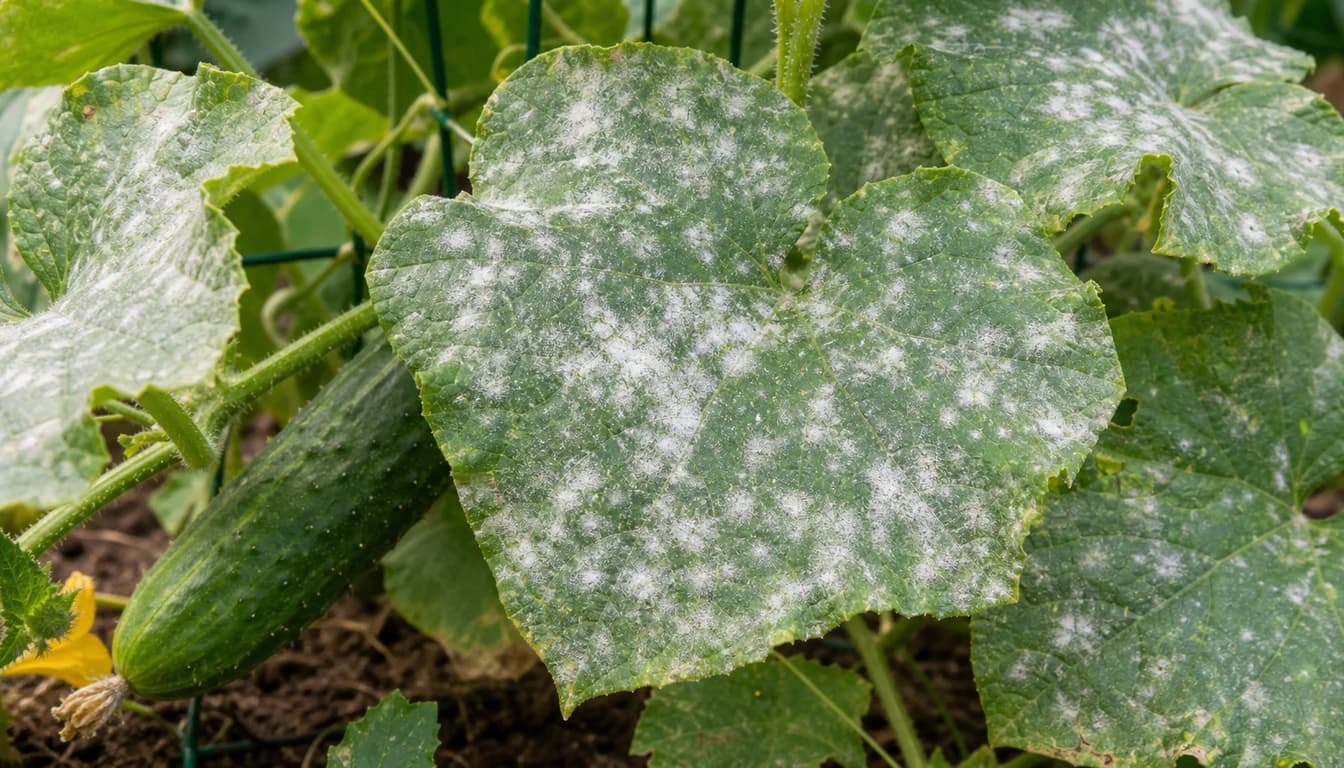
Powdery mildew on **Cucumber** starts as white, floury patches on older leaves and can cut fruit size when the canopy loses too much healthy leaf area. Confirm the powdery upper-leaf coating, open the vines for airflow, water at the soil, and protect new growth during ==**60-80 F**== mildew weather.

Cucumber leaves with white powdery mildew patches and a small cucumber on the vine

Cucumber leaves with white powdery mildew patches and a small cucumber on the vine

lightbulb
bolt

Quick Diagnosis

Most Likely Cause: Powdery mildew (usually Podosphaera xanthii).

Do a thumb test before calling it dust. If the white coating on Cucumber leaves sits mostly on the upper surface and wipes partly onto your skin, powdery mildew is more likely than nutrient spotting or dried spray residue; the same disease on Watermelon leaves a very similar film.

Jump to fix steps arrow_downward

Powdery mildew on cucumber vines usually starts as a light surface infection and then steals leaf area right when the plant should be filling fruit. Because cucurbits can still look vigorous early on, many gardeners wait too long and treat only after lower leaves are already declining.

Use local timing to scout before the canopy closes; Zone 6 season notes are a useful benchmark for many temperate gardens. Once the first white patches appear, treat the canopy and watering rhythm together instead of spraying leaves while the bed stays crowded.

This disease reduces the leaf area available for photosynthesis, so fruit can stay smaller when several lower leaves collapse. It thrives around 60-80 F (15-27 C) when nights are cooler than days, especially with repeated dew or overhead irrigation.

Soil and plant nutrition matter too. Well-drained, fertile soil with pH near 6.0-6.8 helps Cucumber resist stress; too much nitrogen produces soft, lush foliage that mildew colonizes quickly.

pest_control
Plant Problem - See AlsoCucumber Beetle Damage
chevron_right
psychology

How cucumber powdery mildew differs from other leaf problems

Powdery mildew creates loose, powdery white growth on the upper leaf surface. It often rubs off on your finger, which separates it from pale nutrient stress or ordinary dust.

Downy mildew is the common lookalike. It usually makes angular yellow to brown patches on the upper surface with gray or purple fuzzy growth underneath; that underside check matters before you choose a treatment.

The fix is cumulative: reduce humidity in the canopy, protect healthy new leaves, and rotate labeled products if sprays are needed. Cultural changes alone may slow a light infection, but established mildew can rebound quickly in warm, humid weather.

thermostat

Environmental Baseline

Before diagnosing specific failures, confirm your Cucumber for Home Vegetable Gardens's environment matches its core care requirements.

forestCucumber for Home Vegetable Gardens Care Needs

  • Light: Full sun (6-8+ hours)
  • Water: Consistently moist, not soggy
  • Temp: Best fruit set at 70-85°F

homeTypical Indoor Home

  • Humidity: 30-50% (Low)
  • Temp: 65-72°F variable
  • Light: Often too dim or direct
biotech

Possible Causes

Sorted by likelihood

1. Powdery mildew fungus on the leaf surface

Likelihood: High

The main pathogen produces powdery white spores on living Cucumber leaves. It does not need standing water to infect, so a dry-looking leaf can still develop mildew when the canopy stays humid.

Identification

  • remove_circle_outlineWhite or grayish powdery patches sit mostly on the upper leaf surface.
  • remove_circle_outlineEarly circular spots expand and merge into larger dusty areas.
  • remove_circle_outlineOlder lower leaves usually show symptoms before the newest vine tips.
  • remove_circle_outlineSevere cases cause yellowing, curling, and early leaf drop.

The Fix

  1. 1Remove heavily infected leaves to reduce spore load, but leave enough healthy foliage to shade developing fruit.
  2. 2Train vines on a trellis or prune crowded interior growth so leaves dry faster.
  3. 3Begin labeled organic or synthetic controls at first visible powder if cultural changes do not slow spread.
  4. 4Choose mildew-resistant Cucumber cultivars next season if this bed gets annual pressure.
  5. 5Avoid composting heavily infected foliage at the end of the season.

2. Humid, crowded canopy conditions

Likelihood: Medium

A dense Cucumber canopy traps humidity around older leaves. Even without rain, cool nights, dew, and low airflow can keep the leaf surface favorable for mildew.

Identification

  • remove_circle_outlineSymptoms cluster inside the row, near fences, or in low-airflow corners.
  • remove_circle_outlineLeaves stay damp with dew long after nearby open beds dry.
  • remove_circle_outlineMildew starts where vines overlap heavily.
  • remove_circle_outlinePlants in full sun but cramped spacing still show heavy lower-leaf infection.

The Fix

  1. 1Thin only the worst interior leaves; do not strip the vine bare.
  2. 2Water early in the day and use morning watering timing when mildew pressure is active.
  3. 3Use drip irrigation or a soaker line so foliage stays dry.
  4. 4Orient future rows with prevailing wind when the garden layout allows it.
  5. 5Keep mulch off the crown so trapped moisture does not linger at the base.

3. Susceptible cultivar or stress-softened growth

Likelihood: Low

Some Cucumber varieties mildew earlier than others. Plants pushed by heavy nitrogen, irregular watering, or transplant stress often make tender leaves that are easier for mildew to colonize.

Identification

  • remove_circle_outlineOne variety shows symptoms before another variety in the same bed.
  • remove_circle_outlineLush pale growth appears after heavy fertilizing.
  • remove_circle_outlineWater stress alternates between wilting and wet soil.
  • remove_circle_outlineNew infections return quickly after sprays because the vine is still stressed.

The Fix

  1. 1Switch to resistant or tolerant cultivars for the next planting.
  2. 2Use balanced fertility instead of repeated high-nitrogen side dressing.
  3. 3Keep soil moisture even with vegetable garden watering rather than frequent leaf wetting.
  4. 4Inspect transplants before planting and discard any with visible powdery growth.
  5. 5If using neem, follow safe neem oil use and avoid spraying heat-stressed vines.
menu_book
Guide - See AlsoAir Purifying Plants for Cleaner Indoor Air
chevron_right
potted_plant

Root Health Examination

A direct inspection of the root system distinguishes root rot from drought stress - saving weeks of guesswork.

check_circleHealthy Roots

  • Firm to the touch
  • White or light tan color
  • Earthy, pleasant smell

cancelCompromised Roots

  • Mushy or slimy texture
  • Dark brown or black color
  • Sour, rotting odor

Inspection Step: Gently slide the pot off while supporting the base of the stems. The outer root ball gives sufficient clues without disturbing all the soil.

gpp_bad
warning

When to Worry

A few yellow leaves are normal. If more than 20% of foliage turns yellow within a week, or new growth is affected, act immediately - check the roots first.

timeline

Recovery Protocols

Recovery takes time. Once the root cause is corrected, implement a 30-day stabilization window.

0-1 weekRemove the worst leaves

Cut off heavily coated lower leaves, improve airflow, switch to soil-level watering, and start labeled sprays if mildew is spreading.

1-3 weeksProtect new growth

Check vines every 3-7 days. Existing white patches will not heal cleanly, so judge recovery by whether new leaves stay mostly clean.

3-6 weeksStabilize yield

Fruit size and set improve when enough healthy foliage remains. Remove diseased debris after harvest so the bed does not carry extra pressure into the next cucurbit crop.

menu_book
Guide - See AlsoBest Herbs to Grow Indoors for Real Harvests, Not Spindly Pots
chevron_right
shield

Preventing Future Issues

Prevent recurrence by selecting mildew-tolerant Cucumber varieties, planting in full sun with good row orientation, maintaining soil pH around 6.0-6.8, using drip irrigation, and pruning only enough for airflow. Combine those cultural tactics with companion planting for pest control as support; it does not replace scouting or proper product rotation.

menu_book

Related Reads

pest_control
Plant ProblemCucumber Beetle Damage
chevron_right
menu_book
GuideAir Purifying Plants for Cleaner Indoor Air
chevron_right
menu_book
GuideBest Herbs to Grow Indoors for Real Harvests, Not Spindly Pots
chevron_right
menu_book
GuideBest Indoor Plants for Every Room and Light Level
chevron_right
menu_book
GuidePlan and Plant a Productive Cut Flower Garden
chevron_right
Cucumber for Home Vegetable Gardens (Cucumis sativus) - full care guideCucumis sativus

Cucumber for Home Vegetable Gardens

Cucurbitaceae Family

wb_sunny

Light

Full sun (6-8+ hours)

water_drop

Water

Consistently moist, not soggy

thermostat

Temp

Best fruit set at 70-85°F

yardFull Care Guide

On This Page

boltQuick DiagnosispsychologyUnderstandingthermostatEnvironment CheckbiotechPossible Causespotted_plantRoot ExamwarningWhen to WorrytimelineRecovery PlanshieldPreventionmenu_bookRelated Reads