
When Weeping Willow Roots Reach Paths, Pipes, and Foundations
A weeping willow naturally develops a broad root system, but root presence is not proof of damage. Match lifted paving, repeated drain blockage, wet ground, or foundation movement to direct evidence before choosing pipe repair, hardscape adaptation, root work, or tree removal.
Start diagnosis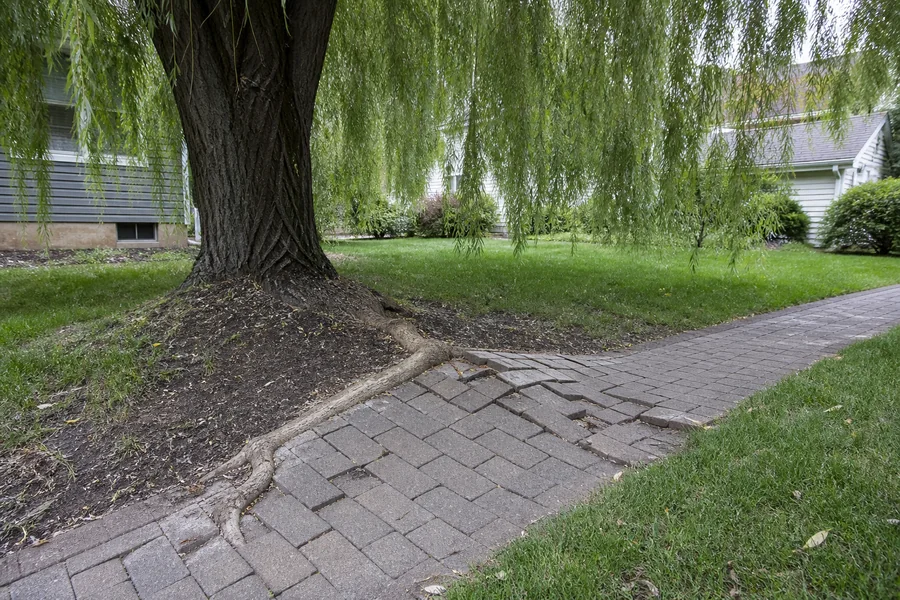
What You Are Seeing
Willow roots spread where soil offers oxygen, space, and reliable moisture. They commonly occupy shallow soil, yet actual depth and direction change with soil, drainage, obstacles, irrigation, and the tree's history.
Roots usually exploit an opening in a leaking or separated pipe rather than drilling through sound modern pipe wall. Repairing the defect removes both the entry point and the moisture reward that concentrates new roots there.
Foundation movement has many possible causes, including expansive soil, drainage, settlement, construction defects, and roots changing local soil moisture. A structural engineer should determine the movement pattern before tree work is prescribed.
Call the utility-locate service before any excavation and check easements or permit requirements. Root location is not predictable enough to make blind trenching safe.
Common Causes
A surface root is lifting rigid paving
As a woody root thickens beneath a slab, curb, edging strip, or tightly laid paver, it can raise the material above it. The visible contact makes this easier to prove than a hidden pipe or foundation claim.
- A ridge in the path follows the direction of a visible root from the tree.
- Individual pavers rock or rise while nearby flexible ground remains stable.
- Excavation by hand exposes direct contact without severing the root.
- The displacement increases as the same root diameter increases.
- The affected surface lies within the tree's occupied root zone.
- Mark the trip hazard and keep the area clear until repaired.
- Lift removable pavers carefully to inspect the conflict without cutting the root.
- Reroute, bridge, or rebuild with a flexible permeable surface when space allows.
- Ask an arborist to assess any proposed cut to a woody root.
- Avoid pouring a new rigid cap directly over the same growing root.
Roots entered a defective wet pipe
A separated joint, crack, failed seal, or damaged lateral releases moisture and provides an opening that fine roots can enter. Once inside, the root mass catches debris and repeated clearing does not repair the defect.
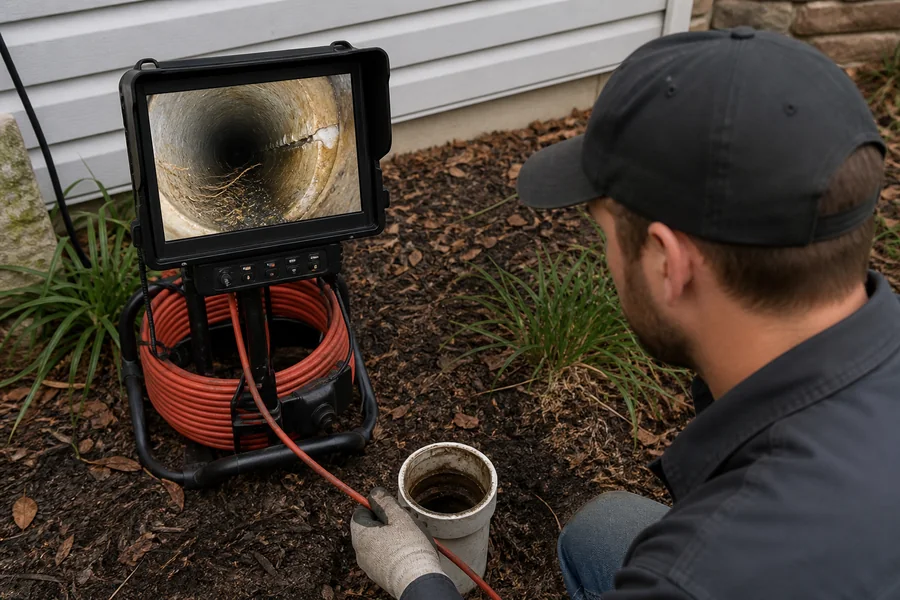
- A sewer camera shows roots entering at a particular joint or crack.
- Blockages recur at the same measured distance from the cleanout.
- The line has offset sections, failed seals, or older vulnerable materials.
- Wet or unusually lush ground aligns with the damaged run.
- Root fragments appear during professional clearing but do not identify the source tree by themselves.
- Have a licensed plumber camera the cleaned line and record the exact defect.
- Repair or replace the failed pipe section so roots lose the opening and leak.
- Coordinate excavation with utility locating and an arborist when it crosses the root zone.
- Use root removal inside the pipe only as part of a repair plan, not as a substitute for one.
- Schedule a follow-up camera inspection when the contractor recommends it.
Soil and drainage are moving near the foundation
Tree water use may contribute to shrinkage in some moisture-sensitive soils, but drainage defects, settlement, expansive clay, construction, and plumbing leaks can produce similar cracks. Distance from a willow cannot assign cause.
- Crack width or floor level changes over time rather than remaining cosmetic.
- Gutters, grading, drains, or buried plumbing concentrate or remove water unevenly.
- Movement follows a soil or foundation pattern documented by measurements.
- No root has been exposed in direct contact with the structure.
- Seasonal opening and closing suggests a moisture-related soil cycle.
- Document crack width, floor levels, dates, rainfall, drainage, and plumbing events.
- Have a structural engineer diagnose meaningful movement before ordering tree work.
- Correct verified drainage or plumbing defects through the appropriate contractor.
- Ask an arborist how proposed root work could affect tree health and anchorage.
- Do not trench beside the foundation merely to search for roots.
The proposed root cut would remove anchorage
Large woody roots help resist wind and support the trunk. Cutting one near the tree, trenching across several roots, or installing a barrier can reduce stability and create decay entries even when the infrastructure repair succeeds.
- The proposed trench passes close to the trunk flare.
- One or more roots are large relative to the trunk and run toward the prevailing load side.
- The tree already leans, has lifted soil, cavities, decay, or storm damage.
- Excavation would remove roots across a substantial arc of the root zone.
- Heavy limbs or buildings create serious targets if the tree fails.
- Stop excavation and keep people away from the potential fall area.
- Have a qualified arborist assess roots, crown load, defects, and targets before cutting.
- Share the utility or construction plan so the assessment addresses the exact trench.
- Consider rerouting infrastructure, tunneling, or tree removal as a coordinated design decision.
- Use the willow storm-risk checks when root loss may interact with existing crown damage.
Prove the contact point before cutting a root
A visible root directly lifting a paver establishes one conflict. A nearby tree plus a cracked foundation or blocked drain does not establish another. Use a sewer camera, level survey, excavation plan, and arborist assessment as the affected structure requires, because cutting large roots can exchange a repair problem for tree instability.
Open full diagnosisProximity Is a Clue, Not a Cause
Roots grow through soil pores and along favorable moisture and oxygen conditions. Their wide reach makes contact plausible, but a root near a structure may be incidental unless displacement, entry, or soil movement is documented.
A sewer camera answers whether roots are inside a line and where they entered. It also reveals the pipe defect that must be repaired, which is more useful than guessing from the tree's distance.
Foundation diagnosis requires a different evidence set. Crack shape, level measurements, soil behavior, drainage, plumbing, and construction details belong to a structural assessment before root pruning is considered.
Setbacks for a new tree should come from mature canopy and root space, site drainage, utilities, local rules, and tolerance for future maintenance. No single distance guarantees that roots will never reach a structure.
Prove the Conflict Before Cutting Roots
Start with the damaged system and choose the inspection that can show direct contact or failure. This prevents an irreversible root cut from becoming the first diagnostic test.
Record locations relative to fixed landmarks and photograph visible displacement. For hidden systems, preserve the contractor's video, measurements, level survey, or excavation notes so the arborist evaluates the same evidence.
- Recurring drain clog
- Clean and camera the line to locate roots and the entry defect.
- Lifted path or curb
- Lift removable material or expose carefully to show direct contact.
- Foundation crack
- Measure movement and have drainage, soil, plumbing, and structure assessed.
- Soggy patch
- Test irrigation, water, sewer, and drainage sources before assigning it to roots.
- Planned trench
- Locate utilities and have the root impact reviewed before excavation.
Do not identify the offending tree from root fragments alone. Root species identification may require diagnostic expertise, and several trees can occupy the same soil corridor.
Choose the Repair Around the Tree
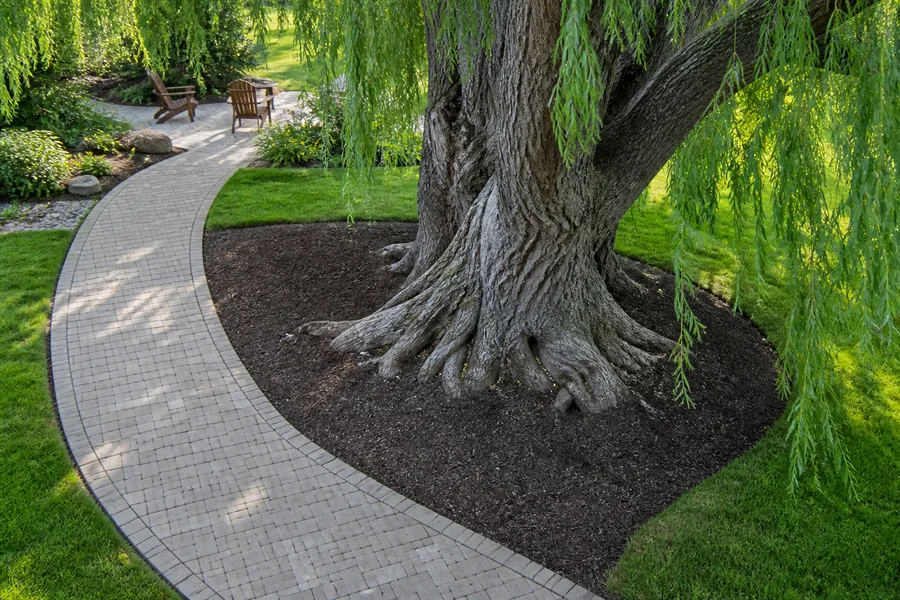
Repair the failed infrastructure first when it can be sealed, rerouted, bridged, or made flexible without sacrificing structural roots. A barrier is not automatically conservative because installing it requires a trench and continued roots may grow around its ends or beneath it.
- Define the exact contact point and the minimum space the repair needs.
- Ask whether the pipe can be relined or rerouted, or whether paving can be lifted, curved, bridged, or replaced with a flexible surface.
- Locate every buried utility before choosing an excavation path.
- Have an arborist identify roots that the proposed repair would expose or cut.
- Compare the retained tree's value and future maintenance with removal and replacement.
- Coordinate the final construction sequence so roots are not left uncovered, compacted, or torn by equipment.
Root barriers work best as planned components around young trees or carefully evaluated repairs. They cannot make an unsuitable mature tree fit a confined site without consequences elsewhere in its root system.
For a new planting, choose a site that can accommodate the mature willow canopy and wet-site habit. If the available space is tight, compare fast-growing tree choices instead of relying on a future barrier.
Treat Root Cutting as a Stability Decision
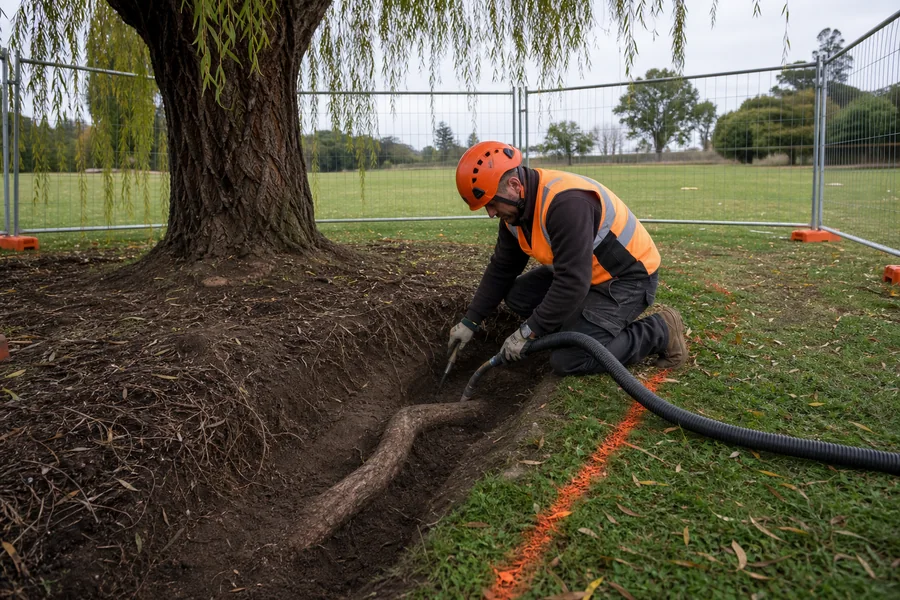
A root cut changes both biology and mechanics. The tree loses absorbing tissue, stored energy, and sometimes anchorage, while the wound creates a path for decay.
Removal may be the safer long-term choice when critical infrastructure cannot move, essential roots cannot be retained, or the tree already carries structural defects. That decision should include stump and regrowth management, utility protection, permits, and a replacement plan.
If the tree remains, monitor crown density, lean, soil lifting, new cracks, and dieback after construction. Sudden movement or hanging limbs require prompt exclusion and professional review.
Recovery Plan
Document and diagnose the affected system
Mark utilities, photograph damage, obtain pipe video or structural measurements, and give the proposed repair plan to an arborist before roots are exposed.
Protect roots and the work zone
Use the least disruptive route, keep equipment and spoil off the root zone, prevent roots from drying, and stop when excavation reveals roots outside the assessed scope.
Monitor both structure and tree
Reinspect the pipe, paving, drainage, or crack measurements as appropriate. Watch the willow for lean, soil movement, canopy thinning, dieback, or storm damage after any root disturbance.
For a new tree, map buildings, paving, drainage, septic components, public and private utilities, easements, and the mature canopy before selecting the planting point. Choose another species when the site cannot provide generous unpaved root space, and repair chronic leaks rather than using them as an irrigation source.