
Small Garlic Bulbs Reveal Where the Growing Season Broke Down
Sort the harvest into uniformly small, patchy, and malformed groups before choosing a fix.
Firm clean garlic bulbs can stay small because of planting stock, cold exposure, weak leaf growth, competition, water stress, retained scapes, or early harvest, while abnormal roots, leaves, and basal plates need a disease or pest diagnosis.
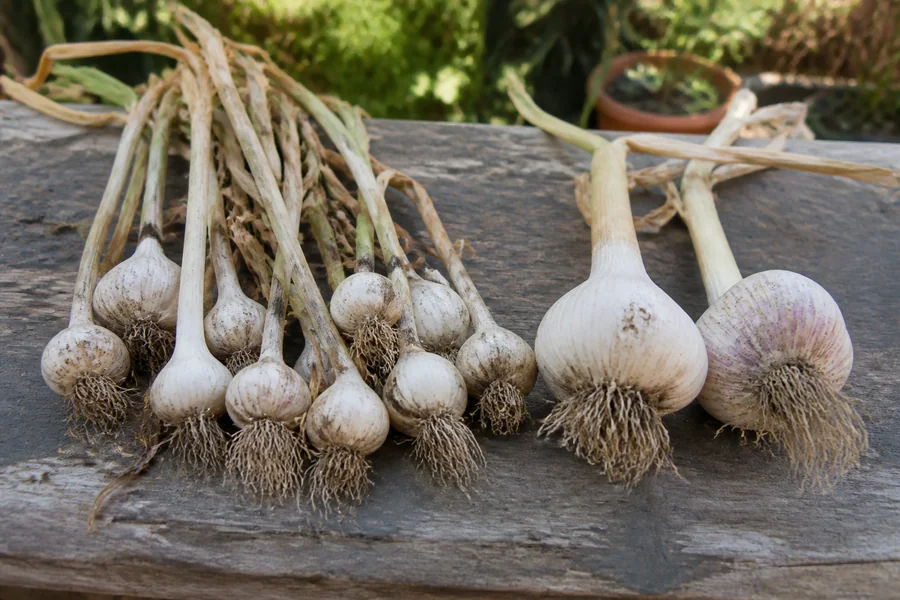
Quick diagnosis
Use the harvest pattern to find the limiting stage
Uniformly small bulbs across the bed point first to seed-clove size, cultivar adaptation, cold exposure, planting date, or a season-wide canopy limit.
A patch along shade, weeds, dry soil, compaction, or a wet pocket points to a local resource or root problem. Rounds, soft tissue, root lesions, leaf streaks, rust, mines, or basal decay require a different diagnosis.
Open the full diagnosisWhat You Are Seeing
Bulb size is the result of months of growth. The planted clove supplies the first reserves, cold and day length cue development, spring leaves capture energy, roots supply water and nutrients, and the bulb needs time to fill before harvest.
A late fertilizer application cannot replace leaf area lost earlier, and extra watering cannot enlarge a bulb that has matured. Trace the crop backward instead of applying one rescue to every small bulb.
Keep firm, well-wrapped small bulbs separate from anything soft, discolored, moldy, hollow, foul-smelling, or damaged at the basal plate. Those signs belong with the garlic rot diagnosis.
Common Causes
01 Uniform bed-wide limit
The crop began with small or poorly adapted cloves
Large healthy cloves usually establish stronger plants than the smallest cloves from the same cultivar. Grocery garlic or stock selected for another climate may also receive the wrong seasonal cues or carry problems that were invisible at planting.
How to identify it
- Bulbs are uniformly small even where soil, sun, and spacing were favorable.
- The planting lot contained many tiny inner cloves or weak bulbs.
- Plants emerged with consistently thin shoots rather than patchy setbacks.
- The cultivar was not chosen for the local winter and growing season.
- Saved stock came from the smallest or abnormal bulbs of the prior crop.
What to do
- Keep records by planting lot and cultivar instead of mixing all cloves in one row.
- Buy clean planting stock adapted to the region from a reputable source.
- Select large firm cloves with intact basal plates for the next crop.
- Do not save abnormal, stunted, or disease-suspect bulbs as seed.
- Compare performance under the same bed conditions before blaming one seasonal input.
02 Climate and planting dependent
Cold exposure or vegetative time was insufficient
Garlic needs an appropriate cold period and later long days to form and divide bulbs. Spring planting or an unusually mild schedule can shorten leaf growth and may produce small heads or single rounds, depending on type and cultivar.
How to identify it
- Plants remained small across the planting despite healthy roots and clean leaves.
- Cloves went in during spring or much later than the local fall window.
- Bulbs stayed round or divided poorly rather than forming expected cloves.
- The cultivar's regional adaptation or chilling history is unknown.
- A nearby fall-planted lot grew larger under otherwise similar conditions.
What to do
- Use the local extension planting window for the chosen hardneck or softneck type.
- Choose stock whose chilling needs match the climate rather than applying one chill duration to every cultivar.
- Give fall-planted cloves time to establish roots without forcing excessive top growth.
- Label spring and fall lots so their results can be compared honestly.
- Treat an elephant garlic round as a different crop response because elephant garlic is a leek, not true garlic.
03 Patchy distribution
A local bed condition restricted only part of the crop
Shade, weeds, close neighboring plants, crusted or compacted soil, dry edges, wet pockets, and root injury can create a recognizable strip or cluster of small plants within an otherwise productive bed.
How to identify it
- Small bulbs align with a path edge, shadow, tree roots, low spot, or irrigation gap.
- Plants in the affected patch were shorter, paler, or slower before bulbing.
- Weeds or a neighboring crop overtopped garlic during spring leaf growth.
- A probe meets dense soil or finds a sharp wet-to-dry boundary.
- Roots from poor plants are shorter or damaged while roots elsewhere remain sound.
What to do
- Map the affected plants before lifting the row and photograph the site pattern.
- Protect shallow garlic roots while using compaction repair before the next planting.
- Remove weeds early and position the crop away from predictable shade or tree-root competition.
- Correct drainage or irrigation coverage based on the actual patch pattern.
- Change spacing only when crowding evidence exists for the cultivar and production goal.
04 Visible in the tops
Leaf growth stalled before bulbs finished sizing
Garlic needs a healthy spring canopy before and during bulb expansion. Nitrogen shortage, prolonged dryness, saturation, severe leaf disease, or root injury can pale and shorten the leaves that supply the bulb.
How to identify it
- Plants were pale, thin, or slow during active spring growth.
- Leaf tips and older foliage yellowed earlier than normal maturation.
- Soil stayed dry through the root zone or remained saturated after watering.
- The weak canopy appears across the same area as small bulbs.
- A soil test or crop history supports a nutrient limitation rather than guesswork.
What to do
- Use soil-test and crop guidance to supply nutrients during the vegetative window, not as a late rescue.
- Follow the vegetable fertilizer timing for local conditions and avoid pushing nitrogen into maturity.
- Base irrigation on root-zone moisture, soil, rainfall, and crop stage with vegetable-bed watering checks.
- Keep the bed evenly moist during active growth without saturating it.
- Stop treating early yellowing as normal when roots, leaf lesions, or mines indicate damage.
05 Contributing factor
Hardneck scapes remained through bulb sizing
Hardneck garlic sends up a scape that develops bulbils. Removing it after it begins curling can redirect growth, while a scape left to mature may reduce bulb size, especially when the plant already faces water or fertility stress.
How to identify it
- The cultivar is hardneck and produced a central round flower stalk.
- Scapes became tall, firm, and advanced toward bulbil development.
- Marked plants with scapes removed earlier produced larger bulbs under the same conditions.
- Leaves were also limited by stress, making allocation more consequential.
- Softneck plants without true scapes show the same small-bulb pattern for another reason.
What to do
- Remove hardneck scapes after they begin to curl, following local cultivar guidance.
- Cut only the scape and avoid clipping functional leaves.
- Use harvested scapes in the kitchen rather than letting them mature by default.
- Mark a few comparison plants if you want evidence for that cultivar and site.
- Do not expect scape removal to repair poor roots, disease, or a short season.
06 Check a test bulb
The row was lifted before cloves filled
Garlic continues sizing as cloves fill their wrappers. A calendar date or one brown leaf can prompt an early harvest, while leaving the crop too long causes wrappers to split and exposes cloves.
How to identify it
- A cut test bulb has loose space between small cloves and their wrappers.
- Clove divisions are indistinct and much of the top remains actively green.
- Bulbs from a later test lift are fuller under the same conditions.
- The whole row was harvested from a date rather than bulb inspection.
- There is no root or leaf disorder explaining the small size.
What to do
- Lift one or two representative test bulbs before committing the row.
- Compare clove fill, wrapper integrity, and leaf maturity with cultivar guidance.
- Leave sound plants longer only when bulbs are still filling and weather permits.
- Reduce irrigation as maturity approaches rather than keeping wrappers wet.
- Harvest before cloves separate through failing outer wrappers.
07 Evidence changes the next crop
Disease or pest damage shortened the growth period
Pink root, rust, downy mildew, viruses, nematodes, bulb mites, allium leafminer, basal rots, and other problems can reduce roots or leaf area enough to produce small bulbs. Size alone cannot identify which one occurred.
How to identify it
- Roots have sunken pink to maroon lesions or break away easily.
- Leaves carry orange pustules, pale lesions with fuzzy growth, or yellow streaks and flattening.
- Aligned white punctures, mines, distorted leaves, larvae, or pupae indicate allium leafminer.
- Cloves have scars, basal damage, softness, mold, or abnormal odor.
- Stunting follows planting stock or a patch that persists across alliums.
What to do
- Photograph intact plants and submit roots, leaves, and bulbs to a diagnostic clinic.
- Keep suspect bulbs out of the seed-stock pile.
- Do not compost or replant material until the pest or disease disposal guidance is known.
- Record the exact bed and planting lot because rotation or stock replacement may be required.
- Use a treatment only after the organism and current crop label are confirmed.
Bulb Size Records the Whole Season
A vigorous shoot does not guarantee a large bulb, but a weak canopy places a clear ceiling on bulb filling.
Compare plant height, leaf color, disease injury, scape timing, and the date growth began to decline.
Uniformity is evidence.
A whole lot that stays small under favorable bed conditions suggests planting stock, adaptation, cold exposure, or a shared timing problem. A narrow patch suggests a local site constraint.
Cultivar expectations matter. A well-filled softneck head may contain more, smaller cloves than a hardneck head, and elephant garlic can make single rounds because it is a different allium.
Map the Bed Before Blaming the Variety
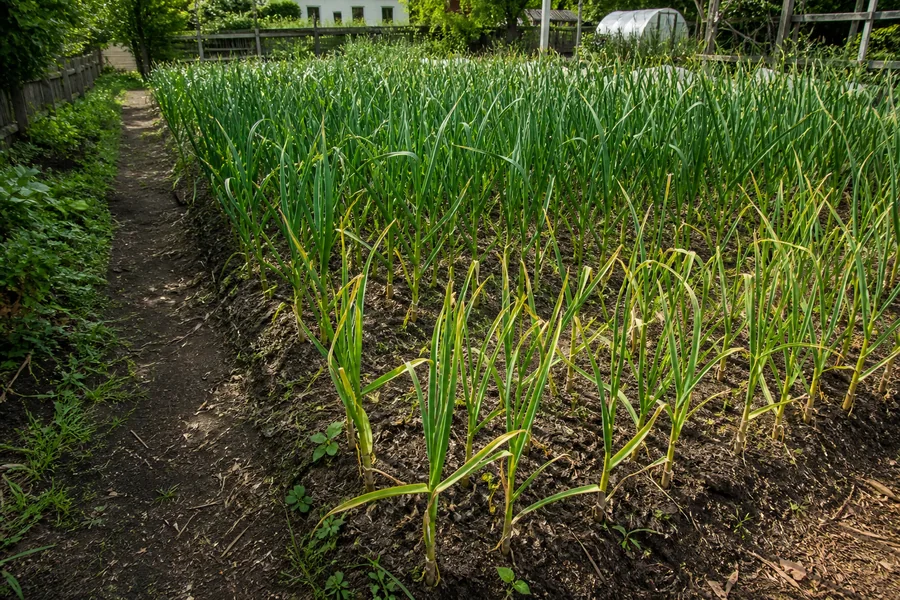
Before mixing the harvest, place bulbs in groups that preserve their bed position and planting lot. Keep uniformly small clean bulbs separate from a weak patch and from anything malformed or decayed.
Trace each group backward through seed-clove size, emergence, winter survival, spring canopy, weeds, shade, soil moisture, scape removal, and leaf symptoms. Photos taken during growth often reveal a boundary that loose bulbs cannot show.
- Uniformly small and clean
- Check clove size, cultivar adaptation, cold exposure, planting date, and season-wide leaf growth.
- Small in one strip or patch
- Inspect shade, weeds, soil density, wet and dry boundaries, irrigation coverage, and root damage.
- Small only where scapes matured
- Compare marked hardneck plants under the same soil and canopy conditions.
- Small with leaf or root symptoms
- Preserve intact samples and seek pest or disease identification before saving seed.
- Small with loose unfilled wrappers
- Compare test-lift dates and maturity rather than changing next year's fertilizer first.
Record bulb weight or diameter only if it helps compare lots grown under the same conditions. A raw number without cultivar, planting date, and bed position cannot identify the broken stage.
Cut One Test Bulb Before Lifting the Row
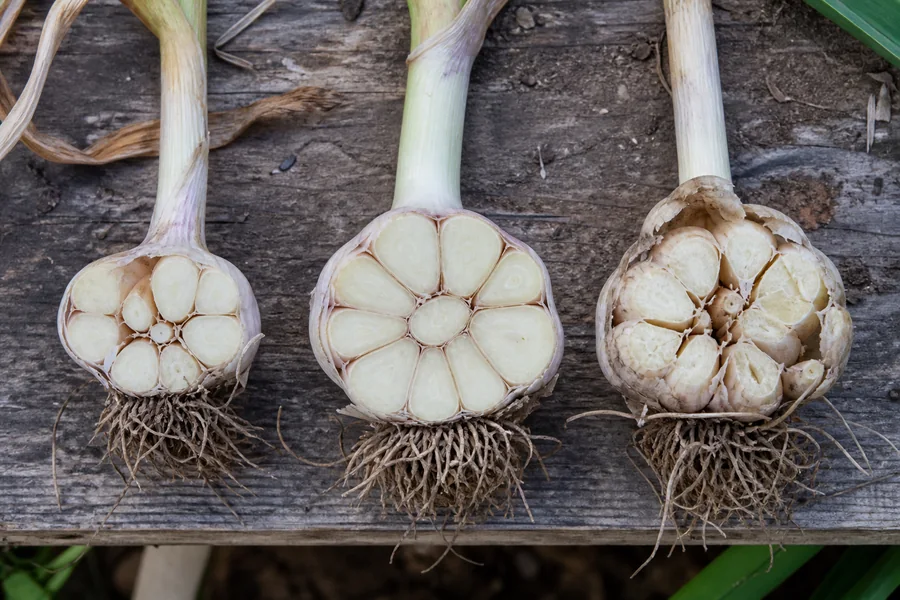
Lift representative bulbs from average plants, not only the largest at the bed edge. Cut one across or peel it carefully enough to see whether distinct cloves fill their skins and whether wrappers remain intact.
Leaf browning helps time inspection but is not a universal countdown. Cultivar, weather, disease, and water stress can change leaf appearance, so pair it with the bulb itself.
If bulbs are mature and small, harvest and cure them normally when they are firm and clean. The correction belongs earlier in the next crop, not in extra water or nitrogen after maturity.
Separate Limited Growth From Root and Leaf Disease
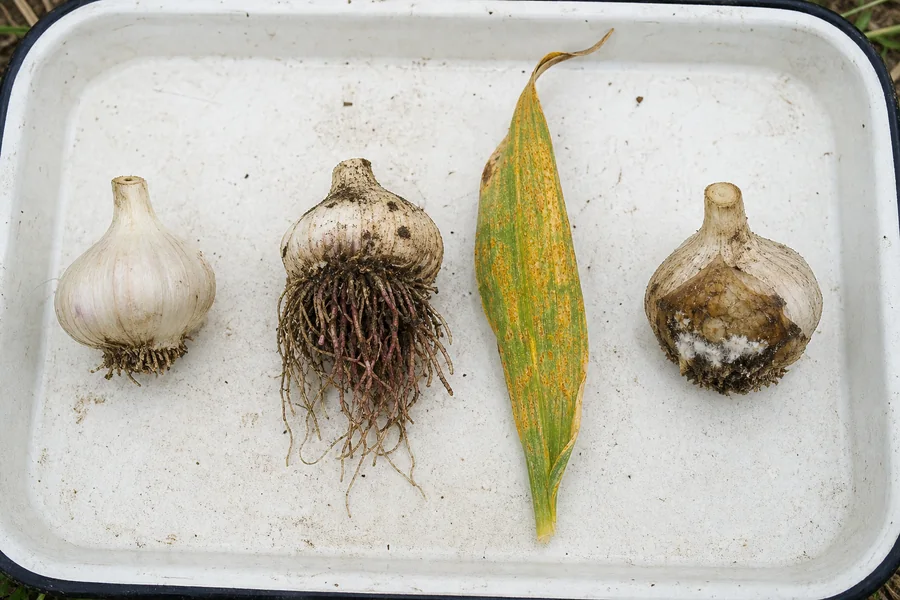
Firm texture, intact wrappers, a sound basal plate, and normal odor support a growth-limited bulb. Abnormal roots, patterned leaf injury, mines, soft tissue, or mold show that size is only one symptom.
- Pink to maroon sunken roots that break easily: submit roots and the basal plate for pink-root or related diagnosis.
- Orange pustules or pale lesions with fuzzy growth: preserve affected leaves because severe leaf loss can limit bulb fill.
- Yellow streaks, flattened leaves, and whole-plant stunting: ask about virus testing and do not save cloves from the plant.
- Rows of white punctures, mines, distorted leaves, larvae, or pupae: identify allium leafminer and follow local containment guidance.
- Soft cloves, white fungal growth, dark basal tissue, or abnormal odor: follow the rot evidence and disposal steps.
Clean small bulbs are usually usable in the kitchen after normal curing. Disease-suspect bulbs need a separate food-safety and disposal decision based on the actual organism and tissue condition.
Recovery Plan
Keep location and planting lots separate
Sort firm clean bulbs, patch-specific bulbs, underfilled test bulbs, and abnormal samples before curing.
Photograph roots, leaves, and basal plates while evidence is fresh.
Watch which small bulbs remain sound
Cure clean bulbs with good airflow and keep suspect lots apart. Bulbs that soften, discolor, mold, or smell abnormal move to the rot or diagnostic pathway.
Choose clean stock and correct the earliest constraint
Use adapted clean cloves, repair a mapped soil or water problem, and plan fertility from a soil test. Do not combine all corrections when the harvest pattern points to one stage.
Record canopy and scape timing
Photograph emergence, leaf color, weak patches, weeds, irrigation boundaries, disease signs, and hardneck scape removal. These records explain the next harvest better than bulb size alone.
Start with clean regionally adapted planting stock, protect early leaf growth from weeds and root stress, use soil-test-based fertility at the correct stage, and adjust water to soil and weather.
Lift test bulbs rather than harvesting from a date, and never recycle abnormal bulbs into seed stock.