
Rose Aphids on Buds? Check Predators Before You Spray
Rose aphids gather on tender shoots and buds, but a small colony may disappear under pressure from predators.
Confirm the insects, inspect damage and natural enemies, then choose observation, a firm water spray, or a labeled contact treatment.
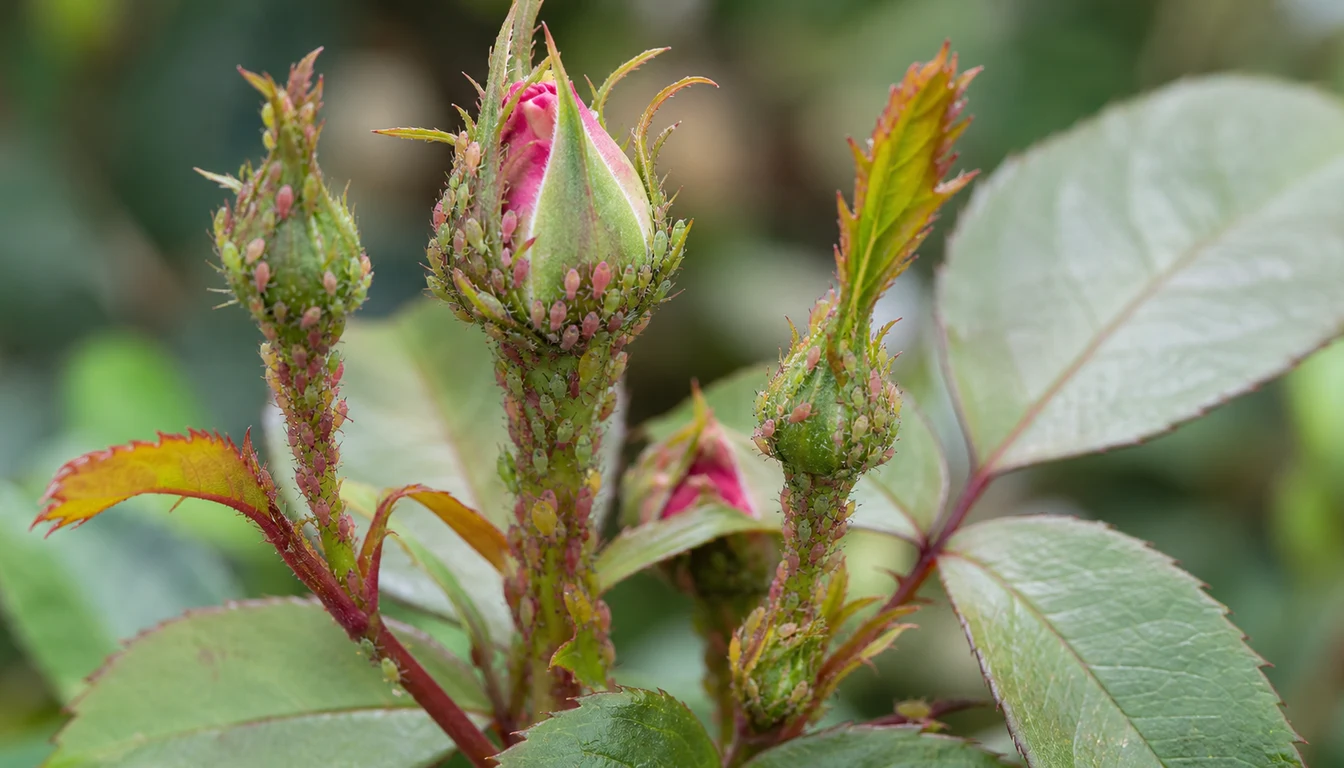
Quick diagnosis
Aphids when mobile pear-shaped insects cluster on soft growth
Check new rose tips and the folds around unopened buds. Aphids are soft mobile insects with long antennae and two short tubes called cornicles at the rear, and a colony often leaves white cast skins and shiny sticky honeydew.
Next look for damage and natural enemies. A small colony on a vigorous rose can be watched when new leaves expand normally and predator larvae or tan aphid mummies are present, while rising numbers, distorted buds, and fresh honeydew support active control.
Open the full diagnosisWhat You Are Seeing
Several aphid species feed on roses, including Macrosiphum rosae, and their color can range from green and pink to darker shades.
Body shape, feeding site, movement, honeydew, and paired cornicles are more reliable than color alone.
Low to moderate aphid populations often cause little harm to an established rose. Heavy colonies can distort new leaves, stunt shoot tips, reduce flower size, and produce enough honeydew for black sooty mold to grow on the sticky surface.
This page covers live sap-feeding colonies on buds and tender shoots. Expanding black leaf spots, a white powdery coating, missing leaf tissue, or stems that die without visible aphids belong to a different diagnosis.
Common Causes
01 High likelihood when live pear-shaped insects are present
An active aphid colony on new growth
Aphids favor rapidly growing rose tissue because their piercing mouthparts can reach sap in tender buds, stems, and young leaves. Nymphs and adults gather together, so a colony may look like green or pink insects mixed with empty white skins.
Honeydew is sugary waste, not an egg mass. It feels sticky, can drip to lower leaves, and supports a superficial black sooty mold when the colony feeds long enough.
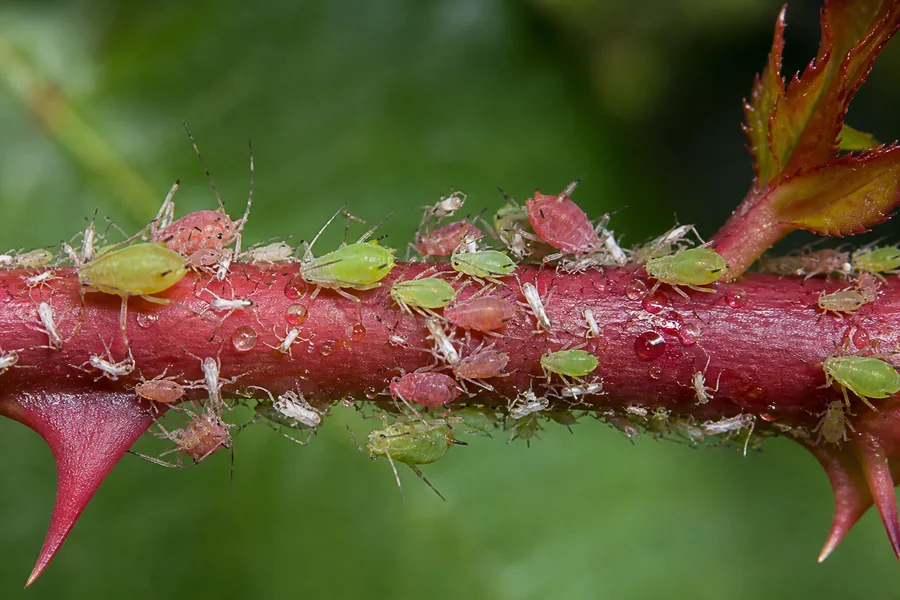
How to identify it
- Soft pear-shaped insects move when the shoot is touched or water reaches them.
- Long antennae and two rear cornicles are visible with a hand lens.
- White translucent cast skins collect among live insects or stick in honeydew.
- Tender leaves curl or buds become distorted as the colony grows.
What to do
- Mark two affected tips and compare live aphid numbers and new distortion over several days.
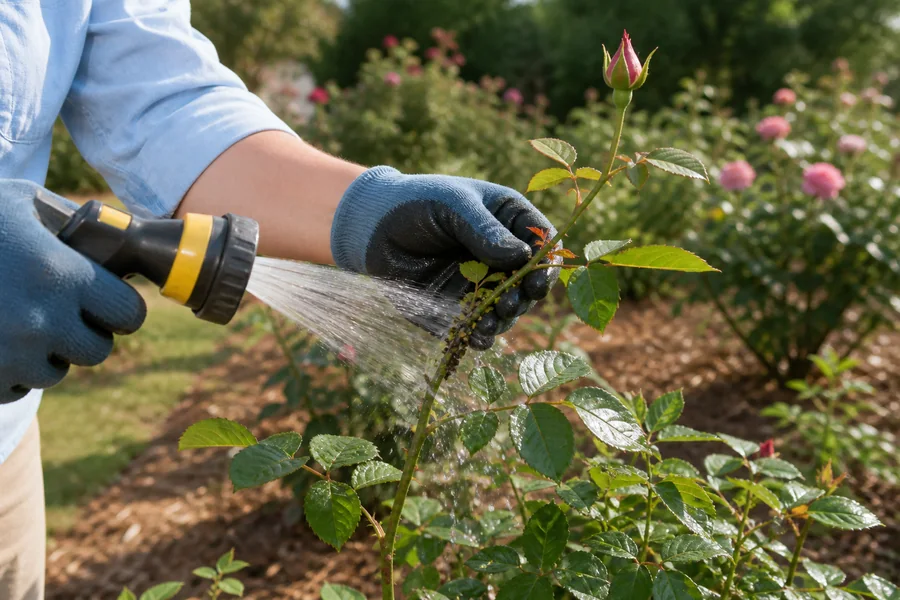
- Use a firm stream of water on colonies that are growing or coating foliage with honeydew.
- Aim at both sides of young leaves and around buds without breaking tender stems.
- Escalate only when the colony rebounds, damage advances, or honeydew continues accumulating despite the first response.
02 Common in unsprayed rose beds
Natural enemies are already reducing the colony
Lady beetle larvae, lacewing larvae, hoverfly larvae, soldier beetles, and tiny parasitic wasps are beneficial insects that attack aphids.
Predators may arrive after the colony becomes noticeable, then reduce it rapidly without leaving a pesticide residue.
A parasitized aphid becomes a swollen tan or bronze mummy fixed to the leaf. A neat round exit hole in a mummy shows that an adult wasp emerged and can continue searching for aphids.
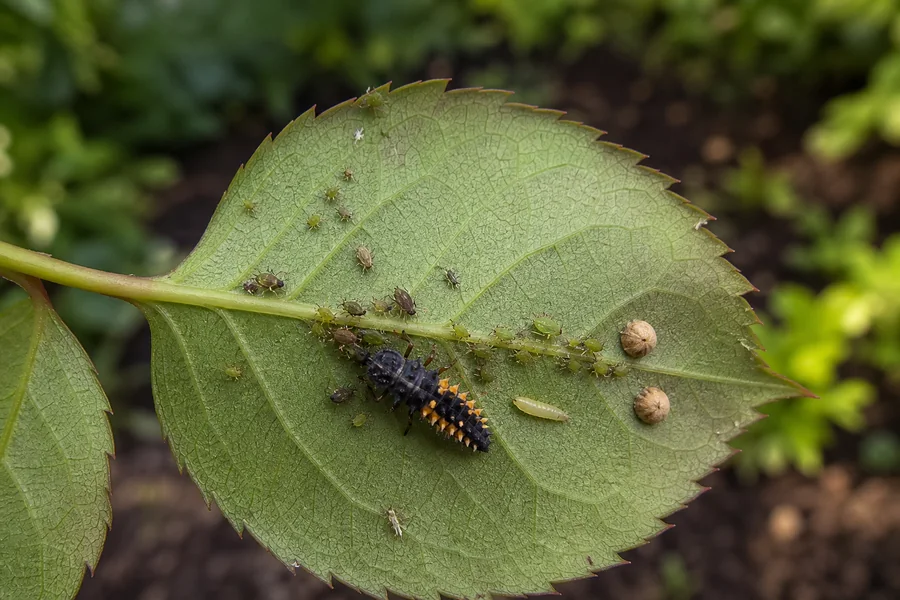
How to identify it
- Black-and-orange alligator-shaped lady beetle larvae hunt among aphids.
- Legless tapered hoverfly larvae or narrow lacewing larvae move through the colony.
- Tan swollen aphid mummies remain attached while live aphids move around them.
- New rose growth remains usable and colony size is stable or falling between checks.
What to do
- Delay spraying while damage remains light and natural-enemy signs increase.
- Avoid broad-spectrum insecticides that kill predators and leave survivors free to rebound.
- Recheck marked shoots instead of assuming one predator means every colony is controlled.
- Use water only on the worst tips when a whole-shrub spray would remove active predators from unaffected shoots.
03 Medium likelihood with steady ant traffic
Ants are protecting honeydew-producing aphids
Ants collect aphid honeydew and may drive lady beetles, hoverfly larvae, and parasitoids away from a profitable colony. The aphids still cause the plant damage, but ant protection can explain why natural enemies are present elsewhere and ineffective on one rose.
An occasional ant on a flower proves little. Repeated traffic up the same cane, ants touching aphids, and a colony that persists beneath their activity form the useful pattern.
How to identify it
- Ants travel in a repeated line between the soil and aphid-covered tips.
- Workers pause among aphids and collect honeydew droplets.
- Predator larvae are scarce on ant-tended shoots but present on nearby untreated colonies.
- The sticky colony rebounds while untended colonies decline.
What to do
- Wash down the aphids first so the honeydew reward and colony both shrink.
- Prune plant bridges that allow ants to bypass a trunk barrier when that pruning suits the rose structure.
- Use an ant bait or exclusion method labeled for the site and keep sticky materials off rose bark.
- Do not spray every ant on open flowers because the goal is to interrupt protection of the aphid colony.
04 Possible with a clear fertilizer history
A soft growth flush is sustaining repeated colonies
Aphids concentrate on fresh rose growth in any healthy spring flush. Excess nitrogen becomes a useful contributor only when unusually long soft shoots follow a heavy fertilizer application, manure, or lawn-feed drift.
Lush growth does not replace insect identification.
A rose can make vigorous shoots without aphids, and adding a different fertilizer will not remove insects already feeding on the tips.
How to identify it
- The newest shoots are unusually long and soft after a known heavy nitrogen application.
- Colonies repeatedly move to each new flush while older leaves carry fewer aphids.
- The overfed rose has denser colonies than comparable roses receiving measured fertilizer.
- No other stress pattern explains the tender growth or distorted tips.
What to do
- Stop extra nitrogen and follow a measured rose feeding plan rather than adding a bloom booster.
- Keep lawn fertilizer outside the rose root zone and clean granules from hard surfaces and foliage.
- Retain useful new shoots unless aphid damage has killed the tip because hard pruning can trigger another soft flush.
- Manage the current colony directly while the rose matures its new tissue.
05 Possible when body shape or feeding site differs
Thrips or scale are being mistaken for aphids
Thrips are narrow fast insects that hide between petals and scar pale or brown streaks into buds and flowers, often leaving tiny black waste spots. They do not resemble a pear-shaped colony once viewed with a hand lens.
Scale insects stay fixed under a hard or waxy cover, usually on older canes or leaf surfaces. Some scale produces honeydew, but its shell-like body and stationary feeding site require different coverage and timing from aphids on soft tips.
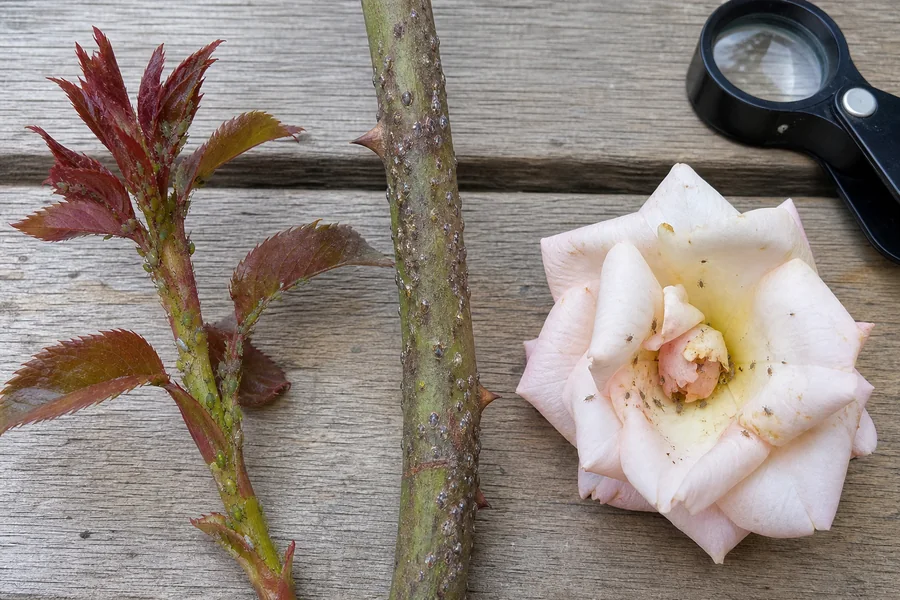
How to identify it
- Slender thrips and black specks appear when a damaged flower is tapped over white paper.
- Petals show streaks, scars, or browned edges without a dense pear-shaped colony.
- Scale appears as firm domes or flattened shells attached to older rose tissue.
- A suspected scale cover does not walk away when gently touched.
What to do
- Open and tap several affected flowers to confirm thrips before choosing treatment.
- Inspect older canes and leaf undersides separately when shell-like scale is present.
- Use management labeled for the identified pest because water that removes aphids may not remove protected scale.
- Preserve a clear sample or photo when body shape remains uncertain.
06 Low likelihood when honeydew and bud colonies are absent
Stippling or chewing points to another rose pest
Spider mites remove color from many tiny leaf cells and may leave fine webbing underneath. Rose leafhoppers also cause pale stippling and leave cast skins, but their wedge-shaped nymphs move sideways and do not cluster as pear-shaped honeydew producers on buds.
Rose sawfly larvae and caterpillars remove tissue instead of sucking sap. Skeletonized lower leaf surfaces, holes, rolled leaves, or frass inside a damaged bud rule out aphids as the main cause of that injury.
How to identify it
- Fine stippling spreads through the leaf while buds lack aphid colonies.
- Webbing and tiny moving dots below the leaf support spider mites.
- Wedge-shaped nymphs, larger stippling, and cast skins without webbing support leafhoppers.
- Chewed holes, windowpane skeletonizing, rolled leaves, or frass support larvae.
What to do
- Use a hand lens and inspect the lower leaf surface before applying any product.
- Choose a method for the confirmed mite, leafhopper, sawfly, or caterpillar rather than repeating aphid treatment.
- Avoid broad-spectrum sprays that can worsen mites by removing their predators.
- Move to the separate rose disease diagnosis when no insect is present and lesions continue expanding.
Cast skins, aphid mummies, and sooty mold tell different stories
Aphids molt as they grow, leaving translucent white skins shaped like empty insects. These skins do not move or hatch, so count living bodies separately when deciding whether a colony is rising or falling.
An aphid mummy is larger, rounder, and tan or bronze because a parasitoid developed inside it. Mummies and predator larvae show that biological control is active, while fresh nymphs and new honeydew show that live feeding continues.
Sooty mold grows on honeydew and does not feed on rose tissue. Once aphid feeding and sticky deposits stop, new sooty growth should stop as well, though old black coating may remain until weathering or gentle washing removes it.
Ants use honeydew as food and can interfere with predators, but they do not create the curled rose tip.
Manage the live aphids and ant protection pattern rather than treating black mold, white skins, or ant presence as three unrelated problems.
Aphids, Thrips, Scale, or Stippling Pests?
Use body shape together with feeding site. A hand lens on the wrong part of the rose can miss the pest: aphids favor soft tips, thrips hide in flowers, scale stays on older tissue, and mites or leafhoppers work mainly beneath leaves.
- Aphids on buds and soft shoots
- Pear-shaped insects move among cast skins and honeydew. Heavy colonies curl tender growth or distort buds.
- Thrips inside flowers
- Very narrow insects hide between petals. Scarring, browned streaks, and pinpoint black waste replace the sticky bud colony.
- Scale on older cane
- Small shell-like covers stay fixed to firm tissue. A suspected cover does not walk when touched.
- Mites or leafhoppers under leaves
- Pale stippling spreads across the blade. Fine webbing supports mites; wedge-shaped nymphs and cast skins without webbing support leafhoppers.
Chewed holes, windowpane skeletonizing, rolled leaves, or frass lead away from every sap-feeder in the table. Those signs call for a search for sawfly larvae or caterpillars before any aphid treatment is repeated.
Wait, Use Water, or Choose a Contact Treatment
Start with the least disruptive action that matches the marked shoots.
Presence alone supports observation, while a colony that expands into new tips, distorts buds, or lays down fresh honeydew has crossed into useful intervention.
- Small stable colony with predators or mummies
- Watch the marked shoots for several days. Avoid broad sprays and act only if damage or live numbers rise.
- Growing colony on sturdy tender growth
- Support the cane and use a firm narrow fan of water above and below leaves and around buds. Reinspect after the foliage dries.
- Damaging rebound after water
- Choose an insecticidal soap or horticultural oil whose label lists roses and aphids, then follow its coverage, temperature, repeat, and pollinator directions.
A forceful stream works when it reaches the colony without shredding a soft tip. Spray early enough for foliage to dry, shield open blooms when possible, and avoid blasting a flexible cane against thorns or supports.
Insecticidal soaps and horticultural oils work mainly by contacting and covering the aphids present during application. Coat the sites named by the label and do not assume dried residue will kill a colony that was hidden inside a folded leaf.
Systemic and broad-spectrum insecticides are usually unnecessary for garden rose aphids and can harm pollinators or the predators that provide longer control. If a severe infestation persists, use local extension advice and the product label to choose the narrowest suitable option.
Recovery Plan
Count live aphids, not white skins
Recheck the same marked shoots after water has dried or a labeled contact treatment has had time to work. Fewer moving aphids and no fresh honeydew show progress, while cast skins and old sticky residue can remain after live feeding drops.
Judge new leaves and buds
Already curled leaves will not straighten, and scarred petals will not rebuild. Recovery appears as normally expanding new leaves, buds that continue opening, and shoot tips that no longer collect dense colonies.
Let biological control finish the job
Watch for more mummies and predator larvae while checking that damage does not advance. Spot-treat only the shoots that keep rebounding so natural enemies remain on the rest of the plant.
Reset the diagnosis
Stippling, webbing, fixed shells, petal scarring, holes, or expanding fungal lesions require a fresh inspection. Repeated aphid treatment cannot solve a different insect or a rose disease.
Inspect rose shoot tips and unopened buds whenever a new flush begins, and turn over young leaves before colonies become dense. Keep a simple photo record so live aphids, cast skins, mummies, and old distortion are not counted as the same thing.
Feed according to the rose's measured need and keep lawn fertilizer away from the root zone. Excess nitrogen can sustain soft growth, while severe pruning of every infested tip can provoke another tender flush and remove developing flowers.
Preserve lady beetles, hoverflies, lacewings, parasitoids, and other natural enemies by avoiding routine broad-spectrum insecticides. Manage repeated ant traffic when it clearly protects aphid colonies, and remove nearby weeds that are carrying large aphid populations into the bed.
Choose treatment from the current colony and damage trend rather than a calendar or a universal insect count.
A healthy mature rose can tolerate light feeding, while a young or stressed plant with distorted buds may need earlier help.