yard
KnowTheYard

databasePlant Database

Browse by category

potted_plant

Houseplants

Indoor & tropical species

nutrition

Vegetables

Edible garden crops

spa

Herbs

Culinary & medicinal

local_florist

Flowers

Ornamental blooms

water_drop

Succulents

Drought-tolerant species

park

Trees

Arboreal species

forest

Shrubs

Bushes & hedges

nature

Perennials

Garden flowers

grass

Lawn Grasses

Turf varieties

local_dining

Fruits

Fruit-bearing plants

Best Indoor Plantsarrow_forwardBest Shade Plantsarrow_forward

menu_bookGarden Guides

Step-by-step guides by task type

grass

Lawn Care

Seasonal checklists and year-round maintenance guides for a championship lawn.

yard

Planting

When, where, and how to plant — from seed to transplant for every garden type.

water_drop

Watering

Deep-watering techniques, schedules by plant type, and drought management.

compost

Fertilizing

Feeding schedules, NPK ratios, and organic vs synthetic options by plant.

pest_control

Pest Control

Identify, prevent, and treat common garden pests without harming beneficial insects.

content_cut

Pruning

Pruning timing, techniques, and tools for trees, shrubs, and flowering plants.

Popular Guides

parkFall Lawn Carelocal_floristSpring Lawn Carecalendar_monthFull Calendar
All Guidesarrow_forwardLawn Care Hubarrow_forward
ToolsCompareRegional GuidesPlant ProblemsPet SafetyAbout
searchPlant Finder
yardKnowTheYard

Published plant profiles, practical care guides, problem diagnosis pages, and side-by-side comparisons for home gardeners.

chatphoto_camera

databaseBrowse Plants

  • arrow_forwardHouseplants
  • arrow_forwardVegetables
  • arrow_forwardHerbs
  • arrow_forwardFlowers
  • arrow_forwardTrees

menu_bookResources

  • arrow_forwardGarden Tools
  • arrow_forwardRegional Guides
  • arrow_forwardPlant Problems
  • arrow_forwardPet Safety
  • arrow_forwardCare Calendar
  • arrow_forwardPlant Finder

infoCompany

  • arrow_forwardAbout Us
  • arrow_forwardOur Team
  • arrow_forwardMethodology
  • arrow_forwardEditorial Policy
  • arrow_forwardContact Us

mailEmail Updates

Join the list for new guides, seasonal notes, and launch updates.

No spam. Request removal anytime.

fact_check

Reviewed Pages

77 pages currently attributed to public review lanes

public

USDA Zone Coverage

Zone-aware recommendations and regional growing context

database

230 Published Plant Profiles

555 public pages across profiles, guides, comparisons, and problem pages

© 2026 KnowTheYard. All rights reserved.

Privacy PolicyTerms of ServiceContactSitemap
Home/vegetables/Cabbage: Pick the Right Head, Then Hold It Steady/Worms
scienceEditorial DiagnosisUpdated Feb 20, 2026

Cabbage Worms

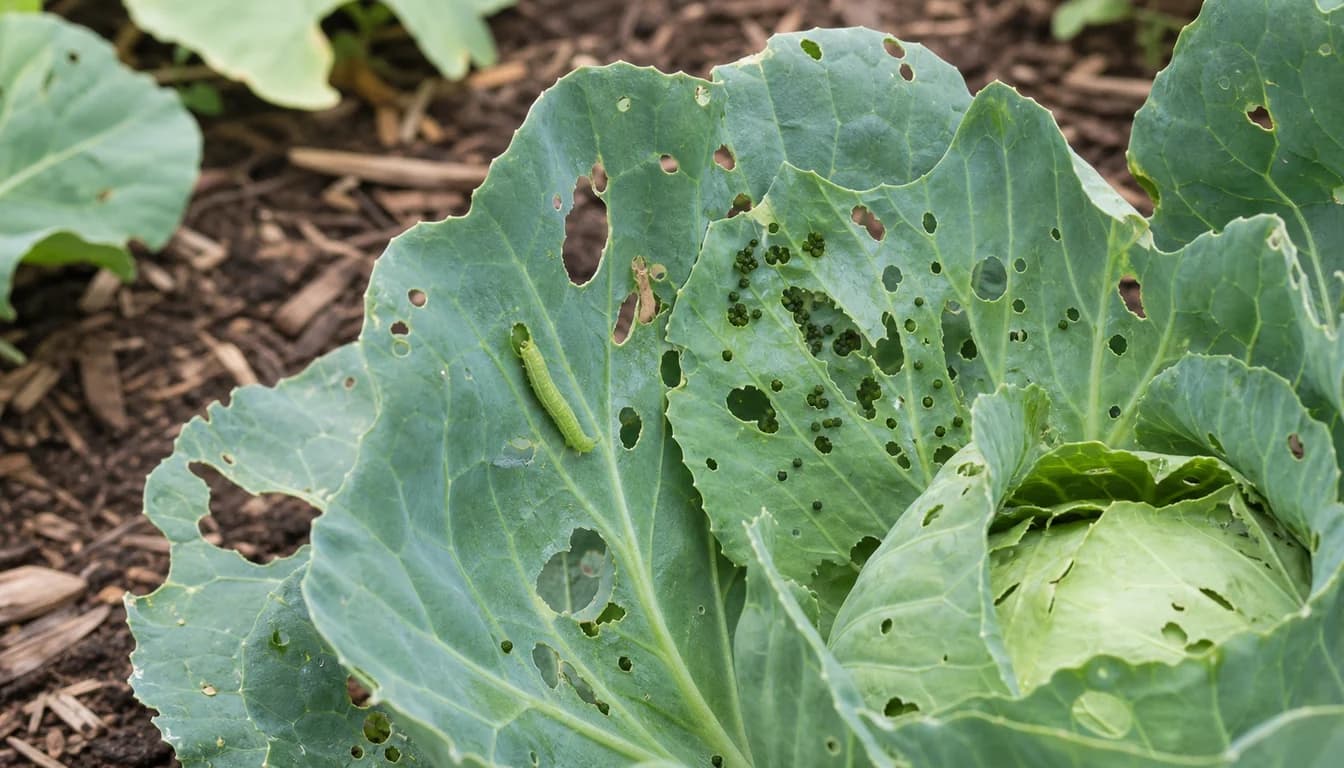
**Cabbage** worms are green caterpillar pests that chew brassica leaves, mostly imported cabbageworm and **cabbage looper** larvae. They feed on undersides and edges of **Cabbage**, broccoli, kale, cauliflower, and other brassicas, leaving ragged holes, frass pellets, and skeletonized patches that reduce plant growth and head quality.

Green cabbage worm on a cabbage leaf with ragged chewing holes and dark frass pellets in a garden bed.

Green cabbage worm on a cabbage leaf with ragged chewing holes and dark frass pellets in a garden bed.

lightbulb
bolt

Quick Diagnosis

Most Likely Cause: Imported cabbageworm or cabbage looper larvae.

Look under outer leaves before you spray anything. On Cabbage, ragged holes plus green frass usually mean imported cabbageworm or a similar caterpillar feeding toward the head, and the control timing is different from slug or flea beetle damage; selective caterpillar control works best while larvae are still small.

Jump to fix steps arrow_downward

Cabbage worms do their real damage quietly from the leaf undersides inward. By the time the white butterflies are obvious, small larvae may already be feeding near the developing cabbage head, which is why early scouting matters more than a late blanket spray.

The two species most home gardeners see are imported cabbageworm (Pieris rapae) and cabbage looper (Trichoplusia ni). Both eat similar leaves, but imported cabbageworms are slower and velvety while loopers move in an inchworm arch; control is easiest while larvae are small and actively feeding.

Light feeding early in the season can be tolerated, but repeated holes on several plants means larvae are multiplying. Confirm the culprit before spraying; selective controls such as targeted neem oil use or Btk work best when larvae are small and beneficial insects are protected.

menu_book
Guide - See AlsoAir Purifying Plants for Cleaner Indoor Air
chevron_right
psychology

How to read the damage before you treat

The larva is the damaging stage. Adult white butterflies or brown moths are the warning sign, but holes and frass tell you eggs have already hatched and larvae are feeding.

Chewing damage is different from head splitting. Worm feeding leaves ragged missing tissue, frass, and sometimes caterpillars; a moisture split opens cleanly through the head without pellets or larvae.

Cabbage heads can still be usable if damage stays on outer leaves. Peel and discard badly chewed wrappers, but harvest promptly if larvae have entered the head or rot has started around holes.

thermostat

Environmental Baseline

Before diagnosing specific failures, confirm your Cabbage: Pick the Right Head, Then Hold It Steady's environment matches its core care requirements.

forestCabbage: Pick the Right Head, Then Hold It Steady Care Needs

  • Light: Full sun for best head size
  • Water: Even moisture, about 1-1.5 in per week
  • Temp: Best heads at ==**45-75 F**==; quality drops in heat above 80 F

homeTypical Indoor Home

  • Humidity: 30-50% (Low)
  • Temp: 65-72°F variable
  • Light: Often too dim or direct
biotech

Possible Causes

Sorted by likelihood

1. Imported cabbageworm larvae

Likelihood: High

Small white butterflies lay single yellow eggs on brassica leaves. The pale green larvae hatch, blend into the foliage, and chew steady roundish holes before moving toward protected head interiors.

Identification

  • remove_circle_outlineSmall white butterflies hover around brassicas on warm days.
  • remove_circle_outlineTiny yellow eggs appear singly on upper or lower leaf surfaces.
  • remove_circle_outlineSmooth pale green caterpillars move slowly and may have a faint yellow stripe.
  • remove_circle_outlineRoundish holes, ragged edges, and dark green frass pellets sit near feeding sites.

The Fix

  1. 1Check leaves every 2-3 days and hand-pick visible caterpillars before damage spreads.
  2. 2Crush eggs under leaves or wipe them off with a gloved finger.
  3. 3Use floating row cover immediately after transplanting to block egg laying.
  4. 4Apply Btk when larvae are small, following label timing and reapplication directions.
  5. 5Remove nearby wild mustard or volunteer brassicas that keep the pest cycle going.

2. Looper caterpillars

Likelihood: Medium

Loopers are green caterpillars with pale lengthwise stripes and a looping gait. They hide under leaves and can eat larger patches before you notice them, especially in warm weather.

Identification

  • remove_circle_outlineLarvae arch their bodies into an inchworm shape as they move.
  • remove_circle_outlinePale green bodies may show thin white stripes along the back.
  • remove_circle_outlineIrregular holes become larger and more skeletonized than early imported-cabbageworm feeding.
  • remove_circle_outlineFrass pellets collect under leaves, inside loose outer wrappers, or near the head.

The Fix

  1. 1Shake plants over a cloth or tray during scouting so hidden loopers fall out.
  2. 2Use row covers before adults arrive; remove covers only when crop needs access or airflow.
  3. 3Treat small larvae with Btk; use spinosad only for heavier pressure and follow the label.
  4. 4Avoid broad-spectrum insecticides that remove parasitic wasps and other natural enemies.
  5. 5Scout more often during warm spells because larvae grow fast.

3. Dense brassica beds and missed scouting

Likelihood: Low

Crowded rows, volunteer brassicas, and missed underside checks give adult moths and butterflies more places to lay eggs. This does not create the pest by itself, but it lets small larvae become a visible infestation.

Identification

  • remove_circle_outlineDamage appears in hidden lower leaves before anyone notices larvae.
  • remove_circle_outlineVolunteer mustard, kale, or other brassicas grow near the bed.
  • remove_circle_outlineRows are dense enough that leaf undersides are hard to inspect.
  • remove_circle_outlineSimilar holes repeat across multiple brassica plantings in one season.

The Fix

  1. 1Thin crowded plants so you can inspect outer leaves and head interiors.
  2. 2Remove volunteer brassicas and wild mustard near the vegetable bed.
  3. 3Rotate brassicas away from the same bed where pressure was heavy last season.
  4. 4Record first adult sightings so next planting gets row cover before eggs appear.
  5. 5Compare chewing damage with split-head symptoms if the head is opening without frass or larvae.
menu_book
Guide - See AlsoBest Herbs to Grow Indoors for Real Harvests, Not Spindly Pots
chevron_right
potted_plant

Root Health Examination

A direct inspection of the root system distinguishes root rot from drought stress - saving weeks of guesswork.

check_circleHealthy Roots

  • Firm to the touch
  • White or light tan color
  • Earthy, pleasant smell

cancelCompromised Roots

  • Mushy or slimy texture
  • Dark brown or black color
  • Sour, rotting odor

Inspection Step: Gently slide the pot off while supporting the base of the stems. The outer root ball gives sufficient clues without disturbing all the soil.

gpp_bad
warning

When to Worry

A few yellow leaves are normal. If more than 20% of foliage turns yellow within a week, or new growth is affected, act immediately - check the roots first.

timeline

Recovery Protocols

Recovery takes time. Once the root cause is corrected, implement a 30-day stabilization window.

0-3 daysRemove active larvae

Hand-pick caterpillars, crush eggs, and remove the worst damaged outer leaves. Confirm whether the larvae are small enough for Btk to work well.

1-2 weeksWatch for new hatch

Scout every few days because eggs missed during the first pass can hatch later. New holes or fresh frass mean the infestation is still active.

Next plantingBlock egg laying earlier

Use row cover from transplant day, rotate brassicas, and remove volunteers. Prevention is much easier than chasing larvae once heads begin closing.

menu_book
Guide - See AlsoBest Indoor Plants for Every Room and Light Level
chevron_right
shield

Preventing Future Issues

Prevent repeat Cabbage worm damage with early row covers, underside scouting, volunteer-brassica cleanup, and selective sprays only when larvae are present. If you use oils or microbial controls, check natural pest control timing so treatment hits small larvae without flattening beneficial insects.

menu_book

Related Reads

menu_book
GuideAir Purifying Plants for Cleaner Indoor Air
chevron_right
menu_book
GuideBest Herbs to Grow Indoors for Real Harvests, Not Spindly Pots
chevron_right
menu_book
GuideBest Indoor Plants for Every Room and Light Level
chevron_right
menu_book
GuideDirect Sow vs Transplant: Choose the Right Method
chevron_right
Cabbage: Pick the Right Head, Then Hold It Steady (Brassica oleracea var. capitata) - full care guideBrassica oleracea var. capitata

Cabbage: Pick the Right Head, Then Hold It Steady

Brassicaceae Family

wb_sunny

Light

Full sun for best head size

water_drop

Water

Even moisture, about 1-1.5 in per week

thermostat

Temp

Best heads at ==**45-75 F**==; quality drops in heat above 80 F

yardFull Care Guide

On This Page

boltQuick DiagnosispsychologyUnderstandingthermostatEnvironment CheckbiotechPossible Causespotted_plantRoot ExamwarningWhen to WorrytimelineRecovery PlanshieldPreventionmenu_bookRelated Reads