yard
KnowTheYard

databasePlant Database

Browse by category

potted_plant

Houseplants

Indoor & tropical species

nutrition

Vegetables

Edible garden crops

spa

Herbs

Culinary & medicinal

local_florist

Flowers

Ornamental blooms

water_drop

Succulents

Drought-tolerant species

park

Trees

Arboreal species

forest

Shrubs

Bushes & hedges

nature

Perennials

Garden flowers

grass

Lawn Grasses

Turf varieties

local_dining

Fruits

Fruit-bearing plants

Best Indoor Plantsarrow_forwardBest Shade Plantsarrow_forward

menu_bookGarden Guides

Step-by-step guides by task type

grass

Lawn Care

Seasonal checklists and year-round maintenance guides for a championship lawn.

yard

Planting

When, where, and how to plant — from seed to transplant for every garden type.

water_drop

Watering

Deep-watering techniques, schedules by plant type, and drought management.

compost

Fertilizing

Feeding schedules, NPK ratios, and organic vs synthetic options by plant.

pest_control

Pest Control

Identify, prevent, and treat common garden pests without harming beneficial insects.

content_cut

Pruning

Pruning timing, techniques, and tools for trees, shrubs, and flowering plants.

Popular Guides

parkFall Lawn Carelocal_floristSpring Lawn Carecalendar_monthFull Calendar
All Guidesarrow_forwardLawn Care Hubarrow_forward
ToolsCompareRegional GuidesPlant ProblemsPet SafetyAbout
searchPlant Finder
yardKnowTheYard

Published plant profiles, practical care guides, problem diagnosis pages, and side-by-side comparisons for home gardeners.

chatphoto_camera

databaseBrowse Plants

  • arrow_forwardHouseplants
  • arrow_forwardVegetables
  • arrow_forwardHerbs
  • arrow_forwardFlowers
  • arrow_forwardTrees

menu_bookResources

  • arrow_forwardGarden Tools
  • arrow_forwardRegional Guides
  • arrow_forwardPlant Problems
  • arrow_forwardPet Safety
  • arrow_forwardCare Calendar
  • arrow_forwardPlant Finder

infoCompany

  • arrow_forwardAbout Us
  • arrow_forwardOur Team
  • arrow_forwardMethodology
  • arrow_forwardEditorial Policy
  • arrow_forwardContact Us

mailEmail Updates

Join the list for new guides, seasonal notes, and launch updates.

No spam. Request removal anytime.

fact_check

Reviewed Pages

77 pages currently attributed to public review lanes

public

USDA Zone Coverage

Zone-aware recommendations and regional growing context

database

230 Published Plant Profiles

555 public pages across profiles, guides, comparisons, and problem pages

© 2026 KnowTheYard. All rights reserved.

Privacy PolicyTerms of ServiceContactSitemap
Home/vegetables/Cabbage: Pick the Right Head, Then Hold It Steady/Loose Split Heads
scienceEditorial DiagnosisUpdated Feb 20, 2026

Cabbage Loose Split Heads

Practical guide to diagnosing, salvaging, and preventing loose or split **Cabbage** heads (Brassica oleracea var. capitata) for home gardeners in ==**zones 3-11**==. Learn how to spot early warning signs, fix problem heads mid-season, and change watering, feeding, and variety choices so future crops form tight, harvest-ready heads.

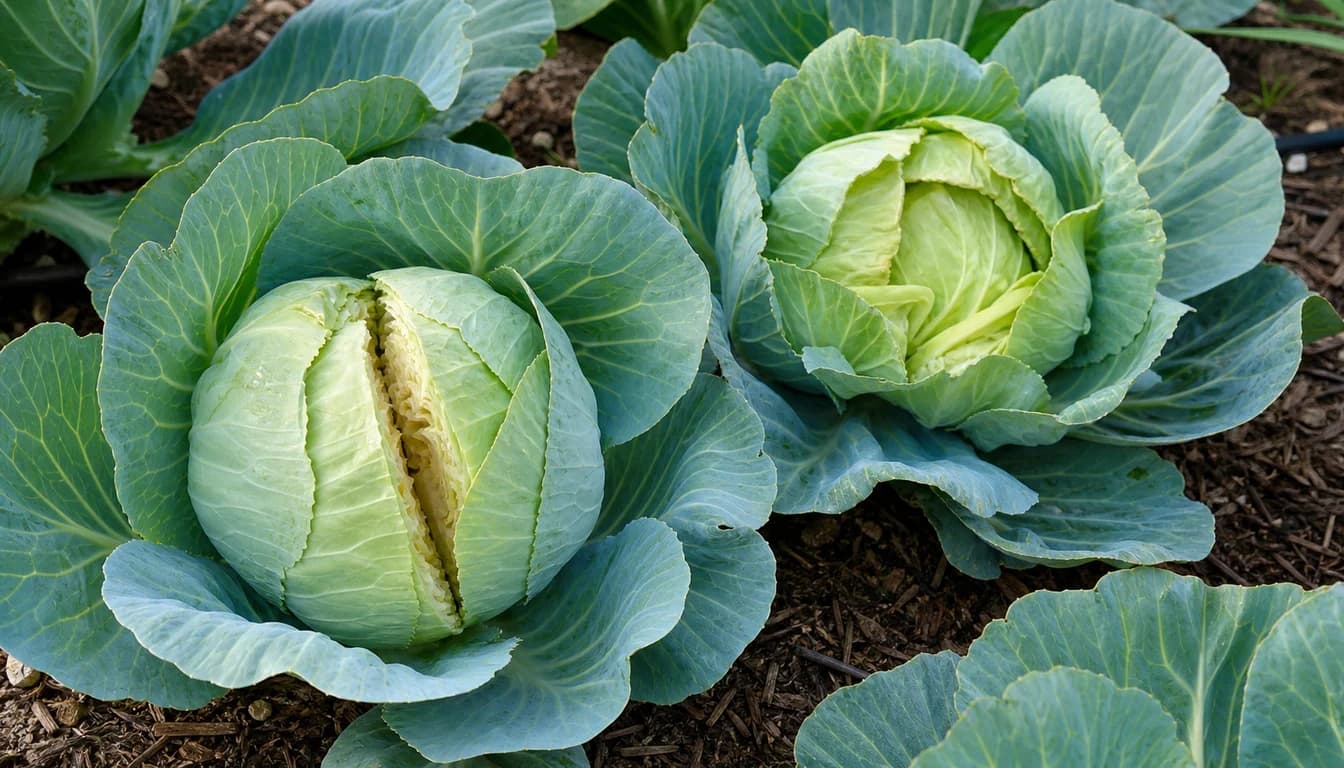
Cabbage plants in a garden bed with one head split open and another loose head with inner leaves spreading apart.

Cabbage plants in a garden bed with one head split open and another loose head with inner leaves spreading apart.

lightbulb
bolt

Quick Diagnosis

Most Likely Cause: Inconsistent soil moisture causing rapid head growth followed by swelling or splitting.

Loose heads and sudden cracking usually start weeks before harvest, so squeeze a few heads and check recent weather before blaming the seed packet. With Cabbage, a head that firms late after heavy rain behaves differently from one that never tightened because of heat or excess nitrogen; basic cabbage timing helps you separate the two.

Jump to fix steps arrow_downward

Most loose or split Cabbage heads are a timing-and-growth problem, not a disease. Plants pushed by warm weather, uneven moisture, or late nitrogen keep expanding after the wrapper leaves should have tightened, which leaves you with puffy heads or splits after a rain.

Split heads lower yield and make storage harder, but not every split needs to be discarded. Small splits can be trimmed and used immediately; loose heads can still be harvested for slaw, sauteing, or short-term refrigeration. While the crop is still in the ground, the goal is to slow growth surges and keep soil moisture steady so developing leaves pack tightly instead of stretching and tearing.

Steady deep watering, mulch, moderate feeding, and firm-heading varieties reduce risk. Use watering frequency for vegetable beds to avoid dry-to-flood swings. Pair that routine with fertilizer choices for vegetables so late nitrogen does not push fast, loose leaf growth.

menu_book
Guide - See AlsoAir Purifying Plants for Cleaner Indoor Air
chevron_right
psychology

Why heads loosen, split, and still might be usable

Cabbage heads are compressed leaf buds. When the inner leaves expand evenly, the head feels firm; when water, heat, or nitrogen pushes growth too fast, the inner leaves separate and the head opens.

A clean split down the head is different from cabbage worm damage. Splitting exposes pale inner leaves but does not leave frass, ragged holes, or caterpillars.

Loose or split heads are not automatically waste. Use cracked heads quickly, trim dry edges, and discard any soft or slimy tissue. Tight storage quality is gone once a head splits, but the edible leaves are often still fine the same week.

thermostat

Environmental Baseline

Before diagnosing specific failures, confirm your Cabbage: Pick the Right Head, Then Hold It Steady's environment matches its core care requirements.

forestCabbage: Pick the Right Head, Then Hold It Steady Care Needs

  • Light: Full sun for best head size
  • Water: Even moisture, about 1-1.5 in per week
  • Temp: Best heads at ==**45-75 F**==; quality drops in heat above 80 F

homeTypical Indoor Home

  • Humidity: 30-50% (Low)
  • Temp: 65-72°F variable
  • Light: Often too dim or direct
biotech

Possible Causes

Sorted by likelihood

1. Inconsistent soil moisture

Likelihood: High

Rapid wet-dry cycles make inner leaves expand unevenly. After a dry stretch, heavy rain or a deep sprinkler run can swell the head faster than the outer wrapper leaves can hold it, so Cabbage heads split or open.

Identification

  • remove_circle_outlineHeads split within a few days of heavy rain, deep watering, or a storm after dry weather.
  • remove_circle_outlineSoil was dry below the surface before the head started cracking.
  • remove_circle_outlineA vertical crack opens through the head while outer leaves still look mostly intact.
  • remove_circle_outlineSeveral plants in the same row split at the same time after a moisture change.

The Fix

  1. 1Switch to even, deep watering; soak beds to 6-8 inches every 4-7 days depending on weather, rather than light frequent sprays.
  2. 2Add a 2-3 inch layer of organic mulch to buffer soil from sudden wet-dry swings.
  3. 3Use drip irrigation or soaker hoses where possible so moisture stays steady around the shallow roots.
  4. 4Harvest heads that are already cracked; they will not tighten back up in storage.
  5. 5For nearly mature heads, twist each plant a quarter turn to break a few roots and slow water uptake before a forecasted storm.

2. Rapid growth from warm weather or high nitrogen

Likelihood: Medium

Warm spells and late high-nitrogen feeding push leaf expansion when heads should be firming. The plant keeps making loose interior leaves, especially if feeding continues after head formation.

Identification

  • remove_circle_outlineRecent fertilizer or fresh compost was applied as heads began forming.
  • remove_circle_outlineOuter leaves look oversized and lush while the center stays open or springy.
  • remove_circle_outlineHeads push apart at the center without obvious pest chewing or rot.
  • remove_circle_outlineRapid growth occurred during a warm 7-14 day stretch.

The Fix

  1. 1Stop high-nitrogen feeding once heads begin to form; avoid quick-release side dressing during the last 3-4 weeks.
  2. 2If plants are pale and truly need food, use a light balanced vegetable fertilizer rather than a lawn-style nitrogen product.
  3. 3Keep watering steady after reducing feed so the plant does not swing from lush growth to stress.
  4. 4Harvest loose heads when they are usable instead of waiting for them to become perfectly tight.
  5. 5Choose firm-heading or split-resistant varieties for seasons when warm spells arrive early.

3. Variety choice or delayed harvest

Likelihood: Low

Some varieties naturally form looser heads, and mature heads left in the bed too long are more likely to crack. This is less common than moisture swings, but it matters when only one cultivar or one planting date fails.

Identification

  • remove_circle_outlineLoose heads are limited to one variety while nearby plants stay tight.
  • remove_circle_outlineSeed packet or transplant tag describes a savoy, loose-leaf, or early type rather than a dense storage type.
  • remove_circle_outlineHeads were already mature and firm before splitting after extra days in the bed.
  • remove_circle_outlineFall or spring timing pushed head formation into heat above the crop's preferred cool window.

The Fix

  1. 1Harvest mature heads promptly when they feel firm and full-sized.
  2. 2Plant smaller succession blocks so every head does not mature during the same stormy week.
  3. 3Use split-resistant or storage-type cultivars where wet finishing weather is common.
  4. 4Shift planting dates so head fill happens in cool weather rather than summer heat.
  5. 5Compare symptoms with cabbage worm damage before blaming variety if leaves are chewed or full of frass.
menu_book
Guide - See AlsoBest Herbs to Grow Indoors for Real Harvests, Not Spindly Pots
chevron_right
potted_plant

Root Health Examination

A direct inspection of the root system distinguishes root rot from drought stress - saving weeks of guesswork.

check_circleHealthy Roots

  • Firm to the touch
  • White or light tan color
  • Earthy, pleasant smell

cancelCompromised Roots

  • Mushy or slimy texture
  • Dark brown or black color
  • Sour, rotting odor

Inspection Step: Gently slide the pot off while supporting the base of the stems. The outer root ball gives sufficient clues without disturbing all the soil.

gpp_bad
warning

When to Worry

A few yellow leaves are normal. If more than 20% of foliage turns yellow within a week, or new growth is affected, act immediately - check the roots first.

timeline

Recovery Protocols

Recovery takes time. Once the root cause is corrected, implement a 30-day stabilization window.

0-3 daysHarvest what is already split

Cut heads with open cracks and use them quickly. Do not wait for split tissue to heal; exposed inner leaves dry, rot, or invite pests once the head opens.

1-2 weeksStabilize heads still forming

Even out watering, mulch exposed soil, and stop late nitrogen. Heads that are only loose may tighten somewhat, but fully split heads will not close again.

Next plantingPrevent the repeat pattern

Adjust planting dates, choose split-resistant varieties, and keep moisture consistent from transplanting through head fill. The prevention work happens before the final swelling stage.

menu_book
Guide - See AlsoBest Indoor Plants for Every Room and Light Level
chevron_right
shield

Preventing Future Issues

Prevent loose or split Cabbage heads by keeping soil evenly moist, mulching 2-3 inches deep, feeding moderately before head formation rather than late, and harvesting mature heads before a major rain. If your bed swings from dry to soaked, combine deep watering habits with steady vegetable-bed timing so the crop never has to recover from drought and swell overnight.

menu_book

Related Reads

menu_book
GuideAir Purifying Plants for Cleaner Indoor Air
chevron_right
menu_book
GuideBest Herbs to Grow Indoors for Real Harvests, Not Spindly Pots
chevron_right
menu_book
GuideBest Indoor Plants for Every Room and Light Level
chevron_right
menu_book
GuideDirect Sow vs Transplant: Choose the Right Method
chevron_right
Cabbage: Pick the Right Head, Then Hold It Steady (Brassica oleracea var. capitata) - full care guideBrassica oleracea var. capitata

Cabbage: Pick the Right Head, Then Hold It Steady

Brassicaceae Family

wb_sunny

Light

Full sun for best head size

water_drop

Water

Even moisture, about 1-1.5 in per week

thermostat

Temp

Best heads at ==**45-75 F**==; quality drops in heat above 80 F

yardFull Care Guide

On This Page

boltQuick DiagnosispsychologyUnderstandingthermostatEnvironment CheckbiotechPossible Causespotted_plantRoot ExamwarningWhen to WorrytimelineRecovery PlanshieldPreventionmenu_bookRelated Reads