
Butterfly Bush Not Flowering? Check When You Pruned It
A leafy butterfly bush with few flower panicles usually needs a check of direct sun, shoot stage, pruning date, and root-zone conditions. The pattern on individual branches separates a plant that is merely late from one spending the season on weak or purely vegetative growth.
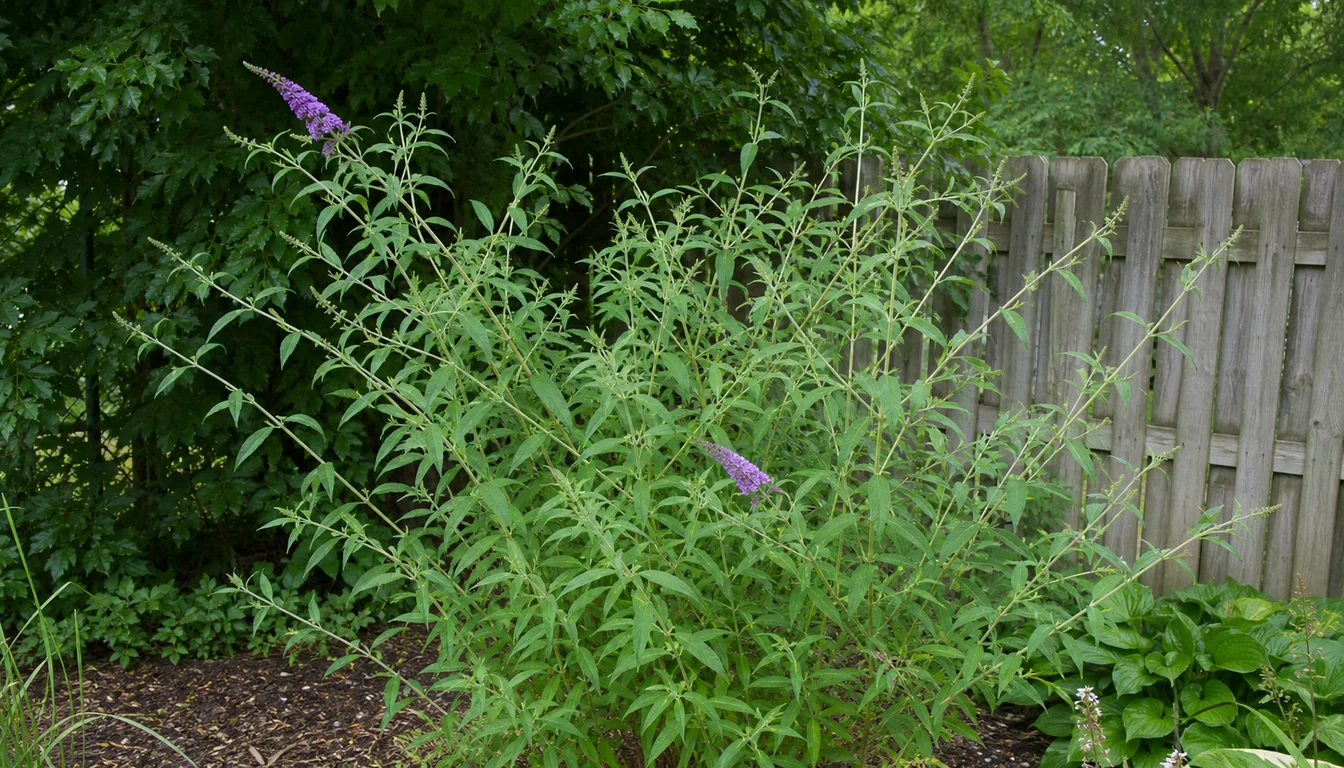
Quick diagnosis
Pruning at the wrong time or insufficient sun
Butterfly bush flowers at the ends of current-season shoots.
Early-spring pruning encourages flowering, while a cut made after the shoots have lengthened restarts growth and delays the panicles.
Open the full diagnosisWhat You Are Seeing
Buddleja davidii is a summer-flowering shrub whose terminal panicles develop on new growth. Spring shoots have to extend and mature first, so a cold-delayed crown or a recently pruned plant can stay healthy and leafy long before it reaches the flowering stage.
Direct sun is the clearest site requirement.
Record where the shrub gets at least six hours of unfiltered light and look for panicles concentrated on those branches, because that within-plant comparison beats any general claim that the garden is sunny.
The species tolerates varied soil but performs best where roots drain freely. Saturated soil, sustained drought, and repeated high-nitrogen feeding all reduce flowers, and each leaves different evidence in the root zone and the shoot texture.
Common Causes
01 High likelihood
Improper pruning timing or method
Butterfly bush responds well to pruning before spring shoot expansion, because it flowers on current-season growth.
Trouble starts when established shoots are shortened late in spring or pinched repeatedly, forcing the plant to rebuild terminal growth before it can form panicles.
How to identify it
- Fresh cuts remain visible below soft new shoots that have no terminal panicles
- The plant was pruned after spring shoots had already elongated
- Hedge shearing or repeated tip pruning removed every developing terminal point
- Uncut branches are farther ahead than branches cut later
What to do
- Stop cutting and let the current terminal shoots mature through the remaining warm season.
- Schedule structural pruning for late winter or early spring before foliage expands, adjusted for local cold risk.
- Remove dead stems and selected old stems cleanly instead of shearing every tip into one dense shell.
- Use summer-flowering shrub pruning timing to separate current-season bloomers from old-wood shrubs.
02 Medium likelihood
Too little sunlight
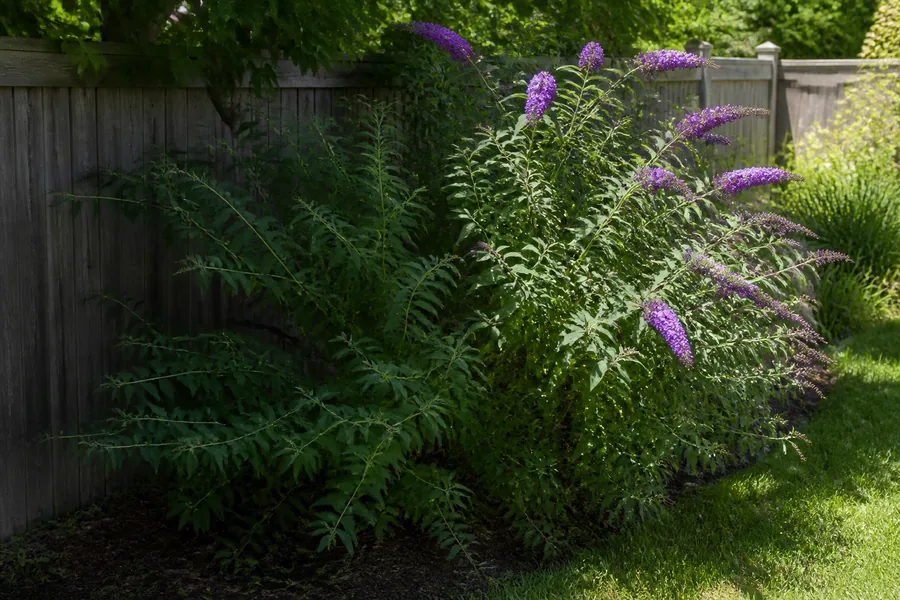
Butterfly bush makes its strongest display with at least six hours of direct sun. In shade it stays leafy and stretches toward the light, and the few panicles it does make concentrate on branch ends that escape the canopy or the building shadow.
How to identify it
- Shrub located under tree canopy or on north side of building with long shady hours
- Long, thin shoots with sparse flower buds by mid-summer
- Better flowering observed on any branches that receive more direct sun
- Neighboring structures or newly planted trees creating shade changes
What to do
- Relocate the plant during dormancy when the site cannot provide enough direct light.
- If moving is not possible, thin nearby tree branches to increase light or remove competing shrubs within a few feet.
- Prune to open the center of the shrub so interior shoots receive more light and can produce flowers.
- Use morning versus afternoon sun guidance to decide if your site gets the strong afternoon light this plant prefers.
- Trim taller surrounding plants a season before expecting major bloom improvements so the bush can build root reserves.
03 Low likelihood
Poor soil fertility or drainage
Saturated or compacted soil limits root function and shortens the flowering shoots.
Sustained drought leaves a different pattern of dull leaves, stalled extension, and dry soil below the mulch, so check moisture before adding water or digging for drainage.
How to identify it
- Soil stays wet for days after rain or irrigation and plant looks weak
- Short weak shoots accompany soil that stays saturated or smells sour
- Plants in raised beds or amended soil flowering better than those in native compacted soil
- Visible root crowding in the planting hole when inspecting the base
What to do
- Improve drainage by amending planting area with coarse sand and compost or planting on a raised berm to lift roots out of wet soil.
- Pause automatic irrigation and correct runoff or low-grade drainage when the root zone stays wet.
- Water a confirmed dry root zone thoroughly, then wait for partial drying rather than sprinkling the surface each day.
- Use a soil test before feeding a weak plant because fertilizer cannot repair oxygen-starved roots.
- If root problems are suspected, dig a small inspection hole to check roots and consider replanting at a slightly higher grade with fresh well-drained mix.
- Use mulch versus compost options to decide which organic amendment belongs on the soil surface.
04 Medium likelihood
Excess nitrogen or repeated feeding
High-nitrogen fertilizer produces long soft shoots and large green leaves without touching the reason flowers are scarce. It differs from shade because similarly exposed branches all over the shrub make lush extension and few terminal panicles.
How to identify it
- Growth accelerated after lawn fertilizer, manure, or a high-nitrogen feed reached the root zone
- Shoots are unusually long, soft, and leafy with wide gaps between nodes
- Sun-exposed and shaded sides are both strongly vegetative
- Leaves look dark green without the wilt or yellowing associated with root stress
What to do
- Stop supplemental feeding for the rest of the season and keep lawn fertilizer outside the shrub bed.
- Do not prune the soft shoots again, because another cut restarts terminal growth.
- Use a soil test before the next application and feed only when a measured deficiency or weak overall growth supports it.
- Keep normal irrigation rather than withholding water to counter fertilizer, which creates a second stress.
05 Medium likelihood
Cold-delayed spring regrowth
In colder sites the top dies back while the crown survives, and the new shoots then start late.
The plant simply lacks the accumulated warmth to reach its normal flowering stage in the same week as an established shrub that kept more living wood.
How to identify it
- New stems began at the crown weeks after nearby shrubs leafed out
- Shoots are healthy and firm but still short for the cultivar
- The whole plant is at one early growth stage rather than losing individual shoot tips
- Scratch tests and crown growth confirm survival without an expanding dieback margin
What to do
- Let healthy new shoots grow and avoid another corrective pruning.
- Track terminal development against local warmth rather than a national calendar date.
- Use the separate winter-dieback diagnosis when stems or the crown remain dead, soft, or rootless.
- Plan future pruning after the worst cold but before vigorous shoot expansion.
06 Medium likelihood
Normal seasonal or cultivar timing
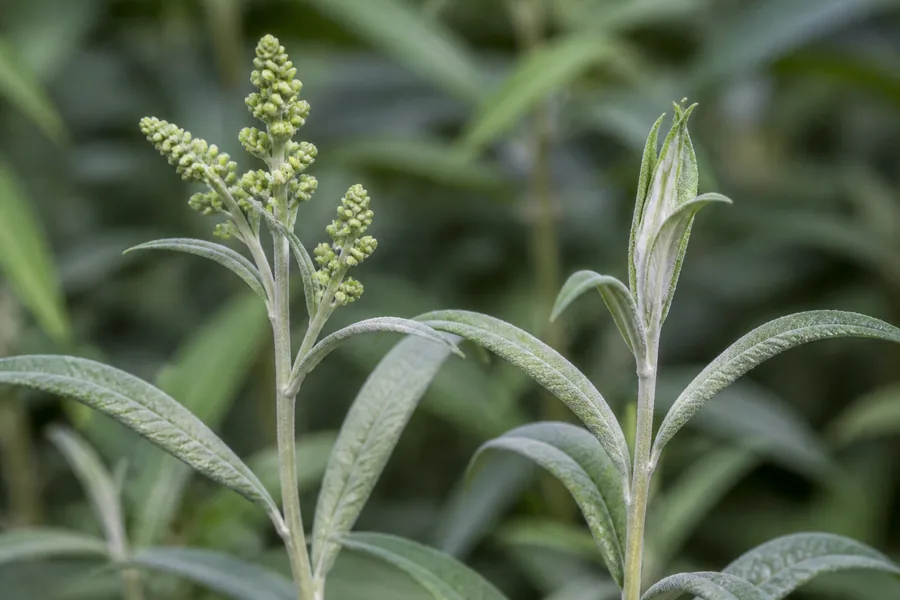
Cultivars differ in size and flowering schedule, and a cool spring delays every stage. A healthy shrub with compact terminal clusters may already be forming panicles even while the buds are still green and easy to mistake for leaves.
How to identify it
- Several firm shoot tips carry tight branching clusters rather than single folded leaves
- Growth is balanced and the shrub receives adequate direct sun
- No recent cut, fertilizer surge, water stress, or tip injury explains a delay
- The plant's previous bloom records show a similar seasonal start
What to do
- Photograph the same marked tip now and again in ten to fourteen days.
- Keep care steady while the clusters enlarge instead of adding bloom booster.
- Confirm the cultivar name and mature flowering period from its label or breeder.
- Escalate to the other causes only if terminal clusters stall or disappear.
07 Low likelihood
Finished panicles are slowing the repeat display
Deadheading improves appearance and encourages later side shoots on some plants, but it explains a weak repeat flush rather than a shrub that never made its first flowers.
Where the species is invasive, stopping seed from maturing matters for its own reasons.
How to identify it
- The shrub completed a normal first flush and now holds many brown spent panicles
- Small side shoots are present below finished flower clusters
- Light, water, and current growth remain adequate
- The complaint began after flowering rather than at the start of summer
What to do
- Remove spent panicles just above a healthy pair of leaves without shortening the whole branch.
- Stop deadheading late enough for new growth to mature before local cold weather.
- Do not use deadheading as the fix for a plant that has no first-flush buds.
- Follow regional rules for invasive butterfly bush and use approved sterile cultivars or native alternatives where required.
Flowering starts only after current shoots mature
Buddleja davidii makes each panicle at the end of a shoot grown that same season.
The plant has to rebuild shoot length after dormancy, cold dieback, or pruning before those terminal clusters can form at all.
A compact green cluster at the tip is an early panicle, not a reason to feed or prune again. Watch it expand while keeping the water steady and the terminal point safe from accidental cuts.
Cultivar vigor and local warmth change the schedule.
Compare the plant against its own previous flowering dates and its labeled cultivar, rather than expecting every butterfly bush to open in the same week.
Check the shoot tips before changing care
Look at at least six terminal tips across the shrub. A developing panicle is a compact branching cluster at the end of a firm shoot, while a purely vegetative tip continues as folded leaves around one growing point.
Compare tips from the sunniest outer branches with tips inside the canopy. Clusters present on both sides suggest the shrub is simply early in its flowering sequence, while clusters only in direct sun support a light limitation.
Mark two representative tips and leave them uncut for ten to fourteen days. Enlargement and branching confirm progress, while stalled soft extension sends the diagnosis toward excess feeding, root stress, or another recent pruning.
Separate low light from excess feeding
Map direct sun on the plant itself rather than estimating the whole bed. If panicles gather on the side beyond a roof or tree shadow while shaded stems stretch without flowers, light is the limiting resource.
Excess nitrogen looks more uniform across equally lit stems. The newest growth is long, soft, dark green, and widely spaced, often after lawn fertilizer, manure, or repeated liquid feed reached the roots.
Correct only the supported cause. Increase safe light or move the shrub during dormancy for persistent shade, but stop feeding and let terminal shoots mature when sun is adequate and growth is already lush.
Pruning can delay flowers without ruining next year
Buddleja davidii carries flowers on growth produced in the current season. A late-winter or early-spring cut can stimulate strong flowering shoots, so the old claim that every hard spring cut removes stored summer buds does not fit this species.
Timing still matters after shoots have elongated. Cutting every tip then removes the terminal points that were moving toward panicle formation, and the replacement shoots need another stretch of warm growth before they can flower.
After a late cut, stop trying to correct the shape and let new tips mature. Make the next structural pruning before spring foliage expands, with local cold risk deciding whether that point comes in late winter or early spring.
Root stress shows up beyond missing flowers
Push aside mulch and test soil several inches down near the root-ball edge. Soil that stays wet for days with weak pale growth supports poor drainage, while dusty soil with dull curling leaves and stalled tips supports sustained drought.
Compare the planting hole with surrounding grade. A buried crown, runoff from a downspout, or an intact dense root ball can keep roots stressed even when the surface looks normal.
Correct drainage, grade, or irrigation from that evidence and leave healthy stems in place. Use the winter-dieback diagnosis only when the main problem is dead stems or a failing crown rather than a living leafy shrub with few flowers.
Decide whether this season still has time
A plant with healthy terminal clusters and weeks of warm weather ahead may still produce a useful display. Keep water steady, stop feeding and pruning, and judge progress from marked tips rather than a promised national bloom date.
Deadhead only after a real first flush has faded. Cut each brown panicle just above healthy leaves to release side shoots, and avoid shortening all green stems into a hedge.
If the season closes without panicles, preserve the diagnosis for next spring. Correct light or drainage during dormancy, prune before shoot expansion, and avoid fertilizer unless a soil test or weak overall growth supports it.
Recovery Plan
Immediate actions and what to expect
Stop the repeat pruning and the unnecessary feeding, then mark representative tips.
Healthy extension or enlarging terminal clusters show the plant is still progressing, though a late-cut shrub may not regain its usual display this season.
Bud set and early blooms
With enough direct sun and warm weather, the current shoots can carry on toward panicle formation. A moved shrub, or one recovering from root stress, may spend the rest of the season rebuilding roots and shoots instead.
Full recovery time
Use the next dormant season for a necessary move or a drainage correction.
Prune at the proper late-winter or early-spring point, then leave the new terminal growth intact right through flower formation.
Keep the shrub in direct sun, prune before spring shoots expand, and avoid shearing terminal growth later. Base fertilizer on measured need, keep the root zone drained, and remove spent panicles only after the first flush, while following local invasive-plant rules and choosing approved sterile cultivars or native nectar plants where required.