
Winter Dieback Does Not Always Kill a Butterfly Bush
Brittle canes after winter do not prove that a butterfly bush is dead. Test the crown and stems in stages, separate cold injury from wet-root failure, and wait for the plant's own spring growth before deciding where to cut or whether to replace it.
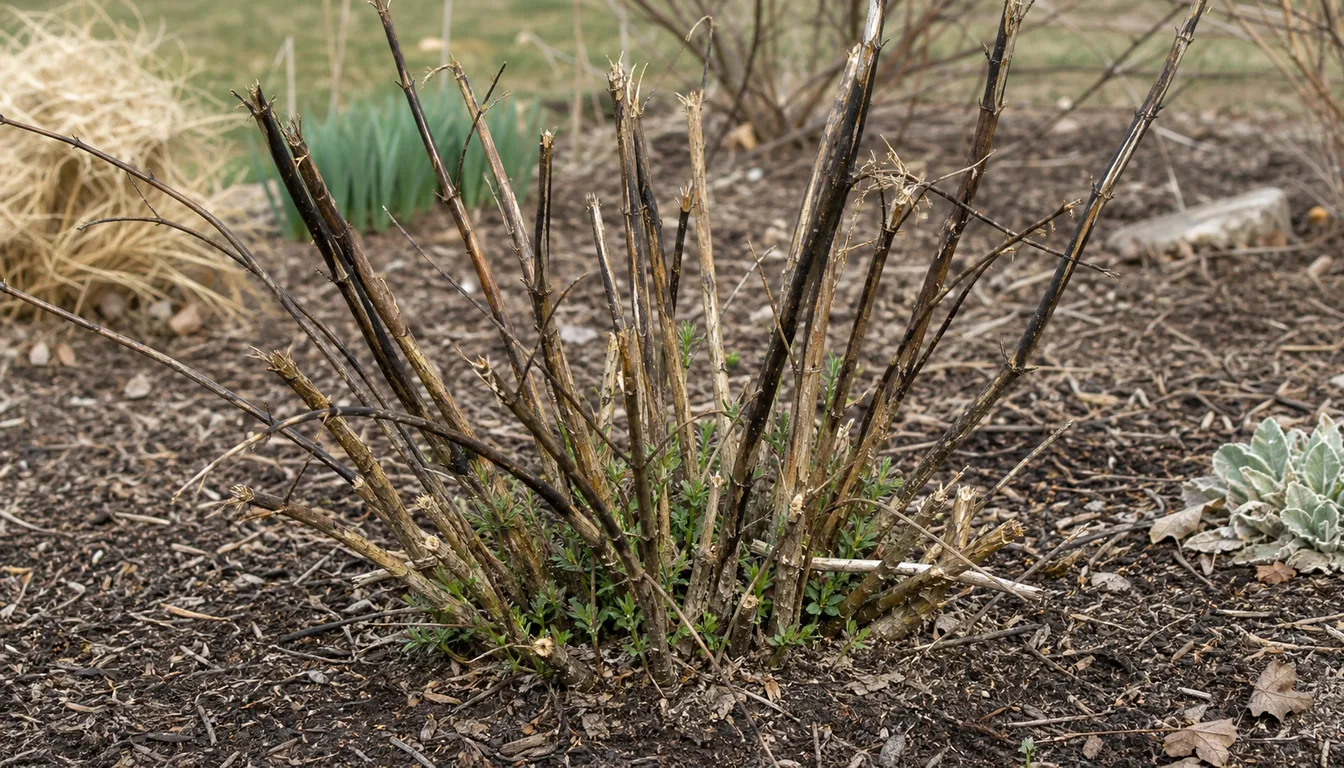
Quick diagnosis
Cold damage to above-ground wood (winter dieback)
Begin at the crown, not at the cane tips. Firm tissue, swelling basal buds, or new shoots mean the root crown survived even when every exposed stem is brittle.
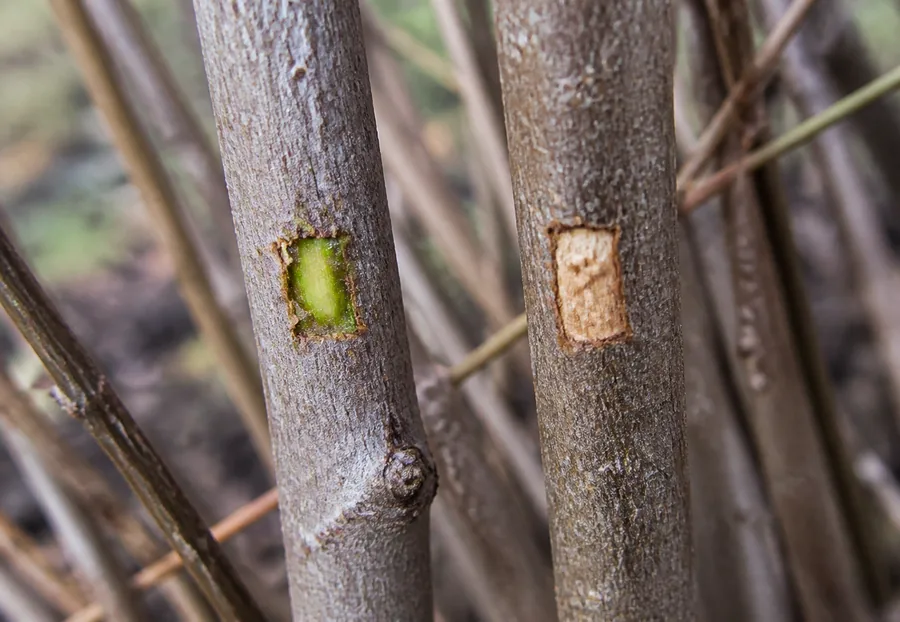
On questionable canes, make a shallow scratch from the tip downward and stop where moist green tissue or swelling buds begin.
Open the full diagnosisWhat You Are Seeing
Winter cold can kill Buddleja davidii stems back to older wood or to the soil line while leaving the crown alive. This is common enough in colder parts of its range that a bare framework should be treated as unconfirmed until basal buds have had warm soil and time to respond.
Butterfly bush recovers best in full sun and freely drained soil. Directional injury on the exposed side suggests wind and cold, while a soft dark crown, poor anchorage, and persistently wet soil point toward root or crown failure.
Prune only after the survival line becomes visible through green cambium, swelling buds, or basal shoots. This preserves living wood, while a fully leafy recovered shrub that later lacks panicles belongs to the poor-flowering diagnosis.
Common Causes
01 High likelihood
Severe winter temperatures or late cold snaps
Prolonged lows, rapid temperature swings, and late cold can kill exposed wood back to older tissue. Damage is often worst on cane tips and the side facing prevailing winter wind, while the insulated crown remains firm.
How to identify it
- Blackened or brittle cane tips with green tissue only at the base
- Dieback that follows the height of a previous summer's growth
- Multiple stems snapped when bent because wood is dead and dry
- Damage concentrated on exposed sides of the shrub after an exposed winter
What to do
- Wait until late winter to test stems (see pruning guidance below) before removing questionable canes.
- Cut back dead stems to healthy green wood or to the crown when you can confirm no buds are swelling.
- After pruning, apply 2-4 inches of mulch over the root zone to buffer future cold.
- When replanting, choose a cultivar with better cold tolerance for your zone.
- If many stems died to the ground and crown buds are absent, plan for replacement rather than restoration.
02 Medium likelihood
Root damage from wet soil or root rot
Winter-saturated soil deprives roots of air and can damage the crown, creating whole-plant collapse that resembles cold loss from above. The decisive evidence is below the cane tips in crown texture, anchorage, smell, and soil moisture.
How to identify it
- Soft, brown roots or a foul, musty smell when you dig at the crown
- Entire shrub collapses instead of isolated cane dieback
- Dieback with persistently wet soil or poor drainage history
- Blackening that starts at the base and moves upward
What to do
- Improve drainage by planting on a slight mound or amending soil with coarse material.
- Avoid heavy fall watering and let the soil partially dry so roots can harden before cold.
- If root rot is present, remove infected material and replant in better-draining location or replace the plant.
- Consider avoiding dense, clay-heavy spots or fix them with long-term soil improvement.
- Inspect for returning shoots in spring before deciding to replace the shrub.
03 Low likelihood
Cultivar hardiness and age of wood
Cultivars vary in cold tolerance, and a recent transplant has fewer established roots and stored reserves than a settled crown. Damage repeating every winter despite good drainage is evidence of a cultivar or microclimate mismatch.
How to identify it
- New cultivars with less field testing show higher winter loss records
- Young transplants or shrubs planted that same fall show more dieback
- Differential dieback across clones or neighboring bushes
- Dead growth mainly on new shoots while older framework stays alive
What to do
- Select reliably hardy cultivars for your zone and microclimate when replacing plants.
- Protect newly planted shrubs with heavier mulch and temporary windbreaks the first two winters.
- Avoid hard pruning late in the fall that stimulates tender new shoots before winter.
- Document which cultivar was affected to guide future planting choices.
- If only tips are killed, prune to older wood in late winter to encourage stronger shoots.
04 High likelihood
A living crown beneath dead canes
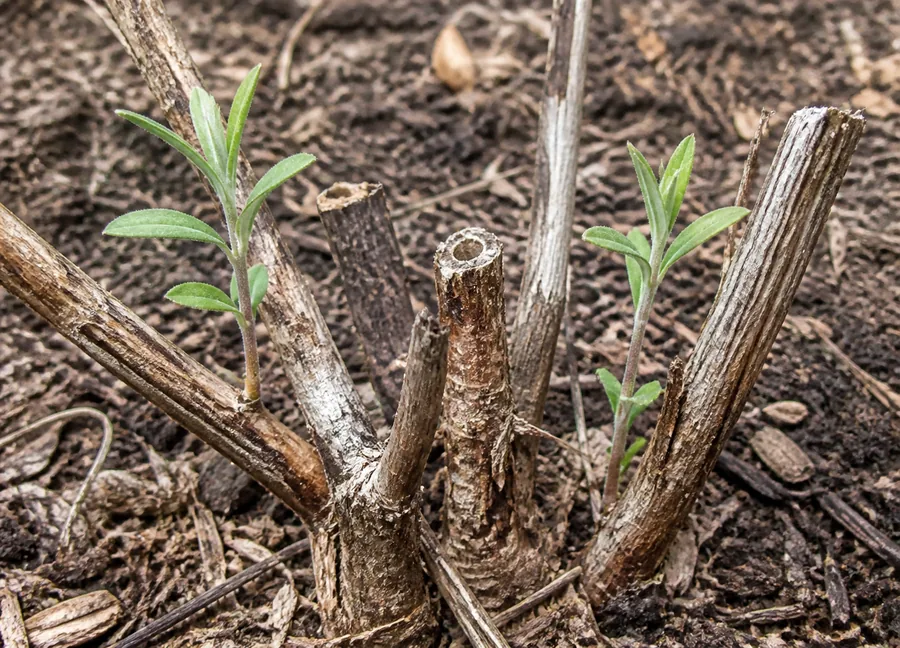
The entire top can die while protected buds at or below the soil line survive. Firm basal tissue and new green shoots make this a recovery case rather than a dead plant, even when every old cane fails a bend test.
How to identify it
- Small green shoots or swelling buds appear at the crown
- The crown is firm and anchored rather than soft or loose
- Old canes are brittle above the soil but the base shows moist living tissue
- New growth begins only after soil warms, later than retained stems nearby
What to do
- Wait until several basal shoots establish before removing every old cane.
- Cut confirmed dead stems close to the crown without injuring green shoots.
- Keep enough new shoots to rebuild the framework and postpone thinning until their vigor is clear.
- Maintain even moisture without keeping the recovering crown saturated.
05 Medium likelihood
Late freeze after spring growth began
A late freeze injures soft new tips after dormant wood has already survived winter. The newest leaves collapse or blacken together, but lower stem tissue and dormant side buds often remain viable.
How to identify it
- Damage appeared immediately after a freeze following warm weather
- Only unfolded leaves and tender shoot tips are black or limp
- Lower cane tissue stays flexible and green under a shallow scratch
- Protected inner or lower shoots show less injury
What to do
- Wait several days for the boundary between dead and live tissue to become clear.
- Trim only collapsed tips back to a healthy bud after severe cold has passed.
- Do not remove the whole cane when lower tissue remains green.
- Avoid fertilizer while replacement shoots are beginning because forced soft growth adds risk.
06 Low likelihood
Winter wind and frozen-soil desiccation
Exposed stems lose moisture on sunny or windy winter days while frozen soil cannot replace it. Injury follows exposure and can be stronger above snow or mulch protection without making the crown soft or rotten.
How to identify it
- Dieback is strongest on the windward or southwest-facing side
- Protected lower stems retain green tissue higher than exposed stems
- Soil drainage and crown firmness remain normal
- Nearby exposed shrubs show a similar winter injury pattern
What to do
- Prune to living tissue after buds reveal the survival line.
- Maintain an appropriate mulch layer over the root zone without piling it against canes.
- Use a temporary porous wind screen for young plants in exposed sites.
- Move or replace a repeatedly injured plant when the microclimate cannot be changed.
How to think about winter dieback and recovery
Winter dieback often kills canes while the crown and protected dormant buds survive.
Confirm living tissue before large cuts so recoverable wood remains in place.
Pests and foliar disease require their own direct signs on living tissue, such as distorted leaves, webbing, insects, or fungal growth. They do not explain a clean pattern of brittle canes after winter by themselves.
Buddleja davidii is invasive or regulated in some regions.
When replacement is necessary, follow local rules and choose an approved sterile cultivar or a suitable native nectar shrub.
Test the crown before judging the canes
Clear loose mulch from the immediate crown and press gently around the cane bases. A living crown is firm and anchored, while a failing crown may feel soft, dark, loose, or foul smelling.
Look for swelling buds at soil level and tiny shoots just beyond the old stems. These protected growing points can start later than buds on surviving canes because they respond to warming soil rather than one mild afternoon.
Mark the crown and wait through a sustained warm period when it remains firm but inactive. Do not use one calendar deadline across climates, and replace the plant only when crown evidence and repeated checks show no living tissue.
Find the lowest living wood before pruning
Start with one representative cane and bend only a short tip. Dead wood snaps dry, while living wood tends to flex, but a bend test alone can damage a stem that is alive and temporarily leafless.
Make a shallow bark scratch near the tip and move downward in small stages. Moist green tissue indicates living cambium, while uniform dry tan tissue supports dieback, so stop scratching once the survival line is located.
Place the cut just above a healthy bud or live section with clean shears. Leave questionable canes until bud swelling clarifies them, and use current-season flowering shrub guidance so survival pruning does not become repeated summer shearing.
Cold injury and wet-root failure leave different evidence
Cold injury usually progresses from exposed tips downward and may spare sheltered sides or the crown. The wood is dry and brittle, but the base remains firm and the plant stays anchored.
Wet-root failure begins below ground and affects the shrub more uniformly. Check whether water stands after rain, whether a buried crown stays dark and soft, and whether roots or cane bases have lost their firm attachment.
Improve drainage or move the plant only when that evidence is present. A mound or corrected grade can help a suitable site, while mixing a little coarse material into one wet planting hole can create a basin instead of solving drainage.
Rebuild the shrub from the strongest shoots
Let basal shoots extend before selecting the new framework. Keeping several strong shoots at first gives the recovering crown enough leaf area to rebuild reserves after losing its top.
Thin weak, crossing, or badly placed shoots only after vigor is obvious. Avoid another hard shaping pass during active recovery, because butterfly bush flowers at the ends of the same current-season shoots.
Once the shrub is fully leafy, use the poor-flowering diagnosis for a flower-only complaint. It covers light, feeding, and shoot maturity without reopening the winter survival decision.
Keep, move, or replace the plant
Keep a plant with a firm crown, healthy basal shoots, and a site whose drainage and exposure can be corrected. One winter of top dieback is compatible with recovery when the roots remain sound.
Move or replace a shrub whose crown repeatedly sits wet, whose cultivar is marginal every winter, or whose roots never established. Choose a plant suited to the actual microclimate instead of repeating mulch and pruning on the same mismatch.
Check regional invasive-plant rules before restoring or replacing Buddleja davidii. Where it is restricted, choose an approved sterile cultivar or a suitable native nectar shrub rather than allowing a seed-producing plant to return.
Recovery Plan
Assess and wait
Delay major pruning until late winter.
Scratch test small sections of cane-healthy wood is green and moist under the bark. Mark obviously dead stems but leave questionable canes until buds swell.
Prune dead wood and mulch
Remove completely dead canes back to healthy growth or to the crown using sharp shears.
Apply 2-4 inches of mulch over the root zone, keeping it off the trunk flare, and water deeply but infrequently to encourage root recovery.
Monitor and be selective
Watch for new shoots from the crown or older wood. If a few strong shoots appear, selectively thin to two or three scaffold stems and delay heavy rejuvenation pruning until you see vigor.
Treat any pest outbreaks promptly to avoid secondary stress.
Reduce future dieback with full sun, freely drained soil, an appropriate mulch layer kept off the crown, and no late-season feeding that forces tender growth.
Choose a cultivar proven for the site, and reconsider the planting when winter injury repeats despite a sound crown and corrected drainage.