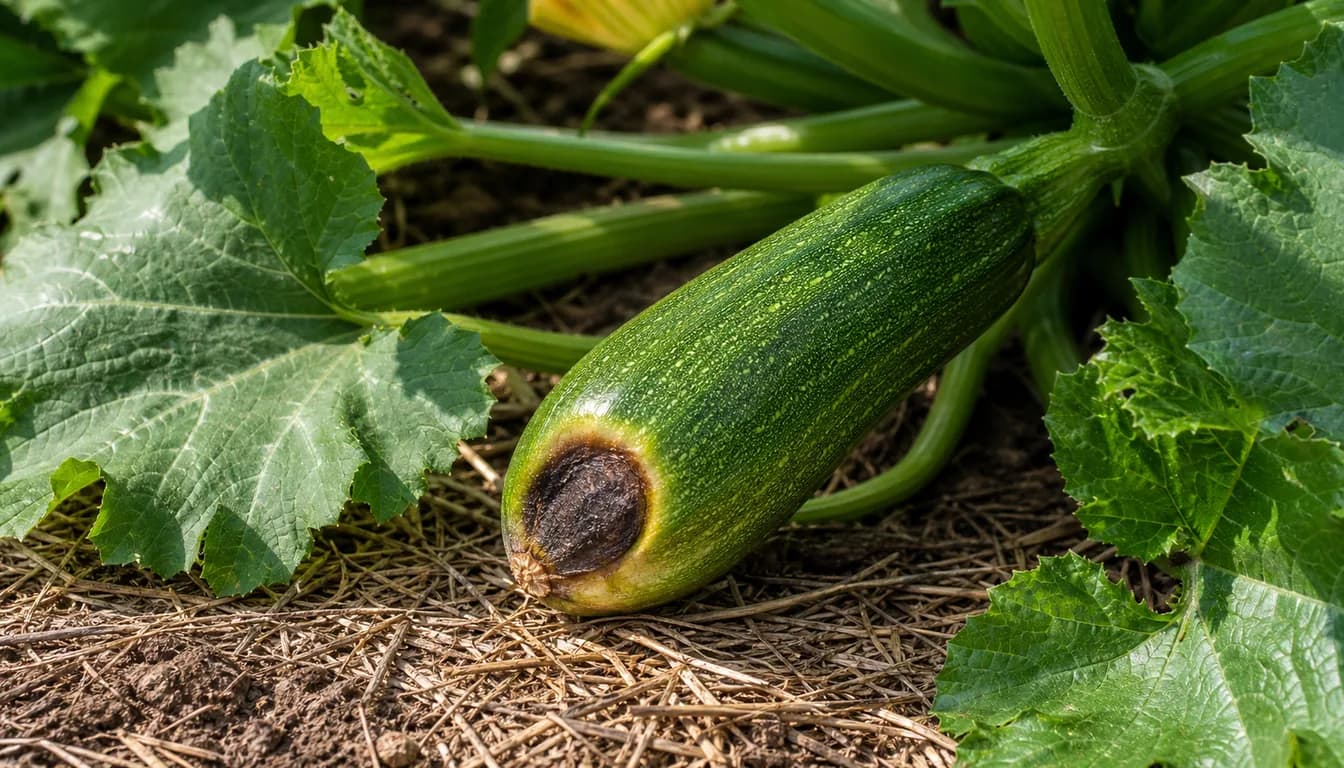
1. Inconsistent soil moisture (High)
Likelihood: HighThe most common trigger. Calcium is moved in the plant in the transpiration stream; if the soil dries and then becomes waterlogged or dries again, calcium transport to young fruit is interrupted and the blossom end develops a necrotic spot.
Identification
- remove_circle_outlinePatches of affected fruit after a dry spell or after erratic watering.
- remove_circle_outlineSoil that looks very dry between rains or has surface cracking.
- remove_circle_outlineNearby zucchinis with no symptoms when soil moisture is steady.
- remove_circle_outlineSymptoms often appear after a heat wave or during rapid fruit set when plants draw heavily on available water.
The Fix
- 1Keep soil evenly moist: water deeply to saturate the root zone then allow the top 1-2 inches to dry before the next irrigation.
- 2Use a soaker hose or drip line to deliver slow, consistent water directly to roots rather than overhead sprinklers.
- 3Mulch with 2-3 inches of organic mulch (straw, shredded leaves, or compost) to slow evaporation and buffer soil moisture swings.
- 4Avoid long dry periods followed by heavy surface watering; set a watering cadence using watering guidelines for vegetable beds adapted to your soil type.
- 5Monitor with a moisture meter or simply use the finger test at the root zone to confirm even moisture.