
What an Overwatered Plant Looks Like, and What Else Looks the Same
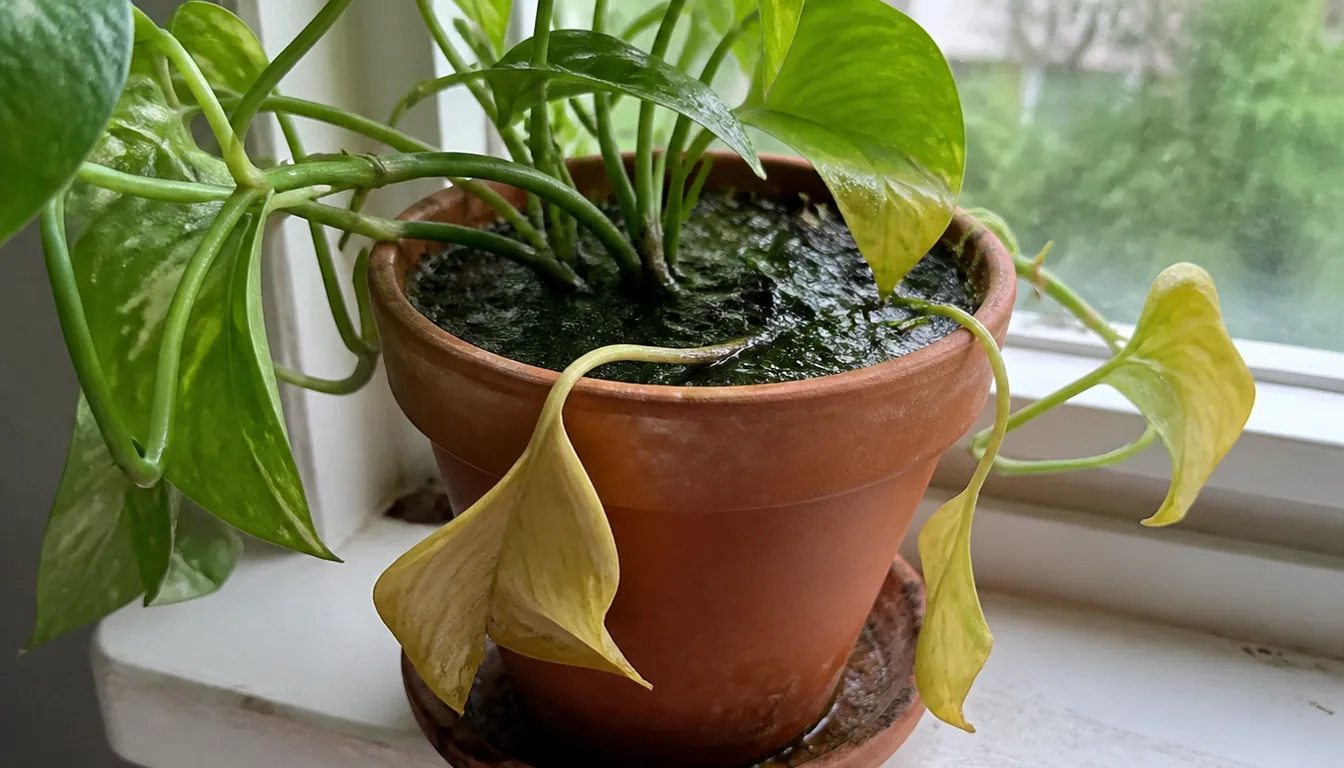
An overwatered plant looks soft. The lower leaves go pale yellow and hang, the soil under them stays dark, and the whole thing droops the way a thirsty plant droops.
That last part is the difficulty. A page that shows you overwatering and nothing else turns every yellow leaf into a watering fault, when extension services put yellowing down to low light, too little feed, mites and insects as readily as to water.
This page therefore does both jobs.
Every visible sign, early and late, with everything known to produce it.
Once you know what you are looking at, confirming it and fixing it is a separate page.
At a glance
What Does an Overwatered Plant Look Like at the Start?
It starts at the bottom.
The oldest lower leaves change first and the damage works upward, which is the opposite of most nutrient problems and of the light-starved growth that shows in new leaves. New growth at the top can look entirely normal for weeks.
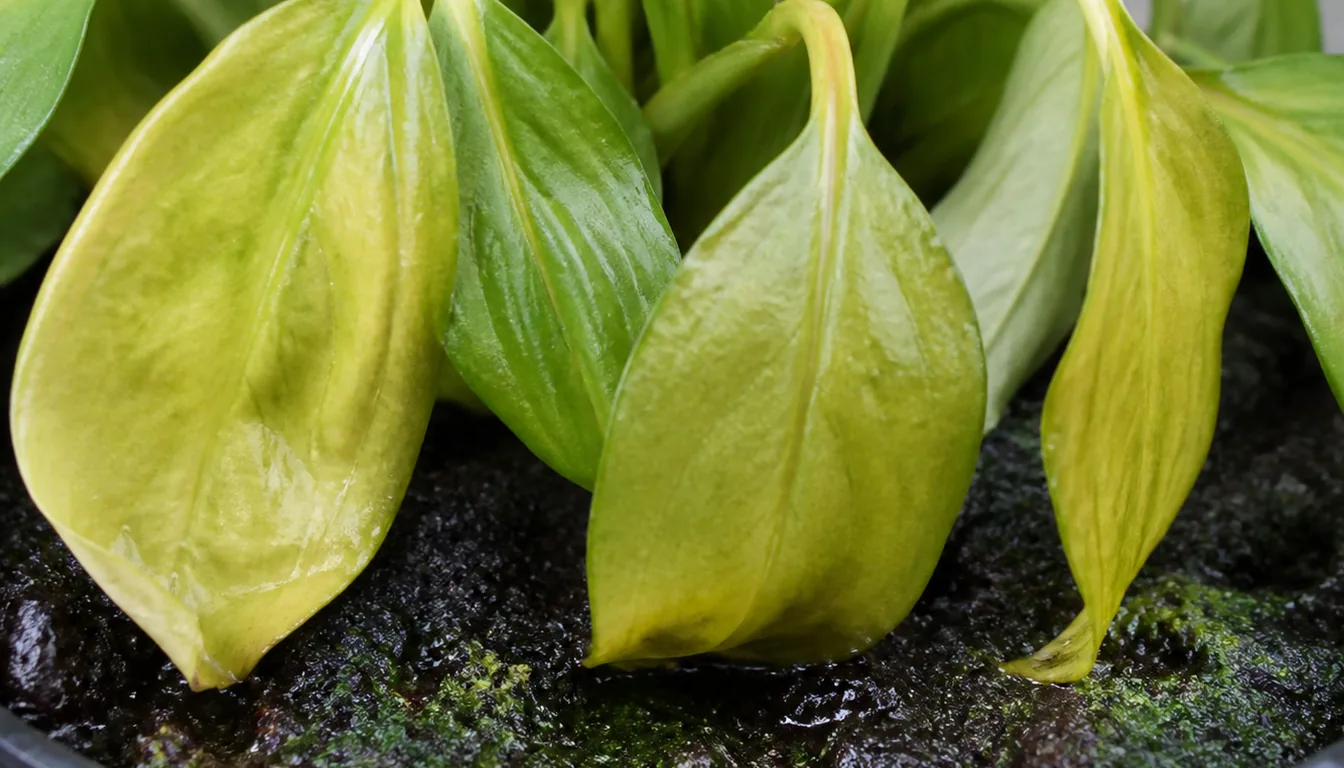
Color is the next clue. Overwatered leaves go a soft even pale yellow, sometimes with a slightly translucent look along the veins, rather than the crisp tan brown of a plant that has dried out.
Texture separates them further. A leaf damaged by too much water stays soft and feels heavy for its size, and it hangs rather than curling in on itself.
Leaf drop can arrive before the color does. Soft green leaves falling off a plant that otherwise looks healthy is a stronger signal than yellowing is, because very little else makes a plant abandon leaves it has not finished with.
Look at the soil in the same glance. At this stage the surface is usually dark and still damp, and it often carries green algae or patches of white fuzz that only grow where the surface never dries.
- Check whether the affected leaves are the oldest ones low on the plant
- Look for even pale yellow rather than crisp brown at the tips and edges
- Feel a leaf, since overwatered tissue stays soft and heavy rather than papery
- Look at the soil surface for a dark damp finish, algae or white fuzz
How Does It Differ From a Plant That Is Too Dry?
Both problems droop, and that is why so many plants get watered into the ground.
Underneath, both end in a root system that cannot supply the leaves. Too much water kills roots by suffocating them and too little never gets to them, and the plant above ground reports the shortage either way.
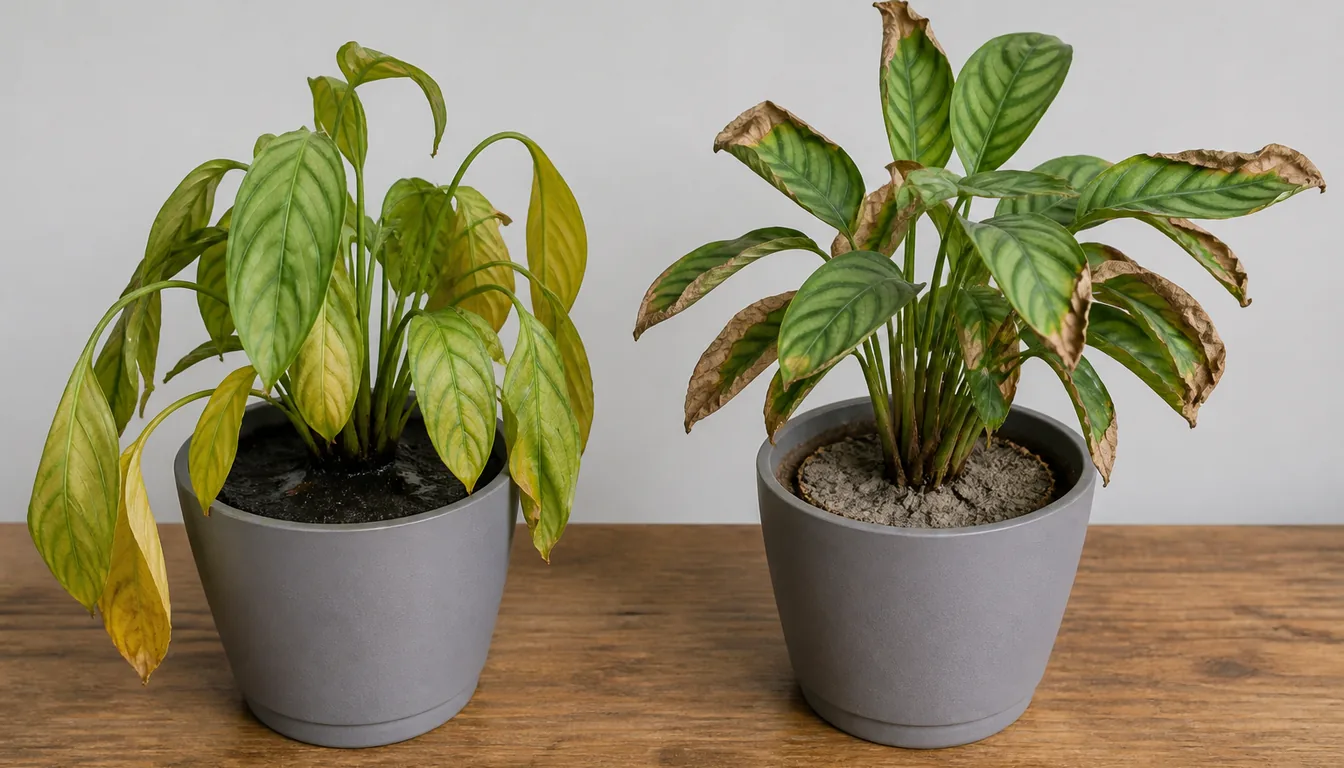
The leaf itself carries the first difference. Overwatered tissue stays soft and limp and the damage spreads across the whole leaf, while a dry leaf goes crisp and papery starting at the tips and margins and working inward.
The soil carries the more reliable one. Dark, heavy and still damp days after watering against pale, shrunken and pulled away from the wall of the pot is a difference you can see from across a room, and it does not depend on knowing the species.
One combination is unambiguous. A plant wilting over soil that is genuinely wet has a root problem, and it is the only appearance on this page that points one way on its own.
| What you can see | Too much water | Too little water |
|---|---|---|
| Leaf feel | Soft, limp, heavy for its size | Crisp, papery, light |
| Where the damage starts | Whole leaf, oldest leaves first | Tips and margins, working inward |
| Color | Even pale yellow, sometimes translucent | Tan to brown, often with a yellow halo |
| Leaves that drop | Often still soft and green | Dry and brittle before they fall |
| Soil surface | Dark, damp, sometimes algae or fuzz | Pale, cracked, shrunk from the pot wall |
| Pot weight | Heavy | Noticeably light |
What Does It Look Like Once It Reaches the Stem and Roots?
There is a point where the plant stops being a puzzle.
The stem base is where it shows.
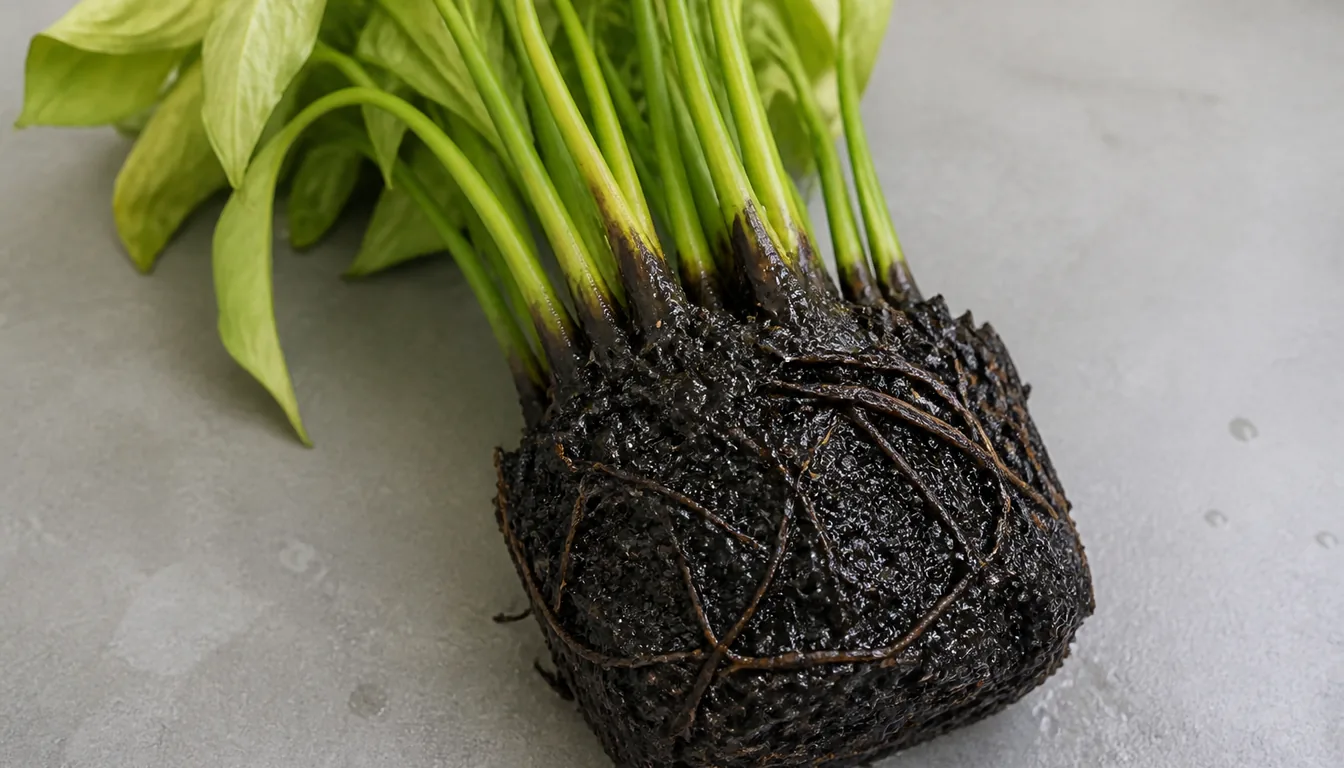
Healthy tissue there is firm and pale, and a plant that has been wet too long darkens and softens at the line where the stem meets the mix.
Crown rot at that point is a consequence of overwatering rather than a separate misfortune.
The root ball reads the same way. Lifted out, it is dark and soaked right through, and the roots running in it are brown instead of pale cream.
Smell belongs to this stage. A sour or drainlike smell from the pot is not something an early case produces, and it puts the plant firmly in the later group.
By here the identification is finished. What matters is no longer what it looks like but how much firm root is left, which the diagnosis guide takes up.
Early appearance
Soft pale yellow on the oldest lower leaves, some soft green leaves dropping, dark damp soil surface, and everything above the affected leaves still normal. The stem base is firm and the pot smells of nothing much.
Late appearance
Darkened sunken stem base, a soaked root ball with brown roots through it, a sour smell from the pot, and collapse working up through the plant rather than staying on the lower leaves.
Which of These Symptoms Are Not About Water at All?
This is the section a symptom page usually leaves out, and it is the one that stops you drowning a hungry plant.
Yellow foliage has a long list behind it. Extension services put it down to too little light, too little fertilizer, insect pests and mites, alongside overwatering and over-fertilizing.
Brown leaf tips are worse for confusion. They come from low humidity, from over-feeding, and from chlorine and fluoride in tap water over a long period, and spider plant, ti plant, dracaena, prayer plant and calathea are all named as species sensitive to what is in the tap.
Salt has a visible signature. Excess fertilizer causes brown leaf edges, and in bad cases the salts show as a white crust on the soil surface, in the saucer, or on the outside of a clay pot.
Leaf drop is the least specific sign on this page. Low humidity, light that is too high, light that is too low, a sudden change in light intensity, and blasts of cold or warm air from a door, a window or an air duct all produce it.
Over-fertilizing is the sneakiest of the group, because it damages the root system and then produces the same wilting through the same mechanism as overwatering does. A plant fed heavily and watered normally can look exactly like a plant watered heavily.
Several of these usually run at once. The aim is to find all the factors and correct the main one rather than to pick a single culprit and stop looking.
| What you see | Causes to consider | What separates them |
|---|---|---|
| Yellow leaves | Overwatering, too little light, too little feed, mites, insects | Wet soil and soft leaves point to water, pale leggy growth points to light |
| Brown tips | Low humidity, over-feeding, chlorine or fluoride in tap water | Tips alone with firm green leaves is rarely water at the roots |
| Brown leaf edges | Fertilizer salts | Look for white crust on the soil, saucer or clay pot |
| Leaf drop | Overwatering, low humidity, a light change, a cold or warm draught | Soft green leaves dropping points to roots, dry ones to air |
| Wilting | Overwatering, drought, over-fertilizing | Feel the soil first, then think about the last feed |
| Spindly pale growth | Too little light, or heavy feeding | Fast lanky growth is feed, slow reaching growth is light |
How Does It Show Up Differently on Common Houseplants?
The plant decides which symptom arrives first.
Thin-leaved plants have almost no water stored in the leaf, so they show yellowing and soft drooping early. They are the plants this page describes best, and the ones most people are holding when they search.
Succulents and thick-leaved plants behave completely differently. Their leaves go translucent, swollen and eventually mushy rather than yellow, and they fall off at a touch, so anybody waiting for a yellow leaf on a jade plant is waiting for the wrong signal.
Plants with a crown at soil level, such as African violets and many ferns, go soft at the base before the leaves say anything at all.
Then there are the tip-browning species. Spider plant, dracaena, prayer plant and calathea brown at the tips from water chemistry alone, which makes tip browning on those plants a weak overwatering signal and a strong reason to check what is coming out of the tap.
One symptom crosses all of them. A plant kept permanently wet grows slowly and pale, which reads as a light problem long before anybody thinks about the watering can.
| Plant type | Earliest visible sign | What to check first |
|---|---|---|
| Thin-leaved foliage plants | Soft pale yellow lower leaves, hanging | The soil surface and the pot weight |
| Succulents and thick leaves | Translucent, swollen or mushy leaves that fall at a touch | The lowest leaves and the stem base |
| Crown-forming plants | A soft darkened base at soil level | The crown, before the leaves |
| Spider plant, dracaena, prayer plant, calathea | Brown tips, which are usually not about water | The water supply and the feeding, not the frequency |
What Should You Do Once You Recognize It?
An appearance narrows the list. It does not close it.
The check that closes it takes a second. Push a finger into the mix to the first joint and feel what is there, because that single reading turns everything above from a guess into a conclusion.
Wet at that depth beside a wilting plant confirms the water reading, and stopping the watering is worth doing immediately.
Dry at that depth beside the same wilting plant sends you somewhere else entirely, which means light, feeding, draughts, humidity and pests rather than the watering can.
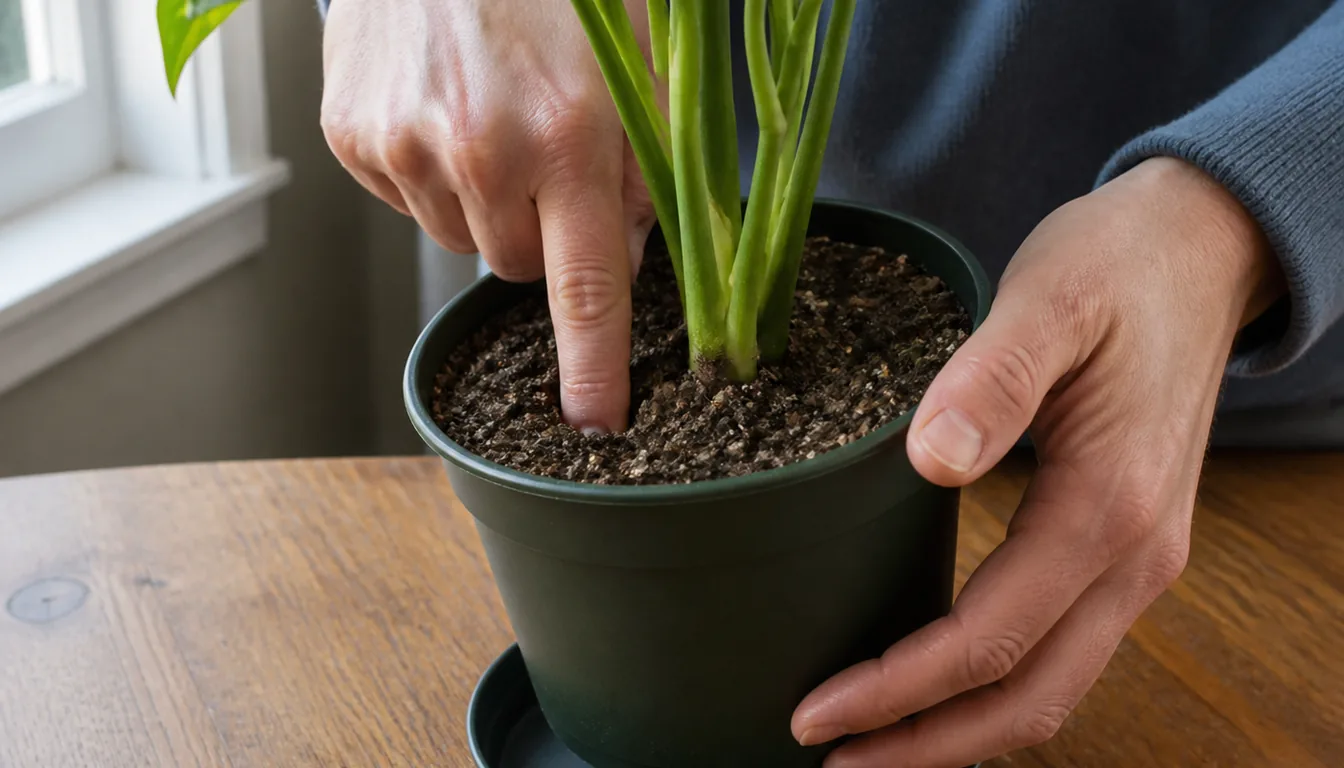
- CheckPush a finger into the mix to the first joint and note whether it comes out damp or dry, then lift the pot and feel its weight.
- StopIf the mix is wet, put the watering can down and empty any saucer or cover pot before doing anything else.
- Confirm and fixMove to the overwatering diagnosis, which covers the root check and what to do about what you find.
Pro Tips
- Look at the oldest lowest leaves first, since overwatering starts there and works upward.
- Feel a damaged leaf before deciding, because soft and heavy means water and crisp and papery means drought.
- Read the soil surface in the same glance as the leaf, since it is the more reliable of the two.
- Brown tips on a spider plant, dracaena, prayer plant or calathea are usually about the tap water rather than the frequency.
- Lift the pot, since a waterlogged pot is noticeably heavier than a dry one of the same size.
Frequently Asked Questions
What does an overwatered plant look like?
Soft pale yellow leaves low on the plant, hanging rather than curling, over soil that is still dark and damp. Soft green leaves may drop before any yellowing appears, and the pot feels heavy.
Can you tell overwatering from underwatering by looking?
Partly.
An overwatered leaf stays soft and the damage spreads across the whole leaf, while a dry leaf goes crisp at the tips and margins.
The soil surface is the more reliable difference, dark and damp against pale and shrunken.
Do yellow leaves always mean too much water?
No.
Extension services list too little light, too little fertilizer, insect pests and mites alongside overwatering.
Feel the soil before concluding anything from the color.
Why does my plant have brown leaf tips?
Usually low humidity, over-fertilizing, or chlorine and fluoride in tap water over a long period. Spider plant, ti plant, dracaena, prayer plant and calathea are particularly sensitive to what is in the tap.
What does overwatering look like on a succulent?
Not yellow. Succulent leaves go translucent, swollen and eventually mushy, and they drop off at a touch, so waiting for a yellow leaf on one is waiting for the wrong signal.
What does a white crust on the soil mean?
Salt built up from excess fertilizer. It shows on the soil surface, in the saucer or on the outside of a clay pot, and it goes with brown leaf edges rather than with a watering problem.
Sources & References
- Diagnosing Houseplant Problems Related to Poor Culture, Iowa State University Extension
- Diagnosing Houseplant Problems from Improper Environmental Conditions, Iowa State University Extension
- Why does my houseplant have brown leaf tips and edges? Iowa State University Extension
- Indoor Plants, Watering, Clemson Cooperative Extension
- Root Rots on Houseplants, Wisconsin Horticulture
Related Guides
A Drought Tolerant Plant Is Not Drought Tolerant Yet
Colorado State puts it in one sentence. Drought tolerant plants are not drought tolerant until…
11 min read
An Overwatered Tree Hides It for a Year, Then Thins
A tree gives you almost no warning. Colorado State says the symptoms of root problems may appear…
12 min read
Best Time to Water Flowers for Stronger Blooms
Watering flowers at the wrong time does more damage than skipping a day.
10 min read
Best Time to Water Indoor Plants: Morning or Evening?
Morning is the better default for watering indoor plants.
6 min read
Best Time to Water Plants for Healthier Roots
Watering at the wrong time wastes water and stresses plants, even if you are generous with the…
11 min read
Deep Watering vs Frequent Watering: What Roots Need
Deep watering usually serves established lawns, vegetables, trees, and shrubs better than repeated…
17 min read