
Best Winter-Blooming Flowers for Mild and Cold Climates
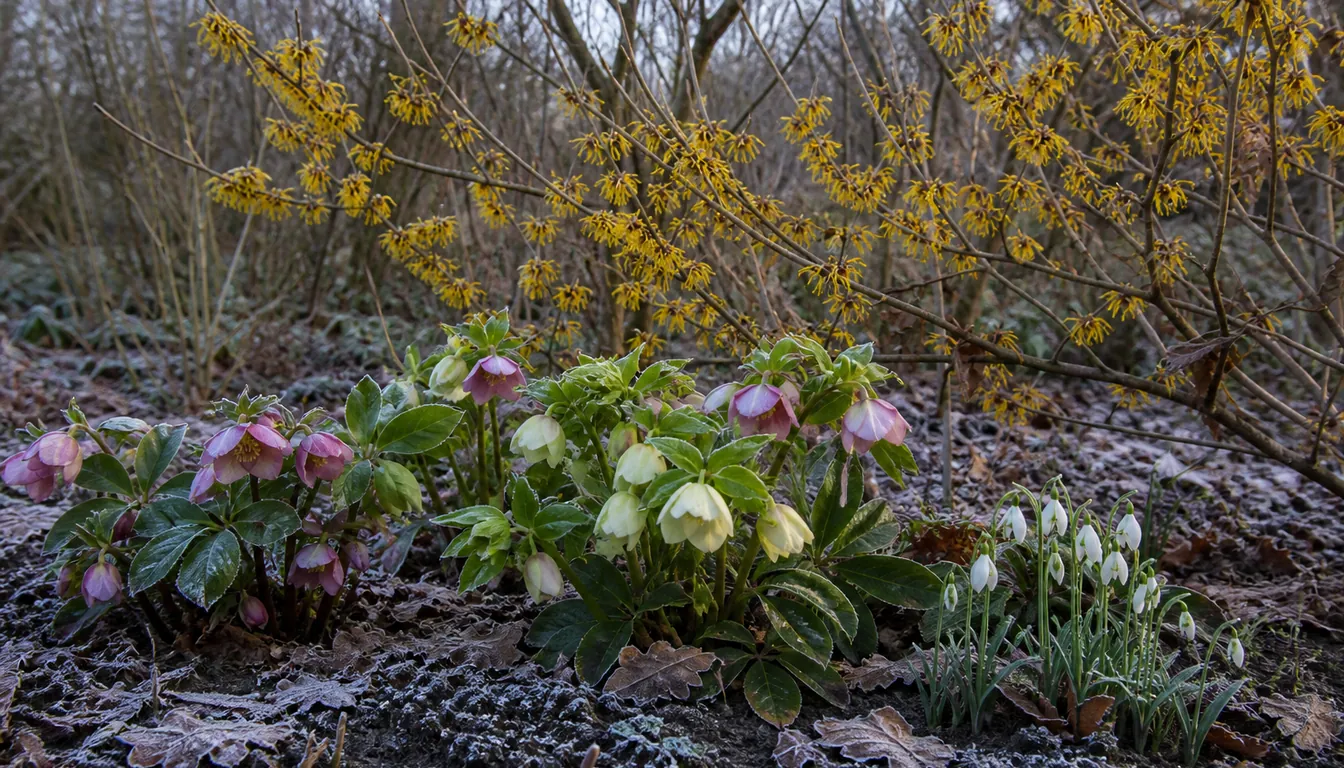
The best winter-blooming flowers depend on whether your ground stays frozen. Camellia and winter jasmine can open in mild winters, while hellebore, snowdrop, winter aconite, and early crocus work at the edge of the cold season.
Where the soil remains frozen for weeks, bark, berries, and evergreen foliage carry the middle of winter until the first flowers emerge near the thaw.
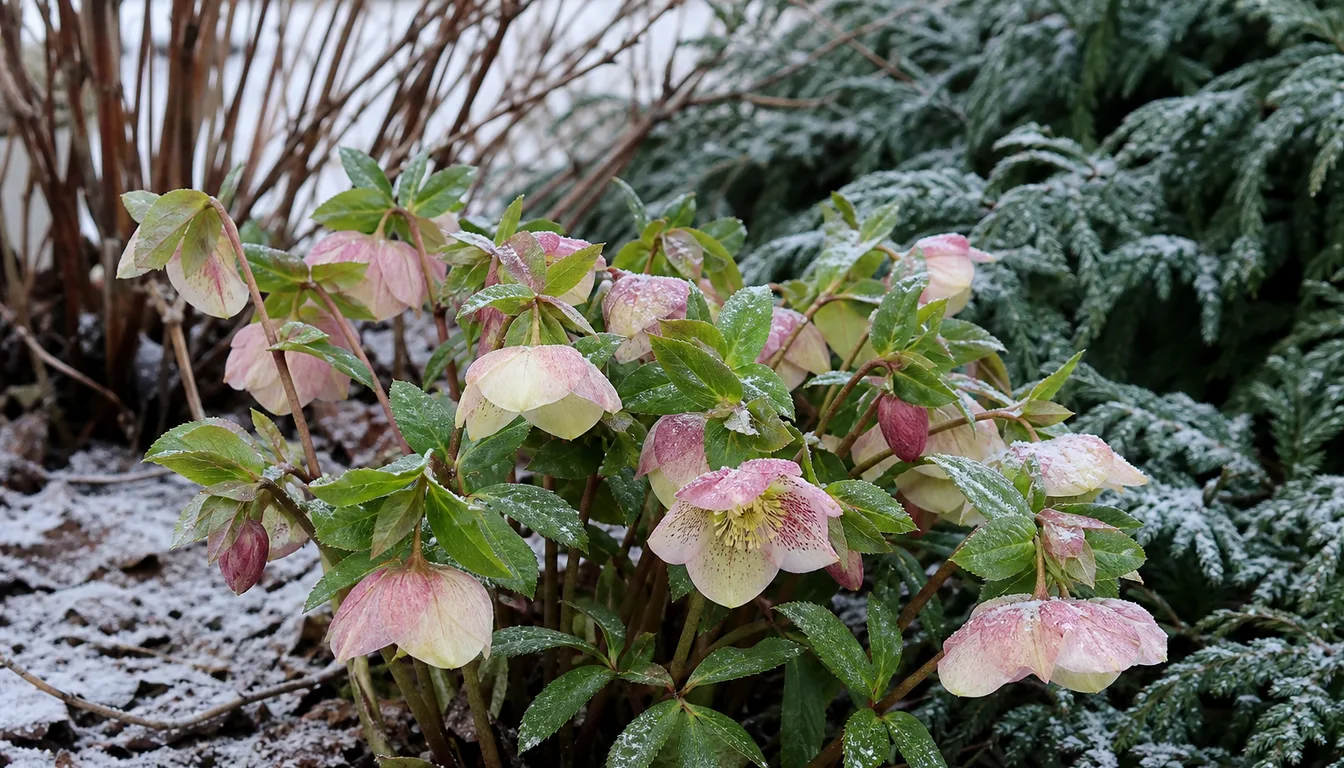
Strong scent helps small winter flowers attract the few insects active during warm spells, and a frost-flattened hellebore may stand upright again after temperatures rise.
At a glance
The Phrase Means Two Different Things
Winter blooming flowers is a phrase that describes two different situations, which is why advice about it contradicts itself so often.
In a mild climate winter is a slow growing season rather than a shutdown. Camellia, early azalea cultivars and winter jasmine open real flowers in January and the garden never stops entirely.
In a cold climate nothing opens while the ground is frozen, and winter bloom means the plants that flower the week the snow pulls back. What happens in between is not flowering at all.
That reframe is not a consolation prize. A cold-zone winter garden runs on evergreen structure, bark, berries and scent, and the few flowers that do appear sit low where snow insulates them, which is a different design rather than a lesser one.
Find your own version by watching the ground rather than the calendar. How long it stays frozen decides whether anything can open at all, and that single observation tells you whether you are gardening for a mild winter or a cold one.
Mild winters
Ground rarely freezes hard. Camellia, winter jasmine and early bulbs open through midwinter, and the garden keeps real flowers all year.
Cold winters
Ground frozen for weeks or months. Hellebore and snowdrops flower at the edges of the season, and evergreens, bark and berries carry the middle.
Very cold winters
Deep frozen ground and lasting snow. Nothing opens until the thaw, so structure, conifers and berried shrubs are the entire winter garden.
The Plants That Really Do Flower in the Cold
This list is shorter than any other season's, and knowing that up front is more useful than a long list padded with plants that need a climate you do not have.
Hellebore is among the most reliable winter perennials. It can hold flowers through repeated frosts, although bloom pauses where the ground stays deeply frozen or buried under lasting snow.
The bulbs come up through cold and often through snow. Snowdrop, winter aconite and early crocus push through ground that looks entirely inhospitable, and the daffodils follow them into what is properly spring flowering rather than winter.
The shrubs carry most of the scent. Witch hazel, winter honeysuckle, sweetbox, mahonia and daphne all flower in the coldest months, and their perfume travels much further than their flowers are visible, which the fragrant flowers guide covers in more detail.
Where nothing will open, color comes from elsewhere.
Red-stemmed dogwood, holly berries and evergreen shrubs do the work that flowers do in other seasons, and the wider shrub directory covers the ones that earn their place on structure alone.
If a winter plant failed to flower, the cause is months in the past. Those buds were formed during the previous summer, so drought, deep shade or a badly timed prune last year is what you are looking at rather than anything that happened in the cold.
| Plant | Type | Where it opens | What it gives |
|---|---|---|---|
| Hellebore | Perennial | Cold and mild zones | Flowers through frost when the ground is workable |
| Snowdrop | Bulb | Cold and mild zones | Earliest white, through snow |
| Winter aconite | Bulb | Cold and mild zones | Yellow at ground level |
| Early crocus | Bulb | Cold and mild zones | Color at the thaw |
| Witch hazel | Shrub | Cold and mild zones | Scent, spidery flowers on bare wood |
| Winter honeysuckle | Shrub | Cold and mild zones | Strong scent, small flowers |
| Sweetbox | Shrub | Cold and mild zones | Scent in deep shade |
| Mahonia | Shrub | Cold and mild zones | Yellow spikes, evergreen |
| Daphne | Shrub | Milder zones | Strong winter scent |
| Camellia | Shrub | Mild zones only | Full-sized flowers in midwinter |
| Winter jasmine | Shrub | Mild zones | Yellow on bare green stems |
| Red-stemmed dogwood | Shrub | All zones | Stem color where nothing flowers |
Scent Does the Work Because Almost Nothing Is Flying
Almost nothing is flying in midwinter. A few bees and flies emerge during brief warm spells, and that thin, unreliable audience is the entire market a winter flower is competing for.
Scent beats display in that situation, because perfume reaches an insect that is nowhere near the plant while a small flower on a bare shrub is visible to nothing. That is why winter-flowering shrubs are among the most heavily perfumed plants in any garden.
They Collapse in Hard Frost and Stand Back Up
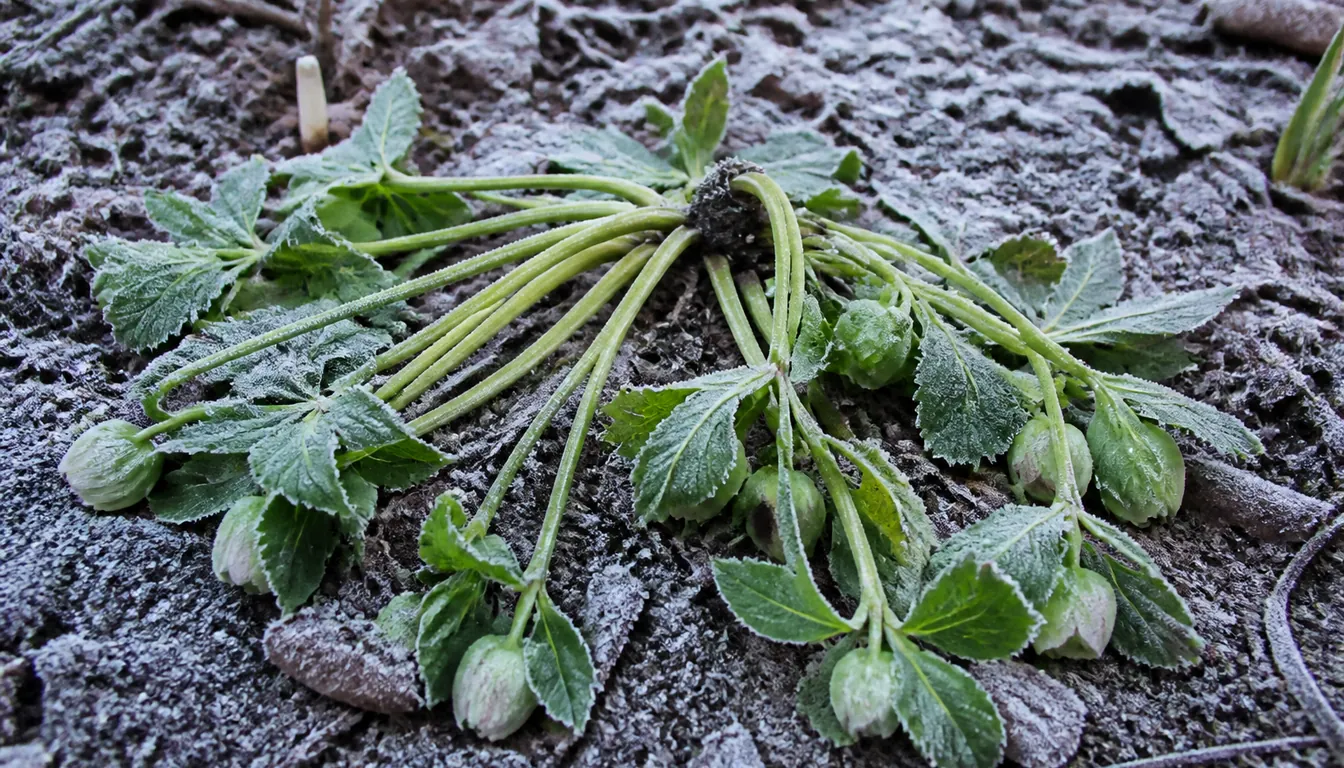
On a hard frost morning a hellebore looks finished. The leaves and flower stems go completely limp and lie flat on the frozen ground, splayed out from the crown like something that died overnight.
It stands back up within hours of thawing. The collapse is water leaving the cells rather than tissue dying, so the plant is doing exactly what it evolved to do and needs nothing from you.
Genuinely dead looks different. A plant that stays flat after a thaw and turns brown, black or mushy has been damaged, and that discoloration is the tell rather than the collapse itself.
Plant Them Where You Actually Go in January
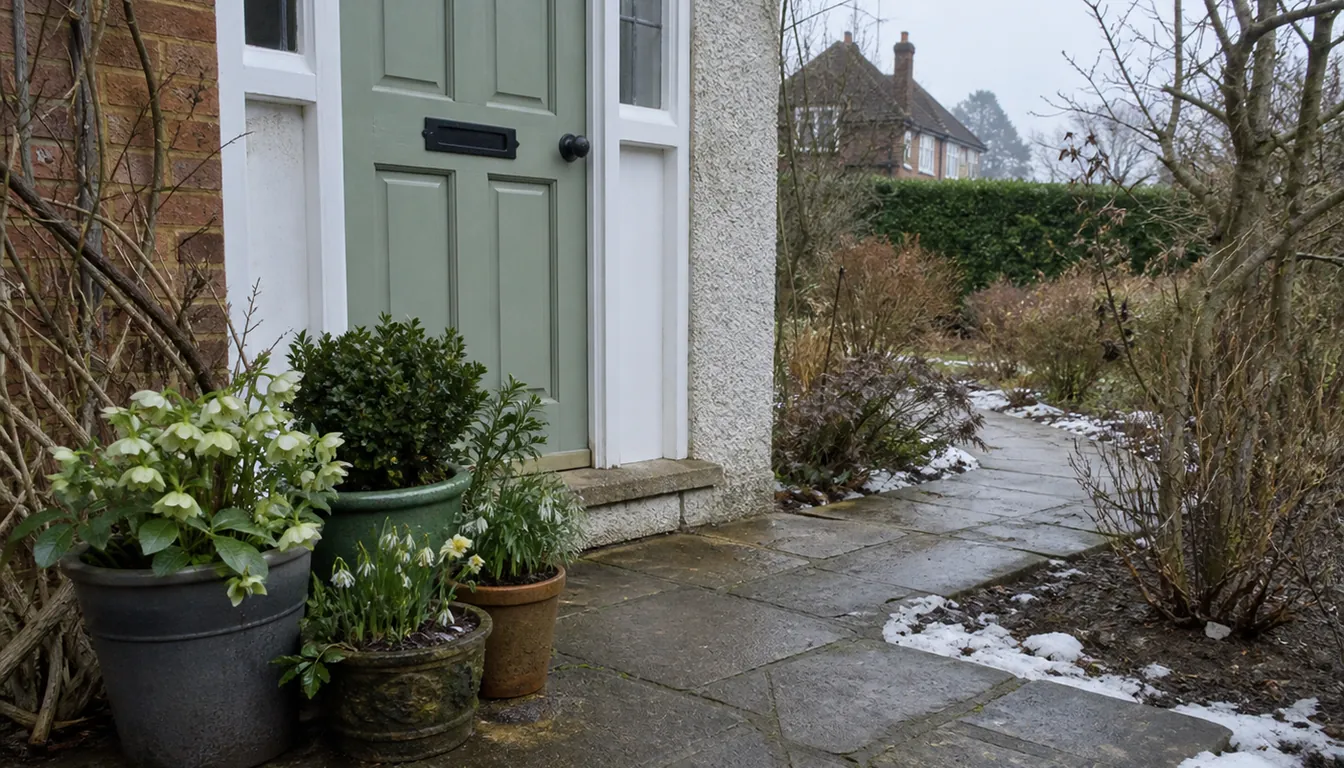
Almost nobody walks to the far end of a garden in January, so a winter border planted where the summer border is will be a planting nobody sees.
Put these plants on the routes you use in cold weather, which means the doorway, the path to the car, the walk to a bin store, and the view from whichever window you actually sit at in daylight.
Pro Tips
- Watch how long your ground stays frozen, since that decides whether real winter flowers are possible where you garden.
- Consider hellebore first in a cold garden because it can hold flowers through repeated frosts near the season's edges.
- Choose winter shrubs by scent rather than flower size, since perfume is what the plant is investing in.
- Leave a frost-flattened hellebore alone and look again after the thaw, when it will usually be standing.
- Trace a winter flowering failure back to the previous summer, because that is when the buds were formed.
- Put winter planting beside a door or a used path rather than in the border you walk in July.
Frequently Asked Questions
What flowers actually bloom in winter?
Hellebore is the most reliable perennial and flowers through repeated frosts, while snowdrop, winter aconite and early crocus push up through cold ground. Among shrubs, witch hazel, winter honeysuckle, sweetbox and mahonia flower in the coldest months, and camellia and winter jasmine need a mild zone to open properly.
Why do winter flowers smell so strong?
Because almost nothing is flying to pollinate them, and the few bees and flies that emerge on mild days are widely scattered. Scent travels much further than a small flower is visible, so heavy perfume is a better investment for the plant than a large showy bloom.
My hellebore collapsed flat in the frost, is it dead?
Almost certainly not, because hellebores go completely limp during a hard freeze as water leaves the cells and then stand back up within hours of the ground thawing. A plant that stays flat after a thaw and turns brown or mushy has genuinely been damaged, and that discoloration is what to look for rather than the collapse.
Why did my winter plant not flower this year?
Because winter flower buds were formed during the previous growing season rather than in the cold. Drought, too much shade or a prune at the wrong time last summer is the usual cause, so the failure happened months before you noticed it.
Can I have winter flowers in a cold climate?
Some, but far fewer than in a mild one, and the honest answer is that a cold-zone winter garden runs mostly on evergreen structure, bark, berries and scent. Hellebore and the early bulbs are the flowers worth planting, and everything else in the garden is doing a different job.
Where should I plant winter flowers?
Beside the door, along the route to the car, or in view of a window you use during daylight, because almost nobody walks the far end of a garden in January. Winter planting in a summer border is planting that nobody will ever see.
Sources & References
Related Guides
Best Butterfly Garden Plants for a Complete Habitat
The best butterfly garden plants do two different jobs. Host plants feed caterpillars, while nectar…
15 min read
Best Fall-Blooming Flowers for Color Near Frost
A bed that still carries flowers in October usually was planned before temperatures fell.
9 min read
Best Fast-Growing Trees for Shade and Privacy
The best fast-growing tree is the one whose mature crown, roots, climate range, and maintenance…
16 min read
Best Fragrant Flowers for Every Yard and Season
The best fragrant flowers depend on climate, light, space, and the hours you use the yard.
15 min read
Best Full-Sun Perennials for Hot, Bright Beds
The best full-sun perennials are the ones that match the bed's soil moisture and drainage, local…
14 min read
Best Ground Cover Plants for Sun, Shade, and Slopes
The best ground cover is a plant that survives the site and performs the job without escaping into…
18 min read