
New Grass Is Ready to Mow When It Passes Three Tests
The first mowing makes or breaks a new lawn. Cut too soon and the mower rips seedlings out by the roots. Wait forever and blades flop over, smothering each other. We want that first pass to thicken the turf, not thin it.
Use exact height, root grip, and mower setup together instead of trusting a seed-bag calendar. Grass types like bermuda in full sun differ from cool season mixes, and soil moisture changes everything.
The yard gives better signals than the calendar; once you know those signals, the first mow becomes a controlled thickening cut instead of a gamble.
Know Your Grass Type and Seeding Method
Timing starts with what you planted. Cool season lawns from seed, like fescue and Kentucky bluegrass, behave very differently from warm season lawns like bermuda or zoysia.
Seeded lawns must grow roots deep enough to anchor each plant. Sod arrives with an instant mat of roots, but it still needs to knit into the soil below. That changes how soon traffic and mowing are safe.
Cool season seed such as perennial rye overseeds often sprouts fast, then stalls while roots form. Warm season plugs or sprigs crawl sideways before they really fill.
Your first mowing date should follow grass height and root strength, never just the calendar. Those visual checks beat generic three-weeks-after-seeding advice every time.
If you do not know what you have, call the supplier or check the seed tag before guessing at timing.
Use the seed tag to sort the lawn into one of these practical buckets before you set the mower deck.
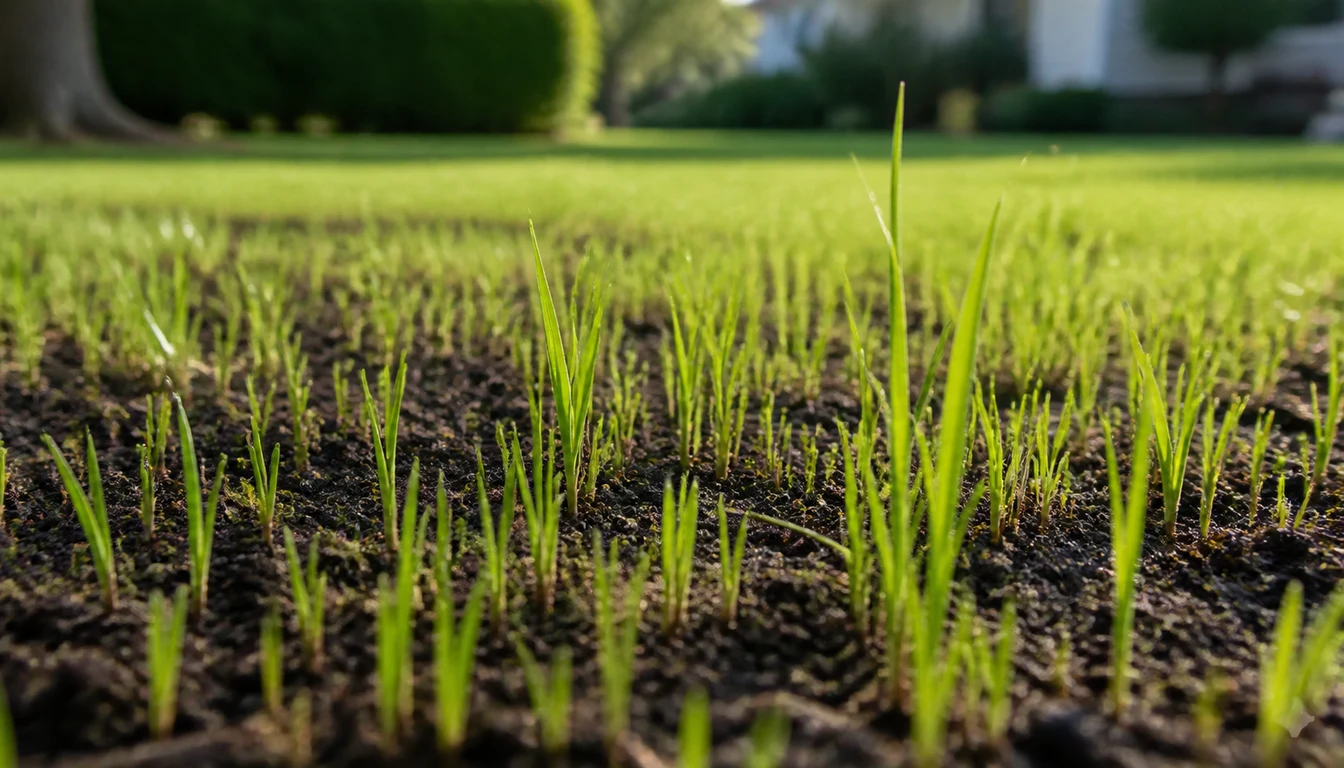
- Cool season seed mix: Often fescue, Kentucky bluegrass, and perennial ryegrass together
- Warm season seed or sod: Commonly bermuda turf, zoysia lawns, or buffalo patches
- Installation type: Seed, sod, plugs, or sprigs each have their own safe mowing window
Height Rules For First Mow From Seed
New seedlings need more height than a mature lawn before the first cut. Extra leaf area fuels root growth and helps shade bare soil while plants fill in.
Cool season lawns from seed, like fescue or Kentucky bluegrass, should reach 3 to 4 inches tall before you mow for the first time. Warm season lawns grown from seed or plugs should usually hit 2.5 to 3 inches.
The one third rule still applies on day one. Mow when grass is at least one third taller than your target height, then cut back down in stages. So if your long term goal is 2.5 inches, that first cut might be from 3.5 down to 2.5 inches.
Shorter blades mean fewer roots and weaker plants. Over time that invites weeds, especially in sunny areas where bermuda runners would otherwise dominate. If the lawn was seeded during a larger renovation, keep the first cut aligned with the establishment rhythm from overseeding a lawn rather than forcing a mature-lawn schedule.
Never mow new seedlings below 2 inches, even if the variety tag brags about low mowing tolerance.
These first-mow ranges are safer than mowing to the final mature height right away.
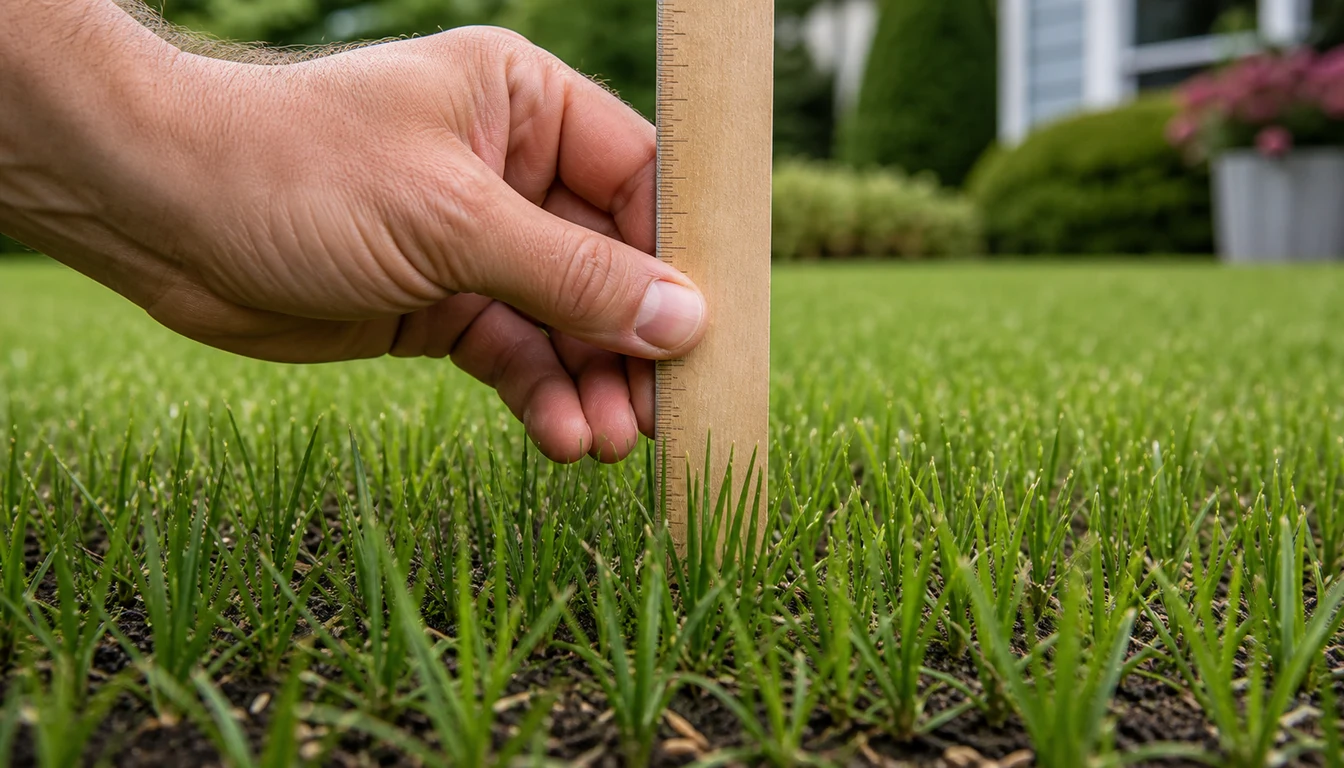
- Cool season target height: Maintain 2.5-3.5 inches after the lawn is established
- Warm season target height: Maintain 1-2.5 inches depending on type and equipment
- First mow trigger: Grass is 3-4 inches tall and stands upright without flopping
Special Timing Rules For Sod And Plugs
Sod tempts people to mow early, because it looks like a finished lawn the day it is installed. Underneath, roots are shallow and not yet anchored into native soil.
Most sod needs 2-3 weeks of rooting before the first mowing, sometimes longer in cool weather. Test by gently tugging in several spots. If the sod lifts like a carpet, wait. If it resists and feels attached, you are closer to safe mowing.
Grass type also matters. Warm season sods like St. Augustine slabs and zoysia squares often get laid in hotter months, when drying and scalping damage happen faster.
Plugs and sprigs planted into bare soil are even more sensitive. Each little plant needs a firm root system before heavy equipment crosses the yard, or wheels simply crush or uproot them.
Treat new sod like a carpet on ice until it resists a firm tug. Mowers and kids both stay off until then.
Check rooting in a few places because edges can anchor before the middle of the lawn is ready.
- Sod rooting time: Usually 2-3 weeks, longer in cool or soggy conditions
- Tug test: Corners should resist lifting in at least four random spots
- Plug fields: Delay mowing until runners connect and plants resist a light kick
Soil Conditions And Weather That Delay Mowing
Even if the lawn hits the right height, bad soil conditions can make mowing risky. Wet, soft ground lets mower wheels sink, tearing new roots and leaving ruts.
Walk the yard in old shoes before you grab the mower. If footprints sink deeper than half an inch, or mud sticks to your soles, wait a day or two. New seedlings in heavy clay, like you often see with zone 5 builds, are especially easy to rip out.
Temperature matters too. Cold snaps slow root growth, even if blades keep stretching. A seeded fescue lawn might reach 3 inches fast during a warm spell, but then stall when nights drop into the 40s.
On the other end, hot, windy days dry leaf tips quickly. The first mowing in full sun during a heat wave can scorch tender blades, much like moving potted peace lily foliage straight onto a south porch.
If in doubt, skip one more day. Grass recovers from being slightly tall much faster than from ripped roots.
Use the delay list below when height says yes but the ground says no.
- Too wet: Footprints deeper than 0.5 inch or mud on tires
- Too cold: Night temps below 45°F for cool season seedlings
- Too hot: Heat index above 90°F with strong sun on brand new turf
First Three Mows: Technique And Pattern
Those first few cuts shape how your new lawn thickens. Gentle technique and smart mowing patterns help seedlings tiller and fill bare spots instead of tearing out by the roots.
Sharp blades are mandatory on a young stand. Dull metal shreds tender blades and leaves white tips that dry out fast and invite disease.
Cut in a straight, slow pass, then overlap slightly on your way back. Avoid whipping the mower around on a pivot, because that twists roots out of still-loose soil.
Change your mowing direction every time, just like you would rotate crops when planting different vegetable beds. Alternating stripes helps prevent ruts and keeps grass from leaning in one direction.
- Blade sharpness: Sharpen or replace after every 8-10 hours of mowing on new turf
- Walking speed: Slow, steady pace, roughly 2-3 mph
- Overlap per pass: Aim for 2-3 inches so you do not miss strips
- Turn style: Three-point turns, never tight spins on one wheel
The main point is to keep the mower moving forward cleanly; backward dragging is where young turf gets peeled up.
Never yank a stalled mower back across the lawn to restart it. Dragging the deck backward can rip out seedlings in long strips.
What To Do Right After Each Mow
Right after mowing, a quick walk across the yard tells you whether your timing was right. Look for scalped patches or pale areas, not just how neat it looks from the driveway.
If you see more brown stems than green blades, you cut too low and need to raise the deck next time. Spots where the mower wheels sank or slipped are also early warnings that the soil is still too soft.
Light watering right after mowing helps settle clippings into the canopy. On a brand new lawn, keep this to a brief soak so you avoid soggy soil that collapses under your feet.
Use the same deep-and-rare mindset that makes sense for drought-tolerant beds, similar to what you would do with deep watering in garden beds. Young turf roots grow stronger with oxygen between waterings. If you are still in the establishment phase, match that restraint to the schedule in watering new grass seed.
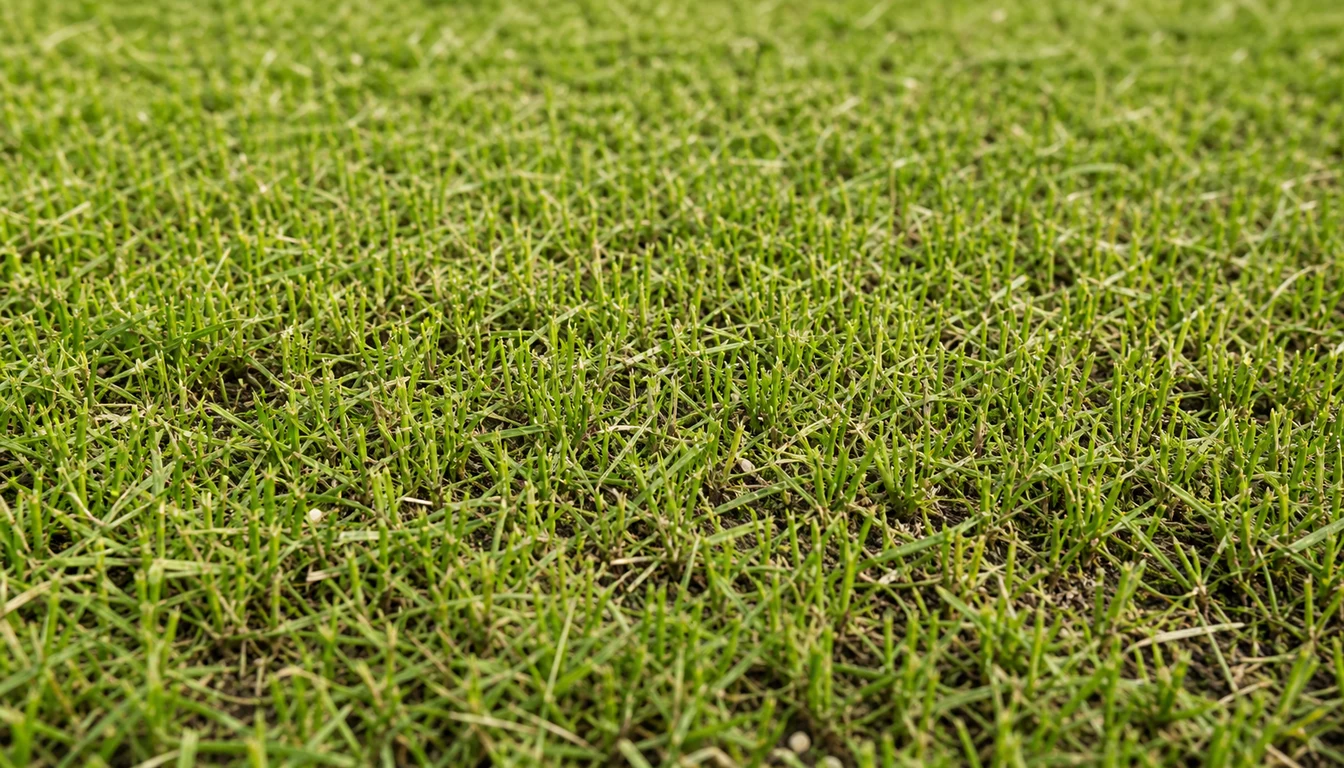
- Post-mow check: Walk the lawn for scalps, ruts, and wheel tracks
- Light watering: 5-10 minutes to rinse clippings off leaf tips
- Traffic break: Keep kids, pets, and equipment off for 24 hours
- Note settings: Record deck height and date so you can adjust with data
If you always see tracks from the mower wheels, your soil or thatch layer is not ready for frequent mowing yet.
Clippings, Bagging, And Mulching On New Lawns
What you do with clippings during those first few cuts affects both color and thatch. They carry nitrogen, but wet clumps can smother seedlings if they sit too long.
For the very first mow on a dense new stand, bagging is usually safest. That keeps heavy clumps off the soil while the canopy is still thin and roots are shallow.
After two or three successful cuts, you can switch to mulching on most cool-season lawns like tall fescue turf. Short clippings filter down, break down fast, and return nutrients with almost no thatch risk when mowing at the right height.
Warm-season lawns from plugs, such as zoysia patches, handle mulched clippings well once the stolons have locked in. Just avoid mowing when leaves are soaked, because wet mulch mats more easily.
- First mow: Bag if clippings are longer than 1 inch
- Later mows: Mulch when you remove less than 1/3 of blade height
- Clump control: Rake or blow apart any visible piles right away
- Thatch watch: Probe with a screwdriver, more than 1/2 inch of spongy layer means back off mulching temporarily
That last thatch check is about crowns and stems, not a few tiny leaf tips.
Thatch comes from stems and crowns, not tiny leaf pieces. Chronic low mowing and overwatering build thatch faster than mulched clippings do.
Seasonal Timing And Growth Slowdowns
Calendar month changes how fast your new grass bounces back after a cut. Cool-season lawns seeded in late summer and fall usually root deeper before heat arrives, so they tolerate mowing better than spring seedlings.
Spring-seeded stands of Kentucky bluegrass or perennial ryegrass may look ready to mow just as early heat or disease pressure ramps up. Back off how often you mow if overnight lows stay above 70°F for several days and growth slows.
Warm-season grasses like bermuda runners started in late spring or early summer often sprint during long, hot days. You might be mowing every 4-5 days at peak growth to stay ahead of the one-third rule.
In colder areas such as zone 5 regions, late fall seedlings may only get one or two cuts before dormancy. That is fine. Focus on proper height going into winter rather than forcing extra mowing. If you seeded without opening the soil much, the same patience applies to overseeding without aerating.
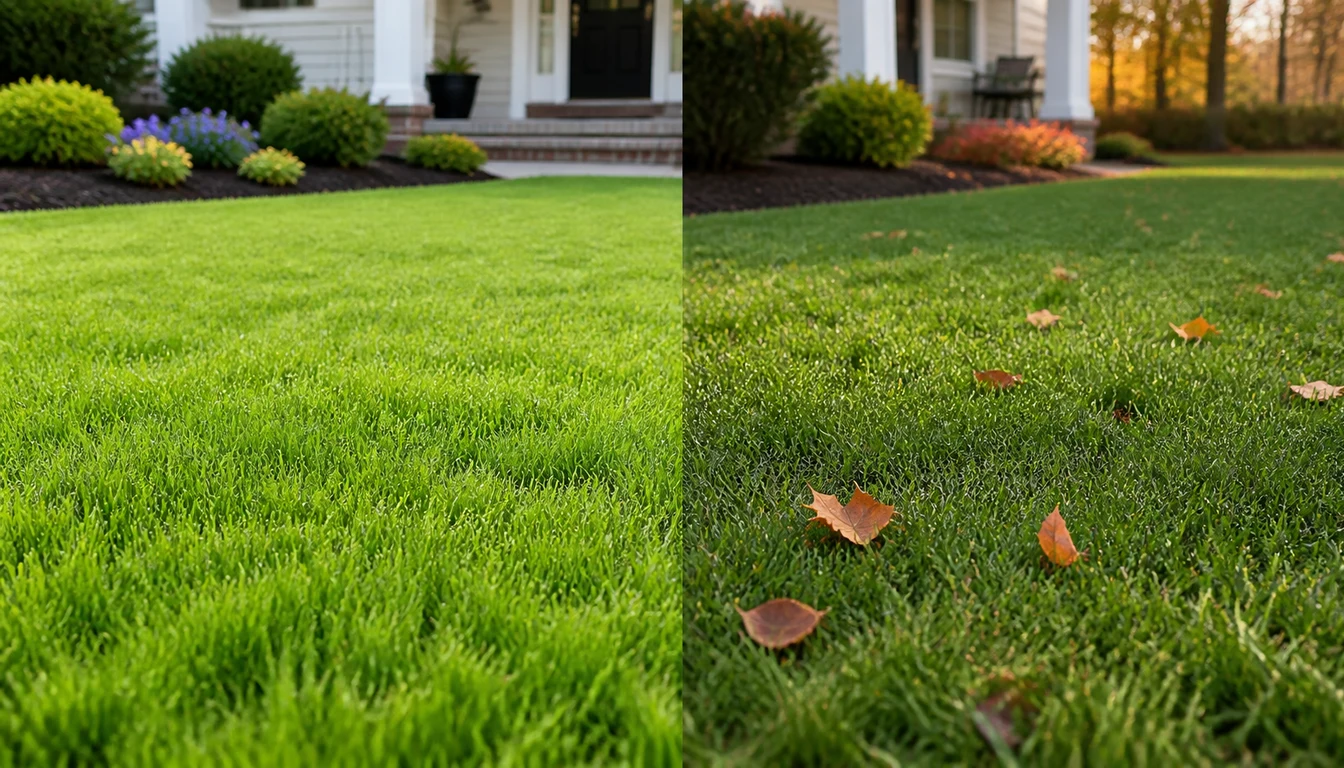
- Cool-season fall seed: Fast establishment, strong roots by next summer
- Cool-season spring seed: Slower rooting, higher stress in early heat
- Warm-season summer plugs: Rapid top growth once soil tops 70°F
- Late fall seed: Minimal mowing first year, main work happens next spring
Fixing Common First-Mow Mistakes
A rough first mow does not doom your lawn, but you need to correct course quickly. Most problems trace back to cutting too low, mowing wet, or using a heavy mower too soon.
Scalped streaks where soil shows through are the most common issue. Raise your deck a full notch, then leave that area alone for a week while the rest of the yard gets trimmed.
Ruts from tires or footprints show that the soil was too soft or saturated. Ease up on irrigation for several days, following the same deep-but-infrequent habit that protects buffalo grass lawns in drought.
If you tore up strips of sod or seedlings by turning too tightly, gently press any loose pieces back into contact with the soil. Water lightly to settle them, then avoid mowing that zone until you see fresh vertical growth.
- Scalped patches: Topdress lightly with screened compost, about 1/4 inch, and keep at proper height
- Tire ruts: Fill shallow tracks with a 50/50 mix of sand and topsoil once dry
- Torn seams in sod: Step them flat and stake corners if they lift
- Uneven cut: Level the deck on a flat surface and check tire pressure
Pause before the next pass if the damage is broad rather than isolated.
If half the yard looks shredded after that first cut, pause mowing for 7-10 days and focus on gentle watering and recovery before trying again.
Pro Tips
- Measure grass height with a ruler in several spots instead of guessing from the porch.
- Raise the mower one notch higher than usual for the very first pass over new turf.
- Make the first mow when the lawn is dry on top but soil is still slightly damp underneath.
- Use the lightest mower you have, and avoid riders on very young or soft lawns.
- Mow slow, with sharp blades, so the mower cuts seedlings instead of yanking them sideways.
- Change direction on each mowing so new roots are not pushed the same way every time.
- Keep kids, pets, and heavy foot traffic off new grass until after that first successful mow.
Frequently Asked Questions
How soon after seeding can I mow new grass?
Wait until the new grass reaches about 3 to 4 inches tall and resists a gentle tug. That usually takes 3 to 6 weeks, depending on seed type, soil temperature, and watering.
Should I bag or mulch clippings on a new lawn?
Bag clippings for the very first mow if they are long and clumpy. Once you are only removing the top third of the blade, switch to mulching so short clippings recycle nutrients without smothering seedlings.
Can I mow new sod right away?
New sod usually needs 7 to 14 days before its roots grip the soil firmly. Test by trying to lift a corner. If it still peels up easily, wait a few more days and keep watering lightly but consistently.
What height should I cut newly seeded cool-season grass?
Set the mower to about 3 inches for cool-season grass, then stay at that setting for the first several cuts. Taller blades shade the soil, keep roots cooler, and help the lawn thicken instead of drying out.
Is it okay to mow new grass when it is wet?
Avoid mowing new grass when it is wet. Wet leaves clump, clog the deck, and can mat down over seedlings. Wait until dew dries or the lawn feels dry to the touch to protect the young plants.