Lawn Careschedule10 min read
How to Water New Grass Seed Without Washing It Away
Learn how often to water new grass seed, how long to run sprinklers, and when to shift from light misting to deeper watering.
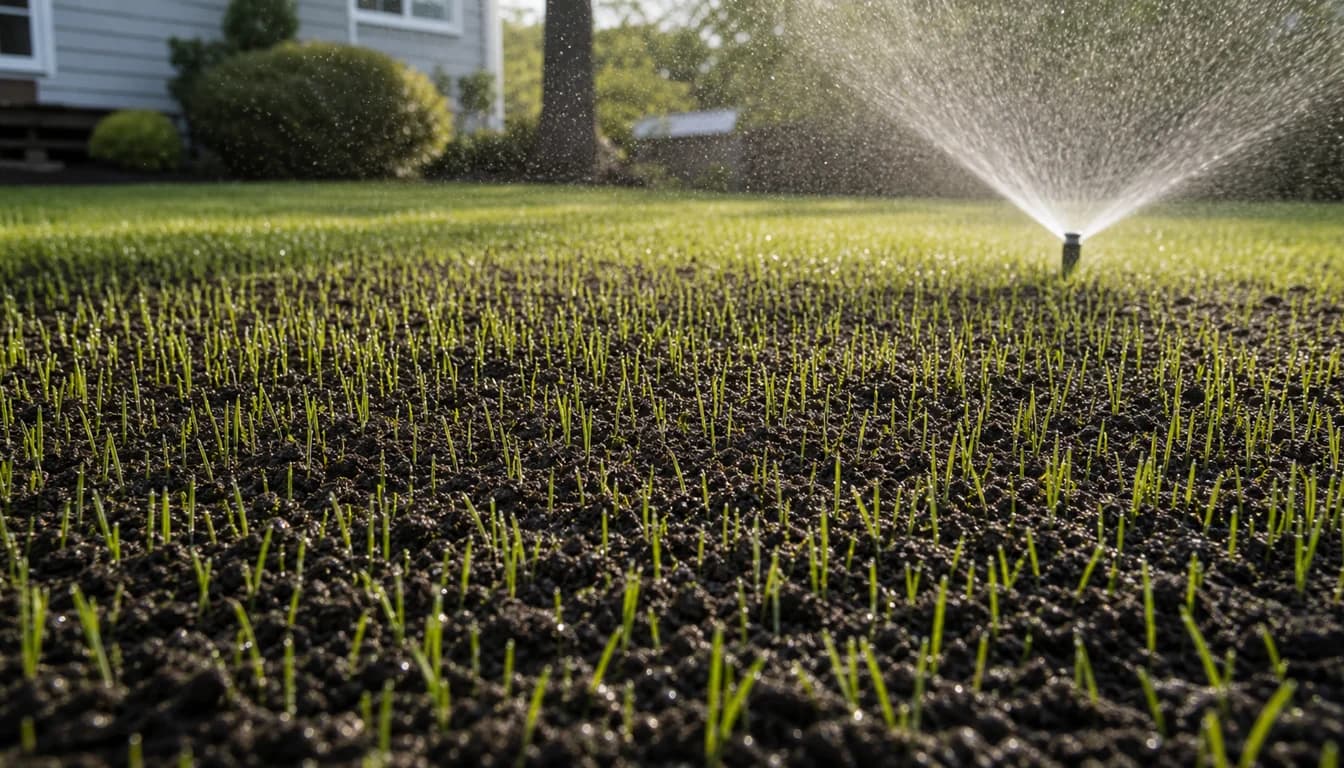
New grass seed needs a different watering rhythm than an established lawn. Mature turf can wait for deeper soakings, but seed has no roots yet. If the top layer dries out, germination stalls. If you blast the area with too much water, seed moves downhill, puddles form, and the thin spots show up later.
The goal is simple: keep the top 1 to 2 inches evenly moist until germination, then slowly train the young lawn toward deeper, less frequent watering. That transition matters for cool-season lawns like new fescue seedlings.
It also matters for slow-starting Kentucky bluegrass. Warm-season projects with bermuda seed in full sun need the same gradual shift, just in warmer soil.
water_dropStart With Moist Soil Before You Seed
The best watering schedule starts before seed touches the soil. Dry, powdery soil repels water at first, so the first irrigation can run across the surface and carry seed with it. Lightly moist soil accepts water more evenly.
Water the prepared seedbed the day before seeding if the top few inches are dry. You want the soil damp enough to darken, not muddy enough to stick to your shoes. Rake the surface after it drains so the seed still has loose soil contact.
This step is especially useful on slopes, compacted clay, and sunny yards that bake between waterings. It pairs well with the prep steps in overseeding without aerating because both jobs depend on seed-to-soil contact.
A small amount of water before seeding reduces the urge to overwater afterward.
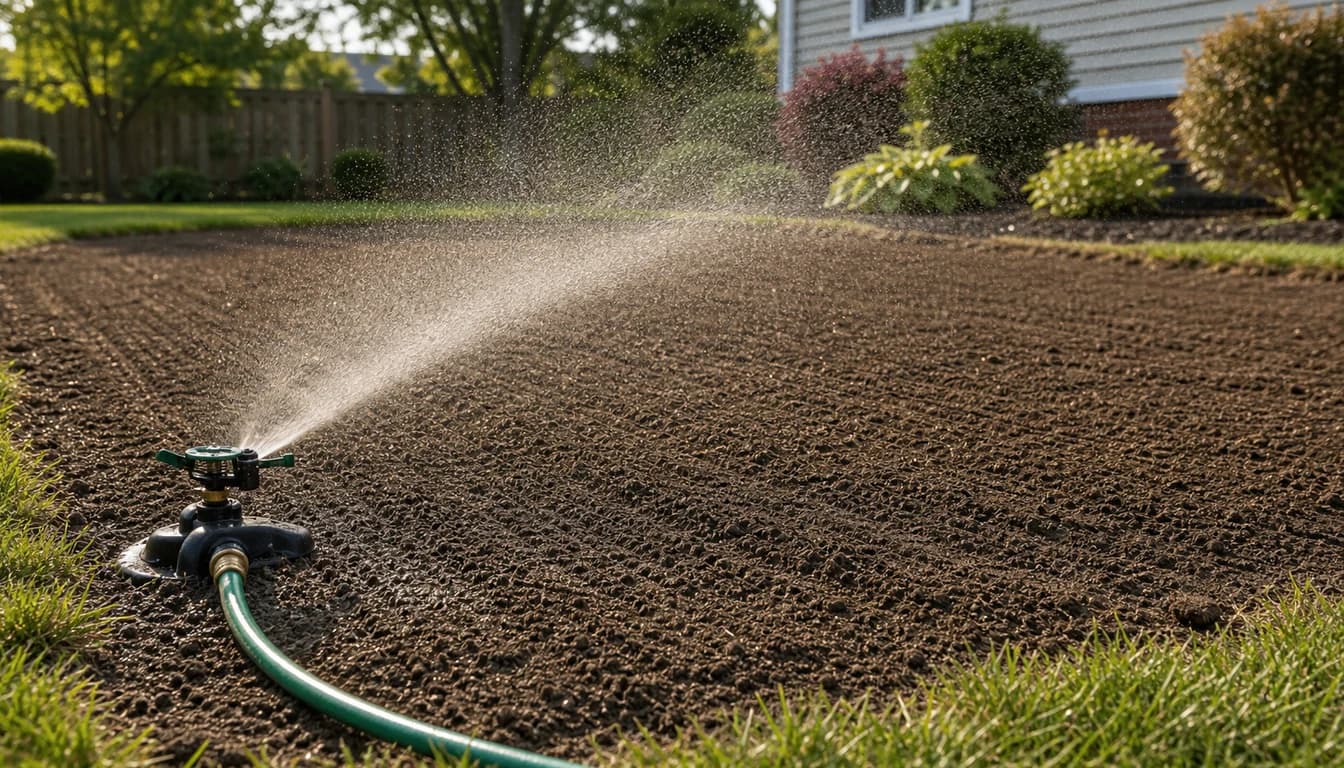
Pre-moistening the seedbed helps water soak in instead of pushing seed around.
- fiber_manual_recordTarget before seeding: Damp top 1 to 2 inches
- fiber_manual_recordAvoid: Shiny mud, puddles, or footprints that sink
- fiber_manual_recordBest tool: Oscillating sprinkler or gentle hose-end shower pattern
- fiber_manual_recordFinal prep: Rake lightly before spreading seed
Break any crust before the seed goes down, especially after a hot, windy afternoon.
If the soil crusts before you seed, break that crust first. Seed sitting on a sealed surface dries faster and washes more easily.
scheduleDays 0 to 7: Keep the Surface Damp
The first week is not about deep watering. It is about keeping seed from drying out while it swells and begins to sprout. Short, repeated watering sessions work better than one long soak.
Most new seedbeds need water 2 to 4 times per day during warm, dry weather. Each session may only run 5 to 10 minutes, depending on sprinkler output and soil texture. The top layer should stay dark and damp, but water should not stand in low spots.
Cool-season seed mixes with perennial ryegrass often show green quickly, while bluegrass-heavy mixes take longer. Do not stop watering just because one fast species has sprouted. The slower seed still needs surface moisture.
Sandy soil dries fast and may need more frequent short cycles. Clay soil holds moisture longer but puddles quickly, so it usually needs shorter run times with longer breaks between cycles.
- fiber_manual_recordMorning: Water before the surface heats up
- fiber_manual_recordMidday: Add a short cycle if soil turns pale or dusty
- fiber_manual_recordLate afternoon: Water only enough to prevent overnight drying
- fiber_manual_recordEvening: Avoid soaking the lawn right before dark
The seedbed should be moist, not flooded; if seed collects in little rivers, reduce runtime immediately.
Guide — See AlsoWhen to Aerate a Lawn in Ohio for Thick, Green GrassPractical timing tips for when to aerate a lawn in Ohio, plus how to match aeration to your grass type, soil, and overse
chevron_rightopacityHow Long to Run Sprinklers Without Runoff
Sprinkler runtime depends on output, not just the clock. One sprinkler may apply a quarter inch in 10 minutes, while another barely wets the soil. Measure instead of guessing.
Place several straight-sided cups across the seeded area and run the sprinkler for 10 minutes. Check how much water each cup collected and look for dry corners. Move sprinklers or overlap patterns until the coverage is even.
For the germination stage, you usually want light applications around 1/8 to 1/4 inch per cycle. That is enough to refresh the surface without pushing seed around. On slopes, split even that small amount into two shorter pulses.
Watch the soil while the sprinkler runs. If water starts moving sideways, you have passed the intake rate. Stop, let it soak for 20 to 30 minutes, then finish with a shorter cycle.
Runoff is a contract failure at the seedbed layer. The fix is slower application, not more seed later.
Match the cycle length to the soil before you repeat it across the whole lawn.
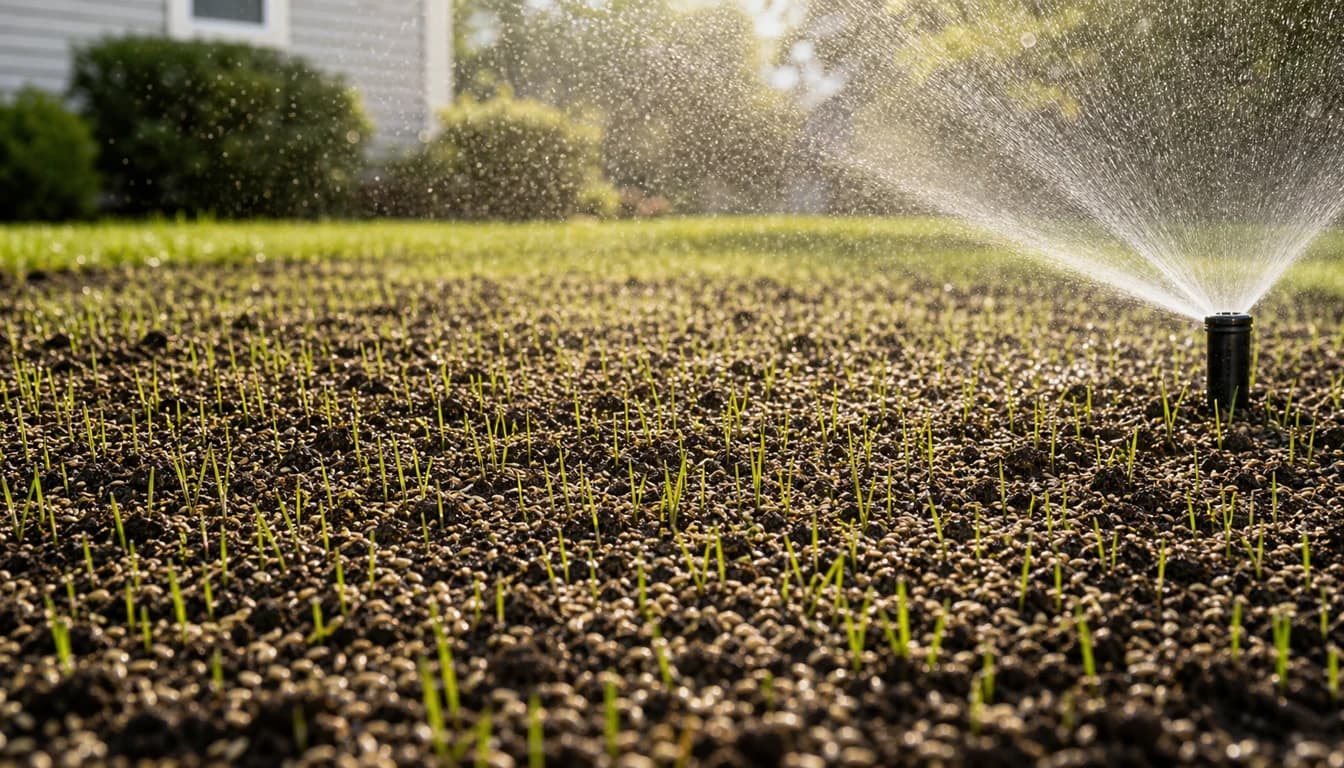
A fine sprinkler pattern keeps new grass seed moist without pushing seed into piles.
- fiber_manual_recordFlat loam: Often handles 8 to 12 minute light cycles
- fiber_manual_recordClay soil: Often needs 4 to 7 minute cycles with pauses
- fiber_manual_recordSandy soil: May need more cycles because it dries quickly
- fiber_manual_recordSlopes: Use pulse watering instead of one continuous run
Email Updates
Join the KnowTheYard update list
Zone-specific advice, seasonal reminders, and new plant guides — no filler.
grassAfter Germination: Shift Toward Deeper Roots
Once most seedlings are visible, the watering job changes. The lawn still cannot handle drought, but it also should not stay shallow forever. Gradually reduce frequency and increase depth so roots begin chasing moisture downward.
When seedlings reach about 1/2 to 1 inch tall across most of the area, start cutting back from constant misting. Move toward 1 to 2 waterings per day, then every other day as the grass thickens and roots hold the soil.
By the time the lawn is tall enough for its first mow, it should be moving toward the same logic used in deep watering for stronger roots. Use first-mow timing for new grass if you are unsure whether the stand is ready.
Do this transition slowly. A sudden switch from four light waterings a day to one weekly deep soak will stress seedlings. The roots are not ready for that jump.
- fiber_manual_recordSprouted seed: Keep the top inch moist, but reduce constant misting
- fiber_manual_recordOne to two inches tall: Water less often and slightly longer
- fiber_manual_recordNear first mowing: Let the surface dry lightly between sessions
- fiber_manual_recordEstablished lawn: Move to deeper, less frequent watering based on weather
A young lawn should graduate from frequent surface moisture to deeper watering; it should not stay on seedling mode for months.
Guide — See AlsoBest Time to Overseed a Northeast Lawn for Thick TurfLearn exactly when to overseed cool-season lawns in the Northeast, how soil temperature and frost dates affect timing, a
chevron_rightcalendar_monthAdjust for Grass Type and Season
Grass type changes how long you stay in the high-frequency watering phase. Fast-germinating species need protection early, while slower species need patience even when the yard already looks partly green.
Perennial ryegrass can germinate in less than a week in good conditions, so rye-heavy overseeding may look successful quickly. Kentucky bluegrass lawns often take much longer, so keep the seedbed moist until the slower grass catches up.
Tall fescue and fine fescue usually sit in the middle. They are common in cool-season blends and handle the transition to deeper watering well once roots start anchoring. If your mix is mostly tall fescue, expect a sturdier seedling once it gets past the surface-moisture stage.
Warm-season grasses such as bermuda and zoysia lawn patches need warm soil. If nights are cool, water carefully but expect slow movement. If the weather turns hot and windy, the top layer can dry several times in one day.
Season matters too. Fall seedings often need fewer midday cycles because temperatures are lower. Spring seedings may fight weeds and warm spells; pair them with the timing guidance in overseeding a lawn before you commit. Summer repairs need the most attention and may be a poor choice during watering restrictions.
- fiber_manual_recordRyegrass: Fast to green, but still protect slower blend partners
- fiber_manual_recordBluegrass: Keep moisture steady for a longer germination window
- fiber_manual_recordFescue: Avoid drying during early root growth
- fiber_manual_recordBermuda: Needs warm soil and steady surface moisture
- fiber_manual_recordZoysia: Slow establishment, so do not rush the transition
warningAvoid the Mistakes That Ruin New Seed
Most watering failures are visible before the lawn fails. The surface tells you when water is too strong, too light, or too uneven. Catch those signs early and the fix is usually simple.
The biggest mistake is letting the seed dry out after it has started absorbing water. That can kill or weaken germinating seed. The second biggest mistake is overcorrecting with heavy watering that moves seed into piles.
Another common error is dragging hoses across the area after seeding. A hose can scrape seedlings loose and create curved bare lines. Place hoses before seeding or water from the edges whenever possible.
Do not water so late that the lawn stays wet all night. A damp seedbed is necessary, but a soaked surface in cool evening air can encourage disease and algae.
If you see green fuzz, algae, or a sour smell, the surface is staying too wet for too long.
Use the symptom list below to adjust water before you add more seed.
- fiber_manual_recordDry crust: Add shorter, more frequent cycles
- fiber_manual_recordSeed piles: Reduce pressure and runtime; lightly rake seed back into place
- fiber_manual_recordPuddles: Pause watering and split cycles
- fiber_manual_recordHose tracks: Move hoses from outside the seeded area
- fiber_manual_recordNight wetness: Shift more watering to morning and early afternoon
Guide — See AlsoBest Time to Overseed a Midwest Lawn for Thick TurfLearn the best time to overseed a Midwest lawn based on soil temperature, grass type, and hardiness zone so your new see
chevron_rightyardWatering Slopes, Clay, and Patch Repairs
Difficult sites need a slower hand. Slopes, clay, and small patch repairs all punish the same generic watering schedule. Match the method to the site instead.
On slopes, use straw mulch, seed blankets, or a very light compost cover to hold seed in place. Water in short pulses so moisture soaks down before gravity moves it sideways. A single heavy watering can undo the whole repair.
Clay soil needs patience. It may look wet on top while staying dry below, or it may seal and shed water. Use repeated short cycles and check with a screwdriver or trowel. If the tool only enters the top inch easily, the lower seedbed still needs moisture.
Patch repairs inside an established lawn are tricky because the old turf wants deeper watering and the seed wants surface moisture. Water the patches lightly by hand or with targeted sprinkler zones until germination, then merge them into the normal lawn schedule.
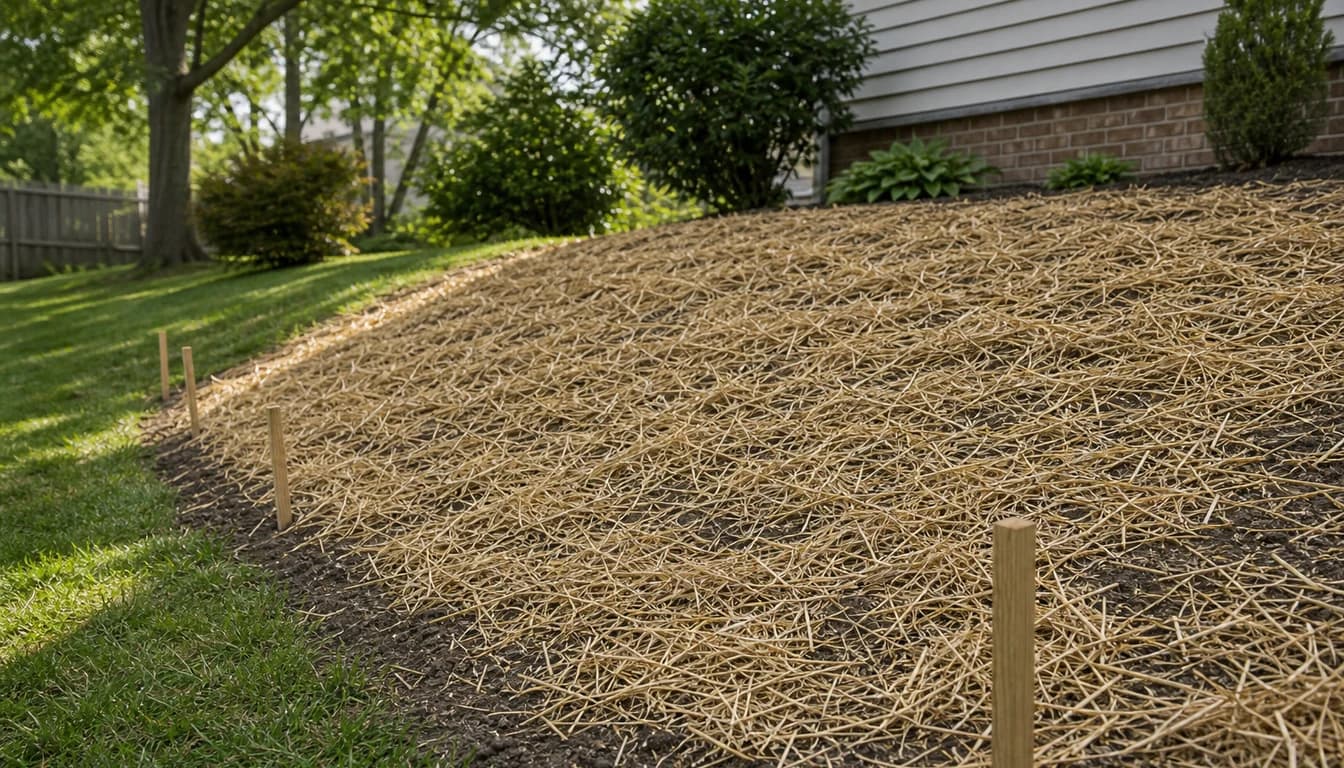
Mulch and pulse watering help keep seed in place on slopes.
- fiber_manual_recordSlopes: Use mulch and pulse watering
- fiber_manual_recordClay: Short cycles, long pauses, and soil checks
- fiber_manual_recordBare patches: Hand-water patches instead of soaking the whole lawn
- fiber_manual_recordHigh sun: Check edges and curb strips twice daily
The right schedule keeps seed in place and the top root zone moist; a calendar cannot see your slope.
checklistWhen to Stop Babying the Lawn
You can stop treating the lawn like a seedbed when roots anchor the soil and the grass can recover from light stress. That usually happens after several mowings, not after the first green haze.
Use three checks. First, grass should resist a gentle tug. Second, the stand should be thick enough that most soil is shaded. Third, the lawn should have handled at least one careful mow without ripping, rutting, or flattening. If you are unsure, compare with first-mow timing for new grass.
Once those checks pass, move toward a normal lawn watering pattern. Most established lawns prefer deeper watering that wets several inches of soil, followed by a drying period. That builds stronger roots and reduces daily dependency.
Keep watching weather. A young lawn in its first summer still needs help during heat waves. It is established enough to leave seedling mode, but not old enough to ignore.
- fiber_manual_recordReady sign: Grass resists a light tug
- fiber_manual_recordCanopy sign: Soil is mostly shaded by blades
- fiber_manual_recordMowing sign: First mow caused no major tearing
- fiber_manual_recordWatering shift: Fewer sessions, longer runtime, deeper moisture
That is the moment to train the lawn, not abandon it.
Do not jump straight to neglect. A first-year lawn needs training, not abandonment.
Guide — See AlsoHummingbird Plants for Nonstop Backyard VisitsPractical steps to plan, plant, and maintain a yard full of hummingbird friendly flowers from spring through fall, in zo
chevron_righttips_and_updates
Pro Tips
- check_circleSet sprinklers before spreading seed so you do not drag hoses through the seedbed later.
- check_circleUse several cups across the lawn to measure sprinkler coverage and find dry corners.
- check_circleKeep the surface moist during germination, but stop watering when puddles or seed movement appear.
- check_circleWater earlier in the day so the seedbed does not stay soaked all night.
- check_circleSplit watering into short pulses on clay soil or slopes to prevent runoff.
- check_circleAfter most seedlings appear, reduce frequency gradually instead of switching suddenly to deep watering.
- check_circleHand-water small patch repairs so established turf around them is not overwatered.
- check_circleUse the tug test and first-mow results before moving the lawn to a normal watering schedule.
quiz
Frequently Asked Questions
How often should I water new grass seed?expand_more
Water lightly 2 to 4 times per day during warm, dry germination weather. The top 1 to 2 inches should stay moist, but not flooded. Reduce frequency once seedlings are up and roots begin holding the soil.
How long should sprinklers run on new grass seed?expand_more
Start with 5 to 10 minute cycles, then adjust by measuring coverage with cups. Stop sooner if water runs off or seed moves. Clay and slopes usually need shorter pulse cycles.
Can you overwater new grass seed?expand_more
Yes. Overwatering can wash seed away, create puddles, reduce oxygen, and keep the surface wet long enough for algae or disease problems. Moist is the goal, not saturated.
When do I switch from frequent watering to deep watering?expand_more
Begin the transition after most seedlings are visible and about 1/2 to 1 inch tall. Reduce frequency gradually, then move toward deeper watering after the lawn has rooted and handled its first mowing.
Related Guides
Best Time to Aerate and Overseed for a Thicker Lawn
Learn when to aerate and overseed your lawn by season and grass type so every pass of the machine leads to thicker, greener turf instead of wasted seed.
11 min read
Best Time to Overseed a Midwest Lawn for Thick Turf
Learn the best time to overseed a Midwest lawn based on soil temperature, grass type, and hardiness zone so your new seed fills in thin spots.
11 min read
Best Time to Overseed a Northeast Lawn for Thick Turf
Learn exactly when to overseed cool-season lawns in the Northeast, how soil temperature and frost dates affect timing, and what to do before and after seeding for a thicker, greener yard.
11 min read