
Lawn Careschedule14 min read
How to Level a Sloping Yard for Safer, Flatter Space
Step‑by‑step guide for homeowners on how to level a sloping yard without ruining drainage, hurting trees, or wasting money on extra soil.
A sloping yard can feel like wasted space, especially if you want a level play area, patio, or tidy year‑round lawn. You do not need heavy equipment for every project, but you do need a plan. Start here: how to measure your slope, decide how flat you need, and reshape soil without causing drainage problems or killing existing plants; that tells you whether a DIY weekend project is realistic or if part of the job should be left to a pro.
lightbulbDecide How Flat You Really Need
The right level depends on how you use the yard. A putting‑green lawn needs a different grade than a kids' play area or simple seating spot.
Start by sketching your yard and marking the zones that truly need to be level. Often you only need to flatten a rectangle where a shed, trampoline, or patio will sit.
Most lawns still need some slope so water drains. Aim for about 1–2% grade away from the house, which is 1–2 inches drop per 10 feet.
Trying to make the entire yard perfectly flat usually costs more and creates drainage headaches. Keep slight slopes where water can safely move.
If you plan planting beds with shrubs like evergreen borders, you can use those areas to “hide” grade changes with gentle berms. Hydrangea or other summer flowering anchors work well where the grade softens naturally.
Never flatten the ground so it slopes toward your foundation. Water must always move away from the house.
Keep that drainage rule in mind before choosing the exact finish grade.
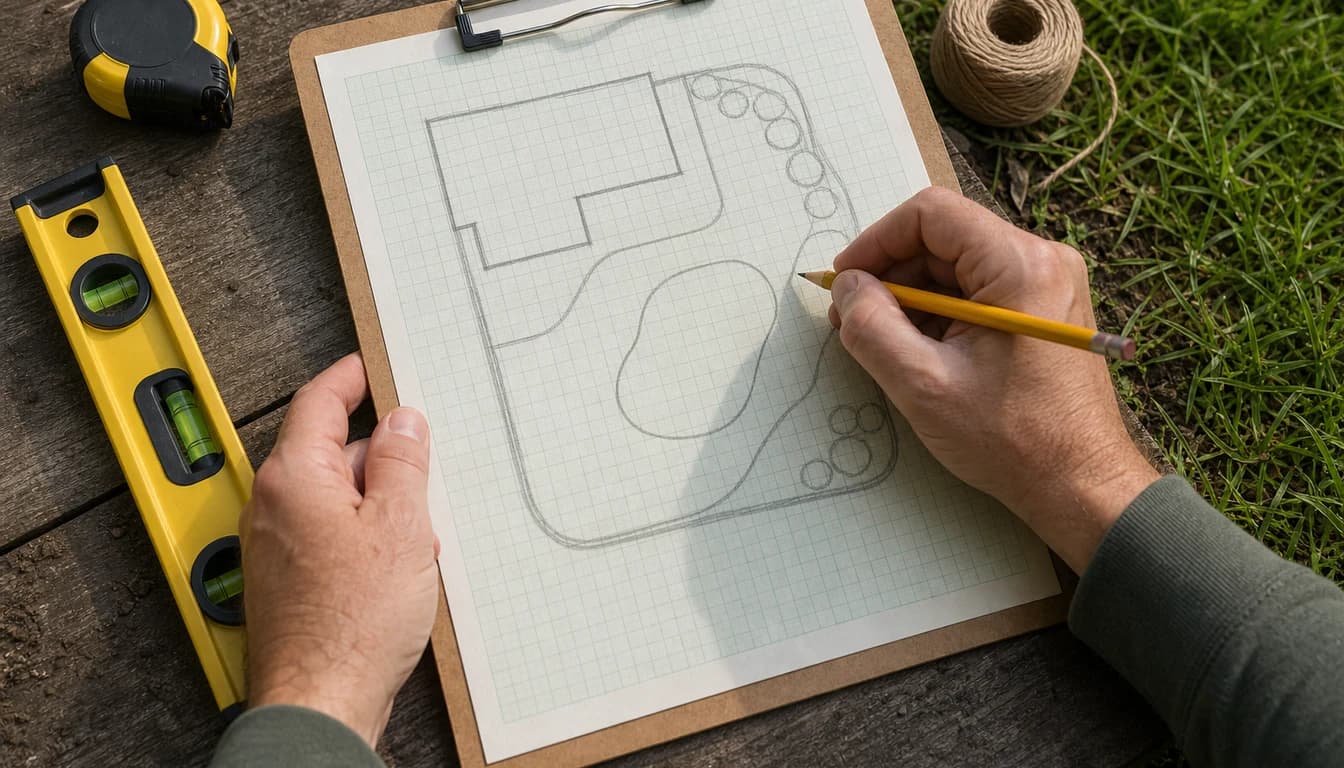
Only level the areas you actually use flat, like patios or play spaces.
- fiber_manual_recordLevel play areas: 0–1% slope is usually enough for safety and drainage.
- fiber_manual_recordPatios and hardscape: 1–2% slope away from buildings keeps surfaces dry.
- fiber_manual_recordRest of the yard: Up to 5% grade can feel comfortable to walk and mow.
heightMeasure Your Current Slope Accurately
A rough guess by eye is usually wrong. Taking ten minutes with simple tools saves hours of moving soil later.
You can measure slope with a long straight board, a 2–4 foot builder's level, and a tape measure. For big yards, a 50–100 foot tape and string work even better.
Pick two points along the slope, at least 10–20 feet apart. Place the board or string between them, make it level, then measure the vertical drop from the low end down to the ground.
Slope percentage equals vertical drop divided by horizontal distance, then times 100. A 6 inch drop over 10 feet is a 5% slope.
Anything steeper than about 12% slope (roughly 1.5 feet drop in 10 feet) is hard to mow safely and often needs terraces or a retaining wall.
If parts of your yard already sit near house foundations, also note the drop from the house wall out 10 feet. You want at least 6 inches of fall in that run to keep basements dry.
- fiber_manual_recordWalkable lawn: Under 5% grade mows easily with most push mowers.
- fiber_manual_recordMarginal slope: 5–12% feels awkward and ruts during rain.
- fiber_manual_recordToo steep: Over 12% is where steps, paths, or terraces help.
Guide — See AlsoWhen to Fertilize New Grass Without Burning ItLearn exactly when to fertilize new grass from seed or sod so it roots deeply, fills in fast, and avoids fertilizer burn
chevron_rightyardPlan Your Cut‑and‑Fill Grading Strategy
Flattening a slope usually means moving soil from higher spots (cut) to lower spots (fill). The more you reuse your own soil, the less you spend on deliveries and hauling.
Start by marking future finished heights with stakes. Use string lines at the desired elevation for patios, play zones, or flat lawn pockets.
Walk the area and note which sections sit well above those strings and which sit far below. High areas become your cut zones. Low pockets are your fill zones.
Keep heavy cuts away from large trees like mature shade oaks so you do not expose roots or destabilize trunks. Even a 4–6 inch soil change over roots can stress them.
If you need a wall over 3 feet tall or plan to change grade near a house foundation, consider a local pro to design it safely.
Use gentle transitions where new flat areas meet untouched yard. Spread grade changes over 8–10 feet instead of creating sudden steps or humps.
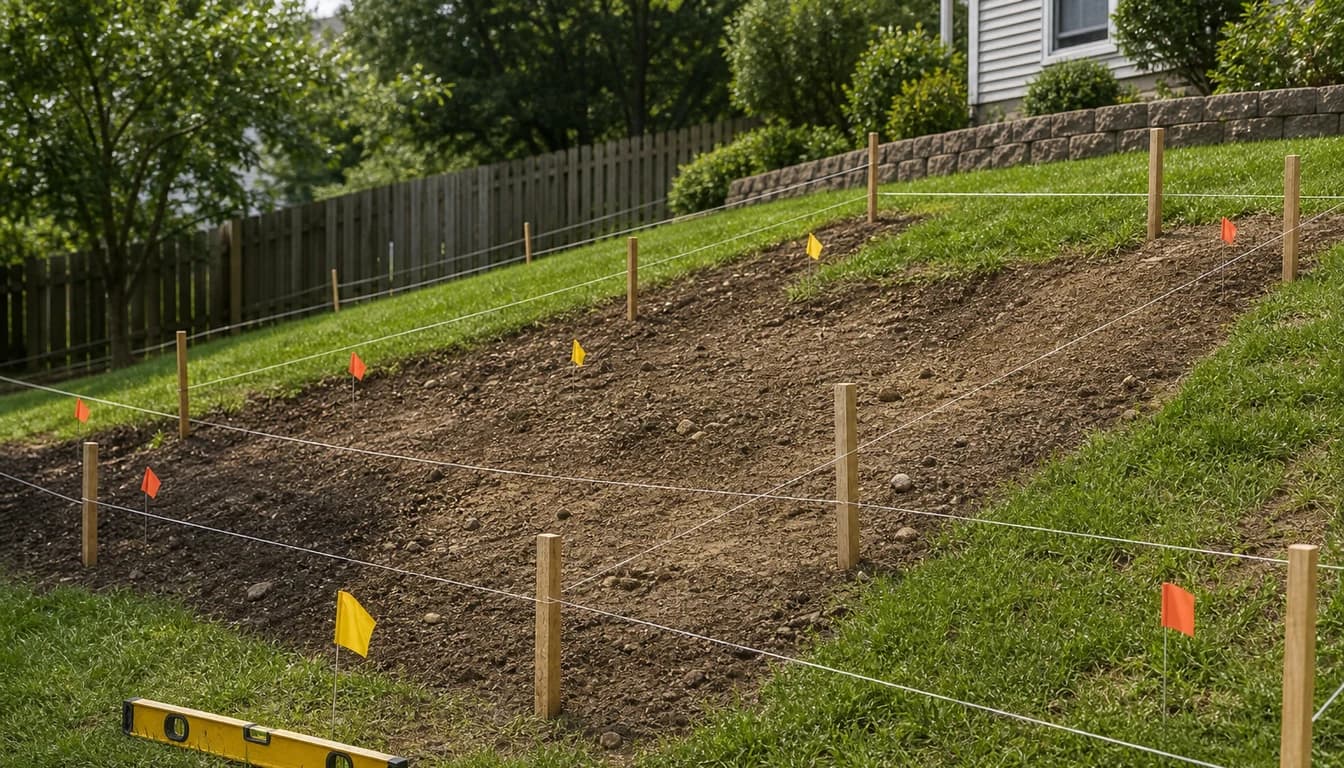
Mark cut and fill zones with stakes and string before moving any soil.
- fiber_manual_recordReuse existing soil: Saves money and avoids mismatched textures.
- fiber_manual_recordAdd topsoil on top: The final 4–6 inches should be clean, rock‑free soil.
- fiber_manual_recordPreserve drainage paths: Leave low routes where water already exits the yard.
Email Updates
Join the KnowTheYard update list
Zone-specific advice, seasonal reminders, and new plant guides — no filler.
grassStrip Sod and Move Soil the Right Way
Before you move soil, decide what happens to the existing grass. Usable sod can be saved and relaid, but only if you cut and store it correctly.
For healthy turf like warm‑season Bermuda patches or cool‑season tall fescue, slice the sod in 2–3 foot strips about 1–2 inches thick. Roll or stack pieces in a shady spot and keep them lightly moist.
If the grass is mostly weeds, it is usually better to strip it, compost or discard, then plan to reseed or resod when grading is done.
Use a flat shovel, mattock, or rented sod cutter to remove turf from your cut and fill areas. Removing that top layer keeps organic material more even when you rebuild.
Never bury thick layers of sod under new fill. They rot unevenly and cause soft spots and sinkholes in future lawns.
After stripping, start cutting high spots first. Move soil in thin layers of 2–4 inches at a time, checking your string lines or level frequently.
- fiber_manual_recordSave good topsoil: Keep the dark upper layer separate to spread back on top later.
- fiber_manual_recordAvoid heavy machines on wet soil: It compacts badly and is hard to fix.
- fiber_manual_recordShape with rakes: A sturdy landscape rake helps feather small grade transitions.
Guide — See AlsoIs Overseeding Worth It For Your Lawn Or Not?Honest look at whether overseeding is worth it for your lawn, including cost, effort, timing, and how it compares to opt
chevron_rightyardCompact the New Grade so It Stays Put
Loose soil looks smooth for a week, then turns into ruts after the first rain. Compaction locks your new grade in place so you are not re-leveling every spring.
Start by working in thin layers. Spread soil in 3–4 inch lifts, then compact each lift before adding more. Thick piles never firm up evenly, especially in clay.
For small areas, a hand tamper is enough. On anything bigger than a parking spot, rent a plate compactor from the same place that rents aerators or raised bed hardware stores.
Never compact saturated mud. You will seal the surface and create drainage problems.
Make two to three passes in different directions over each lift. Overlap your passes like mowing so you do not miss strips in the middle.
Edges along sidewalks and patios sink fastest. Spend extra time compacting within 18 inches of hard surfaces where water tends to run.
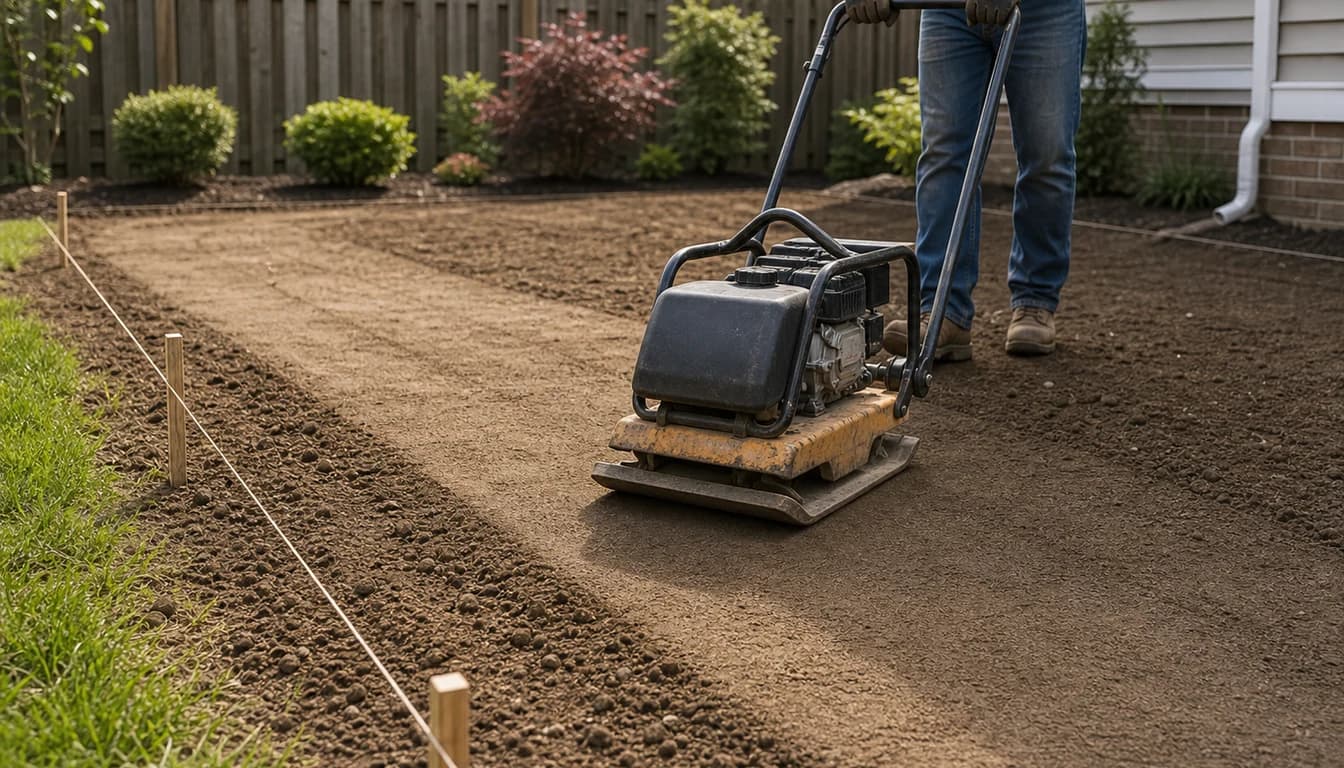
Compacting in thin lifts keeps your new slope from settling into dips later.
- fiber_manual_recordLift thickness: 3–4 inches per layer
- fiber_manual_recordPasses per lift: 2–3 in a crisscross pattern
- fiber_manual_recordCompaction tools: Hand tamper or gas plate compactor
- fiber_manual_recordSkip compaction: Final 1–1.5 inches if you are laying sod
If you are seeding, lightly rake the top half inch after compacting. That scuffed surface helps grass seed contact soil without rolling downhill.
water_dropHandle Drainage Before You Put Grass Back
Water is the real reason most yards get re-graded. If you still have puddles or water against the house after leveling, the job is not finished.
Walk the yard right after a hose test or rain. Follow where the water naturally wants to go, then decide if you need surface fixes, a buried drain, or both.
Shallow swales are usually enough in average clay or loam. A swale is just a wide, gentle channel that nudges water toward a safe outlet like the street or a rain garden.
Do not send water straight at your neighbor's basement or fence line.
In heavy clay, add a simple French drain. That means a perforated pipe set in gravel, wrapped in fabric, laid along the low side of your slope.
Tie downspouts into that system if they currently dump right at the foundation. Gutters dropping on a fresh slope cut rills overnight.
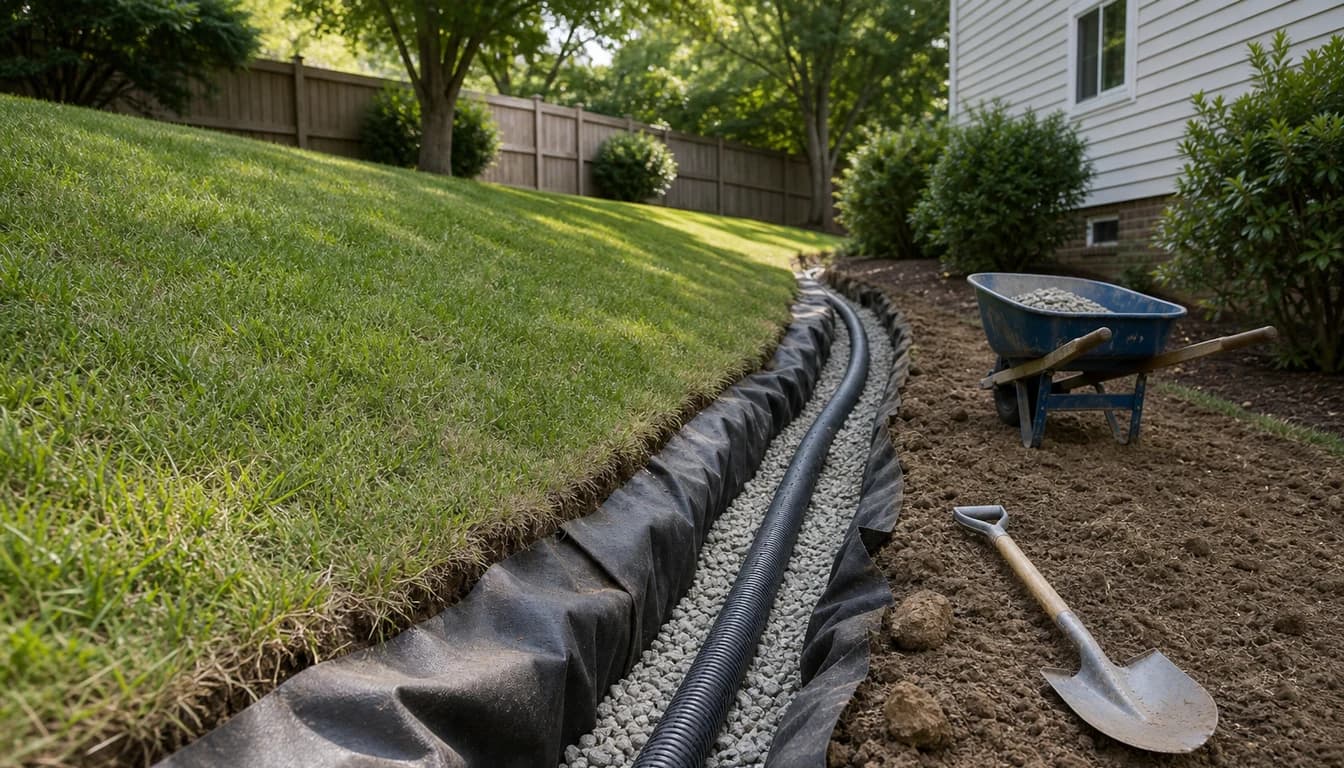
Drains and swales are easier to install before sod or seed goes down.
- fiber_manual_recordSwale depth: 3–6 inches, at least 1% fall
- fiber_manual_recordFrench drain pipe: 4 inch perforated, holes down
- fiber_manual_recordGravel size: 3/4 inch clean stone, no fines
- fiber_manual_recordOutlet: Daylight on a slope, dry well, or rain garden
Plan where you want turf and where turf is a headache. Steep corners might be better as a bed of ground cover plants or mulch to slow water and avoid mower slides.
Guide — See AlsoBest Time to Aerate and Overseed for a Thicker LawnLearn when to aerate and overseed your lawn by season and grass type so every pass of the machine leads to thicker, gree
chevron_rightgrassChoose Sod or Seed and Keep It From Washing Away
Once the dirt is right, you have to armor it. Bare soil on a slope will move no matter how well you compacted.
Sod is the most foolproof on anything steeper than 4–5%. It gives instant cover and roots in fast, which is why pros use it on newly graded banks.
On gentler grades, seed can work fine if you protect it. An erosion blanket or straw mat keeps rain from carving channels while roots get started.
Match your grass to your sun and region. Warm-season types like bermuda for hot sun behave very differently than cool-season lawns such as fescue in temperate zones.
Lay sod in a brick pattern with joints staggered. On slopes, pin the top edge and seams with 6 inch sod staples so they do not creep downhill.
If you are seeding, go a bit heavier than flat ground. On a slope, aim for 1.25–1.5 times the normal seeding rate to offset what washes or blows away.
- fiber_manual_recordSod staples: Every 2–3 feet along seams
- fiber_manual_recordSeed cover: Straw, mat, or compost at 1/4 inch
- fiber_manual_recordWatering: Light, 2–3 times daily at first
- fiber_manual_recordMowing wait: Until grass reaches 3–4 inches tall
Short, frequent watering in week one prevents crusting, which is the main reason new seed fails on slopes.
calendar_monthTime Your Project With Weather and Season
Leveling is heavy work even on a cool day. Trying it in midsummer heat or during spring mud season just adds misery and mistakes.
In cool-season lawns, fall is ideal. Soil is still warm, air is cooler, and rain is more dependable for new fescue or bluegrass patches.
Early spring can also work if you avoid saturated ground. If soil sticks to your shovel like brownie batter, wait a week.
Warm-season grasses like zoysia sod strips prefer late spring into early summer when soil stays above 65°F at 4 inches. St. Augustine squares need the same warm, active-growth window.
Never regrade when the ground is frozen. You will create air pockets that collapse once it thaws.
Wind matters too. Strong gusts shred erosion blankets and dry out exposed soil in a day.
Try to schedule the grading itself for a dry stretch, then use the following rainy period to help settle the soil and establish grass.
- fiber_manual_recordBest for cool-season grass: Late August to early October
- fiber_manual_recordBest for warm-season grass: Late April through June
- fiber_manual_recordSkip: Freeze-thaw months and peak summer heat
- fiber_manual_recordCheck: zone 7 timing and nearby zones for your pattern
If you are also overseeding thin spots, pair this project with the window in your overseeding schedule so you are not doing two big lawn jobs in different months.
Guide — See AlsoGrass Weeds Identification Pictures for Real LawnsLearn how to identify common grass-like weeds in your lawn using clear photo cues, simple traits, and side‑by‑side compa
chevron_rightwarningAvoid the Mistakes That Ruin a New Grade
Most bad grades fail for the same handful of reasons, and they usually show up in the first serious storm.
Low spots near patios and walkways are first. People pile extra soil there, forget to compact, then watch it settle 2–3 inches below everything else.
Another trouble spot is around tree roots. Scraping soil off the high side of a mature oak shade tree can expose roots and stress the tree.
Keep grade changes gentle within the drip line of established trees unless a pro signs off.
Buried utilities are a safety risk, but they also matter long term. Deep cuts over a shallow gas line or cable can leave it exposed after settling.
The last mistake is skipping soil tests. If you already have thin turf or lots of weeds, fix the soil chemistry while it is exposed. Pair leveling with your next round of lawn fertilizing work.
- fiber_manual_recordDo not: Flatten everything so water has nowhere to go
- fiber_manual_recordDo: Preserve a gentle 2% fall away from the house
- fiber_manual_recordDo not: Leave compacted tire tracks from heavy equipment
- fiber_manual_recordDo: Rake out ruts and re-compact before seeding
If water still runs toward the foundation after grading, stop and correct the slope now. It only gets harder after grass is in.
tips_and_updates
Pro Tips
- check_circleOnly level the area you truly need flat so you move less soil and keep drainage simple.
- check_circleMeasure slope with a board and level before you rent equipment or order fill.
- check_circleKeep at least 6 inches of fall away from the house over the first 10 feet of soil.
- check_circleCut and fill in several shallow passes instead of digging one deep trench at a time.
- check_circleStrip and save healthy sod so you can relay it after grading instead of buying all new turf.
- check_circleDo not bury thick chunks of old sod under fill or you will get bumpy, sinking spots later.
- check_circleFinish with 4–6 inches of quality topsoil before reseeding so new grass roots easily.
- check_circleIf you need a retaining wall higher than 3 feet, let an engineer or contractor design it.
quiz
Frequently Asked Questions
Can I level a sloping yard without heavy equipment?expand_more
Yes, if the elevation change is small and the area is modest. For drops under about 12 inches across a typical suburban yard, you can dig, move, and compact soil by hand with shovels, a wheelbarrow, and a hand tamper.
How much slope should I keep away from my house?expand_more
Aim for at least 6 inches of drop over the first 10 feet away from the foundation, which is about a 5% slope. This keeps surface water from pooling near your basement or crawlspace.
Will leveling my yard hurt existing trees and shrubs?expand_more
It can if you cut or bury roots too deeply. Try to keep grade changes within 2–3 inches inside the drip line, and avoid piling soil against trunks of shrubs like boxwood hedges or trees such as maple species.
How long before I can mow after regrading?expand_more
For seed, wait until grass reaches 3–4 inches tall and the soil feels firm underfoot. For sod, test by gently tugging; once it resists pulling and roots have grabbed, usually in 2–3 weeks, you can do a first, high cut.
Do I need a permit to change the slope of my yard?expand_more
Some cities require permits for significant grading, especially near property lines or drainage easements. Call your local building or zoning office before you start, and ask about setback rules and where you can legally send runoff.
menu_book
Sources & References
- 1.Penn State Extension, Home Lawn Establishment and Renovationopen_in_new
- 2.Clemson Cooperative Extension, Grading and Drainage Around the Homeopen_in_new
- 3.University of Minnesota Extension, Seeding and Sodding Home Lawnsopen_in_new
- 4.Iowa State University Extension, Turfgrass Establishmentopen_in_new
Related Guides
Best Time to Aerate and Overseed for a Thicker Lawn
Learn when to aerate and overseed your lawn by season and grass type so every pass of the machine leads to thicker, greener turf instead of wasted seed.
11 min read
Best Time to Overseed a Midwest Lawn for Thick Turf
Learn the best time to overseed a Midwest lawn based on soil temperature, grass type, and hardiness zone so your new seed fills in thin spots.
11 min read
Best Time to Overseed a Northeast Lawn for Thick Turf
Learn exactly when to overseed cool-season lawns in the Northeast, how soil temperature and frost dates affect timing, and what to do before and after seeding for a thicker, greener yard.
11 min read