yard
KnowTheYard

databasePlant Database

Browse by category

potted_plant

Houseplants

Indoor & tropical species

nutrition

Vegetables

Edible garden crops

spa

Herbs

Culinary & medicinal

local_florist

Flowers

Ornamental blooms

water_drop

Succulents

Drought-tolerant species

park

Trees

Arboreal species

forest

Shrubs

Bushes & hedges

nature

Perennials

Garden flowers

grass

Lawn Grasses

Turf varieties

local_dining

Fruits

Fruit-bearing plants

Best Indoor Plantsarrow_forwardBest Shade Plantsarrow_forward

menu_bookGarden Guides

Step-by-step guides by task type

grass

Lawn Care

Seasonal checklists and year-round maintenance guides for a championship lawn.

yard

Planting

When, where, and how to plant — from seed to transplant for every garden type.

water_drop

Watering

Deep-watering techniques, schedules by plant type, and drought management.

compost

Fertilizing

Feeding schedules, NPK ratios, and organic vs synthetic options by plant.

pest_control

Pest Control

Identify, prevent, and treat common garden pests without harming beneficial insects.

content_cut

Pruning

Pruning timing, techniques, and tools for trees, shrubs, and flowering plants.

Popular Guides

parkFall Lawn Carelocal_floristSpring Lawn Carecalendar_monthFull Calendar
All Guidesarrow_forwardLawn Care Hubarrow_forward
ToolsCompareRegional GuidesPlant ProblemsPet SafetyAbout
searchPlant Finder
yardKnowTheYard

Published plant profiles, practical care guides, problem diagnosis pages, and side-by-side comparisons for home gardeners.

chatphoto_camera

databaseBrowse Plants

  • arrow_forwardHouseplants
  • arrow_forwardVegetables
  • arrow_forwardHerbs
  • arrow_forwardFlowers
  • arrow_forwardTrees

menu_bookResources

  • arrow_forwardGarden Tools
  • arrow_forwardRegional Guides
  • arrow_forwardPlant Problems
  • arrow_forwardPet Safety
  • arrow_forwardCare Calendar
  • arrow_forwardPlant Finder

infoCompany

  • arrow_forwardAbout Us
  • arrow_forwardOur Team
  • arrow_forwardMethodology
  • arrow_forwardEditorial Policy
  • arrow_forwardContact Us

mailEmail Updates

Join the list for new guides, seasonal notes, and launch updates.

No spam. Request removal anytime.

fact_check

Reviewed Pages

77 pages currently attributed to public review lanes

public

USDA Zone Coverage

Zone-aware recommendations and regional growing context

database

230 Published Plant Profiles

555 public pages across profiles, guides, comparisons, and problem pages

© 2026 KnowTheYard. All rights reserved.

Privacy PolicyTerms of ServiceContactSitemap
Home/trees/Japanese Maple: Protect the Leaves and Let the Form Do the Work/Leaf Scorch
scienceEditorial DiagnosisUpdated Feb 20, 2026

Japanese Maple Leaf Scorch

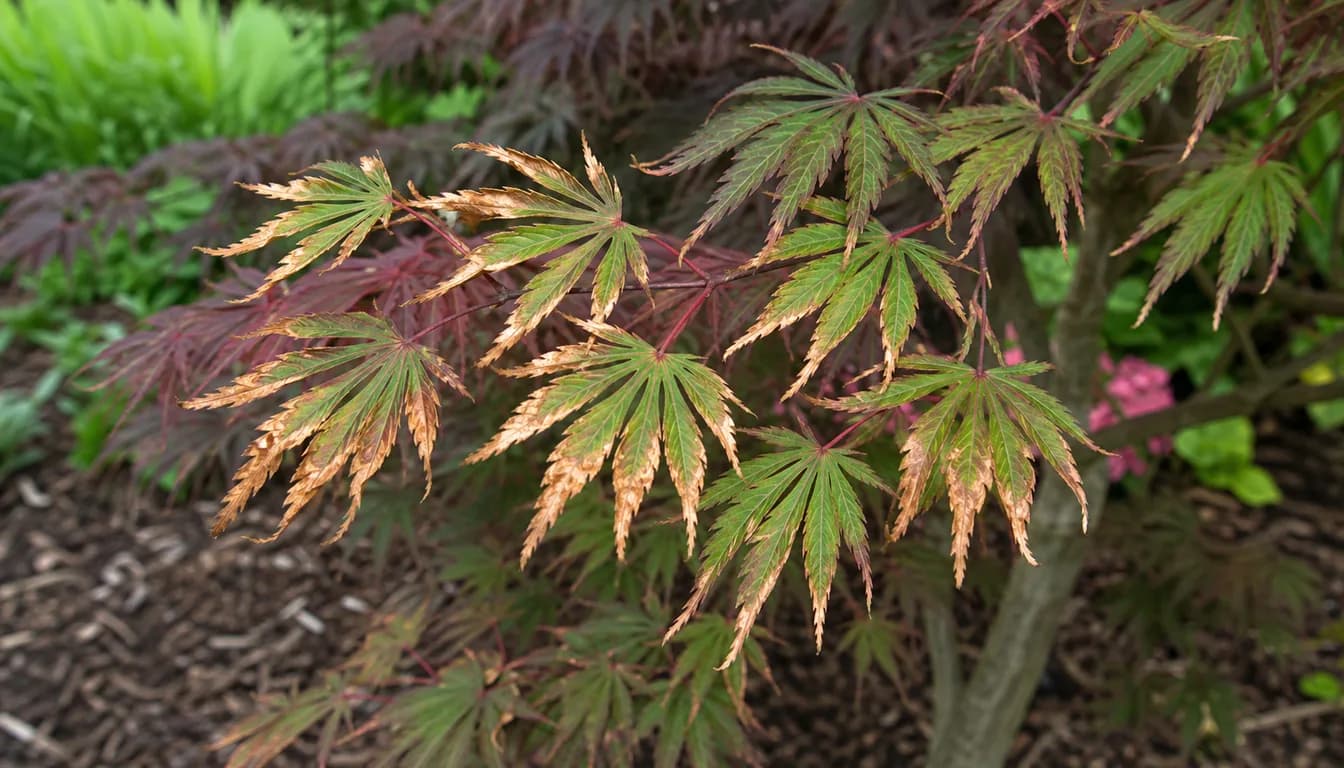
**Japanese Maple** leaf scorch shows up as tan or brown leaf edges, crispy tips, and sometimes browning between veins after heat, wind, strong afternoon sun, or uneven soil moisture. The browned tissue will not turn green again; the goal is to stop fresh scorch and protect the roots for the next flush.

Japanese maple leaves with brown crispy scorched margins and green centers on a garden branch.

Japanese maple leaves with brown crispy scorched margins and green centers on a garden branch.

lightbulb
bolt

Quick Diagnosis

Most Likely Cause: Heat, afternoon sun, and inconsistent root-zone moisture.

Read the pattern before you blame disease. On Japanese Maple, brown tips and margins that concentrate on hot, windy, or sun-exposed sections usually mean leaf scorch, especially when the tissue dries from the edges inward. A steadier deep-watering rhythm usually tells you more than another fungicide spray.

Jump to fix steps arrow_downward

Japanese Maple leaf scorch is usually a water-balance failure at the leaf edge, not a contagious pathogen. Heat, reflected light, dry wind, compacted soil, or root disturbance can all make the canopy lose water faster than the roots can replace it.

This route is different from Japanese Maple poor fall color. Fall-color problems are about pigment and seasonal timing; scorch is about crisp brown injury during heat, wind, drought, or root stress.

Most home-garden scorch decisions come down to light and soil. Morning sun with afternoon protection is easier on the tree in hot sites, and a mulch layer near 2-3 inches helps buffer the root zone without burying the trunk.

compare_arrows
Comparison - See AlsoJapanese Maple vs Red Maple
chevron_right
psychology

How to tell scorch from other leaf problems

Scorch usually respects exposure. The outer, hotter, windier side of the canopy looks worse; inner leaves and shaded leaves often stay greener.

Disease spots usually have more defined lesions, speckling, or spreading patterns. Scorch is broader and crispier, especially along the edges where thin leaf tissue dries fastest.

A quick soil check matters more than guessing from leaf color alone. Use a trowel or probe at the dripline, then compare the result with drought-stress planning if the site stays hot and dry every summer.

thermostat

Environmental Baseline

Before diagnosing specific failures, confirm your Japanese Maple: Protect the Leaves and Let the Form Do the Work's environment matches its core care requirements.

forestJapanese Maple: Protect the Leaves and Let the Form Do the Work Care Needs

  • Light: Morning sun or bright filtered light; avoid harsh late heat
  • Water: Moderate, even moisture, not soggy
  • Temp: Hardy to about ==**-15 F**== once established

homeTypical Indoor Home

  • Humidity: 30-50% (Low)
  • Temp: 65-72°F variable
  • Light: Often too dim or direct
biotech

Possible Causes

Sorted by likelihood

1. Heat, afternoon sun, or drying wind

Likelihood: High

Hot afternoon exposure and drying wind raise water loss from Japanese Maple leaves. Scorch is most likely when browning is worst on the sun-facing or wind-facing side of the canopy.

Identification

  • remove_circle_outlineLeaf tips and margins turn tan, brown, or crispy after hot weather.
  • remove_circle_outlineDamage is strongest on the side facing afternoon sun or reflected heat.
  • remove_circle_outlineInner shaded leaves look better than outer exposed leaves.
  • remove_circle_outlineThere are no insect clusters, sticky residue, or spreading fungal spots.

The Fix

  1. 1Add temporary shade cloth during the hottest part of the day while the tree recovers.
  2. 2Keep the root zone mulched, but pull mulch back from the trunk flare.
  3. 3Avoid pruning green wood during heat waves; pruning removes leaf area the tree still needs.
  4. 4For a new planting, choose a site with morning sun and afternoon shade.
  5. 5If the tree sits near pavement or a hot wall, widen the mulched area to reduce reflected heat.

2. Dry root zone or shallow watering

Likelihood: Medium

A Japanese Maple can look watered on the surface while feeder roots stay dry below. Light, frequent watering wets mulch and topsoil but often fails to supply the root zone during hot spells.

Identification

  • remove_circle_outlineSoil is dry several inches down even after recent light watering.
  • remove_circle_outlineLeaves curl slightly, then edges crisp and brown.
  • remove_circle_outlineScorch appears after missed irrigation, drought, or a changed watering schedule.
  • remove_circle_outlineThe trunk and branches look alive, with no cankers or sudden dieback.

The Fix

  1. 1Use deep watering so moisture reaches below the mulch and surface roots.
  2. 2Water slowly around the full root zone, not just beside the trunk.
  3. 3Probe the soil before watering again; soggy soil can create a different root problem.
  4. 4Refresh mulch after watering so the soil cools and dries more slowly.
  5. 5Do not fertilize a drought-stressed tree until new growth looks steady.

3. Root stress, compaction, or drainage trouble

Likelihood: Low

Root stress makes Japanese Maple scorch easier because damaged roots cannot keep leaves supplied. Recent transplanting, compacted soil, grade changes, or wet soil can all reduce root function.

Identification

  • remove_circle_outlineScorch repeats every summer even when watering seems consistent.
  • remove_circle_outlineThe tree was planted recently or soil was disturbed near the root zone.
  • remove_circle_outlineWater pools after rain, or the soil surface crusts hard around roots.
  • remove_circle_outlineNew shoots are short and weak compared with previous seasons.

The Fix

  1. 1Keep foot traffic and digging out of the root zone.
  2. 2Improve surface soil with compost and mulch instead of tilling through roots.
  3. 3If soil stays wet, compare symptoms with overwatered tree signs before adding more irrigation.
  4. 4Correct drainage around the bed so rainwater does not sit over the roots.
  5. 5Give a newly planted tree a full season of steady moisture before judging recovery.
menu_book
Guide - See AlsoAir Purifying Plants for Cleaner Indoor Air
chevron_right
potted_plant

Root Health Examination

A direct inspection of the root system distinguishes root rot from drought stress - saving weeks of guesswork.

check_circleHealthy Roots

  • Firm to the touch
  • White or light tan color
  • Earthy, pleasant smell

cancelCompromised Roots

  • Mushy or slimy texture
  • Dark brown or black color
  • Sour, rotting odor

Inspection Step: Gently slide the pot off while supporting the base of the stems. The outer root ball gives sufficient clues without disturbing all the soil.

gpp_bad
warning

When to Worry

A few yellow leaves are normal. If more than 20% of foliage turns yellow within a week, or new growth is affected, act immediately - check the roots first.

timeline

Recovery Protocols

Recovery takes time. Once the root cause is corrected, implement a 30-day stabilization window.

0-2 weeksStop fresh damage

Water slowly if the root zone is dry, add temporary shade during extreme heat, and leave partly green leaves attached. Brown edges will stay brown, but new scorch should slow.

3-8 weeksWatch new growth

Judge recovery by fresh leaves and shoot tips, not by old damaged tissue. If new leaves scorch again, the site exposure or root-zone moisture is still wrong.

Next seasonFix the site pattern

Recurring scorch means the tree needs better afternoon protection, steadier watering, wider mulch, or a healthier root zone. For young trees, one improved season can make the next canopy noticeably cleaner.

menu_book
Guide - See AlsoBest Herbs to Grow Indoors for Real Harvests, Not Spindly Pots
chevron_right
shield

Preventing Future Issues

Prevent Japanese Maple leaf scorch with morning sun, afternoon shade in hot gardens, steady deep watering, and mulch that protects roots without touching the trunk. In the tree garden, protect shallow roots from digging, mower damage, and compacted soil.

menu_book

Related Reads

compare_arrows
ComparisonJapanese Maple vs Red Maple
chevron_right
menu_book
GuideAir Purifying Plants for Cleaner Indoor Air
chevron_right
menu_book
GuideBest Herbs to Grow Indoors for Real Harvests, Not Spindly Pots
chevron_right
menu_book
GuideBest Indoor Plants for Every Room and Light Level
chevron_right
Japanese Maple: Protect the Leaves and Let the Form Do the Work (Acer palmatum) - full care guideAcer palmatum

Japanese Maple: Protect the Leaves and Let the Form Do the Work

Sapindaceae Family

wb_sunny

Light

Morning sun or bright filtered light; avoid harsh late heat

water_drop

Water

Moderate, even moisture, not soggy

thermostat

Temp

Hardy to about ==**-15 F**== once established

yardFull Care Guide

On This Page

boltQuick DiagnosispsychologyUnderstandingthermostatEnvironment CheckbiotechPossible Causespotted_plantRoot ExamwarningWhen to WorrytimelineRecovery PlanshieldPreventionmenu_bookRelated Reads