yard
KnowTheYard

databasePlant Database

Browse by category

potted_plant

Houseplants

Indoor & tropical species

nutrition

Vegetables

Edible garden crops

spa

Herbs

Culinary & medicinal

local_florist

Flowers

Ornamental blooms

water_drop

Succulents

Drought-tolerant species

park

Trees

Arboreal species

forest

Shrubs

Bushes & hedges

nature

Perennials

Garden flowers

grass

Lawn Grasses

Turf varieties

local_dining

Fruits

Fruit-bearing plants

Best Indoor Plantsarrow_forwardBest Shade Plantsarrow_forward

menu_bookGarden Guides

Step-by-step guides by task type

grass

Lawn Care

Seasonal checklists and year-round maintenance guides for a championship lawn.

yard

Planting

When, where, and how to plant — from seed to transplant for every garden type.

water_drop

Watering

Deep-watering techniques, schedules by plant type, and drought management.

compost

Fertilizing

Feeding schedules, NPK ratios, and organic vs synthetic options by plant.

pest_control

Pest Control

Identify, prevent, and treat common garden pests without harming beneficial insects.

content_cut

Pruning

Pruning timing, techniques, and tools for trees, shrubs, and flowering plants.

Popular Guides

parkFall Lawn Carelocal_floristSpring Lawn Carecalendar_monthFull Calendar
All Guidesarrow_forwardLawn Care Hubarrow_forward
ToolsCompareRegional GuidesPlant ProblemsPet SafetyAbout
searchPlant Finder
yardKnowTheYard

Published plant profiles, practical care guides, problem diagnosis pages, and side-by-side comparisons for home gardeners.

chatphoto_camera

databaseBrowse Plants

  • arrow_forwardHouseplants
  • arrow_forwardVegetables
  • arrow_forwardHerbs
  • arrow_forwardFlowers
  • arrow_forwardTrees

menu_bookResources

  • arrow_forwardGarden Tools
  • arrow_forwardRegional Guides
  • arrow_forwardPlant Problems
  • arrow_forwardPet Safety
  • arrow_forwardCare Calendar
  • arrow_forwardPlant Finder

infoCompany

  • arrow_forwardAbout Us
  • arrow_forwardOur Team
  • arrow_forwardMethodology
  • arrow_forwardEditorial Policy
  • arrow_forwardContact Us

mailEmail Updates

Join the list for new guides, seasonal notes, and launch updates.

No spam. Request removal anytime.

fact_check

Reviewed Pages

77 pages currently attributed to public review lanes

public

USDA Zone Coverage

Zone-aware recommendations and regional growing context

database

230 Published Plant Profiles

555 public pages across profiles, guides, comparisons, and problem pages

© 2026 KnowTheYard. All rights reserved.

Privacy PolicyTerms of ServiceContactSitemap
Home/shrubs/Butterfly Bush: Big Color, Bigger Pollinator Draw/Poor Flowering
scienceEditorial DiagnosisUpdated Feb 20, 2026

Butterfly Bush Poor Flowering

Why your **Butterfly Bush** (Buddleja davidii) isn't producing the long, fragrant flower spikes you expect and what to do about it. This guide helps you diagnose pruning, light, soil, and frost-related causes, then gives step-by-step fixes and realistic recovery timelines so you can get blooms back on schedule.

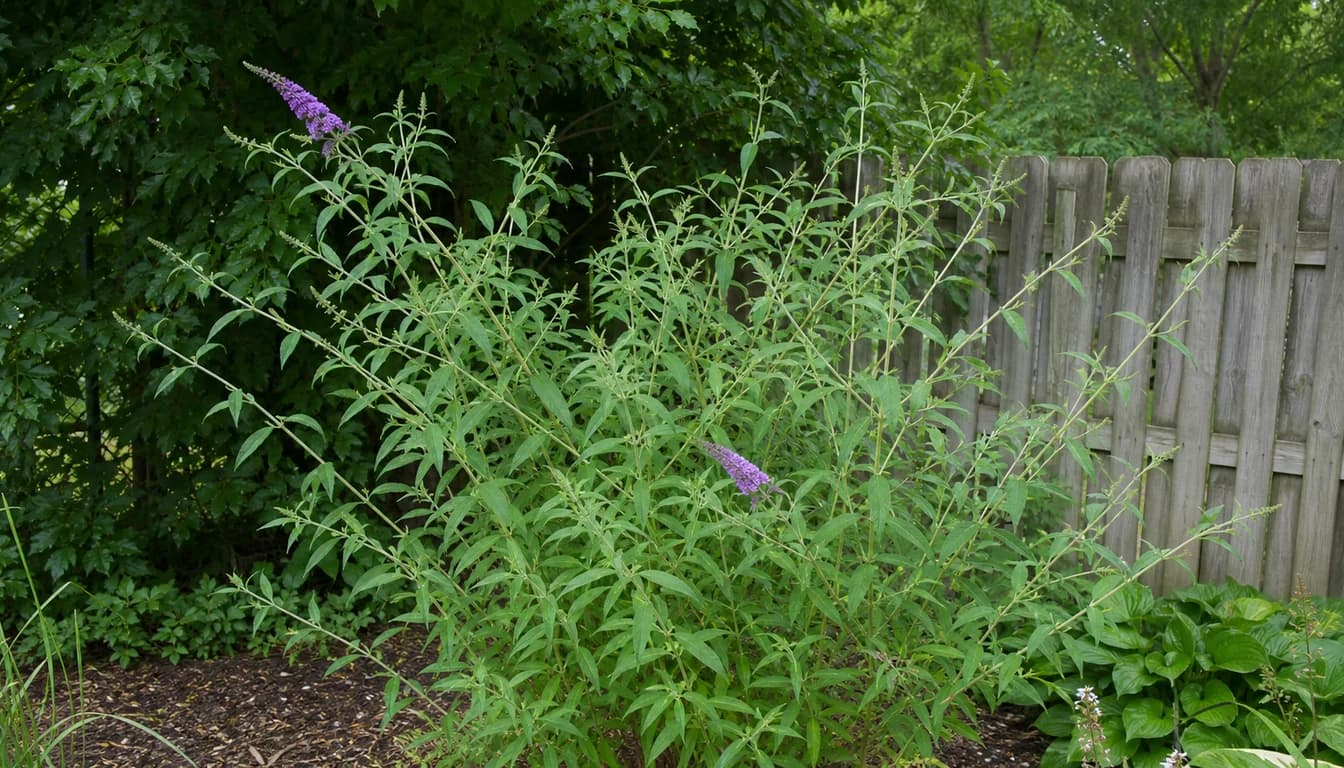
Leafy butterfly bush in a garden bed with only two small purple flower panicles and many bare green shoot tips.

Leafy butterfly bush in a garden bed with only two small purple flower panicles and many bare green shoot tips.

lightbulb
bolt

Quick Diagnosis

Most Likely Cause: Pruning at the wrong time or insufficient sun.

Butterfly Bush blooms on new wood, so heavy or late-season pruning removes the stems that would produce next summer's flowers. Match last season's cuts against pruning timing and technique before blaming disease. Inadequate full sun or poor soil fertility are the next most common causes, so confirm current sun exposure and whether many new shoots are forming before assuming pests are to blame.

Jump to fix steps arrow_downward

Buddleja davidii is a deciduous shrub prized for tall, fragrant flower spikes that attract pollinators; it reliably blooms on new wood, meaning flowers form on growth produced the same season. In USDA zones 5-10 most cultivars put on a long flowering display in mid to late summer if given full sun and decent soil. A bloom comparison with other shrubs helps clarify why some varieties seem to flower earlier or later.

Expect blooms to appear after the shrub has pushed new shoots in spring and put on active summer growth; flowers are not held on last year’s wood. That makes pruning timing a primary control for bloom quantity: prune too late and you cut away the stems that would carry flowers.

Butterfly Bush tolerates a range of soils but prefers well-drained, fertile soil. Plants in heavy clay, compacted beds, or very shaded spots often produce lots of foliage but few flower spikes. Balanced spring feeding encourages branching and bud set, but excess nitrogen or too-early heavy feeding can delay bloom in favor of leafy growth.

pest_control
Plant Problem - See AlsoButterfly Bush Winter Dieback
chevron_right
psychology

Understanding Bloom Biology and Seasonal Timing

Buddleja davidii blooms on new wood produced each growing season, so your pruning calendar should align with the plant’s growth cycle. After winter dormancy the shrub pushes new shoots in spring; these shoots form flower buds through late spring and bloom in mid to late summer.

In USDA zones 5-10 plants that receive full sun and moderate water typically have a long flowering season through summer into early fall. In colder marginal zones late spring frost can damage developing shoots and delay or reduce flowering; protecting emerging growth in spring can preserve buds.

Cultivar vigor matters: some Buddleja cultivars produce more vigorous flowering with less maintenance, while very vigorous types require regular pruning to keep bloom concentrated on fresh, flowering shoots. Balanced feeding supports bud set, but excess nitrogen or wrong timing will favor leafy growth over flowers.

thermostat

Environmental Baseline

Before diagnosing specific failures, confirm your Butterfly Bush: Big Color, Bigger Pollinator Draw's environment matches its core care requirements.

forestButterfly Bush: Big Color, Bigger Pollinator Draw Care Needs

  • Light: ==**full sun (6+ hours)**==
  • Water: Low once established
  • Temp: Hardy to about -20°F in well-drained soil

homeTypical Indoor Home

  • Humidity: 30-50% (Low)
  • Temp: 65-72°F variable
  • Light: Often too dim or direct
biotech

Possible Causes

Sorted by likelihood

1. Improper pruning timing or method

Likelihood: High

Pruning late in the season or cutting stems to ground in spring removes or delays the new shoots that carry flowers. Butterfly Bush blooms on new wood, so timing and technique matter: you want to remove old wood to encourage vigorous new shoots but not remove the base that will produce next season’s flowers.

Identification

  • remove_circle_outlineShrub heavily cut back in late summer, fall, or very late winter with few or no new stems in spring
  • remove_circle_outlineNo developing flower panicles on new season’s shoots by early summer
  • remove_circle_outlineMultiple old, bare stems with few basal shoots
  • remove_circle_outlineHistory of annual rejuvenation pruning at the wrong time (late winter in colder zones without checking bud swell)

The Fix

  1. 1Switch to hard pruning in late winter or very early spring before new shoot expansion, removing up to a third to half of the oldest stems to encourage fresh wood.
  2. 2In milder climates prune in late winter; in colder areas wait until late winter/early spring after worst frosts but before bud break.
  3. 3Use the 2-3-year renewal method: each year remove a few oldest stems at the base rather than cutting the whole plant to the ground.
  4. 4If you mistakenly pruned late-season, allow the shrub to regrow vigorously and expect reduced blooms that season but stronger flowering next year.
  5. 5Match each cut to flowering shrub pruning timing if you need step-by-step cutting diagrams.

2. Too little sunlight

Likelihood: Medium

Butterfly Bush prefers full sun to set abundant flower spikes. Plants in part shade often produce leggy growth and few flowers because energy goes to growing taller foliage rather than reproductive buds.

Identification

  • remove_circle_outlineShrub located under tree canopy or on north side of building with long shady hours
  • remove_circle_outlineLong, thin shoots with sparse flower buds by mid-summer
  • remove_circle_outlineBetter flowering observed on any branches that receive more direct sun
  • remove_circle_outlineNeighboring structures or newly planted trees creating shade changes

The Fix

  1. 1Relocate the plant to a sunnier spot in the garden during dormant season if possible; flowering improves markedly in full sun.
  2. 2If moving is not possible, thin nearby tree branches to increase light or remove competing shrubs within a few feet.
  3. 3Prune to open the center of the shrub so interior shoots receive more light and can produce flowers.
  4. 4Use morning versus afternoon sun guidance to decide if your site gets the strong afternoon light this plant prefers.
  5. 5Trim taller surrounding plants a season before expecting major bloom improvements so the bush can build root reserves.

3. Poor soil fertility or drainage

Likelihood: Low

Soggy, compacted soils stunt root development and reduce flowering, while very lean soils may produce sparse growth. Conversely, heavy nitrogen applications push leafy growth at the expense of flower bud formation.

Identification

  • remove_circle_outlineSoil stays wet for days after rain or irrigation and plant looks weak
  • remove_circle_outlineRapid leafy growth after fertilizer applications with little flowering
  • remove_circle_outlinePlants in raised beds or amended soil flowering better than those in native compacted soil
  • remove_circle_outlineVisible root crowding in the planting hole when inspecting the base

The Fix

  1. 1Improve drainage by amending planting area with coarse sand and compost or planting on a raised berm to lift roots out of wet soil.
  2. 2Apply a balanced fertilizer (for example 10-10-10) in early spring if growth is weak, avoiding high-nitrogen blends in mid-season.
  3. 3Top-dress with 2-3 inches of compost in spring to improve fertility slowly and encourage healthy root growth.
  4. 4If root problems are suspected, dig a small inspection hole to check roots and consider replanting at a slightly higher grade with fresh well-drained mix.
  5. 5Use mulch versus compost options to decide which organic amendment belongs on the soil surface.
menu_book
Guide - See AlsoAir Purifying Plants for Cleaner Indoor Air
chevron_right
potted_plant

Root Health Examination

A direct inspection of the root system distinguishes root rot from drought stress - saving weeks of guesswork.

check_circleHealthy Roots

  • Firm to the touch
  • White or light tan color
  • Earthy, pleasant smell

cancelCompromised Roots

  • Mushy or slimy texture
  • Dark brown or black color
  • Sour, rotting odor

Inspection Step: Gently slide the pot off while supporting the base of the stems. The outer root ball gives sufficient clues without disturbing all the soil.

gpp_bad
warning

When to Worry

A few yellow leaves are normal. If more than 20% of foliage turns yellow within a week, or new growth is affected, act immediately - check the roots first.

timeline

Recovery Protocols

Recovery takes time. Once the root cause is corrected, implement a 30-day stabilization window.

Short term (0-6 weeks)Immediate actions and what to expect

After corrective pruning or fertilizer application you’ll see increased shoot growth within **3-6 weeks** in warm conditions. Don’t expect full flowering in the same season if heavy late pruning removed new wood - the plant first reallocates energy to regrow stems.

Medium term (6-12 weeks)Bud set and early blooms

If pruning and light corrections are made before or at the season’s start, expect bud formation and the first flower spikes to appear within **6-12 weeks** of vigorous new shoot growth. Balanced spring fertilizer can speed this by improving shoot quality.

Long term (3-12 months)Full recovery time

A full return to regular prolific flowering after a major pruning mistake or site change may take one full growing season. Rejuvenation pruning that removes old wood often reduces bloom that year but produces stronger, more reliable displays the following summer.

menu_book
Guide - See AlsoBest Herbs to Grow Indoors for Real Harvests, Not Spindly Pots
chevron_right
shield

Preventing Future Issues

Prevent poor flowering by keeping your Butterfly Bush in full sun, pruning on a predictable late-winter or early-spring schedule to encourage new wood, improving soil drainage and fertility slowly with compost, and protecting emerging shoots from late frosts in cooler zones. If the bed needs surface improvement, mulch versus compost choices help you add organic matter without pushing soft, leafy growth. A steady rhythm-light annual pruning plus occasional renewal cuts and balanced spring feeding-keeps blooms consistent year after year. Tip: Poor flowering often roots in pruning timing or light. If you didn’t remove next year’s buds, you’re likely missing blooms next season.

menu_book

Related Reads

pest_control
Plant ProblemButterfly Bush Winter Dieback
chevron_right
menu_book
GuideAir Purifying Plants for Cleaner Indoor Air
chevron_right
menu_book
GuideBest Herbs to Grow Indoors for Real Harvests, Not Spindly Pots
chevron_right
menu_book
GuideBest Indoor Plants for Every Room and Light Level
chevron_right
menu_book
GuideButterfly Garden Plants for Continuous Blooms
chevron_right
Butterfly Bush: Big Color, Bigger Pollinator Draw (Buddleja davidii) - full care guideBuddleja davidii

Butterfly Bush: Big Color, Bigger Pollinator Draw

Scrophulariaceae Family

wb_sunny

Light

==**full sun (6+ hours)**==

water_drop

Water

Low once established

thermostat

Temp

Hardy to about -20°F in well-drained soil

yardFull Care Guide

On This Page

boltQuick DiagnosispsychologyUnderstandingthermostatEnvironment CheckbiotechPossible Causespotted_plantRoot ExamwarningWhen to WorrytimelineRecovery PlanshieldPreventionmenu_bookRelated Reads