yard
KnowTheYard

databasePlant Database

Browse by category

potted_plant

Houseplants

Indoor & tropical species

nutrition

Vegetables

Edible garden crops

spa

Herbs

Culinary & medicinal

local_florist

Flowers

Ornamental blooms

water_drop

Succulents

Drought-tolerant species

park

Trees

Arboreal species

forest

Shrubs

Bushes & hedges

nature

Perennials

Garden flowers

grass

Lawn Grasses

Turf varieties

local_dining

Fruits

Fruit-bearing plants

Best Indoor Plantsarrow_forwardBest Shade Plantsarrow_forward

menu_bookGarden Guides

Step-by-step guides by task type

grass

Lawn Care

Seasonal checklists and year-round maintenance guides for a championship lawn.

yard

Planting

When, where, and how to plant — from seed to transplant for every garden type.

water_drop

Watering

Deep-watering techniques, schedules by plant type, and drought management.

compost

Fertilizing

Feeding schedules, NPK ratios, and organic vs synthetic options by plant.

pest_control

Pest Control

Identify, prevent, and treat common garden pests without harming beneficial insects.

content_cut

Pruning

Pruning timing, techniques, and tools for trees, shrubs, and flowering plants.

Popular Guides

parkFall Lawn Carelocal_floristSpring Lawn Carecalendar_monthFull Calendar
All Guidesarrow_forwardLawn Care Hubarrow_forward
ToolsCompareRegional GuidesPlant ProblemsPet SafetyAbout
searchPlant Finder
yardKnowTheYard

Published plant profiles, practical care guides, problem diagnosis pages, and side-by-side comparisons for home gardeners.

chatphoto_camera

databaseBrowse Plants

  • arrow_forwardHouseplants
  • arrow_forwardVegetables
  • arrow_forwardHerbs
  • arrow_forwardFlowers
  • arrow_forwardTrees

menu_bookResources

  • arrow_forwardGarden Tools
  • arrow_forwardRegional Guides
  • arrow_forwardPlant Problems
  • arrow_forwardPet Safety
  • arrow_forwardCare Calendar
  • arrow_forwardPlant Finder

infoCompany

  • arrow_forwardAbout Us
  • arrow_forwardOur Team
  • arrow_forwardMethodology
  • arrow_forwardEditorial Policy
  • arrow_forwardContact Us

mailEmail Updates

Join the list for new guides, seasonal notes, and launch updates.

No spam. Request removal anytime.

fact_check

Reviewed Pages

77 pages currently attributed to public review lanes

public

USDA Zone Coverage

Zone-aware recommendations and regional growing context

database

230 Published Plant Profiles

555 public pages across profiles, guides, comparisons, and problem pages

© 2026 KnowTheYard. All rights reserved.

Privacy PolicyTerms of ServiceContactSitemap
Home/shrubs/Boxwood Shrubs for Hedges and Formal Edges/Blight
scienceEditorial DiagnosisUpdated Feb 20, 2026

Boxwood Blight

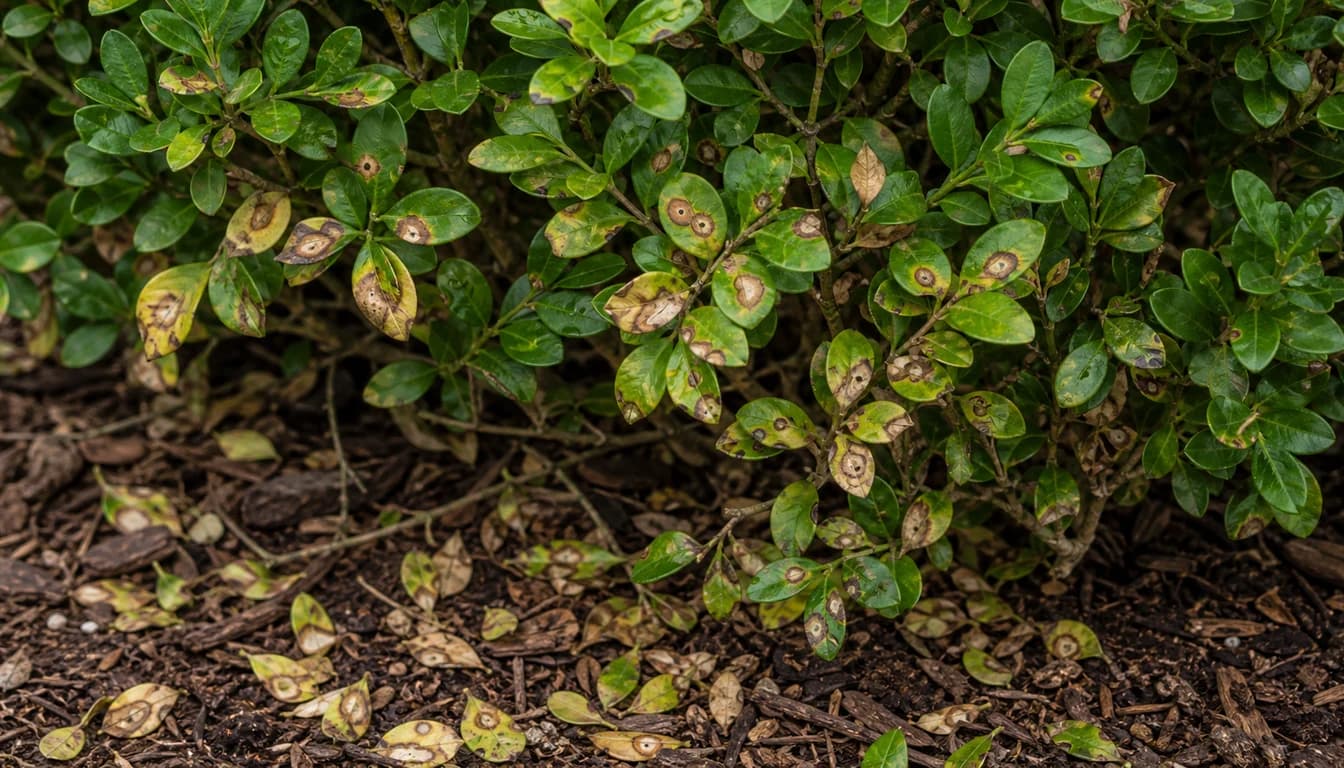
**Boxwood** blight is a fast-moving fungal disease of **boxwood** shrubs caused by Calonectria pseudonaviculata (syn. Cylindrocladium buxicola). It produces ringed leaf spots, rapid leaf drop, and twig dieback, and spreads easily when conditions are warm and wet. This page helps you recognize symptoms, stop spread with targeted sanitation and cultural changes, and use fungicides and quarantine practices when necessary.

Boxwood shrub with tan ringed leaf spots, lower defoliation, and fallen diseased leaves on mulch beneath green foliage.

Boxwood shrub with tan ringed leaf spots, lower defoliation, and fallen diseased leaves on mulch beneath green foliage.

lightbulb
bolt

Quick Diagnosis

Most Likely Cause: **Boxwood** blight (Calonectria pseudonaviculata).

Look for the combination, not a single symptom. On Boxwood, round leaf spots, black stem streaks, and sudden defoliation after wet weather point much more strongly to blight than to winter bronzing or drought stress.

Jump to fix steps arrow_downward

Boxwood blight moves fast in dense hedges because humidity stays high and infected leaves keep feeding the outbreak at the soil surface. That is why diagnosis matters early: once the disease is established, cleanup and sanitation matter more than another round of cosmetic pruning.

The pathogen is the fungus Calonectria pseudonaviculata (also listed historically as Cylindrocladium buxicola). It survives on infected leaves and twigs and can be carried on nursery stock, contaminated tools, clothing, and mulch. Early detection and prompt action are essential to prevent heavy losses in formal hedges or specimen plantings.

If you need to adjust care habits, start with irrigation timing and canopy thinning. Growers in Zone 5 gardens who water in the morning reduce the window for infection. For day-to-day irrigation, deep watering habits and pruning for better airflow lower disease pressure around each shrub.

pest_control
Plant Problem - See AlsoBoxwood Root Rot
chevron_right
psychology

How boxwood blight behaves in the landscape

Boxwood blight needs leaf wetness to infect-spores land on wet leaves and penetrate quickly in warm, humid weather. Once established, the fungus produces abundant spores on fallen leaves, which restart infections with each rain or irrigation event.

Cultivar susceptibility varies: some boxwood types show slower disease progression but few are fully immune. Planting resistant selections and spacing for airflow reduces overall risk, but sanitation and careful plant movement remain the most reliable defenses.

Fungicides are protectant, not curative: they reduce new infections when applied regularly during high-risk periods and always according to label directions and extension recommendations. Rely on cultural controls first and use chemicals as part of an integrated approach.

thermostat

Environmental Baseline

Before diagnosing specific failures, confirm your Boxwood Shrubs for Hedges and Formal Edges's environment matches its core care requirements.

forestBoxwood Shrubs for Hedges and Formal Edges Care Needs

  • Light: Full sun to partial shade
  • Water: Moderate, consistent moisture, hates soggy soil
  • Temp: Hardy to about -20°F once established

homeTypical Indoor Home

  • Humidity: 30-50% (Low)
  • Temp: 65-72°F variable
  • Light: Often too dim or direct
biotech

Possible Causes

Sorted by likelihood

1. Calonectria pseudonaviculata infection

Likelihood: High

The fungus directly infects leaves and young twigs. It produces characteristic lesions and fruiting bodies when conditions are wet, and it can kill foliage quickly under favorable weather.

Identification

  • remove_circle_outlineCircular tan to brown leaf spots with darker margins; spots often develop a bleached center.
  • remove_circle_outlineRapid defoliation starting on older leaves and progressing upward through the plant.
  • remove_circle_outlineBlack pinpoint fruiting bodies visible on wet lesions with a hand lens or after rain.
  • remove_circle_outlineTwig cankers and dieback where infected leaves fall but twigs remain symptomatic.

The Fix

  1. 1Remove and dispose of heavily infected plants or severe sections-bag and burn where allowed, or send to municipal green-waste if permitted.
  2. 2Sanitize pruners and tools between cuts with 10% bleach or 70% alcohol to avoid moving spores.
  3. 3Avoid overhead irrigation and schedule watering for early morning so leaves dry before nightfall.
  4. 4Apply fungicides as a protectant on healthy plants during warm, wet periods and follow local extension label guidance for frequency and timing.
  5. 5Quarantine new boxwood purchases and inspect for leaf spots for at least 2-4 weeks before planting them near existing shrubs.

2. Water splash and high humidity spread

Likelihood: Medium

Spores move short distances in rain and irrigation splash. Long periods of leaf wetness (overnight dew, misting, or overhead sprinklers) dramatically increase infection risk.

Identification

  • remove_circle_outlineClusters of new infections directly below or downwind of infected plants.
  • remove_circle_outlineWorse symptoms in days after heavy rain or frequent overhead watering.
  • remove_circle_outlineMore disease on lower canopy leaves that stay damp longer.
  • remove_circle_outlineMoldy or slimy accumulation of infected debris beneath plants after rainy weather.

The Fix

  1. 1Switch to drip or soaker hoses to keep foliage dry and direct water to the root zone; compare drip versus sprinklers before changing an entire hedge line.
  2. 2Space new plantings to improve air circulation and reduce leaf wetness duration.
  3. 3Rake and remove fallen leaves promptly to eliminate an infection reservoir.
  4. 4Mulch with fresh, disease-free material and avoid piling mulch against trunks or stems.
  5. 5Consider swapping irrigation scheduling to early morning to leverage daylight drying.

3. Contaminated plant material and tools

Likelihood: Low

Nursery stock, cuttings, infected mulch, and pruning tools can move the fungus between sites. This is less common as the day-to-day spread pattern in an established hedge, but it is often how the pathogen enters a new site.

Identification

  • remove_circle_outlineNew infections after recent plant purchases or movement of soil/mulch onto a site.
  • remove_circle_outlinePresence of the disease on only younger plants recently added to the landscape.
  • remove_circle_outlineInfection appearing in otherwise healthy beds following shared tool use.
  • remove_circle_outlineInconsistent distribution of symptoms-clusters near recent work areas or deliveries.

The Fix

  1. 1Quarantine new boxwood for 2-4 weeks and inspect daily for leaf spots before placing among established shrubs.
  2. 2Sanitize tools between plants and avoid using tools on infected material followed by healthy plants without cleaning.
  3. 3Refuse or return suspect nursery stock that shows any ringed leaf spots or premature defoliation.
  4. 4Keep separate containers for transporting infected debris and wash hands and boots after working in infected beds.
  5. 5Use fresh, certified disease-free mulch and soil for planting beds.
compare_arrows
Comparison - See AlsoBoxwood vs Privet
chevron_right
potted_plant

Root Health Examination

A direct inspection of the root system distinguishes root rot from drought stress - saving weeks of guesswork.

check_circleHealthy Roots

  • Firm to the touch
  • White or light tan color
  • Earthy, pleasant smell

cancelCompromised Roots

  • Mushy or slimy texture
  • Dark brown or black color
  • Sour, rotting odor

Inspection Step: Gently slide the pot off while supporting the base of the stems. The outer root ball gives sufficient clues without disturbing all the soil.

gpp_bad
warning

When to Worry

A few yellow leaves are normal. If more than 20% of foliage turns yellow within a week, or new growth is affected, act immediately - check the roots first.

timeline

Recovery Protocols

Recovery takes time. Once the root cause is corrected, implement a 30-day stabilization window.

Immediate (0-2 weeks)Take action and contain spread

Prune out isolated, lightly infected shoots and bag material. Sanitize tools between cuts. Stop overhead watering and inspect the rest of the planting. Missing this window allows spores to build up on the soil and debris.

Short (2-8 weeks)Monitor and apply protectant fungicides

If disease pressure continues, apply a labeled protectant fungicide on a **7-14 day** schedule during wet weather, following local extension guidance. New growth may be protected but already-infected foliage will not recover.

Medium (8-24 weeks)Assess plant vigor and remove heavy infections

Healthy shrubs with light infection often recover leaf area over months if you stop new infections and avoid drought stress. Severely defoliated or repeatedly infected plants may require removal to protect nearby **boxwood**.

menu_book
Guide - See AlsoAir Purifying Plants for Cleaner Indoor Air
chevron_right
shield

Preventing Future Issues

Remove and dispose of heavily infected plants or severe sections-bag and burn where allowed, or send to municipal green-waste if permitted-and sanitize pruners and tools between cuts with 10% bleach or 70% alcohol to avoid moving spores. Quarantine new boxwood purchases and inspect for leaf spots for at least 2-4 weeks before planting them near existing shrubs. If the same bed keeps showing symptoms, compare replacement options such as holly versus boxwood before replanting the same susceptible hedge. Confirm what boxwood blight is, what causes it, and how severe the infection is before deciding between pruning, quarantine, or removal.

menu_book

Related Reads

pest_control
Plant ProblemBoxwood Root Rot
chevron_right
compare_arrows
ComparisonBoxwood vs Privet
chevron_right
menu_book
GuideAir Purifying Plants for Cleaner Indoor Air
chevron_right
menu_book
GuideBest Herbs to Grow Indoors for Real Harvests, Not Spindly Pots
chevron_right
menu_book
GuideBest Indoor Plants for Every Room and Light Level
chevron_right
Boxwood Shrubs for Hedges and Formal Edges (Buxus sempervirens) - full care guideBuxus sempervirens

Boxwood Shrubs for Hedges and Formal Edges

Buxaceae Family

wb_sunny

Light

Full sun to partial shade

water_drop

Water

Moderate, consistent moisture, hates soggy soil

thermostat

Temp

Hardy to about -20°F once established

yardFull Care Guide

On This Page

boltQuick DiagnosispsychologyUnderstandingthermostatEnvironment CheckbiotechPossible Causespotted_plantRoot ExamwarningWhen to WorrytimelineRecovery PlanshieldPreventionmenu_bookRelated Reads