verifiedSource Reviewed
Fern: Texture and Shade for Quiet Garden Spaces
Various fern genera and species
Family: Multiple fern families
wb_sunnyLight
partial to full shade for most garden ferns
water_dropWater
Even moisture; some tolerate dry shade better than others
heightHeight
6 in to 4 ft, depending on species
publicZone
Most common garden ferns fit USDA Zones 3-9
petsPet Safety
Pet Safe
Native Region
Woodlands and moist habitats worldwide
biotechChoose Ferns by Texture, Not One Care Recipe
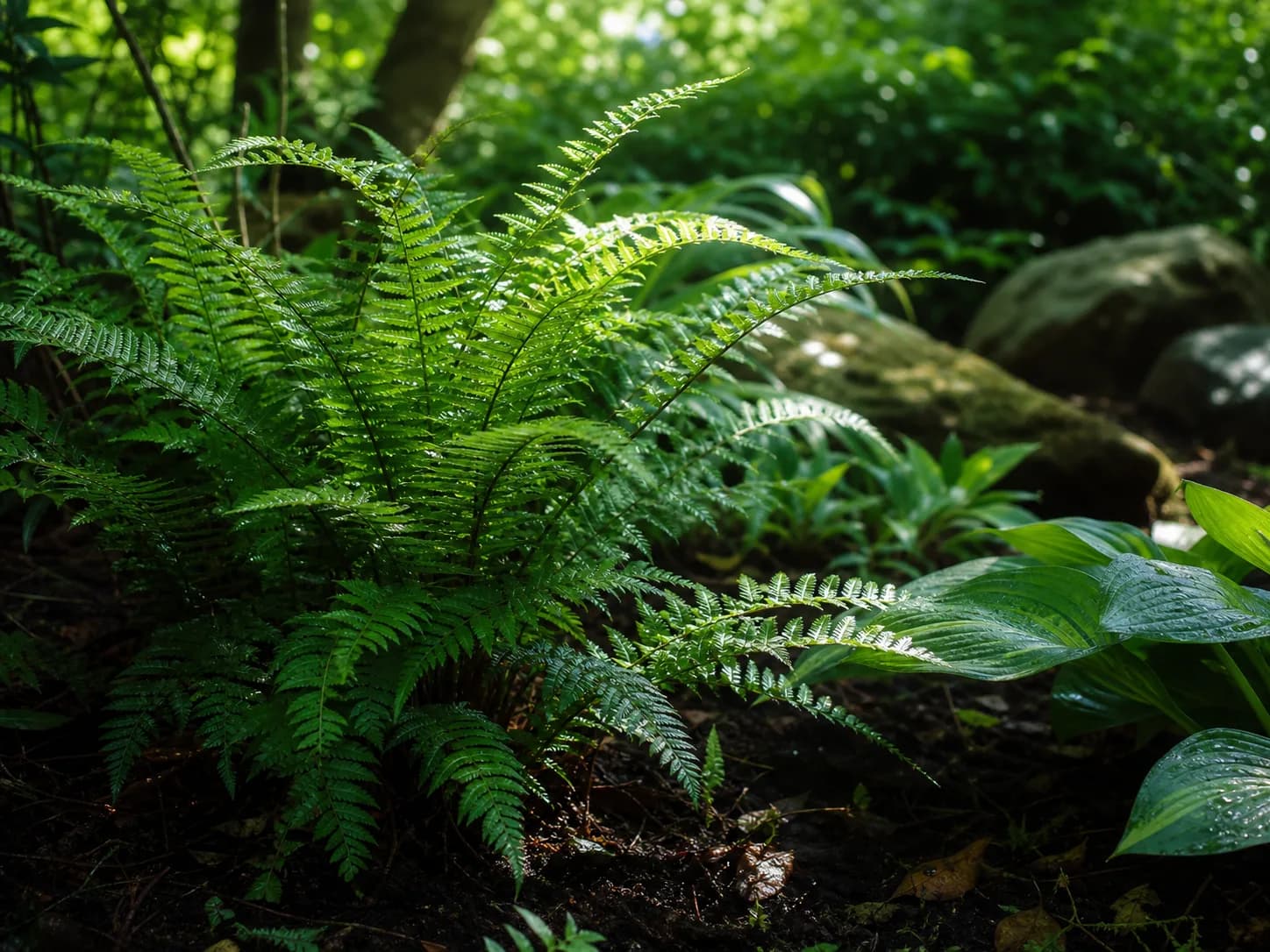
Ferns are not one single plant. They are a broad group of spore-producing perennials that fill shade gardens with fine texture, soft movement, and dependable green structure.
Most garden ferns earn their place in spots where flowers struggle; cool north beds, moist woodland edges, and shaded foundations are classic examples. They pair naturally with Hosta and Astilbe because the foliage shapes contrast so well.
The big split is habit. Some ferns stay in neat clumps; others wander slowly into colonies. That matters more in a layout than the exact Latin name if your goal is clean edging versus a naturalistic drift.
Best useShade borders, woodland beds, damp edges, under-tree texture
Main visual strengthFeathery fronds and layered green texture
Typical habitClumping or slowly spreading perennial
paletteMatch Fern Type to Moisture and Scale
Not all ferns behave the same. Some, like ostrich and cinnamon types, make a taller, bolder mass. Others stay low and work better at path edges or in front of shrubs.
If the bed stays evenly moist, taller ferns can create a lush screen behind Coral Bells or hosta clumps. In drier shade, choose tougher clumpers instead of moisture-hungry showpieces.
The best choice starts with the job of the space. A damp back corner can carry tall ostrich-type texture, while a dry shade path needs tougher, slower clumps that will not collapse between rains.
- fiber_manual_recordTall woodland types: Better for back-of-bed mass and moist shade.
- fiber_manual_recordCompact edging types: Better for paths, porch beds, and narrow shade strips.
- fiber_manual_recordIndoor-looking tropical types: Save these for pots or use Boston Fern indoors instead.
Comparison — See AlsoHosta vs Fern
chevron_rightwb_sunnyRead Shade by Heat and Leaf Color
Most ferns want shade, but shade still has levels. Partial to full shade is the safe default, with the best growth often coming from morning light and afternoon protection.
Deep dry shade under thirsty trees is harder than bright woodland shade. A fern that looks easy beside Japanese Maple may burn or stall under a root-heavy maple canopy if the soil dries too quickly.
Crispy tips and pale fronds usually mean too much sun, too much dryness, or both. If you are balancing a mixed shade design, the logic in shade plant selection helps place ferns where they can actually look full.
lightbulbShade quality matters
Bright woodland shade keeps ferns fuller than deep dry shade under heavy tree roots. If a planting stays thin, improve moisture first and thin the canopy second.
Email Updates
Join the KnowTheYard update list
Zone-specific advice, seasonal reminders, and new plant guides — no filler.
water_dropKeep Moisture Even Without Making a Bog
Garden ferns usually want steady moisture, not swampy soil and not long dusty gaps. The exact level depends on species, but most fail from drying out faster than the gardener expected.
Moist organic soil gives the best results. Where tree roots steal water, mulch matters; a 2-3 inch layer helps the root zone stay cooler and slows evaporation between soakings. If your layout also includes mixed watering needs, check the bed before you assume every corner is drying at the same pace.
If the bed keeps baking, switch to a tougher shade plant or improve irrigation. Do not assume every fern behaves like Boston Fern, which is much thirstier and more humidity-dependent than many outdoor woodland forms.
Feel the soil under the mulch, not the top of the mulch. Fern beds can look damp on the surface while roots are dry, especially under thirsty trees where Hosta and Astilbe may show stress at the same time.
infoMoisture beats pampering
Most outdoor ferns respond better to deep mulch and steady soil moisture than to constant light sprinkling. Keep the root zone cool instead of chasing the fronds with the hose every day.
Guide — See AlsoAir Purifying Plants for Cleaner Indoor AirLearn how to pick, place, and care for air purifying plants so they help your indoor air instead of just looking pretty.
chevron_right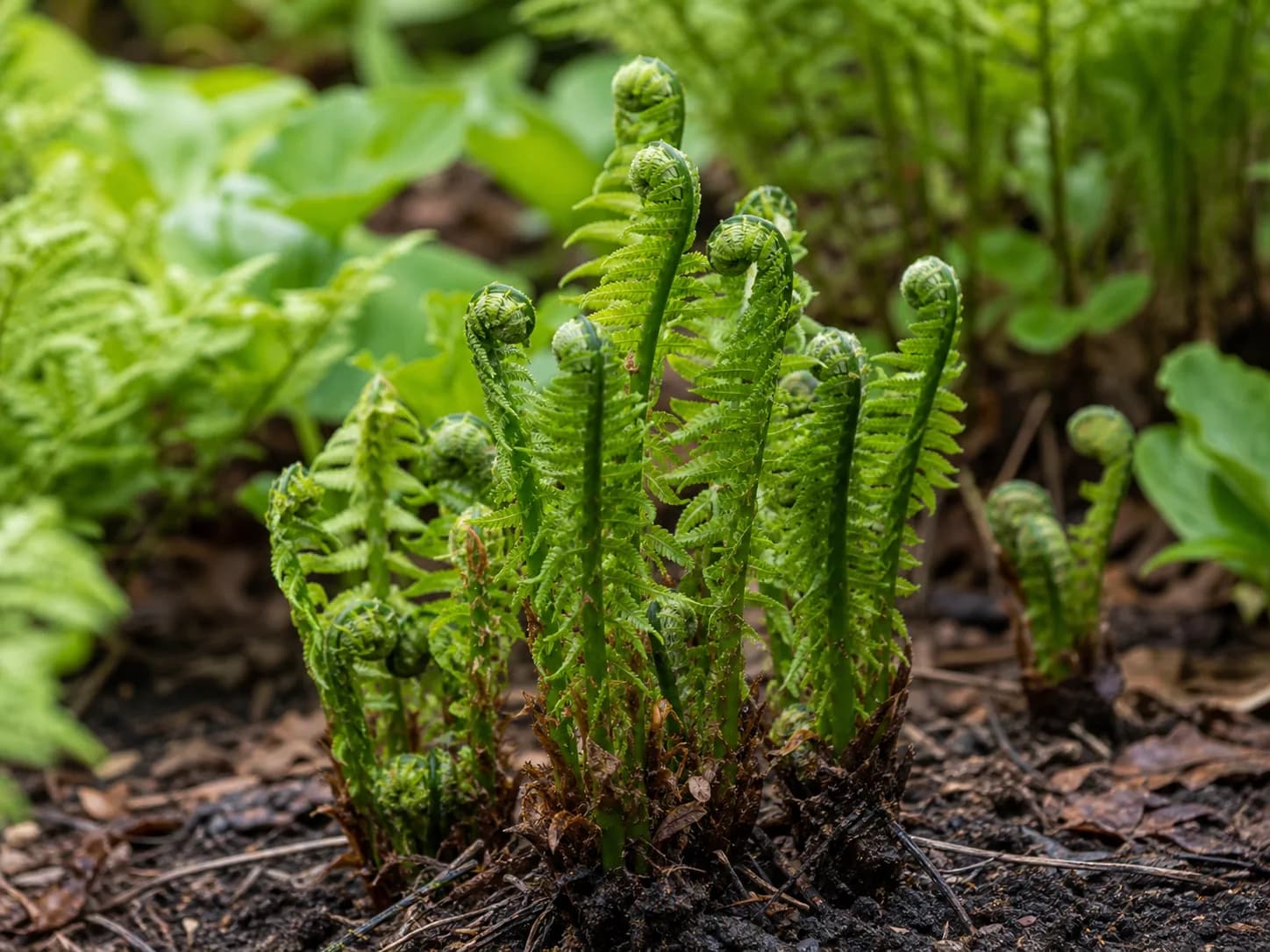
potted_plantBuild a Leaf-Mold Root Zone
Loose, organic soil is the easiest path to good fern growth. Leaf mold, compost, and old woodland humus all help far more than heavy feeding does.
Good placement also means airflow. Ferns like moisture, but stagnant crowded corners can invite mildew or slug pressure. Give them room to show their shape, especially near larger partners like Hydrangea or dense shrub masses.
lightbulbThink texture first
Ferns work best when you use them for foliage contrast, not when you ask them to behave like a flowering focal point.
account_treeDivide Crowns Instead of Chasing Spores
Most home gardeners propagate ferns by division, not spores. Spores are interesting, but they are slow and fussy compared with lifting a mature clump and replanting healthy crown pieces.
Divide clumping ferns in early spring as new fronds start to unfurl; spreading types can be cut into rooted rhizome sections where the colony is already moving outward. The timing feels similar to dividing other shade perennials because roots recover best before summer heat.
- check_circleWater the bed the day before lifting so roots stay cool and flexible.
- check_circleSlice a generous section with roots, crown, and several emerging fronds.
- check_circleReplant at the same depth and firm soil gently around the root mass.
- check_circleKeep divisions shaded and evenly moist for the first few weeks.
Small divisions look thin at first, so place them where mulch and nearby perennials can cover the gap while roots settle.
lightbulbSkip spore projects unless you enjoy slow experiments
Spores can produce new plants, but division gives a garden-ready fern much faster and keeps the parent habit predictable.
Guide — See AlsoBest Herbs to Grow Indoors for Real Harvests, Not Spindly PotsChoose indoor herbs that can actually produce in your light, temperature, and container setup, then match each one to th
chevron_rightpest_controlSolve Damp-Shade Problems Early
Ferns usually have fewer pest issues than tender annuals, but damp shade can still invite slugs, snails, and occasional scale on crowded fronds.
Most brown or crispy fronds come from dry soil, hot sun, or wind exposure before insects are involved. Check moisture first, then inspect the underside of fronds with the same patience you would use in natural garden pest checks.
- fiber_manual_recordSlugs and snails: Ragged edges and slime trails show up in damp mulch. Thin heavy mulch right around crowns and use iron phosphate bait where damage is active.
- fiber_manual_recordScale insects: Small bumps on stems or frond undersides can weaken indoor or sheltered ferns. Prune badly infested fronds and wipe light infestations with horticultural oil.
- fiber_manual_recordFungal spotting: Crowded, stagnant beds can develop speckling. Improve airflow, remove badly damaged fronds, and avoid wetting foliage late in the day.
If a whole planting declines at once, look at drainage and tree-root competition before treating for pests.
infoTroubleshoot the site first
A stressed fern bed is usually telling you the shade is too dry, too sunny, or too crowded.
eventClean Fronds Around the Fiddlehead Clock
Spring is mostly cleanup. Cut old tattered fronds before new growth unfurls so the bed looks clean and the fresh texture can show clearly.
Summer care is about water, mulch, and watching for scorch. In fall, many hardy ferns simply fade back while evergreen types keep a smaller winter presence.
When fern foliage browns early, start with moisture and sun exposure before assuming disease. In mixed beds, the same watering mistakes that stress Hosta leaves often show up faster on fern fronds.
Do not rake through the bed after fiddleheads begin to rise. New fronds bruise easily, and one rough cleanup can damage the season's clean texture before it has a chance to unfurl.
- check_circleCut away winter-damaged fronds in early spring.
- check_circleRefresh mulch before hot weather.
- check_circleWater deeply during dry spells instead of shallow daily sprinkles.
- check_circleMove indoor or patio fern types to Boston Fern care if humidity becomes the main issue.
Guide — See AlsoBest Indoor Plants for Every Room and Light LevelA practical guide to choosing the best indoor plants for your home, covering beginner-friendly picks, low light champion
chevron_righteco
Keep Exploring
Related Plants
 Perennials
Coral Bells
Most gardeners plant coral bells for flowers, then wonder why the show feels short. Heuchera is really a foliage plant first. Give it the right light an
 Perennials
Clematis
Flowering clematis vines give vertical color from late spring into fall, climbing trellises, fences, and shrubs in Zones 3-9. With the right light, soil, an
 Perennials
Russian Sage
By mid to late summer, Russian Sage (Salvia yangii) throws up airy clouds of lavender-blue flowers just when many perennials fade; it thrives in hot, dry si
quiz
Frequently Asked Questions
Do ferns need full shade?expand_more
Most do best in partial to full shade, but bright morning light often improves growth as long as the root zone stays cool and moist.
Why do fern fronds turn brown?expand_more
Brown fronds usually point to too much sun, dry soil, or hot reflected heat. Start by checking moisture and afternoon exposure.
Can ferns grow under trees?expand_more
Yes, but tree-root competition matters. Ferns under maples or oaks usually need better mulch and more consistent water than those in open woodland beds.
menu_book