Treesschedule10 min read
Best Shade Trees for a Cooler Yard
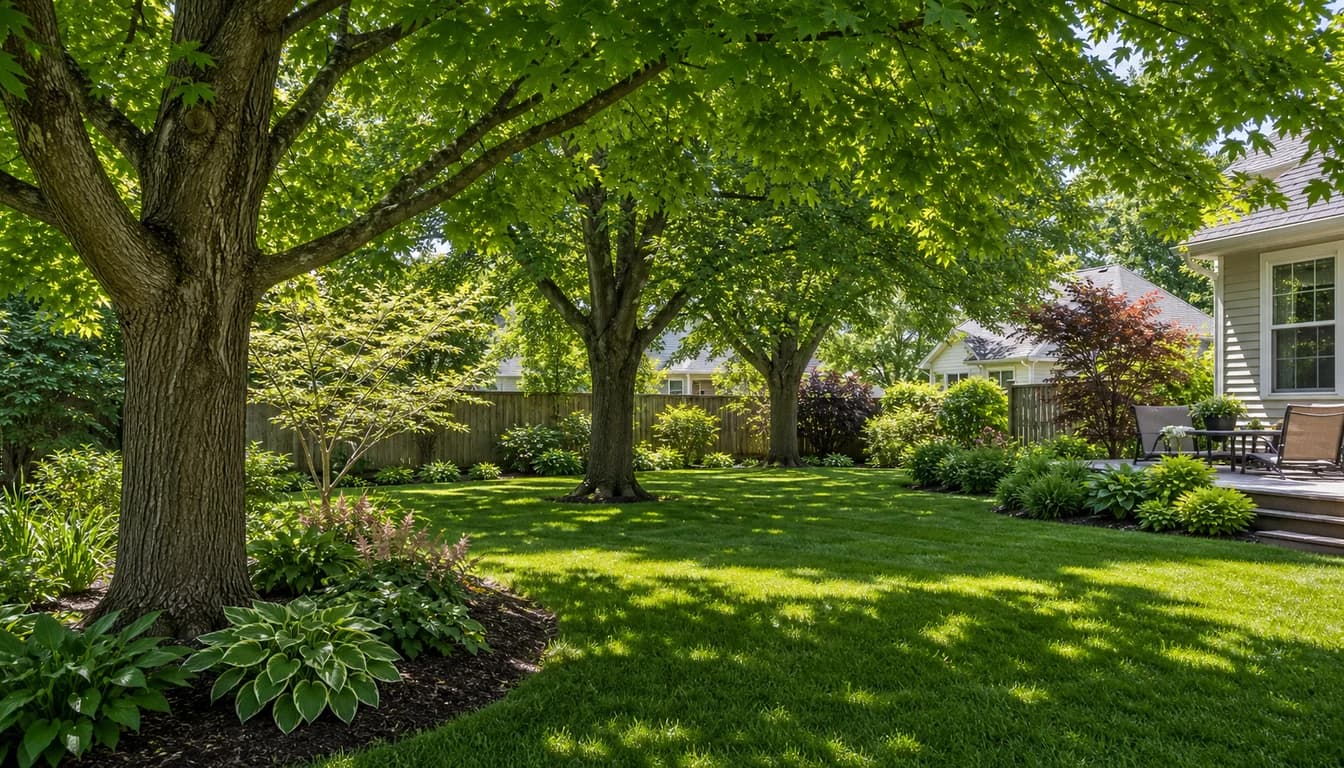
Choose shade trees by the hot surface you need cooled, the summer shadow path, root room, canopy scale, branch structure, and what will live under the new shade.
Put a chair, bucket, or scrap board on the hot spot at 4 p.m. That mark is the article's starting point. A shade tree is useful only if the mature summer shadow reaches that mark when the yard feels worst.
This is why a beautiful young tree in the center of a lawn can fail the job. It may frame the yard, grow well, and still leave the west wall, driveway edge, or patio table in full heat.
Use this page as a shadow-planning guide, not a general tree browsing list. Oak is a long-canopy answer when the yard has room.
Red Maple can fill faster in moist sites with enough root space. Serviceberry belongs to a smaller comfort job, not a driveway-cooling job.
The planning rule is simple enough to write on the nursery tag: buy the future shadow, then check the roots and branch structure that must hold it.
wb_sunnyTrace the Shadow Target First
Do the first pass without plant names. Stand in the yard during the hottest use window and mark three things: the surface that overheats, the direction of the sun, and the place where a mature trunk could stand without blocking the way.
A quick sketch is enough:
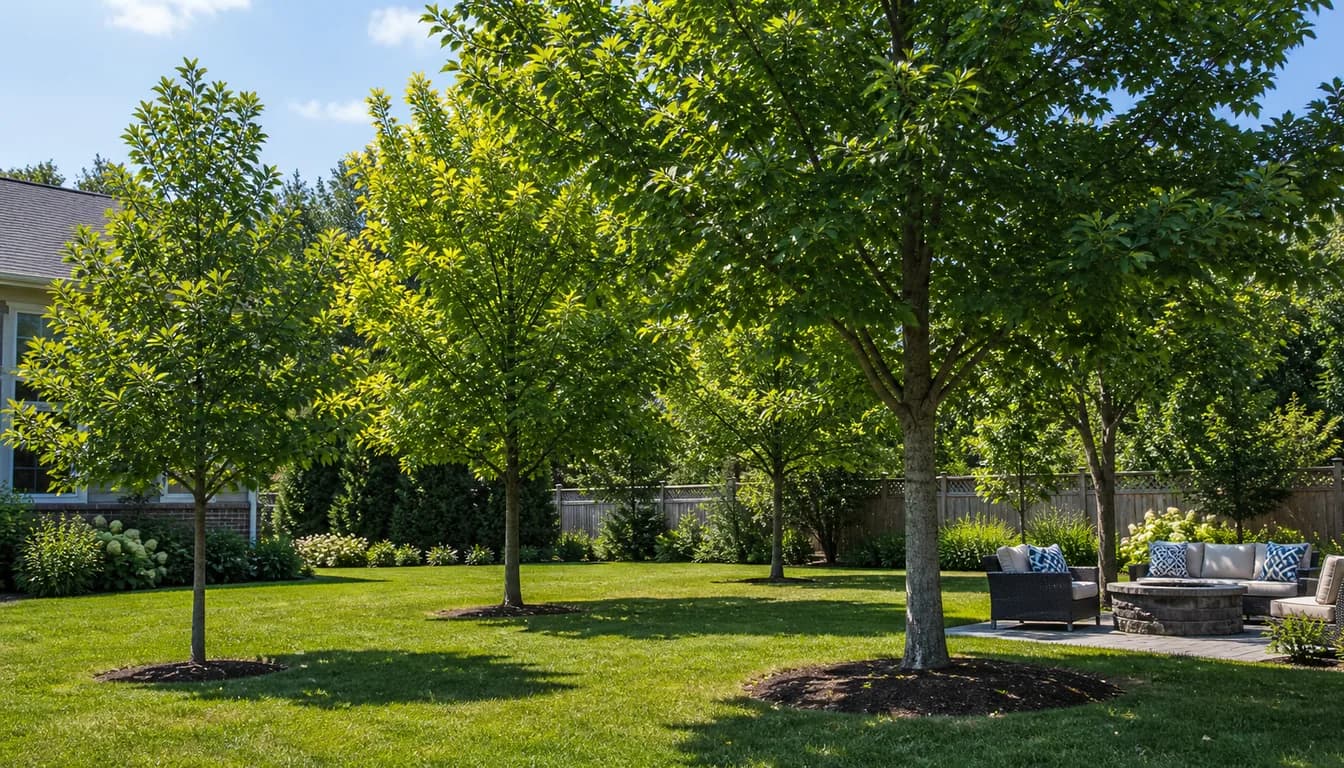
The target surface decides where the tree belongs; symmetry from the porch is secondary.
- fiber_manual_recordHot target: patio seat, west wall, path bend, play area, driveway edge, or lawn chair zone.
- fiber_manual_recordTime: late morning, midday, or late afternoon; most cooling problems are late-day problems.
- fiber_manual_recordSun side: where the shadow must come from, not where the tree would look centered.
- fiber_manual_recordNo-go space: roof edge, wires, sewer line, sidewalk, mower turn, or neighbor access.
Add the site conditions beside the sketch: usable light hours, soil moisture, and root competition from existing trees.
If the sketch shows the tree must sit west or southwest of the target, accept that early. Moving the tree back to the center of the lawn for visual balance often moves the shadow away from the place you meant to cool.
thermostatMatch Canopy Size to the Surface
The surface tells you how much canopy the job really needs.
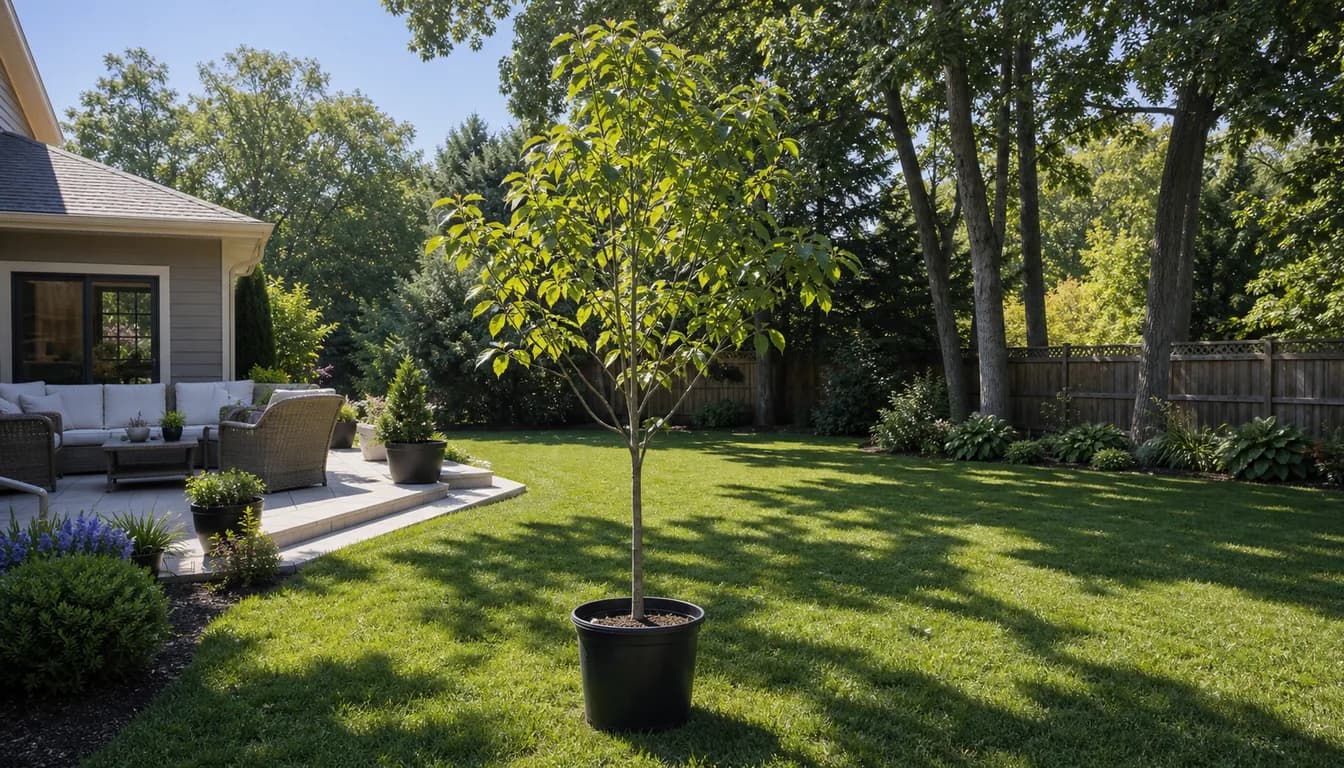
A small comfort tree and a broad cooling tree solve different heat problems.
| Surface that needs shade | Useful tree scale | Bad match | ||
|---|---|---|---|---|
| Bench or narrow path | small canopy, dappled shade | large tree that crowds the walkway | ||
| Dining patio | medium canopy with clear trunk access | tiny ornamental tree that misses half the table | ||
| West wall | broad canopy placed for late-day shadow | tree planted too close to the foundation | ||
| Driveway edge | broad, durable canopy with root room | shallow-rooted choice squeezed into pavement | ||
| Children's play corner | clean branching, mild litter, good sightline | thorny, brittle, or messy tree over play space |
Dogwood can improve comfort where people sit close to the tree. Japanese Maple can do the same for a small protected corner.
Neither should be asked to cool a broad paved surface.
A large canopy is different. Oak can change the temperature of a yard, but the payment is decades of root spread, leaves, branch weight, and future clearance work. Decide whether the surface deserves that scale before choosing the species.
checklistSpend the Root Room Before You Spend the Money
A shade tree buys comfort with leaf area. Leaf area buys itself with roots. If the planting pocket is boxed in by pavement, utilities, compacted fill, or a dry strip under older trees, the canopy may never reach the size drawn on the tag.
Check the ground before the nursery cart. Push a screwdriver into the soil after watering, watch where runoff goes, and look for the hard line where builders compacted the path or driveway edge.
River Birch explains the site-fit problem well: it can be graceful in moist ground, yet it is the wrong kind of shortcut for dry pavement heat. Weeping Willow makes the warning louder because water demand and root behavior can outrun the cooling benefit in tight yards.
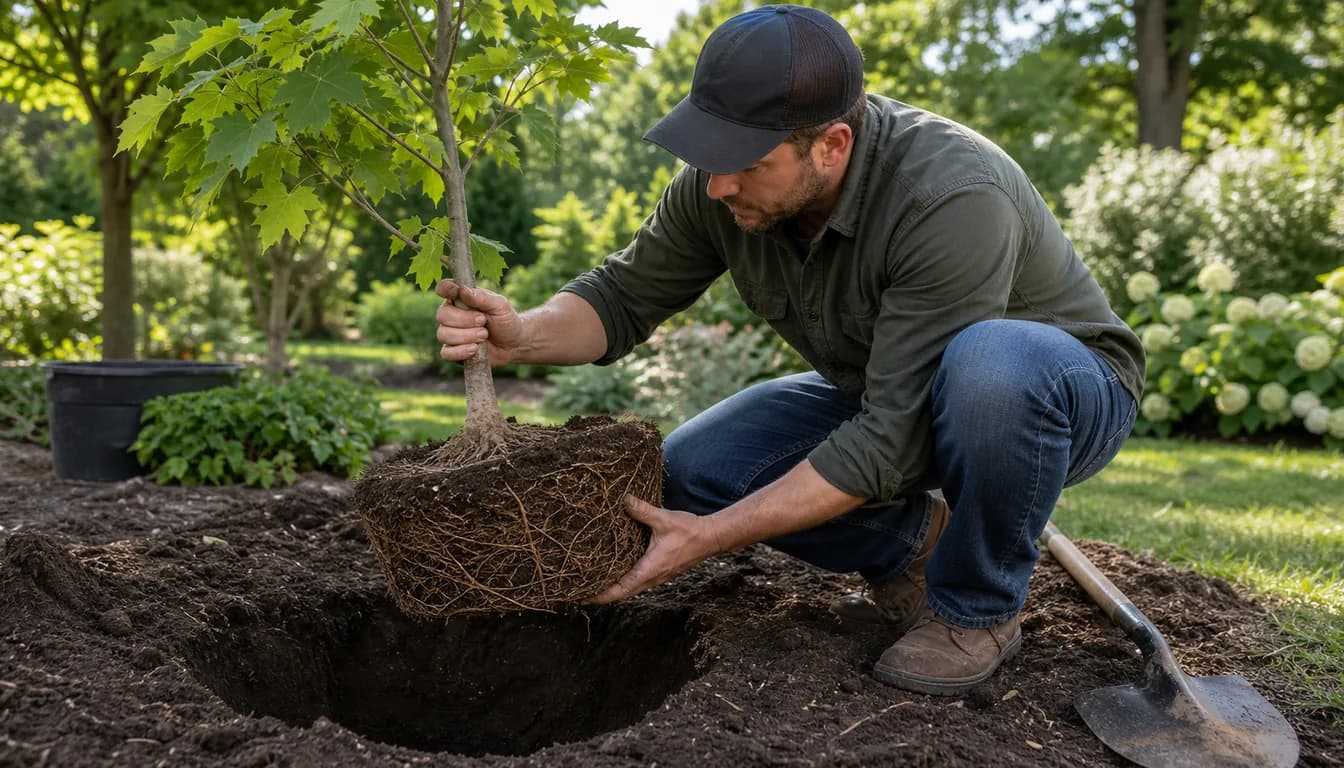
Root room is part of the cooling plan because the canopy cannot grow without it.
Email Updates
Join the KnowTheYard update list
Zone-specific advice, seasonal reminders, and new plant guides — no filler.
ecoTrade Speed Against Structure on Purpose
Fast relief is a real need when a patio bakes every afternoon. The mistake is treating speed as the whole decision.
Before you buy a fast tree, inspect the branch angles, trunk flare, leader, root ball, and nursery stakes. A tree with weak forks or circling roots is not a quicker shade plan; it is a future removal job sitting in a larger hole.
Use fast-growing tree guidance after the shadow and structure checks, not before them. A slower tree that lands the shadow correctly may beat a faster tree that needs heavy corrective pruning every year.
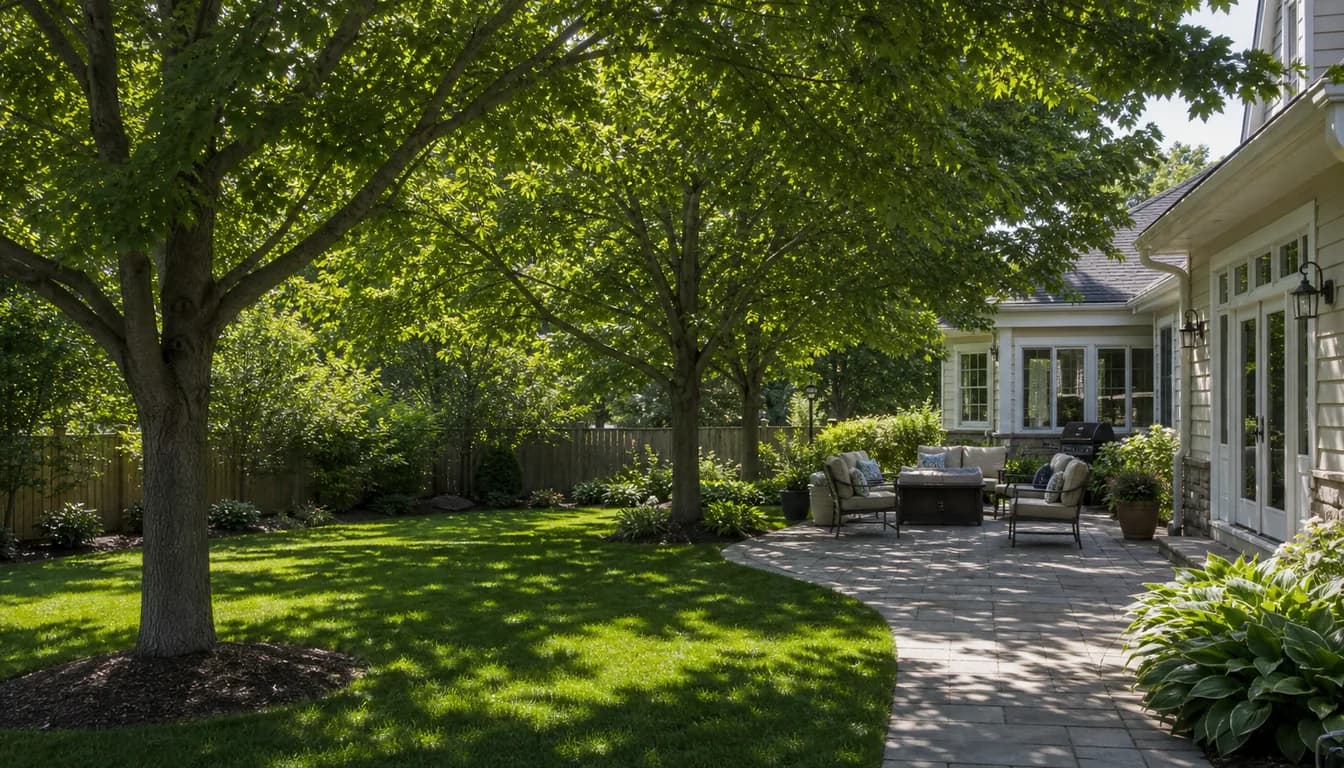
Fast shade helps only when the tree can still build strong scaffolds and a stable root system.
content_cutTrain the Canopy Before You Lift It
New shade owners often rush to clear the trunk. Low limbs can be annoying near a mower, but they also feed the young trunk and help the tree thicken while roots establish.
The better sequence is slower:
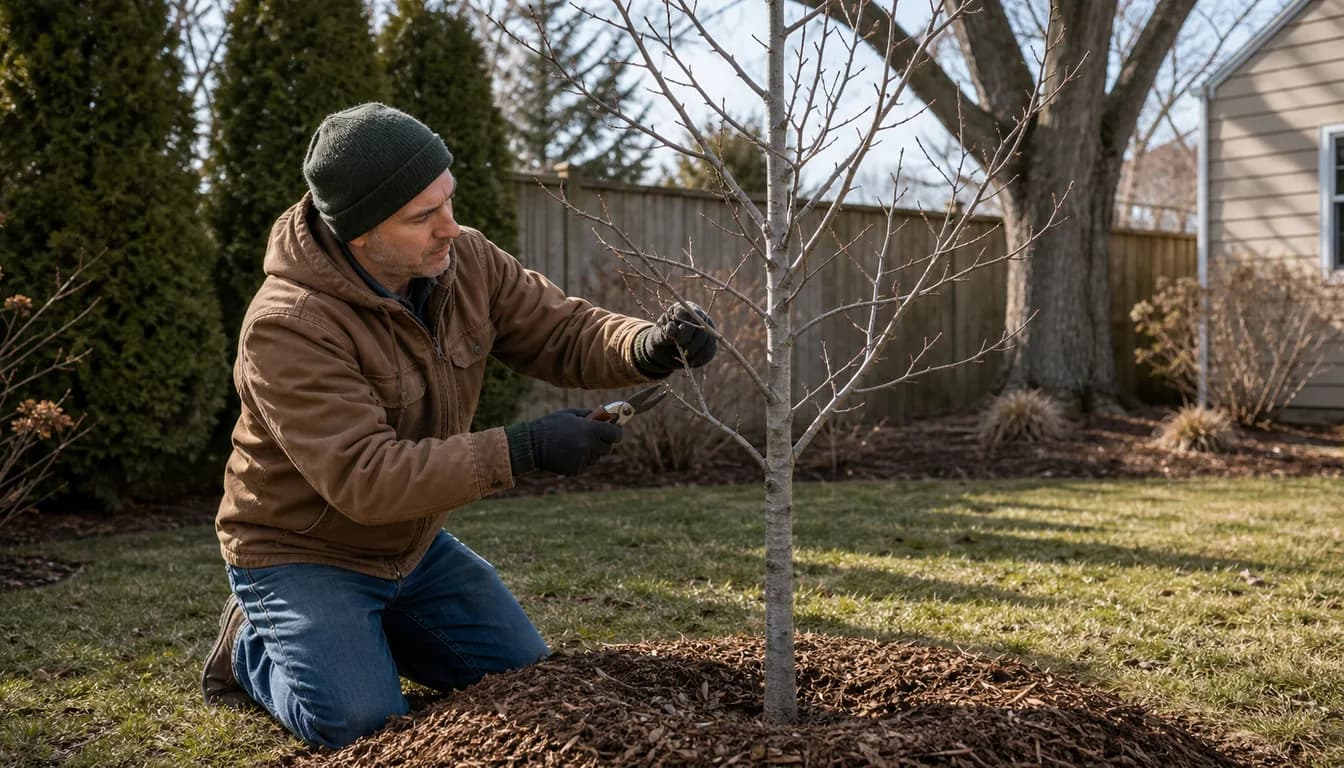
Early pruning should build load-bearing structure before the lower branches are raised for clearance.
- 1Keep the root flare visible and mulch wide.
- 2Remove broken, rubbing, or narrow-fork branches first.
- 3Raise clearance only as people, chairs, and mowers truly need it.
- 4Recheck the shadow after each pruning season.
Tree overwatering signs belong in this stage because a stressed young shade tree often shows wilt before the owner knows whether the problem is dry soil, wet roots, or heat reflection from pavement.
grassPlan the Yard Under the New Shade
Success creates a second design problem. The patio cools down, then the grass under the canopy thins, the sunny border fades, and leaves begin collecting where rain used to dry quickly.
Name the future under-tree surface while the tree is still small. Keep lawn only where light and foot traffic still support it. Use mulch where roots, shade, and cleanup will win. Shift sun-loving flowers before the canopy makes the decision for you.
Magnolia can be a good shade presence in the right yard, but heavy leaves, low branching, and broad spread should be part of the plan. Shade is not just temperature; it changes the room under the tree.
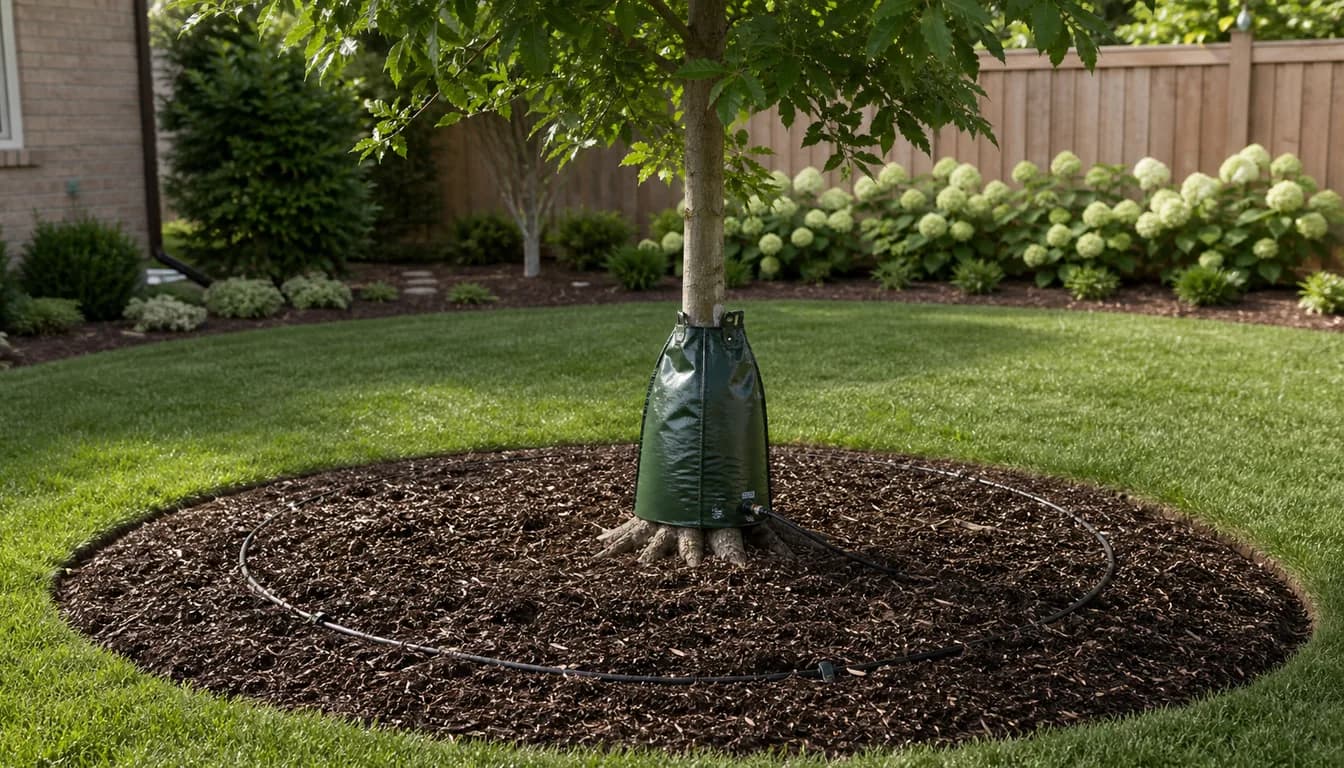
A successful shade tree changes lawn, beds, watering, and cleanup under the canopy.
warningReplace the Plan Early if the Shadow Is Wrong
One summer of observation is enough to catch a bad layout. If the tree's shadow is drifting away from the hot target, do not wait ten years for a larger version of the same mistake.
Move a young tree if it is still practical, or change the target plan. Sometimes a pergola, umbrella, vine screen, or smaller companion tree handles the next few summers while the main canopy grows in the right place.
Keep this final test blunt: if the mature tree will cool the wrong surface, it is not the best shade tree for that yard.
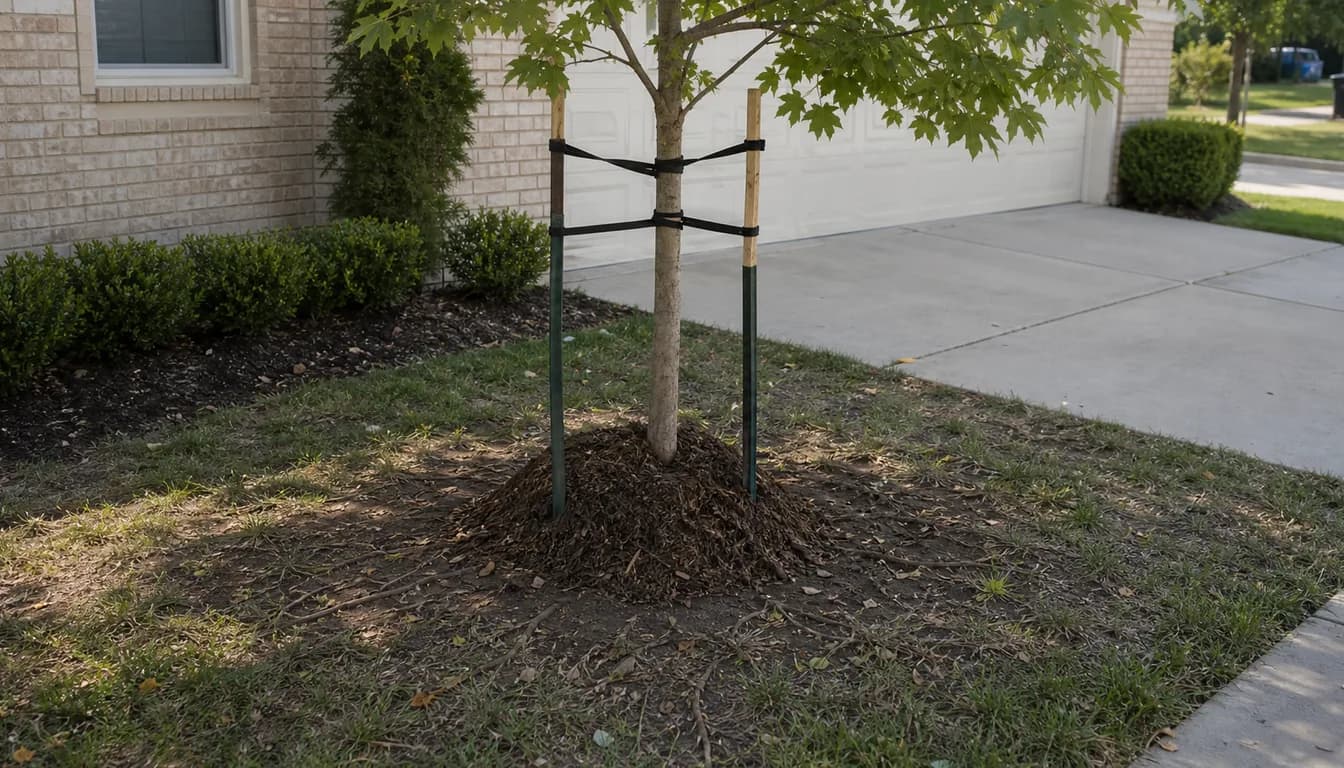
A wrong shade placement is cheapest to fix while the tree is still young.
tips_and_updates
Pro Tips
- check_circleMark the hot target during the time of day when the yard feels worst.
- check_circleChoose canopy size by the surface that needs cooling.
- check_circleCheck root room before comparing growth speed.
- check_circleInspect branch structure before buying a fast-growing shade tree.
- check_circleTrain structure before raising the canopy for clearance.
- check_circlePlan the lawn, mulch, and planting beds that will live under the future shade.
- check_circleChange the plan early if the shadow will land in the wrong place.
quiz
Frequently Asked Questions
Where should a shade tree go for afternoon heat?expand_more
Place it where the mature canopy will cast shade on the hot surface during the late-day heat window. In many yards, that means west or southwest of the patio, wall, driveway, or seating area.
Is a fast-growing tree the best way to get shade?expand_more
Only when the tree also has enough root room and sound branch structure. Fast growth does not fix a shadow that lands in the wrong place or a weak fork that cannot carry future canopy weight.
Can a small ornamental tree cool a yard?expand_more
A small tree can make a bench, path, or small sitting corner more comfortable. A broad patio, west wall, or driveway edge usually needs a larger canopy or a built shade solution while the tree matures.
What should I check before buying a shade tree?expand_more
Check the hot target, sun direction, root space, overhead clearance, trunk flare, branch angles, and the cleanup or lawn changes the mature canopy will create.
What if the tree will not shade the target for years?expand_more
Use a temporary shade sail, umbrella, pergola, or vine screen if the tree is correctly placed for maturity. Do not move the tree closer just for short-term comfort if that creates root or clearance trouble later.