Treesschedule9 min read
Best Ornamental Trees for Landscape Focal Points
Choose ornamental trees by the view they improve, mature silhouette, seasonal feature, root flare, clearance, pruning tolerance, and whether the tree still looks good after bloom.
An ornamental tree is not just a tree with flowers. It is a long-term focal point that changes a view from the porch, street, patio, or main window. The tree has to fit at mature size, hold a useful shape, and still earn space after its showiest week ends.
Use this page with the wider trees library when the job is beauty and structure rather than shade, privacy, or fruit.
Japanese Maple works where a smaller sculptural canopy is the point. Dogwood belongs where layered branching can be seen close up.
Magnolia can anchor a larger view only when the yard has room for its mature width. The practical answer comes first: choose the view and mature silhouette before choosing flower color. A short bloom season cannot rescue a tree that blocks a walkway, crowds a roof, or needs hard pruning every year.
searchStart With the View You Want to Improve
Stand where people will actually see the tree: the porch, front walk, street approach, living-room window, patio door, or kitchen sink. The best ornamental tree improves one of those views every day, not only when it is in flower.
That view decides the tree's job. A small entry tree can frame a path. A courtyard tree can add leaf texture and winter branch shape. A lawn-edge tree can anchor an open space. Serviceberry works well where flowers, fruit for birds, and fall color can all be seen from close range.
Do not start at the nursery tag. Start with the viewing angle and ask what the tree should change: soften a blank wall, pull attention to an entry, make a window view feel layered, or mark a turn in a path.
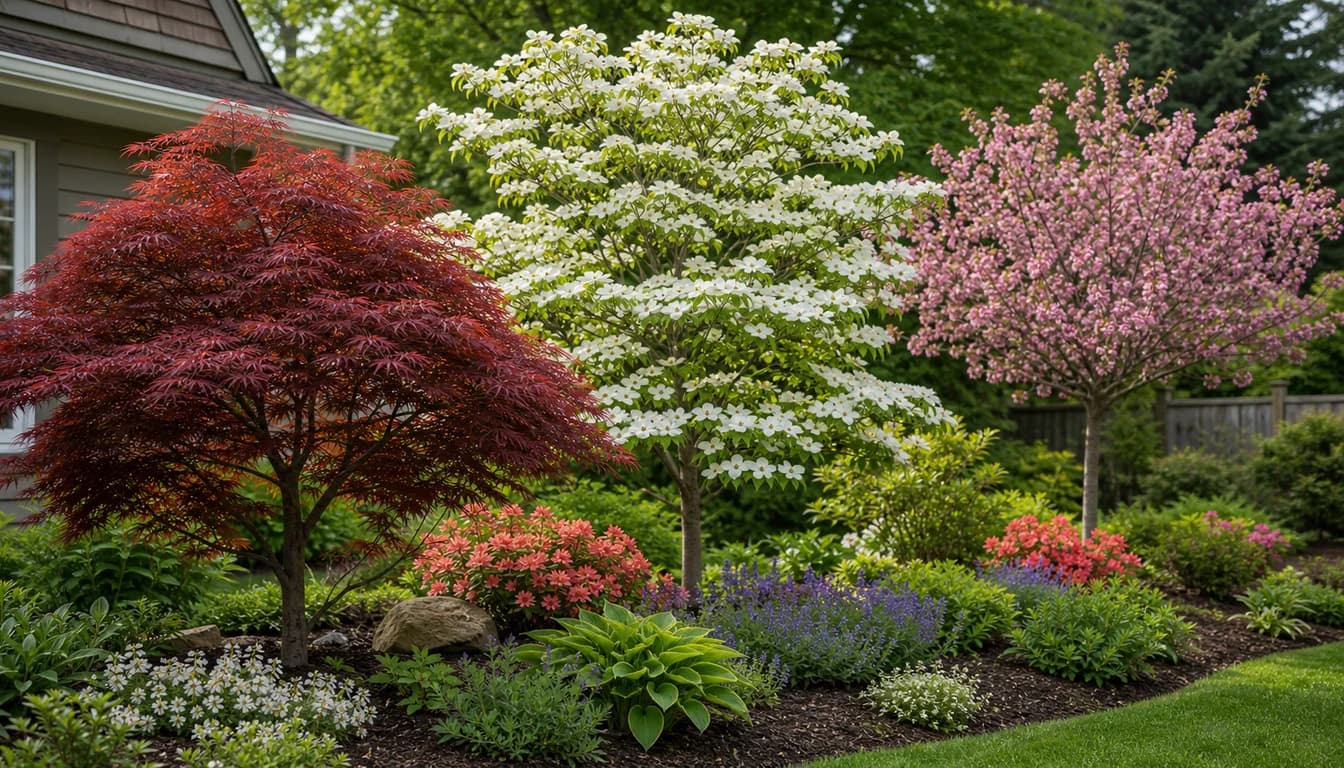
A good ornamental tree starts with the view it will frame, soften, or anchor.
account_treeChoose the Mature Silhouette, Then the Feature
Flower color is temporary. Mature silhouette is permanent enough to live with for decades. Choose upright, layered, weeping, rounded, vase-shaped, or multi-stem form before you choose bloom color.
Japanese Maple is often chosen for small sculptural form and fine leaf texture. Dogwood is chosen for layered branching and spring bloom.
Redbud is chosen for early flowers and a broad, informal canopy that needs room.
Use this order when comparing trees:
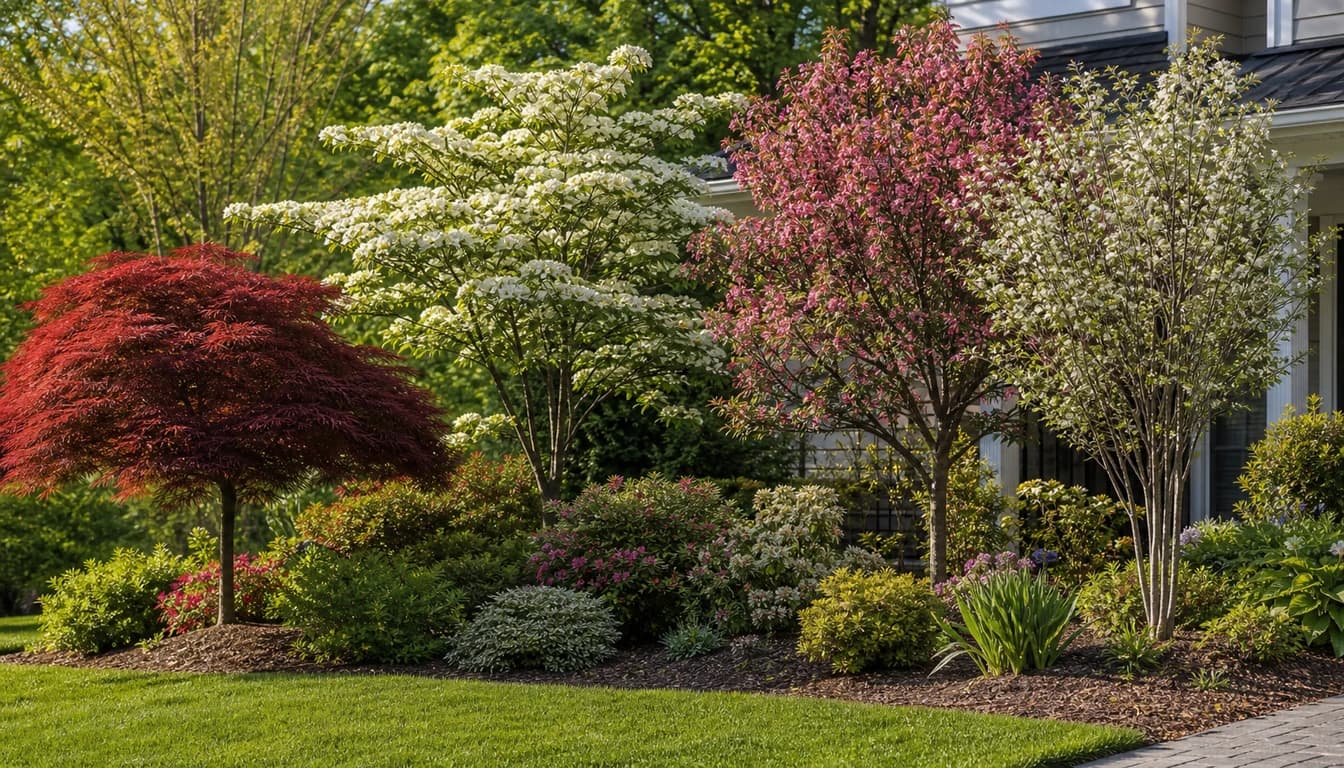
Mature outline decides whether the tree fits long after the nursery pot is gone.
- 1Mature height and spread.
- 2Canopy shape from the main view.
- 3Branch habit and trunk character.
- 4Flower, fruit, bark, or fall color.
- 5Cleanup and pruning access.
If the silhouette is wrong, the feature will not save it. A beautiful bloom on the wrong frame becomes a maintenance problem.
heightMatch Tree Scale to the Yard Role
The word ornamental does not mean small. Some ornamental trees stay courtyard-sized, while others become large anchors. Match the mature scale to the job before falling in love with the flower photo.
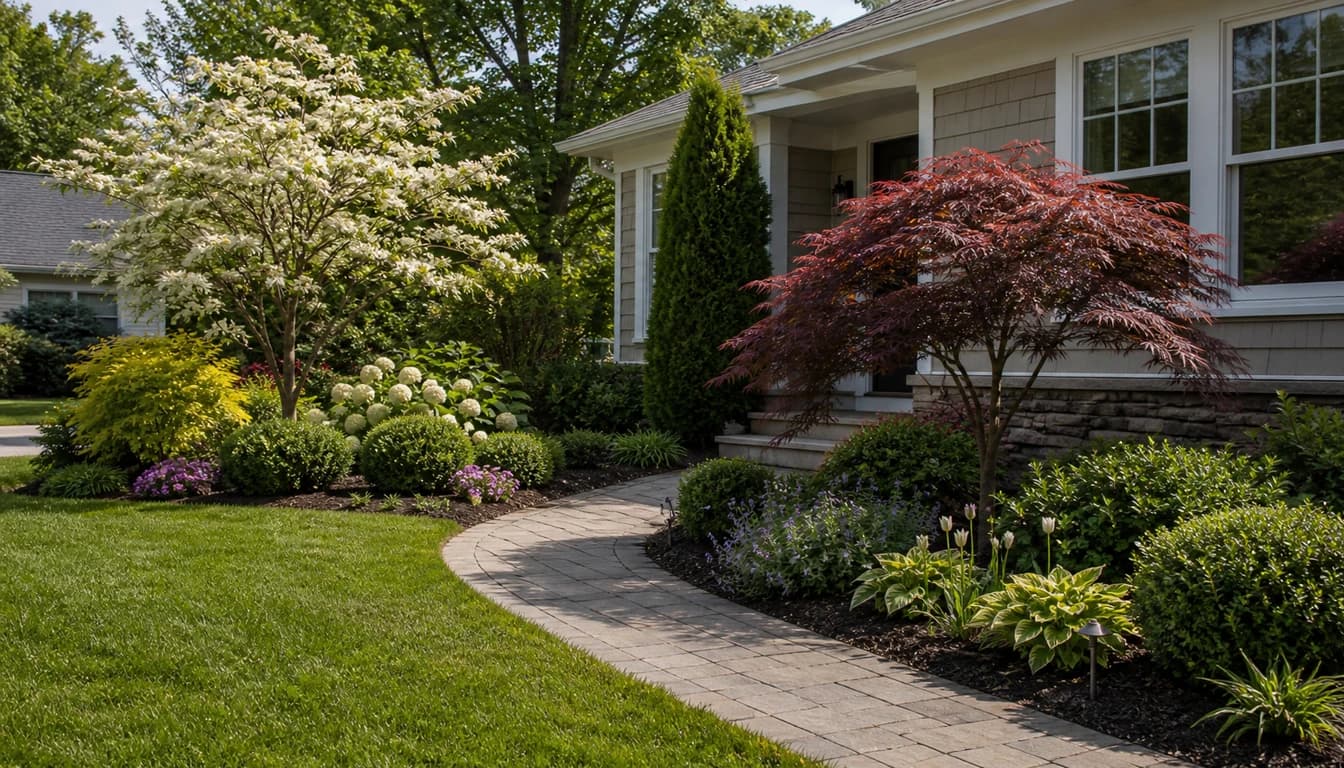
One focal tree needs enough open space to read as intentional.
| Yard role | Better scale | Examples to compare | ||
|---|---|---|---|---|
| Small entry or courtyard | small, sculptural, slow | Japanese Maple, dwarf forms where climate fits | ||
| Window or patio view | layered or multi-season | Dogwood, Serviceberry, Redbud | ||
| Larger lawn anchor | broader canopy, stronger presence | Magnolia, River Birch where moisture fits | ||
| Wildlife-focused focal point | flower, berry, branch structure | Serviceberry, Dogwood, crabapple where disease pressure is managed |
River Birch can be ornamental for bark and movement, but it is not a tiny accent tree. Red Maple can be beautiful in fall, but mature spread and root behavior make it a different decision from a small focal tree.
Email Updates
Join the KnowTheYard update list
Zone-specific advice, seasonal reminders, and new plant guides — no filler.
verifiedCheck Clearance Before You Fall for Flowers
A tree can be beautiful and still be wrong for the spot. Check rooflines, windows, driveways, sidewalks, overhead wires, underground utilities, street sightlines, and mower paths before choosing the species.
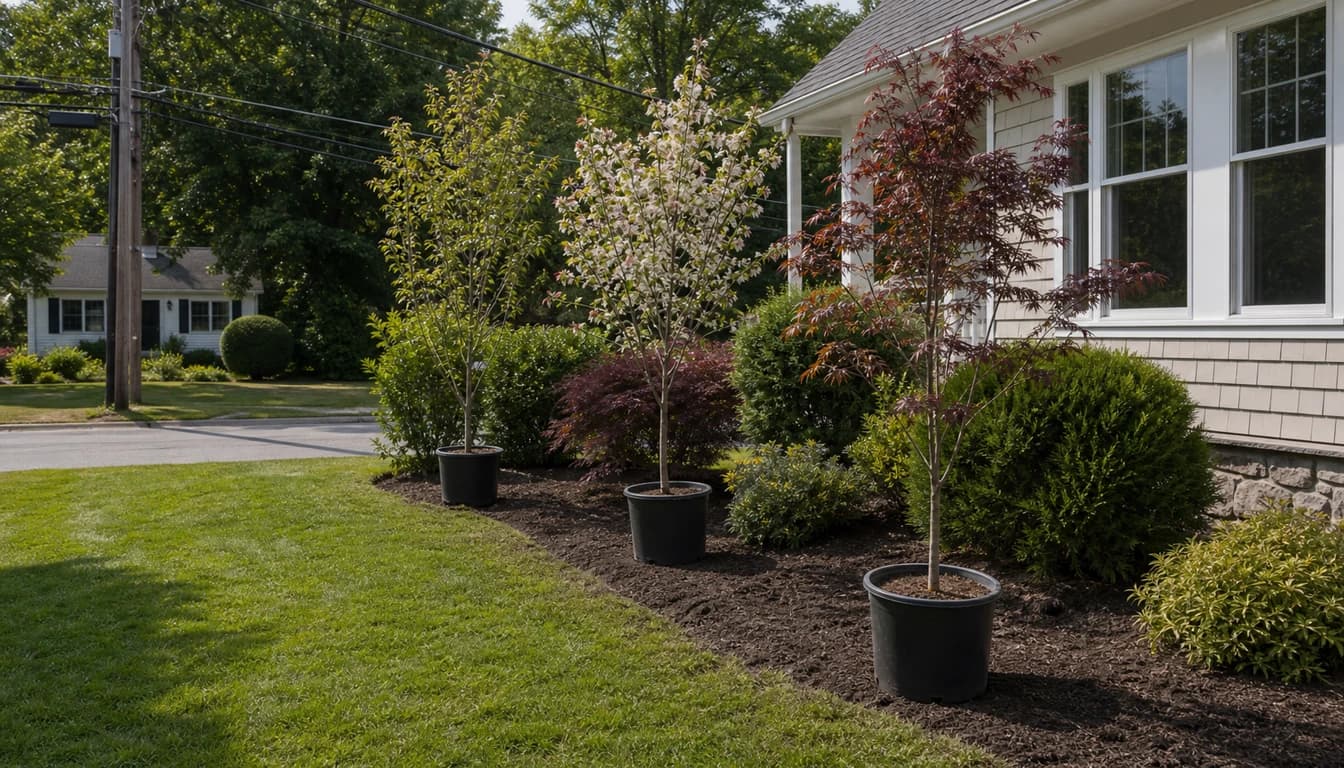
Tree spacing guidance applies even when privacy is not the goal because mature spread still has to fit. Mark the future canopy with a hose, flags, or tape on the ground. The empty bed may look large until the mature spread is visible.
Inspect the tree before buying. Look for a visible root flare, balanced branching, no major bark wounds, and roots that are not circling hard in the pot. A tree with a buried trunk or poor branch structure starts behind, even if it is blooming at the nursery.
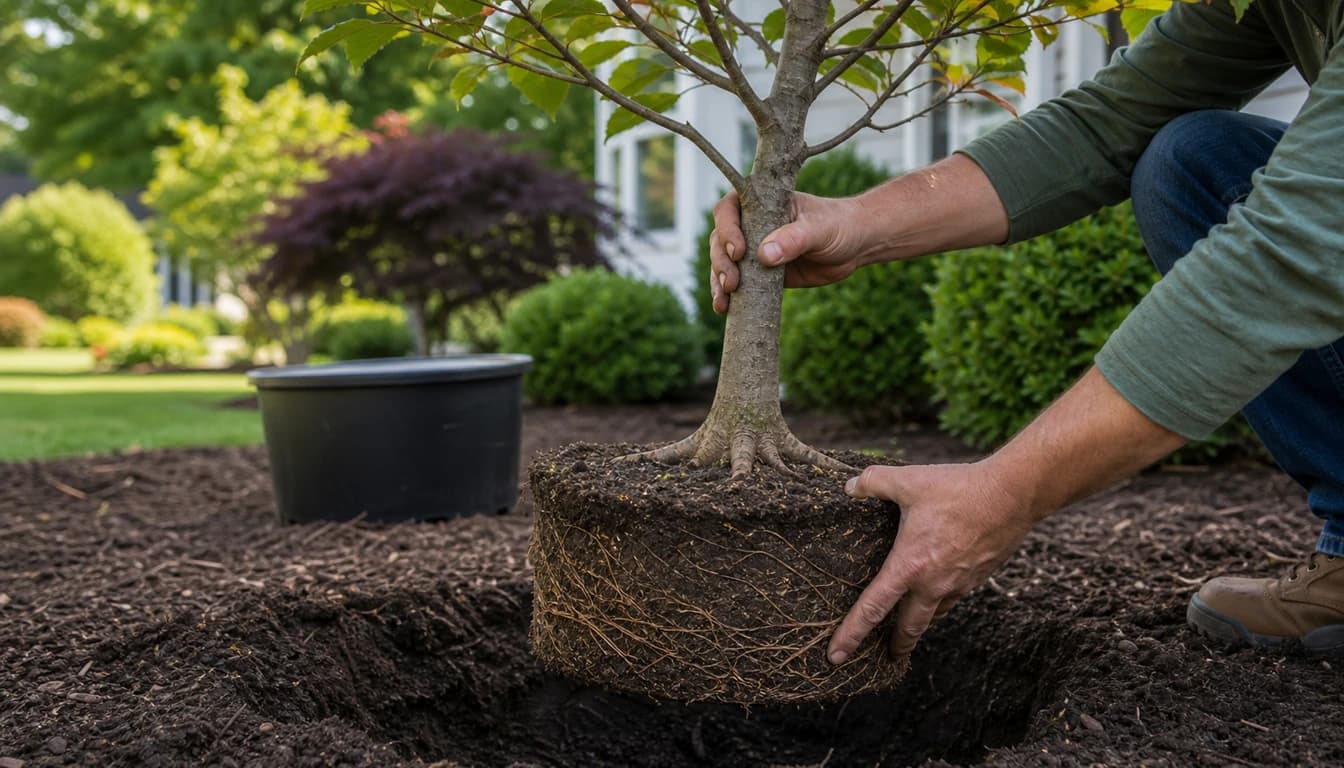
Root flare, branch angles, and clearance matter more than a perfect bloom tag.
potted_plantPlant for Root Flare and Future Form
The root flare should stay visible after planting and after mulching. Planting too deep can stress the tree for years, and mulch piled against the trunk can hide the problem while holding moisture where bark should stay dry.
Water newly planted ornamental trees deeply, then let the root zone breathe. Tree overwatering signs help separate drought stress from a planting hole that stays wet. Wide shallow mulch is useful; a mulch mound against the trunk is not.
Keep turf away from the trunk. Grass competes for water, and mower damage can ruin the clean trunk line that made the tree a focal point. Do not force fast growth with heavy fertilizer. Strong structure matters more than quick height.
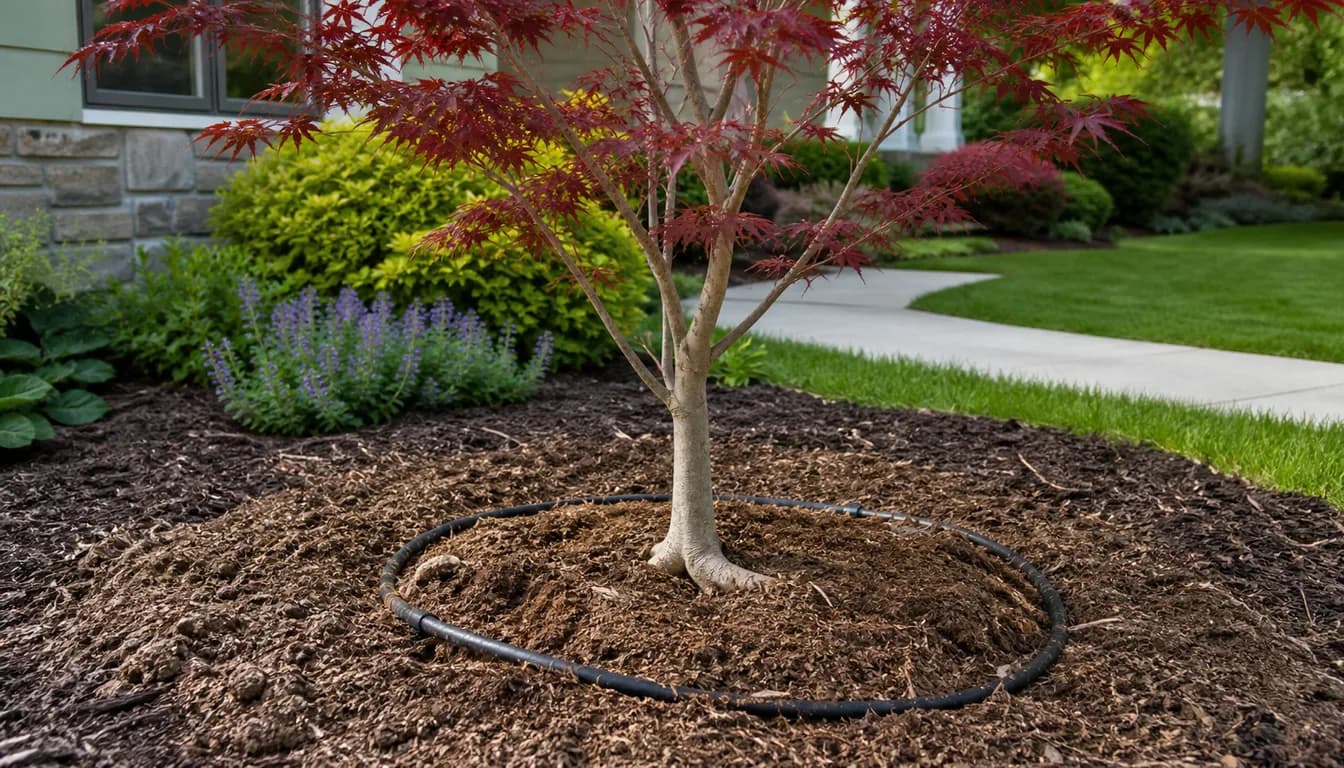
A visible root flare and wide mulch ring protect the form you bought the tree for.
content_cutPrune to Reveal the Tree, Not Control It
Pruning should clarify the natural habit, not erase it. Remove dead, broken, crossing, or poorly attached branches when appropriate. Avoid cutting a layered or sculptural tree into a generic ball just because it outgrew the original mistake.
Timing depends on the tree and the reason for pruning. Spring-flowering trees are often pruned after bloom if flower buds matter. Structural corrections are easier when the tree is young. Fast-growing tree guidance is a useful contrast because speed can tempt people into trees that need more corrective pruning later.
Use the main view as the pruning test. If a cut improves branch visibility, clearance, or health without destroying the tree's character, it may be worth making. If the cut is only needed because the tree was planted too close, the real issue is placement.
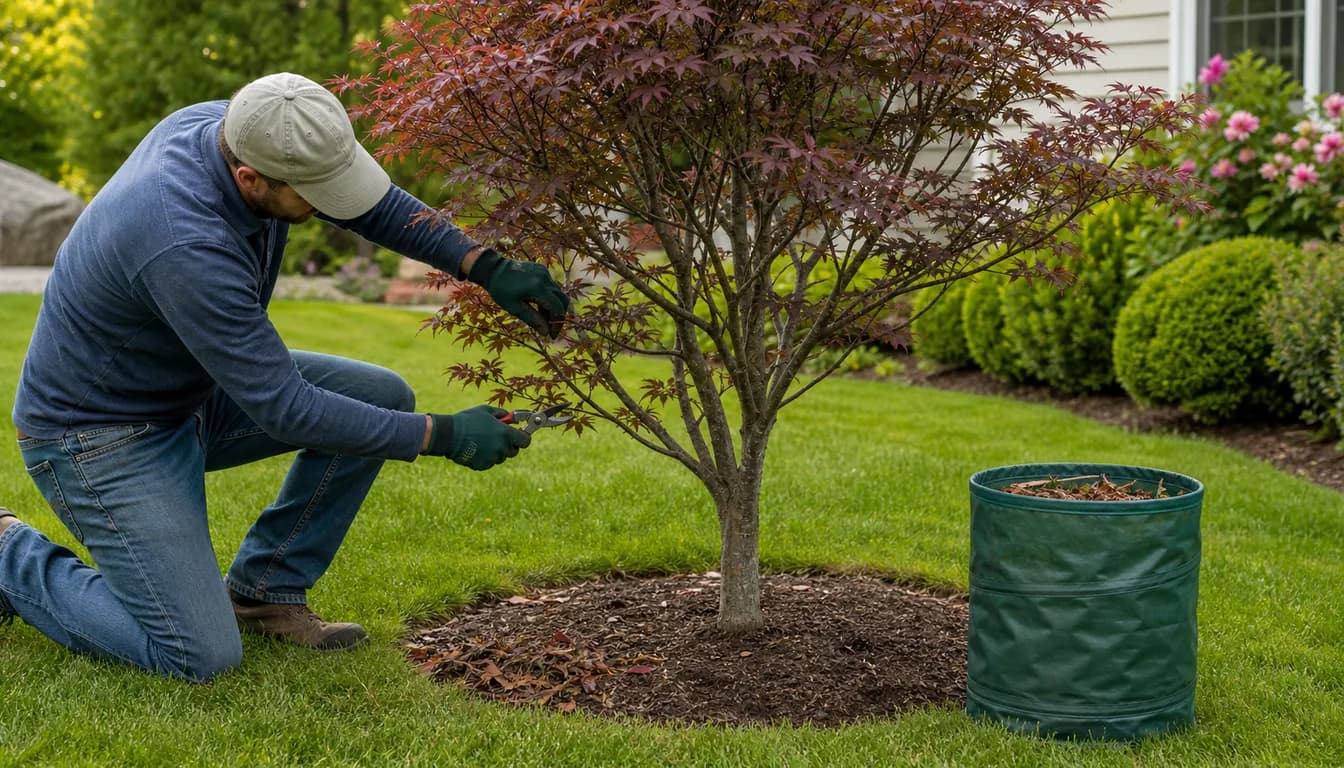
Good pruning protects natural habit instead of turning every ornamental tree into the same round shape.
buildUnderplant, Replace, or Leave It Alone
After the first season, do not rush to add a second ornamental tree. First ask whether the original focal point needs a cleaner mulch ring, lower underplanting, better irrigation, or less competition from shrubs.
Underplant when the tree fits but the bed looks unfinished. Leave it alone when the silhouette is strong and the view needs open space. Replace it early when the site mismatch is obvious: summer scorch every year, constant walkway conflict, buried root flare, poor branch structure, or a mature size that will never fit.
Photos help. Take one after leaf-out, one during the main feature, one in late summer, one in fall, and one in winter. A tree that only works in one photo may need supporting plants. A tree that works in several seasons should not be crowded by another focal point.
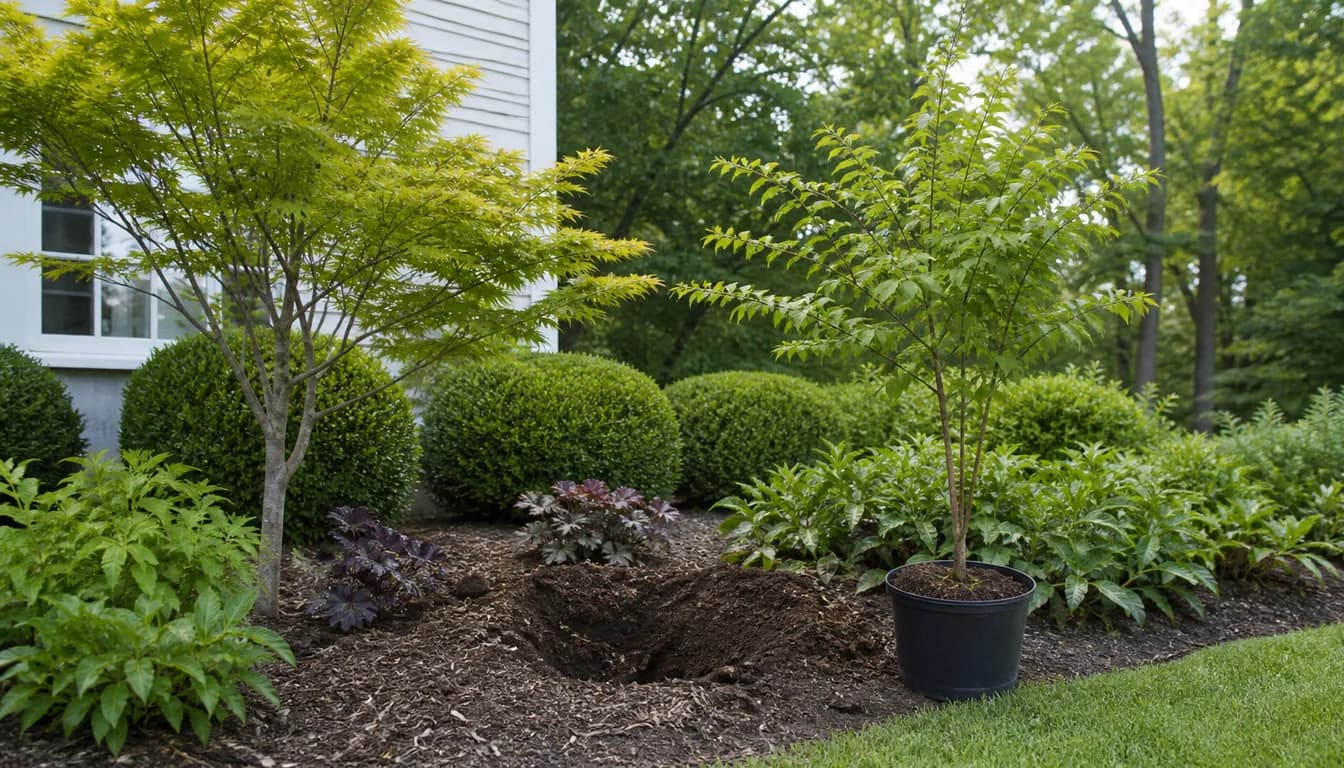
The best upgrade is often editing the view around one tree, not adding another focal tree.
tips_and_updates
Pro Tips
- check_circleChoose the view and mature silhouette before choosing flower color.
- check_circleMark mature spread on the ground before buying the tree.
- check_circleKeep the root flare visible at planting and after mulching.
- check_circleUse one focal tree per view unless the yard is large enough for a grove.
- check_circleJudge the tree after bloom season, not only during its best week.
- check_circlePrune to reveal natural habit instead of forcing a generic round shape.
- check_circleUnderplant or edit the bed before adding another ornamental tree.
quiz
Frequently Asked Questions
What makes a tree ornamental?expand_more
An ornamental tree improves a view through mature shape, branching, flowers, bark, fruit, fall color, or winter structure. It should earn attention beyond one bloom week.
Should I choose an ornamental tree by flowers first?expand_more
Choose mature size, silhouette, clearance, and viewing angle first. Flowers matter, but they cannot fix a tree that is too large or badly placed.
How close can an ornamental tree be to a house?expand_more
Use the mature spread and root behavior of the species. Leave room for roof clearance, window light, walkways, utilities, and pruning access.
Can one ornamental tree also provide shade?expand_more
Sometimes, but beauty and shade are different jobs. A small ornamental tree may give pleasant dappled shade, while a shade tree needs larger canopy planning.
When should I replace an ornamental tree?expand_more
Replace early when the site mismatch is clear: repeated scorch, bad branch structure, buried root flare, constant clearance conflict, or mature size that will never fit.