Treesschedule10 min read
Best Privacy Trees for Screening a Yard
Choose privacy trees by the view you need to block, the eye height, the screen geometry, lower cover, mature width, replacement risk, and pruning access.
Sit where privacy fails. The patio chair, kitchen window, deck stair, side gate, and driveway at night do not see the yard from the same angle. A row on the property line can look correct on paper and still leave the real view open.
The first question is blunt: what exactly must disappear from that seat or window? A neighbor's second-story room needs height. A street view through a side yard needs angle blocking. Headlights need low, dense cover. A service area may need only a small offset group.
That is why privacy trees should be chosen after the sightline, not before it. Juniper can solve a narrow sunny gap.
Magnolia can create broad evergreen mass where the yard has width. River Birch may soften a damp seasonal view, but it will not make a winter wall.
Plan for sightline, screen geometry, lower cover, mature width, and future access. Miss one of those, and the screen may look full for a few years before it opens exactly where you needed privacy.
ecoStand at the Bad View
Do not begin at the fence. Begin at the person who feels watched.
Write the view as a field note:
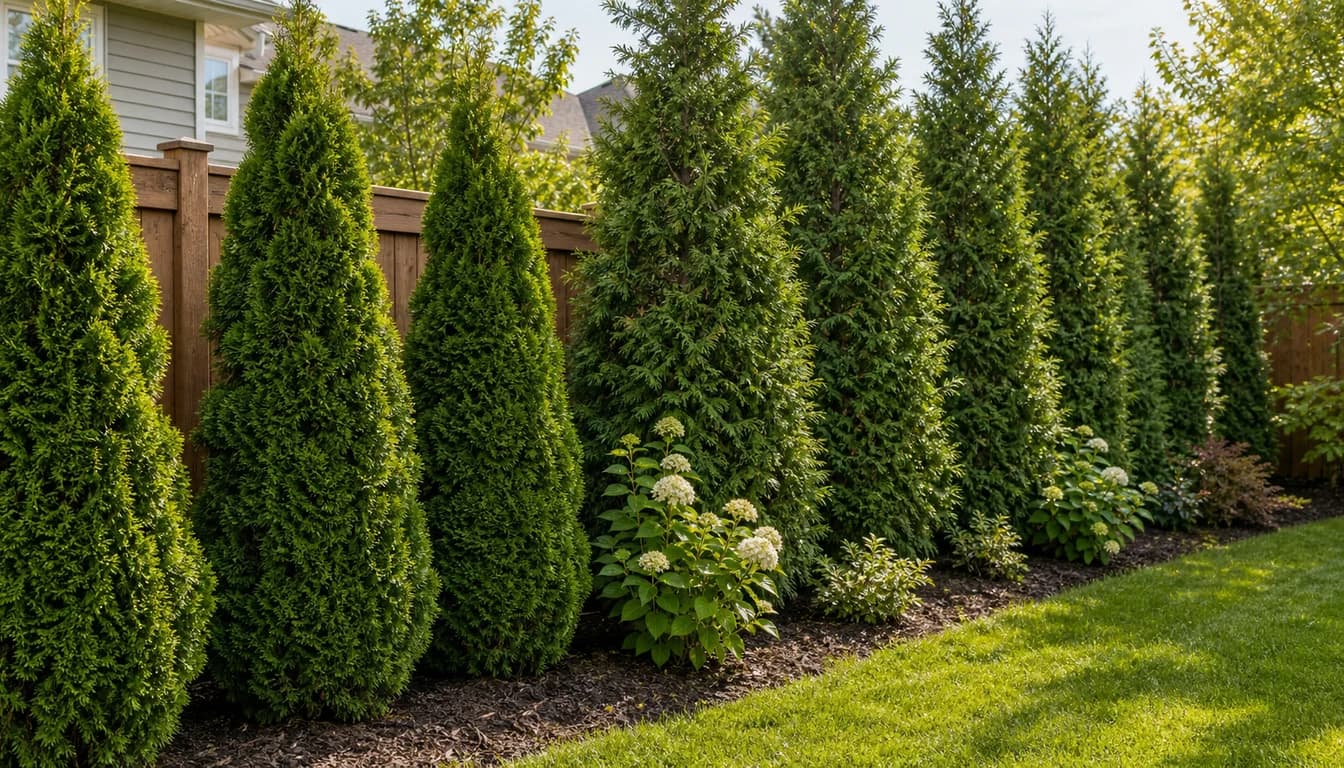
The privacy plan starts from the place where the view feels exposed.
- fiber_manual_recordViewer: seated patio, standing window, deck corner, gate, driveway, or sidewalk.
- fiber_manual_recordTarget: neighbor window, street, service area, utility zone, headlights, or open fence gap.
- fiber_manual_recordHeight: seated eye, standing eye, second-story line, or road glare.
- fiber_manual_recordSeason: all year, summer evenings, weekend patio use, or winter street exposure.
- fiber_manual_recordDistance: close screen near the viewer, boundary screen near the target, or a layer between them.
This note decides whether a tree belongs on the property line. A small group near the patio can block more view than a long row far away because it sits closer to the viewer's eye.
ecoChoose the Screen Geometry
A privacy screen has geometry before it has species. Pick the shape that blocks the view from the viewer's seat.
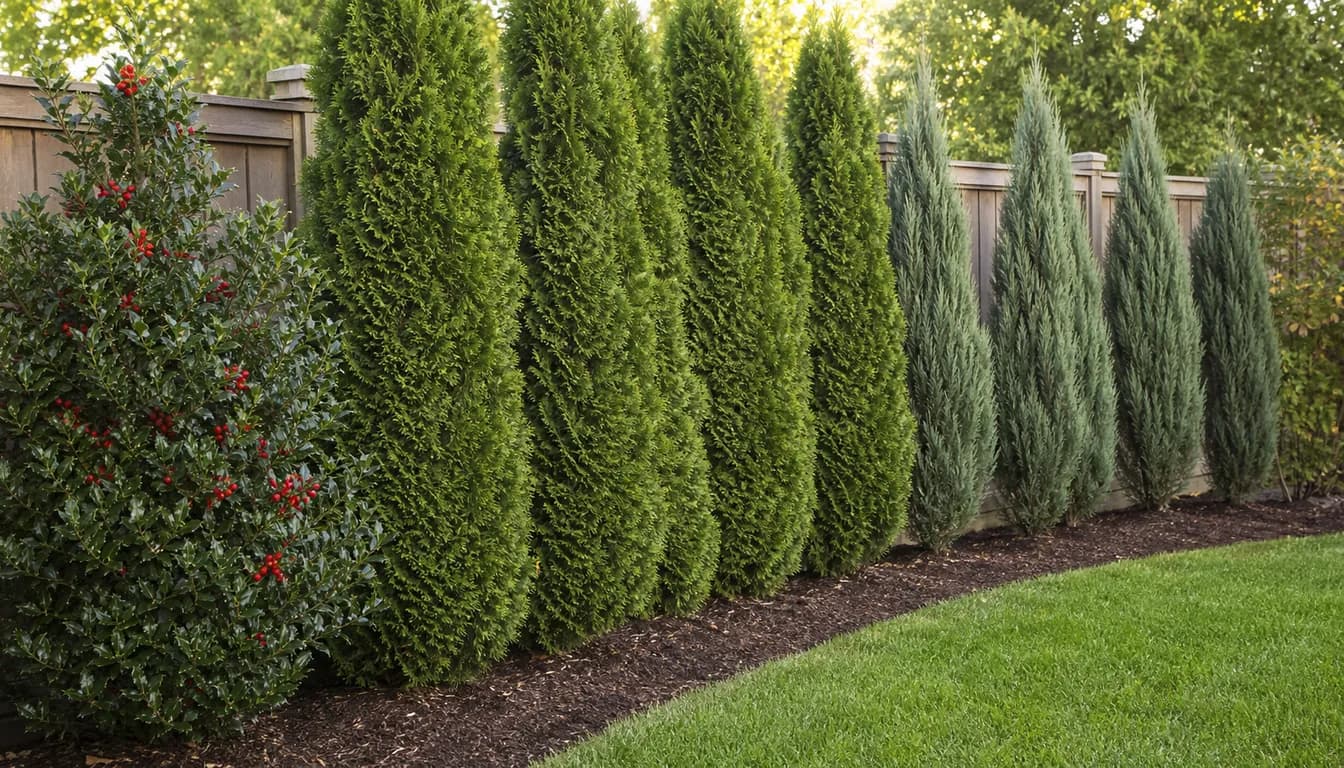
Privacy can come from a near screen, a boundary screen, or layered planting between the two.
| Geometry | Use it when | Watch the failure | ||
|---|---|---|---|---|
| Near screen | one patio seat or window needs relief | it may feel too tight if the plant matures wide | ||
| Boundary screen | the whole edge feels exposed | a straight row may miss angled views | ||
| Offset group | the view comes from the side | gaps open if all plants mature at the same height | ||
| Layered screen | privacy needs upper, middle, and lower cover | maintenance lanes disappear if spacing is too tight | ||
| Built plus living screen | the strip is narrow or immediate cover is needed | trees get forced into a space they cannot own |
Privacy tree planting helps after this decision. Spacing means little until you know whether the screen is supposed to sit close to the viewer, on the boundary, or in staggered layers.
filter_vintageAssign Each Plant a Privacy Job
A privacy plan gets weaker when every tree has the same job. One plant can block the upper view. Another can fill the middle background. A lower layer can close the trunk gap that appears as trees mature.
Use job names before plant names:
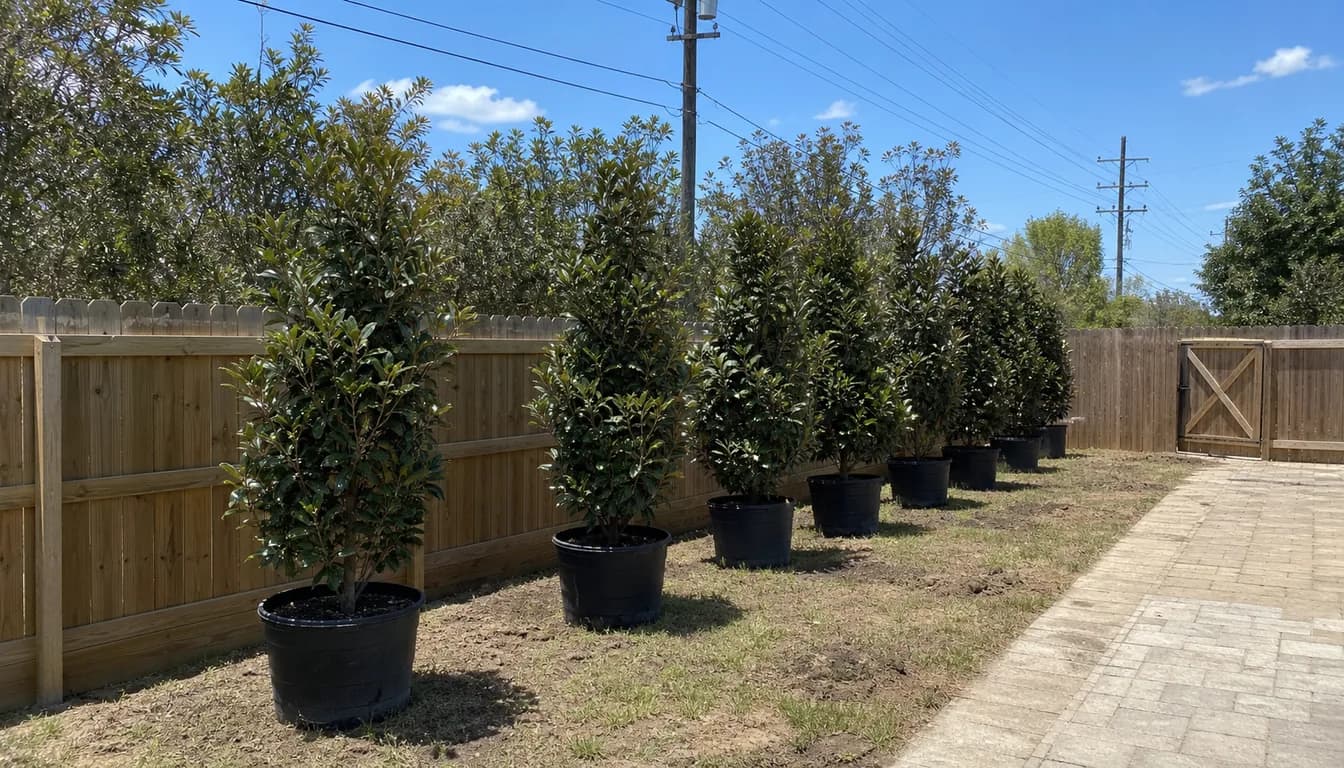
A privacy plant should be chosen for a job: height, width, lower cover, or replacement flexibility.
- fiber_manual_recordNarrow backbone: a slim evergreen for a vertical gap.
- fiber_manual_recordBroad mass: a wider evergreen where the screen must feel solid.
- fiber_manual_recordSeasonal softener: a deciduous layer for summer use and visual depth.
- fiber_manual_recordLower stitch: shrubs or small trees that close trunk-level gaps.
- fiber_manual_recordReplacement piece: a plant that can be removed later without breaking the whole screen.
Arborvitae can be dense, but it is not maintenance-free. Holly can give broadleaf evergreen mass where climate and soil fit.
Serviceberry adds seasonal softness where summer use is the main goal. Dogwood can soften a mixed edge, but it will not make winter opacity by itself.
Email Updates
Join the KnowTheYard update list
Zone-specific advice, seasonal reminders, and new plant guides — no filler.
ecoKeep the Back Side Reachable
Empty space behind a privacy screen is not wasted; it is the corridor that lets you water, prune, remove dead wood, rake leaves, and replace one failed tree without climbing through branches.
A tree pressed against a fence gets flattened on one side and shaded inside. The screen may look full from the house while the fence side turns brown and unreachable.
Large trees make the warning obvious. Oak is a canopy tree, not a privacy shortcut for a narrow strip. Red Maple also needs room for roots and spread before it can be part of a screen.
If mature width plus access does not fit, use fewer trees, a smaller role, a built panel, or a shrub layer.
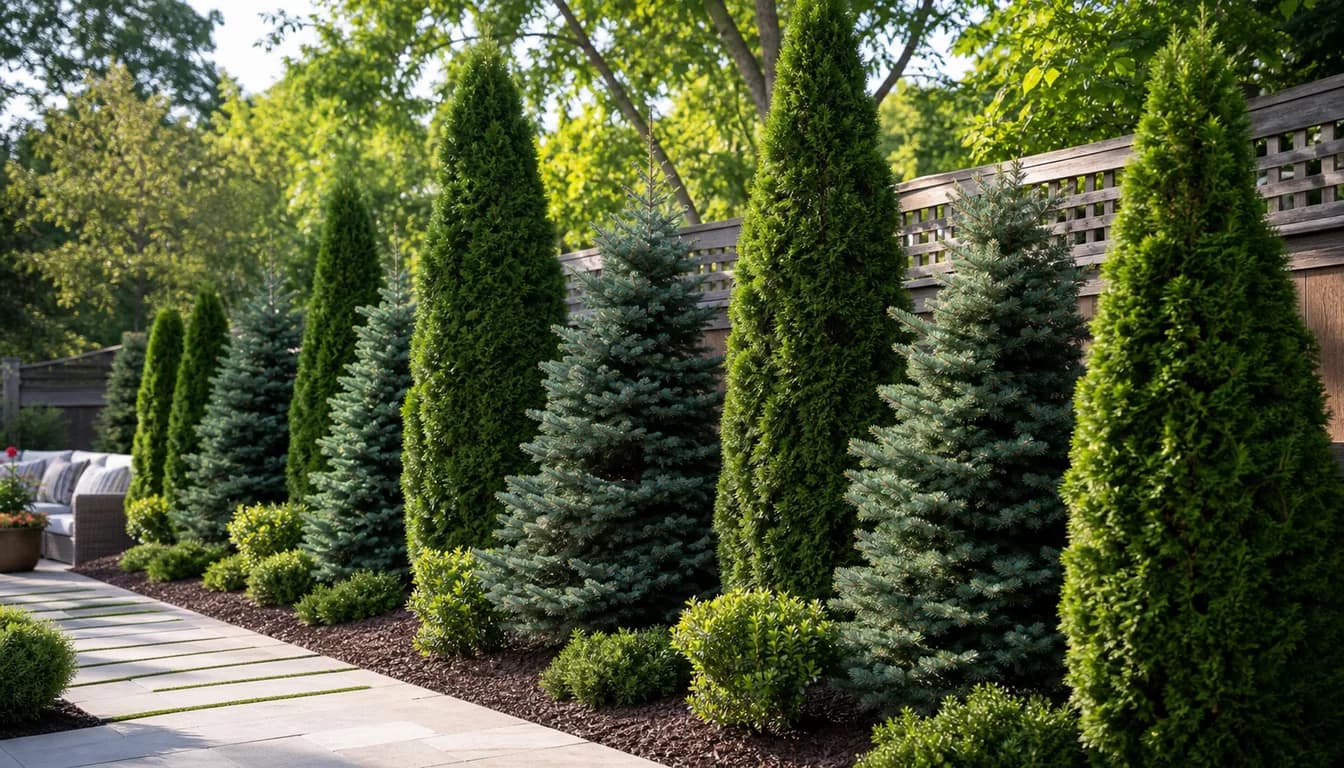
A privacy screen needs enough room for pruning, watering, cleanup, and replacement.
water_dropStress-Test the Row Before It Fills In
A privacy row repeats both strengths and mistakes. One dry fence corner, one soggy drainage line, one wind tunnel, or one buried root flare can damage several trees in the same pattern.
Check the row like a set of separate root zones:
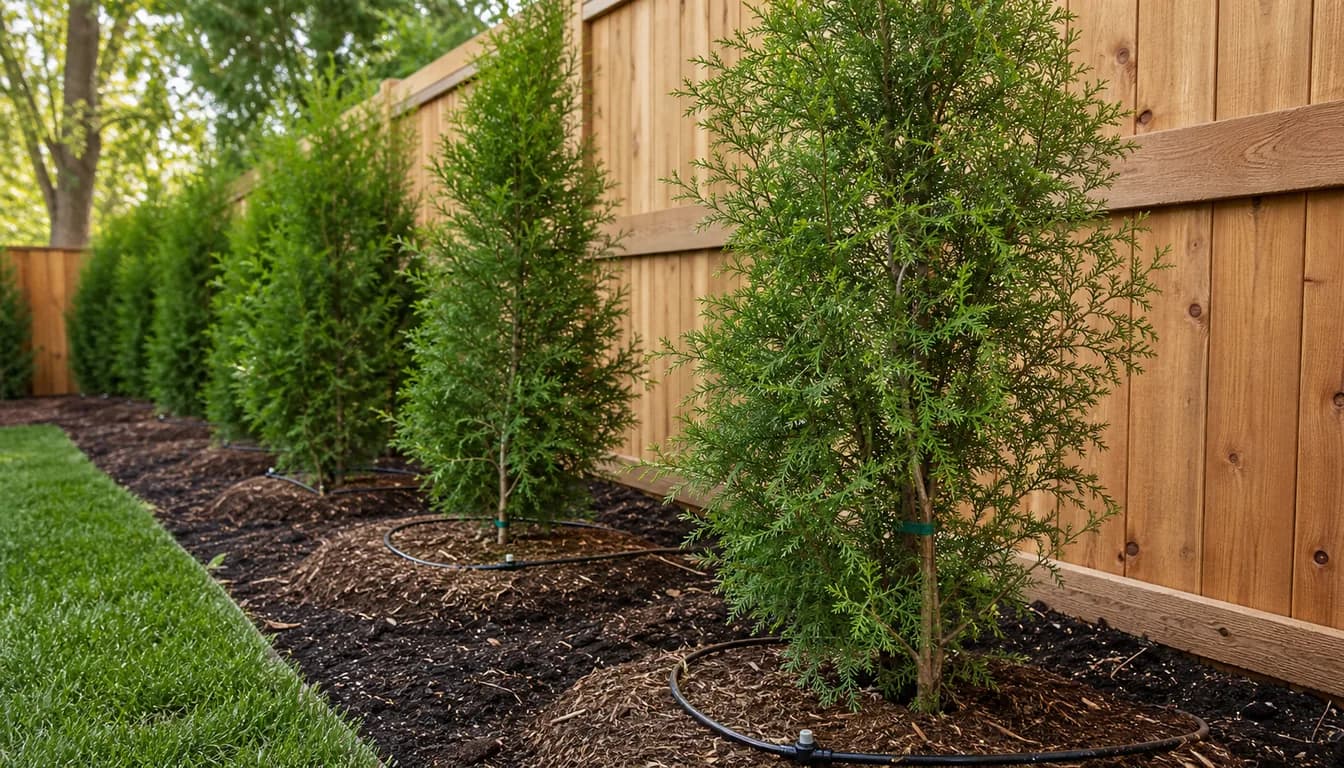
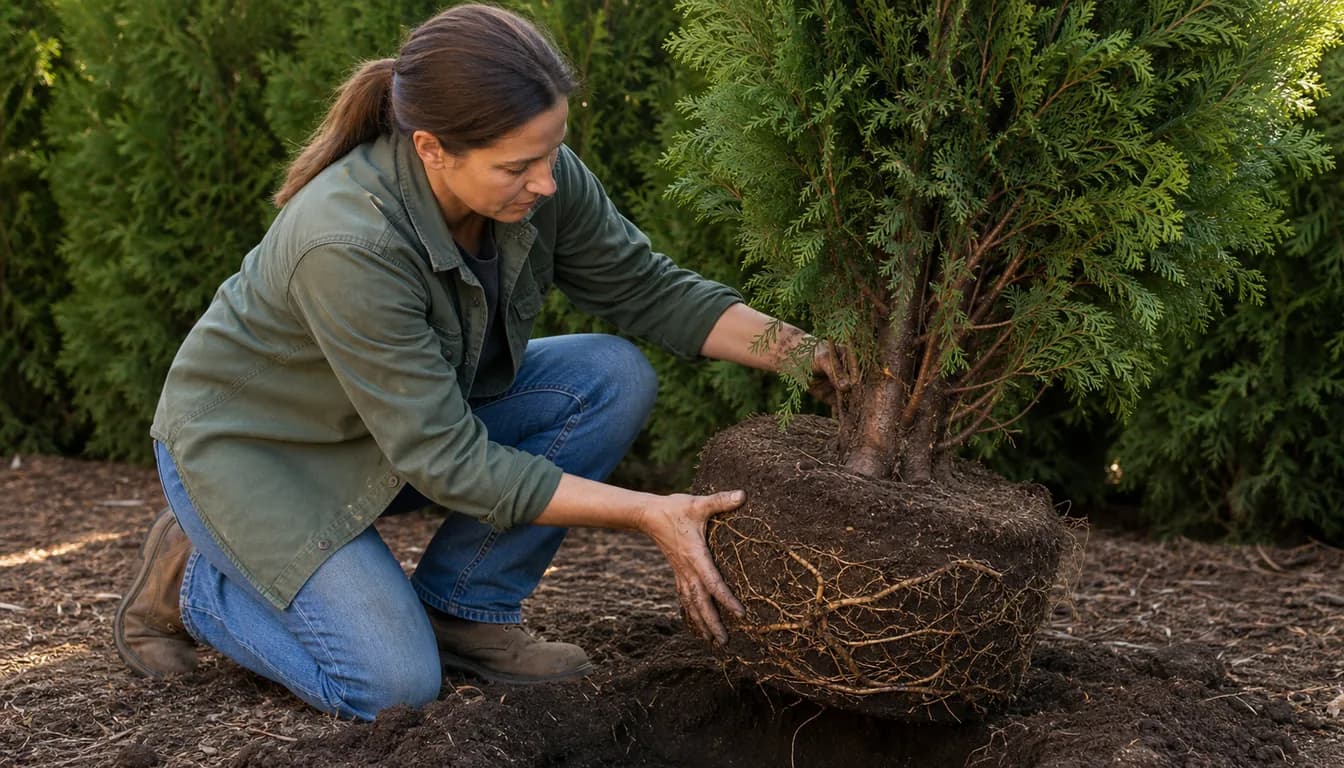
Privacy rows often fail in repeated patterns because each tree is exposed to the same site stress.
- fiber_manual_recorduphill end and downhill end
- fiber_manual_recorddownspout side and dry eave side
- fiber_manual_recordwind-exposed end and protected middle
- fiber_manual_recordtrees near pavement and trees near open soil
Tree overwatering signs matter because a wet trench can make leaves wilt like drought. Mulch wide, keep trunk flares visible, and avoid pushing soft growth just because you want faster privacy.
buildRepair the View, Not the Row
When a gap opens, go back to the original seat, window, or driveway. The fix depends on what the view exposes.
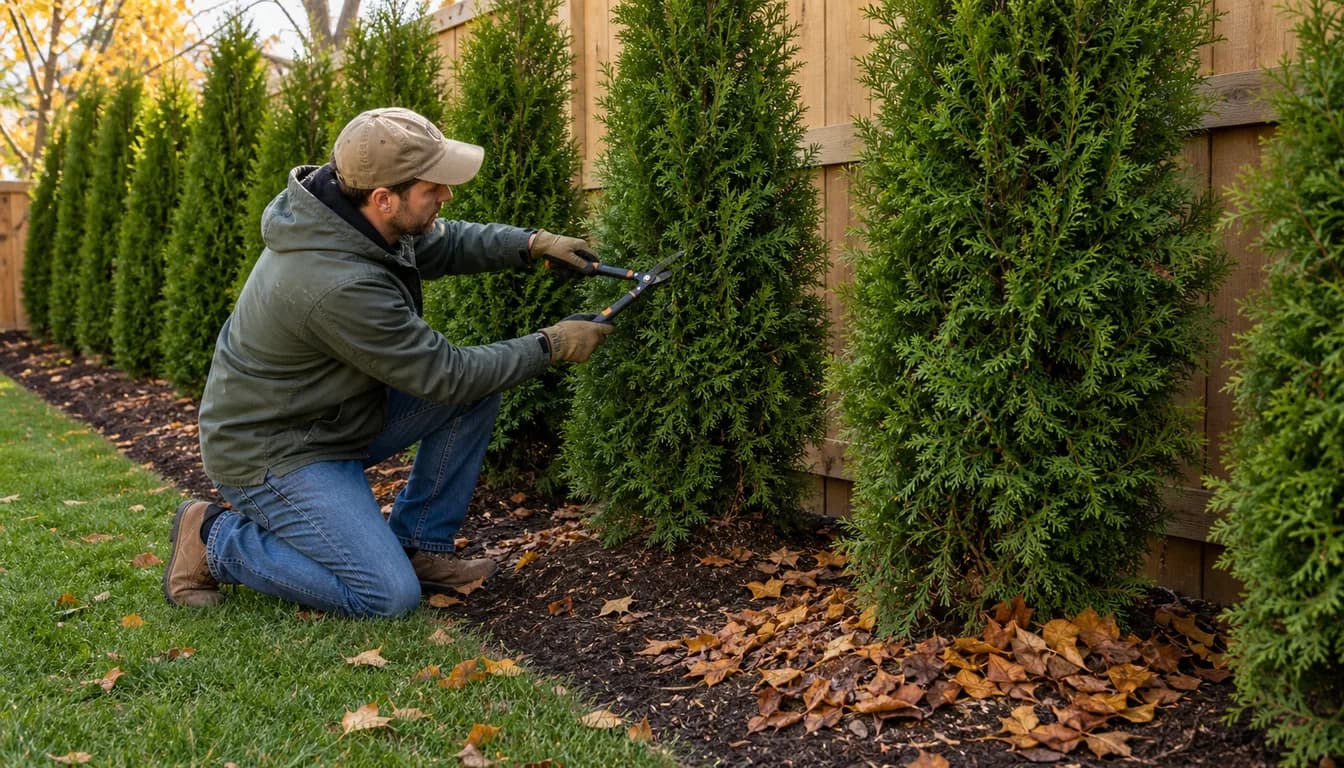
A privacy gap should be diagnosed from the original viewing point before more trees are added.
| What reopened | Better repair | Bad repair | ||
|---|---|---|---|---|
| trunks lifted above seated view | add lower cover | plant another tall tree | ||
| side-angle view through the row | stagger one group inward | extend the row straight | ||
| brown interior | reduce crowding and avoid hard shearing | cut deeper into old wood | ||
| one dead tree | replace early with a role-matched plant | wait until neighbors shade the hole | ||
| strip too narrow | add a panel, trellis, or shrub layer | force more trees into the same slot |
Fast-growing tree guidance is useful only after the geometry is right. Speed cannot fix a screen that was measured from the wrong place.
The best privacy plan may use fewer trees than expected. It blocks the actual view, keeps the lower gap closed, and still leaves enough room to walk behind the planting with pruners.
tips_and_updates
Pro Tips
- check_circleStart from the seat, window, driveway, or gate where privacy actually fails.
- check_circleChoose near, boundary, offset, layered, or built-plus-living geometry before choosing species.
- check_circleAssign each plant a job: upper view, broad mass, seasonal softening, lower stitch, or replacement piece.
- check_circleLeave a corridor for watering, pruning, cleanup, and replacement.
- check_circleStress-test the row for repeated dry, wet, wind, pavement, and root-flare problems.
- check_circleRepair privacy gaps from the original viewing point instead of adding more trees by habit.
quiz
Frequently Asked Questions
What should I measure before buying privacy trees?expand_more
Measure from the place where privacy matters. Note the viewer, target, eye height, season, distance, and whether the screen needs to be close, on the boundary, offset, or layered.
Are privacy trees better in one row or staggered?expand_more
A straight row works for a straight narrow view. Staggered groups work better when the view comes from an angle or when one failed tree would expose the whole screen.
Do privacy trees need shrubs underneath?expand_more
They often do when privacy matters at seated or standing eye level. Many trees lift with age, so a lower layer keeps trunks from becoming open windows.
How close can privacy trees be to a fence?expand_more
Close enough depends on mature width and access. Leave space for roots, branch spread, cleanup, and pruning from your side so the fence side does not become unreachable.
When should I use a fence instead of trees?expand_more
Use a fence, trellis, or screen panel when the strip is too narrow, the cover must be immediate, or utilities and pavement leave no room for mature tree roots and branches.