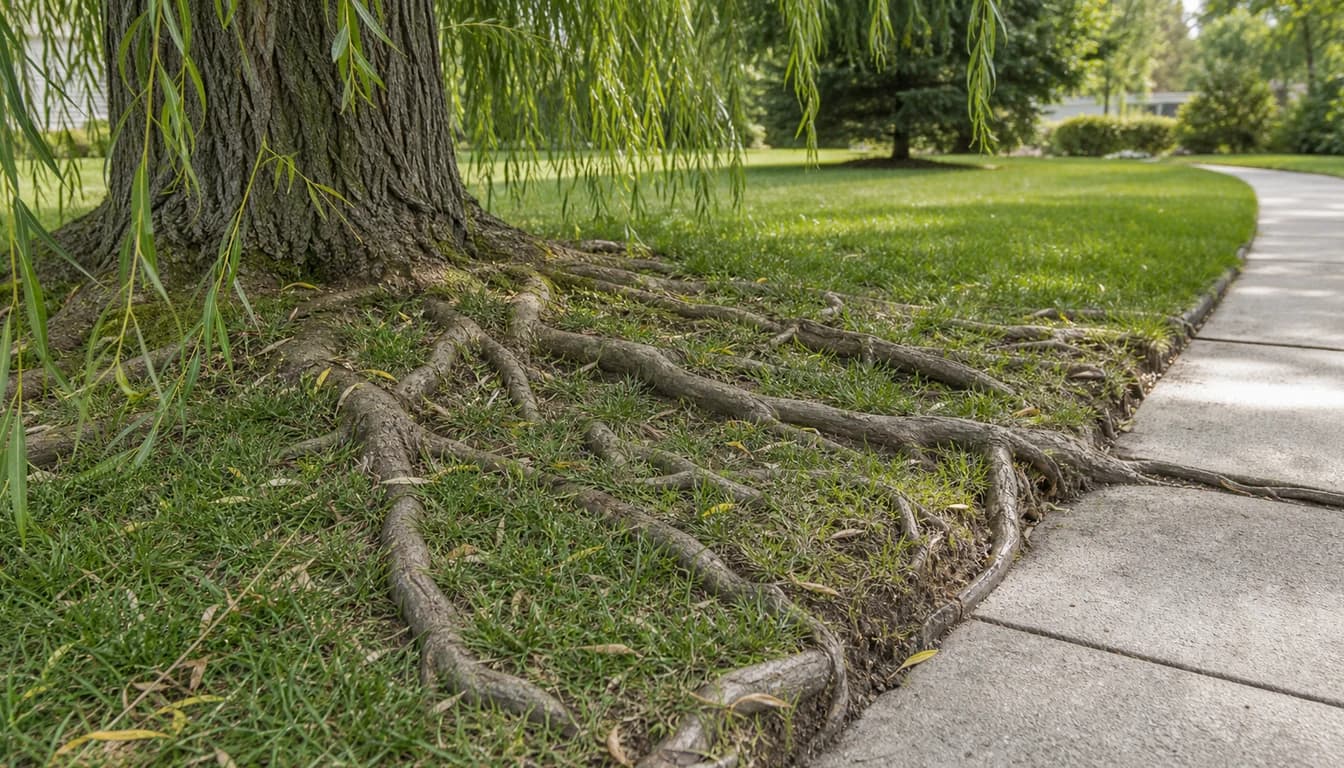
1. Planted too close to foundations, slabs, or utilities
Likelihood: HighWillow roots are drawn to moisture and loosened soil. When trees are planted within 30-50 feet of structures or buried utilities, their roots can reach and exploit weaknesses in pipes, septic fields, or foundation backfill. Old or hairline cracks in concrete or mortar joints are especially attractive entry points.
Identification
- remove_circle_outlineRepeated localized dampness near footings or slab edges
- remove_circle_outlineCracks or lateral settlement in nearby foundations or patios
- remove_circle_outlineLarge woody roots visible within 2-4 feet of foundation walls during inspection.
- remove_circle_outlineSewer clean-outs or drains producing root fragments when cleared.
The Fix
- 1If minor, remove offending feeder roots and patch utility lines; hire a licensed plumber for camera inspection before excavation.
- 2Install a physical root barrier (see mitigation details) along the structure side and monitor for new roots seasonally.
- 3For severe foundation movement, engage a structural engineer and consider tree removal plus foundation repair. Document damage for insurance or permitting. The tree should be removed only after utilities are secured.
- 4Call utility-locate before digging and secure any permits required by local code.
- 5When replacing, pick a tree with a less aggressive root habit and keep a minimum setback of 50 feet for mature willows.