yard
KnowTheYard

databasePlant Database

Browse by category

potted_plant

Houseplants

Indoor & tropical species

nutrition

Vegetables

Edible garden crops

spa

Herbs

Culinary & medicinal

local_florist

Flowers

Ornamental blooms

water_drop

Succulents

Drought-tolerant species

park

Trees

Arboreal species

forest

Shrubs

Bushes & hedges

nature

Perennials

Garden flowers

grass

Lawn Grasses

Turf varieties

local_dining

Fruits

Fruit-bearing plants

Best Indoor Plantsarrow_forwardBest Shade Plantsarrow_forward

menu_bookGarden Guides

Step-by-step guides by task type

grass

Lawn Care

Seasonal checklists and year-round maintenance guides for a championship lawn.

yard

Planting

When, where, and how to plant — from seed to transplant for every garden type.

water_drop

Watering

Deep-watering techniques, schedules by plant type, and drought management.

compost

Fertilizing

Feeding schedules, NPK ratios, and organic vs synthetic options by plant.

pest_control

Pest Control

Identify, prevent, and treat common garden pests without harming beneficial insects.

content_cut

Pruning

Pruning timing, techniques, and tools for trees, shrubs, and flowering plants.

Popular Guides

parkFall Lawn Carelocal_floristSpring Lawn Carecalendar_monthFull Calendar
All Guidesarrow_forwardLawn Care Hubarrow_forward
ToolsCompareRegional GuidesPlant ProblemsPet SafetyAbout
searchPlant Finder
yardKnowTheYard

Published plant profiles, practical care guides, problem diagnosis pages, and side-by-side comparisons for home gardeners.

chatphoto_camera

databaseBrowse Plants

  • arrow_forwardHouseplants
  • arrow_forwardVegetables
  • arrow_forwardHerbs
  • arrow_forwardFlowers
  • arrow_forwardTrees

menu_bookResources

  • arrow_forwardGarden Tools
  • arrow_forwardRegional Guides
  • arrow_forwardPlant Problems
  • arrow_forwardPet Safety
  • arrow_forwardCare Calendar
  • arrow_forwardPlant Finder

infoCompany

  • arrow_forwardAbout Us
  • arrow_forwardOur Team
  • arrow_forwardMethodology
  • arrow_forwardEditorial Policy
  • arrow_forwardContact Us

mailEmail Updates

Join the list for new guides, seasonal notes, and launch updates.

No spam. Request removal anytime.

fact_check

Reviewed Pages

77 pages currently attributed to public review lanes

public

USDA Zone Coverage

Zone-aware recommendations and regional growing context

database

230 Published Plant Profiles

555 public pages across profiles, guides, comparisons, and problem pages

© 2026 KnowTheYard. All rights reserved.

Privacy PolicyTerms of ServiceContactSitemap
Home/fruits/Raspberry: Cane Pruning, Trellis, Water, and Harvest/Poor Fruiting
scienceEditorial DiagnosisUpdated Feb 20, 2026

Raspberry Poor Fruiting

Practical troubleshooting for **Raspberry** patches (Rubus idaeus) in the Rosaceae family that produce few or no berries. Diagnose quickly, adjust pruning and feeding for June-bearing vs everbearing types, and restore yields with light, irrigation, soil, and pollination fixes, especially when canes miss ==**6-8 hours of full sun**== or the wrong wood gets pruned.

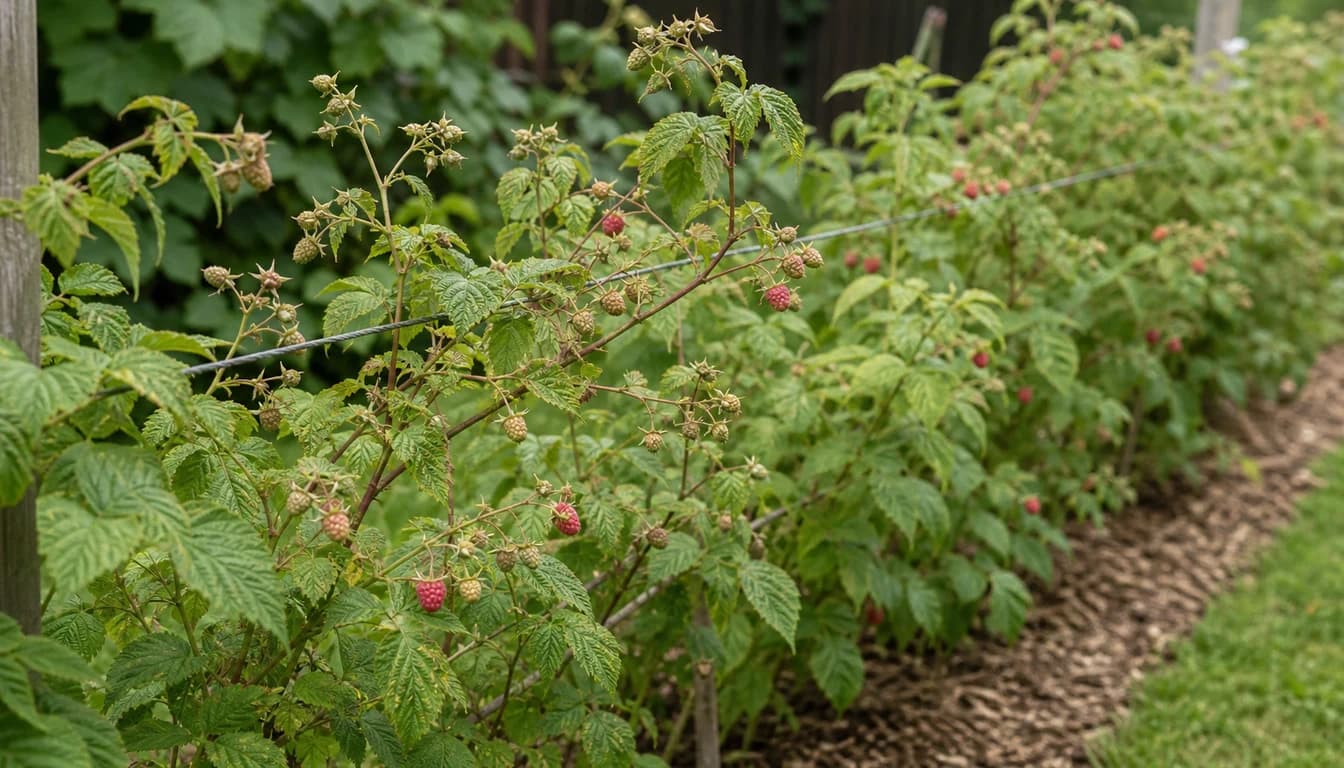
Raspberry canes with sparse leaves and only a few small developing berries

Raspberry canes with sparse leaves and only a few small developing berries

lightbulb
bolt

Quick Diagnosis

Most Likely Cause: Pruning mistake, shading, or excess nitrogen.

If plants are leafy but set few flowers or fruit, suspect late or heavy nitrogen fertilization, removed fruiting canes, or poor light penetration; compare your cane issues with similar cane and fruiting habits in other brambles to spot pruning patterns early by inspecting cane age, canopy density, and recent fertilizer timing first cane and fruiting habits.

Jump to fix steps arrow_downward

Raspberries (Rubus idaeus) are cane-fruited members of the Rosaceae family whose yield depends on correct cane management and good light. June-bearing types fruit primarily on second-year canes (floricanes) in early summer; everbearing types can fruit on first-year primocanes in late summer and again on floricanes if managed as a two-harvest plant. Good fruiting requires full sun (at least 6-8 hours daily), even moisture in well-drained soil, and an appropriate pruning schedule.

Healthy production looks like a steady set of blooms followed by developing berries every warm day of the season. Common failure modes are not plant death but cultural: too much nitrogen encourages vegetative growth at the expense of flowers, dense canopies shade flower buds, and mis-timed pruning often removes the very canes that will carry fruit. Comparing fruiting patterns in berries can help you recognize whether a setback is management related or cultivar behavior fruiting patterns in berries.

Before you act, identify whether you grow a June-bearing or everbearing cultivar, because pruning and timing of corrective actions differ. June-bearing cultivars need annual removal of old fruiting canes after harvest. Everbearers can be managed for a single large fall crop or two smaller crops depending on how you prune.

pest_control
Plant Problem - See AlsoRaspberry Cane Dieback
chevron_right
psychology

Understanding fruiting cycles and why fixes depend on cultivar

June-bearing raspberries fruit on second-year (two-year-old) canes called floricanes. Successful yields require leaving primocanes alone their first year, then letting floricanes carry the crop the second year before cutting them out. Everbearing raspberries produce on primocanes in late summer and on floricanes in summer if left; pruning choices determine whether you harvest once (late summer) or twice (summer and fall).

Pruning mistakes are the most frequent root cause because canes look similar when young; tagging or color-coding canes after the first year prevents accidental removal. Light and nutrient balance interact-too much nitrogen delays bud differentiation and dense shade prevents flower initiation even when pruning is correct.

Pests and diseases reduce vigor and can mimic cultural problems. Look for cane lesions, wilting, stunted growth, or many aborted blossoms; treat confirmed pest or fungal issues directly and combine treatment with cultural recovery steps.

thermostat

Environmental Baseline

Before diagnosing specific failures, confirm your Raspberry: Cane Pruning, Trellis, Water, and Harvest's environment matches its core care requirements.

forestRaspberry: Cane Pruning, Trellis, Water, and Harvest Care Needs

  • Light: Full sun, 6-8+ hours; light afternoon shade in hot climates
  • Water: Consistent moisture during bloom and fruiting
  • Temp: Prefers cool summers; heat can soften fruit

homeTypical Indoor Home

  • Humidity: 30-50% (Low)
  • Temp: 65-72°F variable
  • Light: Often too dim or direct
biotech

Possible Causes

Sorted by likelihood

1. Improper pruning (removing fruiting canes or leaving too many old canes)

Likelihood: High

Cutting the wrong canes or pruning at the wrong time removes flowers or prevents new cane development. Over-thinning lowers overall cane count; under-thinning creates dense shade and weak fruiting wood.

Identification

  • remove_circle_outlineMost canes are either all new green or all old gray; no mixed-age structure indicates poor pruning history.
  • remove_circle_outlineFew or no new laterals and buds visible in spring on canes that should fruit.
  • remove_circle_outlineFor June-bearing types: absence of obvious 2-year-old brown floricanes after harvest suggests they were removed prematurely.
  • remove_circle_outlineFixs noted below will restore correct structure.

The Fix

  1. 1For June-bearing plants: after harvest, remove all spent floricanes to ground level and leave healthy primocanes to become next year's fruiting wood.
  2. 2For everbearing plants: choose a strategy-cut all canes to ground in late winter for a single late-summer crop, or leave primocanes to fruit in fall and then remove only the floricanes after spring harvest.
  3. 3Thin crowded rows so canes are spaced 6-8 inches apart; remove weak or crossing canes to improve light penetration.
  4. 4Mark cane ages with tags this season so you don't repeat the error next year.
  5. 5identification

2. Excessive nitrogen fertilization

Likelihood: High

Too much nitrogen produces lush vegetative growth and few flowers. Symptoms often follow heavy manure, high-nitrogen fertilizer, or late-season feeding.

Identification

  • remove_circle_outlineVigorous, dark-green leafy growth with few flower clusters all season.
  • remove_circle_outlineA history of late-spring or summer high-nitrogen applications.
  • remove_circle_outlineRapid cane growth late into the season that delays bud set and increases frost risk.
  • remove_circle_outlineFixs

The Fix

  1. 1Stop high-nitrogen feeds mid-spring; switch to a balanced fertilizer or apply 1-2 inches of compost at the base in early spring instead.
  2. 2Apply a low-nitrogen, higher-phosphorus feed before bloom if soil test indicates low phosphorus. See balanced early-spring feeding for fruiting shrubs.
  3. 3Avoid fresh manure or 'green' amendments late in the season; they promote leafy growth instead of buds.
  4. 4identification
  5. 5description

3. Shading or poor light penetration

Likelihood: Medium

Raspberries set fewer flowers and smaller crops in partial shade or when canes crowd each other. Shade reduces flower initiation and berry size.

Identification

  • remove_circle_outlinePlants in the garden edge or under trees with less than 6 hours of direct sun.
  • remove_circle_outlineInner canes limp, with few buds and sparse flowering on shaded sides.
  • remove_circle_outlineNeighboring shrubs or trunks casting morning or afternoon shade during bloom.
  • remove_circle_outlineFixs

The Fix

  1. 1Relocate plants in the dormant season to a sunnier spot if possible, or prune neighboring trees to increase light.
  2. 2Thin mid-row canes and remove low laterals to open the center of the row and improve air and light circulation.
  3. 3Train canes on a two-wire trellis (one at 30-36 inches and another at 48-60 inches) to maximize exposure.
  4. 4identification
  5. 5description
menu_book
Guide - See AlsoAir Purifying Plants for Cleaner Indoor Air
chevron_right
potted_plant

Root Health Examination

A direct inspection of the root system distinguishes root rot from drought stress - saving weeks of guesswork.

check_circleHealthy Roots

  • Firm to the touch
  • White or light tan color
  • Earthy, pleasant smell

cancelCompromised Roots

  • Mushy or slimy texture
  • Dark brown or black color
  • Sour, rotting odor

Inspection Step: Gently slide the pot off while supporting the base of the stems. The outer root ball gives sufficient clues without disturbing all the soil.

gpp_bad
warning

When to Worry

A few yellow leaves are normal. If more than 20% of foliage turns yellow within a week, or new growth is affected, act immediately - check the roots first.

timeline

Recovery Protocols

Recovery takes time. Once the root cause is corrected, implement a 30-day stabilization window.

Immediate (0-4 weeks)Short-term fixes and what changes first

After pruning or stopping high-nitrogen fertilizer you should see improved light, less shading, and slower vegetative flush within 2-4 weeks. Existing buds won't become fruit immediately, but reduced competition and better airflow limits disease pressure quickly.

Seasonal (8-16 weeks)This season's fruiting response

If you correct pruning before the flowering window and improve light and water, expect improved bloom and a better set within the current season for everbearing primocane crops and next season for June-bearers. Soil nutrient adjustments made in early spring can boost bloom within 2-3 months.

Long-term (1 year)Full recovery and yield rebuild

For June-bearing raspberries, proper pruning now rebuilds structure so a strong crop appears next summer. For everbearing plants allowed to rebuild primocane wood, plan for a best fall crop this year and fuller spring yields the following year. Consistent annual pruning, correct fertilization, and good spacing restore full production within one growing cycle.

menu_book
Guide - See AlsoBest Herbs to Grow Indoors for Real Harvests, Not Spindly Pots
chevron_right
shield

Preventing Future Issues

Prevent poor fruiting by enforcing a simple annual routine: prune to the correct system for your cultivar, maintain pH 5.5-6.5, avoid late high-nitrogen feeds, provide 6-8 hours of sun, keep soil evenly moist and well-drained, and monitor for pests so vigor stays high but flowering is prioritized over leafy growth; if your soil trends acidic, follow managing soil acidity practices used for other acid-loving shrubs to keep nutrient availability balanced managing soil acidity.

menu_book

Related Reads

pest_control
Plant ProblemRaspberry Cane Dieback
chevron_right
menu_book
GuideAir Purifying Plants for Cleaner Indoor Air
chevron_right
menu_book
GuideBest Herbs to Grow Indoors for Real Harvests, Not Spindly Pots
chevron_right
menu_book
GuideBest Indoor Plants for Every Room and Light Level
chevron_right
Raspberry: Cane Pruning, Trellis, Water, and Harvest (Rubus idaeus) - full care guideRubus idaeus

Raspberry: Cane Pruning, Trellis, Water, and Harvest

Rosaceae Family

wb_sunny

Light

Full sun, 6-8+ hours; light afternoon shade in hot climates

water_drop

Water

Consistent moisture during bloom and fruiting

thermostat

Temp

Prefers cool summers; heat can soften fruit

yardFull Care Guide

On This Page

boltQuick DiagnosispsychologyUnderstandingthermostatEnvironment CheckbiotechPossible Causespotted_plantRoot ExamwarningWhen to WorrytimelineRecovery PlanshieldPreventionmenu_bookRelated Reads