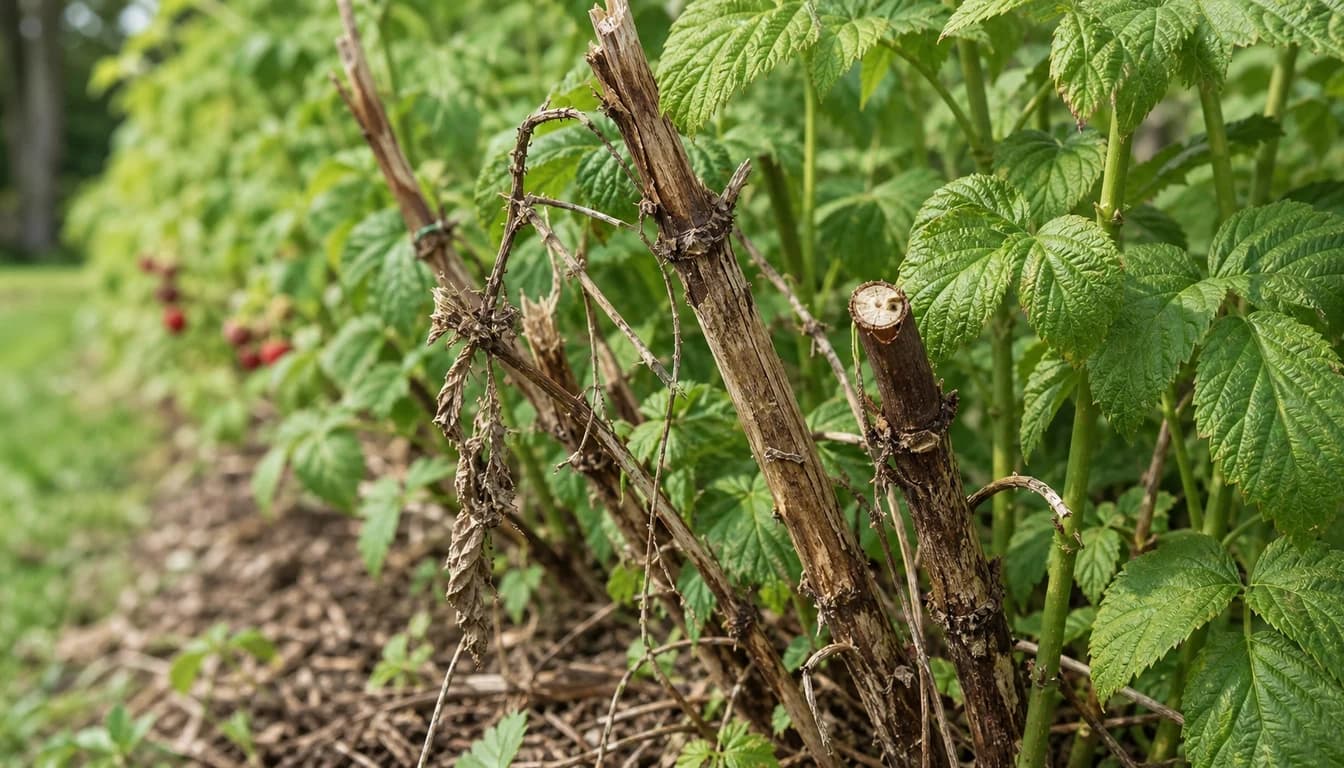
1. Weather or water stress
Likelihood: HighRaspberry canes respond quickly to drought, waterlogging, late freezes, and heat spikes. Stress often kills tips or scattered laterals without the sunken lesions that point to cane blight.
Identification
- remove_circle_outlineBrowning stays mostly at cane tips or the newest growth.
- remove_circle_outlineSeveral plants show symptoms after the same weather event.
- remove_circle_outlineSoil is either cracked and dry or saturated below the mulch.
- remove_circle_outlineNo hollow canes, borer holes, sticky sap, or expanding dark lesions are visible.
The Fix
- 1Restore consistent moisture with deep watering instead of frequent shallow splashes.
- 2Use deep watering habits during dry spells so roots are encouraged downward.
- 3Improve wet beds with compost, raised rows, or a shallow drain before replanting into the same spot.
- 4Mulch with 2-3 inches of coarse material, keeping it off the cane crowns.
- 5Protect tender primocanes from late frost with temporary row cover when cold snaps are forecast.