yard
KnowTheYard

databasePlant Database

Browse by category

potted_plant

Houseplants

Indoor & tropical species

nutrition

Vegetables

Edible garden crops

spa

Herbs

Culinary & medicinal

local_florist

Flowers

Ornamental blooms

water_drop

Succulents

Drought-tolerant species

park

Trees

Arboreal species

forest

Shrubs

Bushes & hedges

nature

Perennials

Garden flowers

grass

Lawn Grasses

Turf varieties

local_dining

Fruits

Fruit-bearing plants

Best Indoor Plantsarrow_forwardBest Shade Plantsarrow_forward

menu_bookGarden Guides

Step-by-step guides by task type

grass

Lawn Care

Seasonal checklists and year-round maintenance guides for a championship lawn.

yard

Planting

When, where, and how to plant — from seed to transplant for every garden type.

water_drop

Watering

Deep-watering techniques, schedules by plant type, and drought management.

compost

Fertilizing

Feeding schedules, NPK ratios, and organic vs synthetic options by plant.

pest_control

Pest Control

Identify, prevent, and treat common garden pests without harming beneficial insects.

content_cut

Pruning

Pruning timing, techniques, and tools for trees, shrubs, and flowering plants.

Popular Guides

parkFall Lawn Carelocal_floristSpring Lawn Carecalendar_monthFull Calendar
All Guidesarrow_forwardLawn Care Hubarrow_forward
ToolsCompareRegional GuidesPlant ProblemsPet SafetyAbout
searchPlant Finder
yardKnowTheYard

Published plant profiles, practical care guides, problem diagnosis pages, and side-by-side comparisons for home gardeners.

chatphoto_camera

databaseBrowse Plants

  • arrow_forwardHouseplants
  • arrow_forwardVegetables
  • arrow_forwardHerbs
  • arrow_forwardFlowers
  • arrow_forwardTrees

menu_bookResources

  • arrow_forwardGarden Tools
  • arrow_forwardRegional Guides
  • arrow_forwardPlant Problems
  • arrow_forwardPet Safety
  • arrow_forwardCare Calendar
  • arrow_forwardPlant Finder

infoCompany

  • arrow_forwardAbout Us
  • arrow_forwardOur Team
  • arrow_forwardMethodology
  • arrow_forwardEditorial Policy
  • arrow_forwardContact Us

mailEmail Updates

Join the list for new guides, seasonal notes, and launch updates.

No spam. Request removal anytime.

fact_check

Reviewed Pages

77 pages currently attributed to public review lanes

public

USDA Zone Coverage

Zone-aware recommendations and regional growing context

database

230 Published Plant Profiles

555 public pages across profiles, guides, comparisons, and problem pages

© 2026 KnowTheYard. All rights reserved.

Privacy PolicyTerms of ServiceContactSitemap
Home/fruits/Pear Tree: Pollination, Pruning, Fire Blight, and Harvest/Poor Fruit Set
scienceEditorial DiagnosisUpdated Feb 20, 2026

Pear Tree Poor Fruit Set

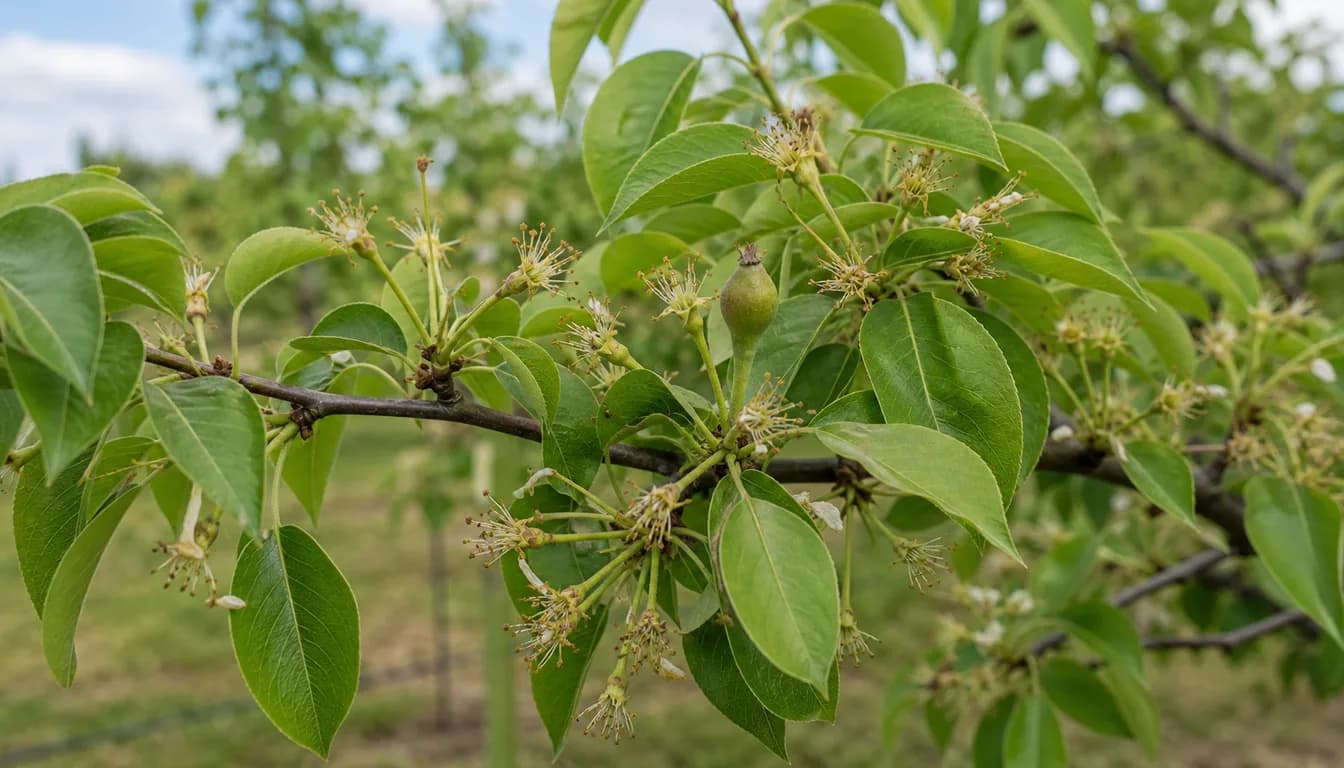
**Pear Tree** poor fruit set usually means bloom happened but pollination, weather, or crop balance failed. A tree can look healthy, flower heavily, and still drop blossoms if it lacks a compatible **Pear Tree** partner, bees were inactive, frost hit bloom, or last year's crop exhausted the tree.

Pear tree branch after bloom with many spent flower stems and only one small young fruitlet.

Pear tree branch after bloom with many spent flower stems and only one small young fruitlet.

lightbulb
bolt

Quick Diagnosis

Most Likely Cause: No compatible pear pollinizer during bloom.

If Pear Tree blooms well but forms very few fruitlets, first check whether another compatible Pear Tree cultivar blooms nearby at the same time. For most home orchards, the practical target is a compatible bloom partner within about 50-100 feet.

Jump to fix steps arrow_downward

Pear Tree fruit set depends on a short bloom window. Viable pollen, receptive flowers, active bees, and mild weather all have to line up before the tree can hold young pears.

Do not treat this like a disease page. If shoots blacken, curl, and stay attached, move to Pear Tree fire blight; poor fruit set is about blossoms failing to become fruitlets or fruitlets dropping early.

Mixed orchards can confuse the diagnosis. Apple vs Pear Tree differences matter because apples may bring pollinators into bloom, but they are not the reliable compatibility answer for most pear fruit set problems.

menu_book
Guide - See AlsoAir Purifying Plants for Cleaner Indoor Air
chevron_right
psychology

Flowers are not the same as fruit set

A heavy bloom only proves the tree made flowers. Fruit set happens after pollen reaches a receptive flower and the tree has enough resources to hold the young fruit.

The sequence helps diagnosis. No fruitlets usually points to pollination or frost; small fruitlets that form and then drop can point to weather stress, poor crop balance, drought, or alternate bearing.

Look at timing before adding fertilizer. Feeding after bloom will not fix a missing pollinizer, and too much nitrogen can make a leafy tree that is less focused on fruit.

thermostat

Environmental Baseline

Before diagnosing specific failures, confirm your Pear Tree: Pollination, Pruning, Fire Blight, and Harvest's environment matches its core care requirements.

forestPear Tree: Pollination, Pruning, Fire Blight, and Harvest Care Needs

  • Light: Full sun, 6-8+ hours
  • Water: Deep watering while young and during dry spells
  • Temp: Needs winter chill; bloom can be hit by late frost

homeTypical Indoor Home

  • Humidity: 30-50% (Low)
  • Temp: 65-72°F variable
  • Light: Often too dim or direct
biotech

Possible Causes

Sorted by likelihood

1. Missing compatible pear pollinizer

Likelihood: High

Many Pear Tree cultivars are not reliably self-fruitful. If the tree blooms alone, or the nearby pear blooms too early or too late, flowers can drop without setting a crop.

Identification

  • remove_circle_outlineThe tree blooms heavily but sets few or no fruitlets.
  • remove_circle_outlineOnly one pear cultivar is planted nearby.
  • remove_circle_outlineNeighboring pear bloom does not overlap your tree's bloom.
  • remove_circle_outlineBee activity is present, but fruit set is still poor.

The Fix

  1. 1Plant a compatible pear cultivar with overlapping bloom.
  2. 2Graft a compatible pollinizer branch onto the existing tree if space is limited.
  3. 3Hand-pollinate during bloom as a temporary bridge.
  4. 4Avoid relying on apple pollen as the main pear pollination plan.
  5. 5Ask a local nursery for cultivar compatibility if the tree is unnamed.

2. Cold, wet, or windy bloom weather

Likelihood: Medium

Poor bee flight and bloom frost can both break fruit set. Bees work less in chilly, wet, or windy weather, and frost can damage flower parts before pollen has a chance to do its job.

Identification

  • remove_circle_outlineBloom coincided with rain, wind, or chilly days.
  • remove_circle_outlineNight temperatures dropped near or below freezing during open bloom.
  • remove_circle_outlineFlowers brown or collapse soon after a cold night.
  • remove_circle_outlineSeveral fruit trees in the yard set poorly the same year.

The Fix

  1. 1Protect small trees with frost cloth on risky bloom nights.
  2. 2Encourage early pollinators with spring flowers and no insecticide sprays during bloom.
  3. 3Use beneficial insect plants to improve pollinator traffic around the fruit area.
  4. 4Hand-pollinate during a warm calm part of the day if bee activity is weak.
  5. 5Choose later-blooming or locally reliable cultivars if frost repeats.

3. Alternate bearing or weak crop support

Likelihood: Low

A Pear Tree may bloom but drop fruitlets if it is recovering from a heavy crop, drought, hard pruning, or poor canopy balance. This is a tree-energy problem, not a pollen problem.

Identification

  • remove_circle_outlineThe tree had a very heavy crop the previous year.
  • remove_circle_outlineFruit set swings sharply from year to year.
  • remove_circle_outlineThe canopy is crowded, shaded, or over-pruned.
  • remove_circle_outlineYoung fruitlets form, then drop before sizing up.

The Fix

  1. 1Thin heavy crops early so the tree does not exhaust itself.
  2. 2Use fruit tree pruning to balance light and fruiting wood.
  3. 3Water during dry bloom and fruitlet stages.
  4. 4Avoid heavy nitrogen that pushes shoots instead of fruit.
  5. 5Let a young or stressed tree rebuild before expecting a full crop.
menu_book
Guide - See AlsoBest Herbs to Grow Indoors for Real Harvests, Not Spindly Pots
chevron_right
potted_plant

Root Health Examination

A direct inspection of the root system distinguishes root rot from drought stress - saving weeks of guesswork.

check_circleHealthy Roots

  • Firm to the touch
  • White or light tan color
  • Earthy, pleasant smell

cancelCompromised Roots

  • Mushy or slimy texture
  • Dark brown or black color
  • Sour, rotting odor

Inspection Step: Gently slide the pot off while supporting the base of the stems. The outer root ball gives sufficient clues without disturbing all the soil.

gpp_bad
warning

When to Worry

A few yellow leaves are normal. If more than 20% of foliage turns yellow within a week, or new growth is affected, act immediately - check the roots first.

timeline

Recovery Protocols

Recovery takes time. Once the root cause is corrected, implement a 30-day stabilization window.

During bloomConfirm pollination conditions

Watch bee activity, note weather, and hand-pollinate a few clusters if a compatible source is available. Current-season fixes only work while flowers are open.

2-6 weeks after bloomCheck fruitlets

Healthy set shows as small pears that remain after petals fall. If fruitlets form and then drop, look at frost, drought, or tree stress.

Next seasonAdd the missing system

Plant or graft a compatible pollinizer, improve bloom habitat, and thin heavy crops. Most permanent fruit-set fixes show their value the next bloom cycle.

menu_book
Guide - See AlsoBest Indoor Plants for Every Room and Light Level
chevron_right
shield

Preventing Future Issues

Prevent Pear Tree poor fruit set by planting compatible cultivars, supporting pollinators, protecting bloom from frost, and thinning heavy crops. In the fruit garden, plan pollination before buying the tree, not after years of empty bloom.

menu_book

Related Reads

menu_book
GuideAir Purifying Plants for Cleaner Indoor Air
chevron_right
menu_book
GuideBest Herbs to Grow Indoors for Real Harvests, Not Spindly Pots
chevron_right
menu_book
GuideBest Indoor Plants for Every Room and Light Level
chevron_right
Pear Tree: Pollination, Pruning, Fire Blight, and Harvest (Pyrus communis) - full care guidePyrus communis

Pear Tree: Pollination, Pruning, Fire Blight, and Harvest

Rosaceae Family

wb_sunny

Light

Full sun, 6-8+ hours

water_drop

Water

Deep watering while young and during dry spells

thermostat

Temp

Needs winter chill; bloom can be hit by late frost

yardFull Care Guide

On This Page

boltQuick DiagnosispsychologyUnderstandingthermostatEnvironment CheckbiotechPossible Causespotted_plantRoot ExamwarningWhen to WorrytimelineRecovery PlanshieldPreventionmenu_bookRelated Reads