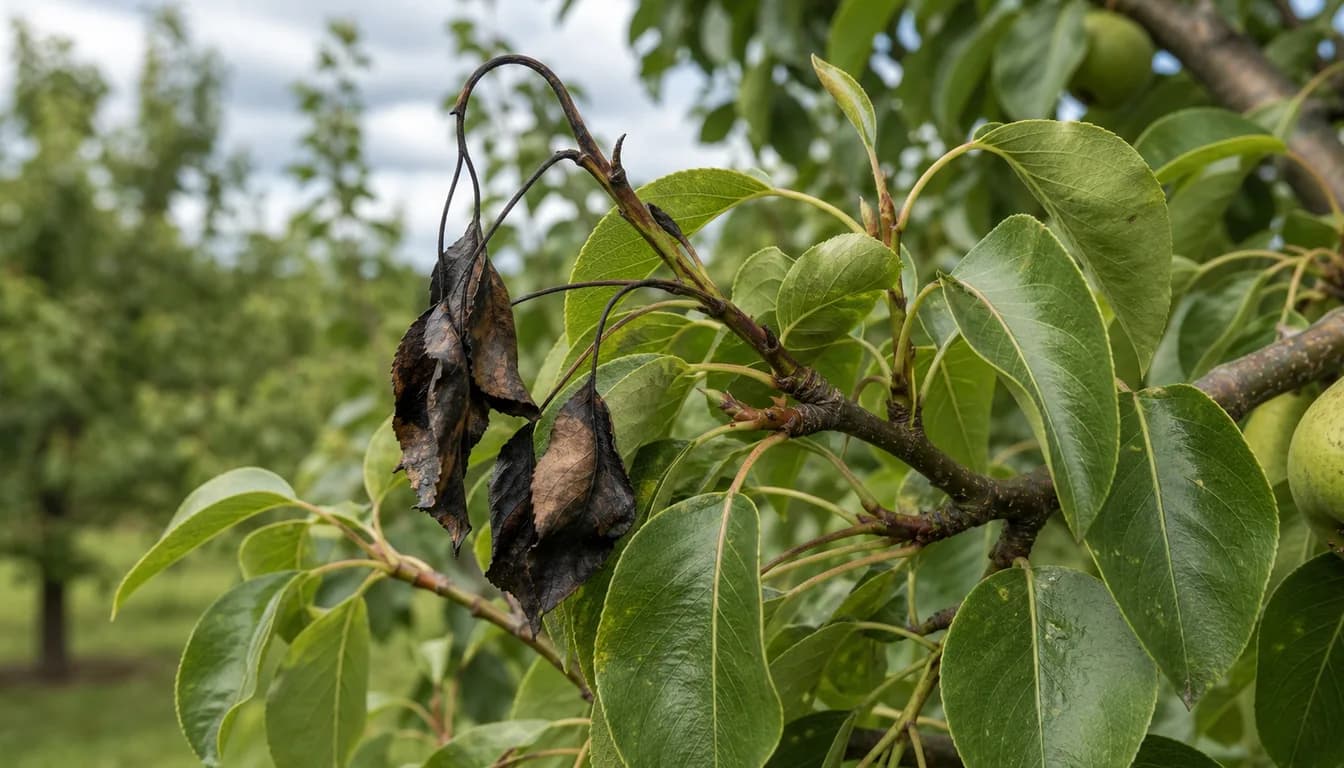
1. Blossom and young shoot infection
Likelihood: HighMost home-orchard outbreaks start during bloom or early shoot growth. Bacteria multiply on flowers, then move into stems where tender shoots wilt, blacken, and bend into the classic shepherd's crook.
Identification
- remove_circle_outlineBlossoms brown or blacken soon after wet bloom weather.
- remove_circle_outlineShoot tips wilt and hook downward.
- remove_circle_outlineLeaves stay attached and look scorched instead of dropping cleanly.
- remove_circle_outlineDamage can move down the shoot into a larger branch.
The Fix
- 1Prune infected shoots during dry weather.
- 2Cut at least 8-12 inches below visible symptoms into clean wood.
- 3Disinfect tools between cuts if you are working through active infection.
- 4Bag and remove infected prunings from the orchard area.
- 5Do not rely on general fungicides; fire blight is bacterial.