yard
KnowTheYard

databasePlant Database

Browse by category

potted_plant

Houseplants

Indoor & tropical species

nutrition

Vegetables

Edible garden crops

spa

Herbs

Culinary & medicinal

local_florist

Flowers

Ornamental blooms

water_drop

Succulents

Drought-tolerant species

park

Trees

Arboreal species

forest

Shrubs

Bushes & hedges

nature

Perennials

Garden flowers

grass

Lawn Grasses

Turf varieties

local_dining

Fruits

Fruit-bearing plants

Best Indoor Plantsarrow_forwardBest Shade Plantsarrow_forward

menu_bookGarden Guides

Step-by-step guides by task type

grass

Lawn Care

Seasonal checklists and year-round maintenance guides for a championship lawn.

yard

Planting

When, where, and how to plant — from seed to transplant for every garden type.

water_drop

Watering

Deep-watering techniques, schedules by plant type, and drought management.

compost

Fertilizing

Feeding schedules, NPK ratios, and organic vs synthetic options by plant.

pest_control

Pest Control

Identify, prevent, and treat common garden pests without harming beneficial insects.

content_cut

Pruning

Pruning timing, techniques, and tools for trees, shrubs, and flowering plants.

Popular Guides

parkFall Lawn Carelocal_floristSpring Lawn Carecalendar_monthFull Calendar
All Guidesarrow_forwardLawn Care Hubarrow_forward
ToolsCompareRegional GuidesPlant ProblemsPet SafetyAbout
searchPlant Finder
yardKnowTheYard

Published plant profiles, practical care guides, problem diagnosis pages, and side-by-side comparisons for home gardeners.

chatphoto_camera

databaseBrowse Plants

  • arrow_forwardHouseplants
  • arrow_forwardVegetables
  • arrow_forwardHerbs
  • arrow_forwardFlowers
  • arrow_forwardTrees

menu_bookResources

  • arrow_forwardGarden Tools
  • arrow_forwardRegional Guides
  • arrow_forwardPlant Problems
  • arrow_forwardPet Safety
  • arrow_forwardCare Calendar
  • arrow_forwardPlant Finder

infoCompany

  • arrow_forwardAbout Us
  • arrow_forwardOur Team
  • arrow_forwardMethodology
  • arrow_forwardEditorial Policy
  • arrow_forwardContact Us

mailEmail Updates

Join the list for new guides, seasonal notes, and launch updates.

No spam. Request removal anytime.

fact_check

Reviewed Pages

77 pages currently attributed to public review lanes

public

USDA Zone Coverage

Zone-aware recommendations and regional growing context

database

230 Published Plant Profiles

555 public pages across profiles, guides, comparisons, and problem pages

© 2026 KnowTheYard. All rights reserved.

Privacy PolicyTerms of ServiceContactSitemap
Home/trees/Cherry Blossom Tree: Plant the Spring Show Where You Will Actually See It/Leaf Spot
scienceEditorial DiagnosisUpdated Feb 20, 2026

Cherry Blossom Leaf Spot

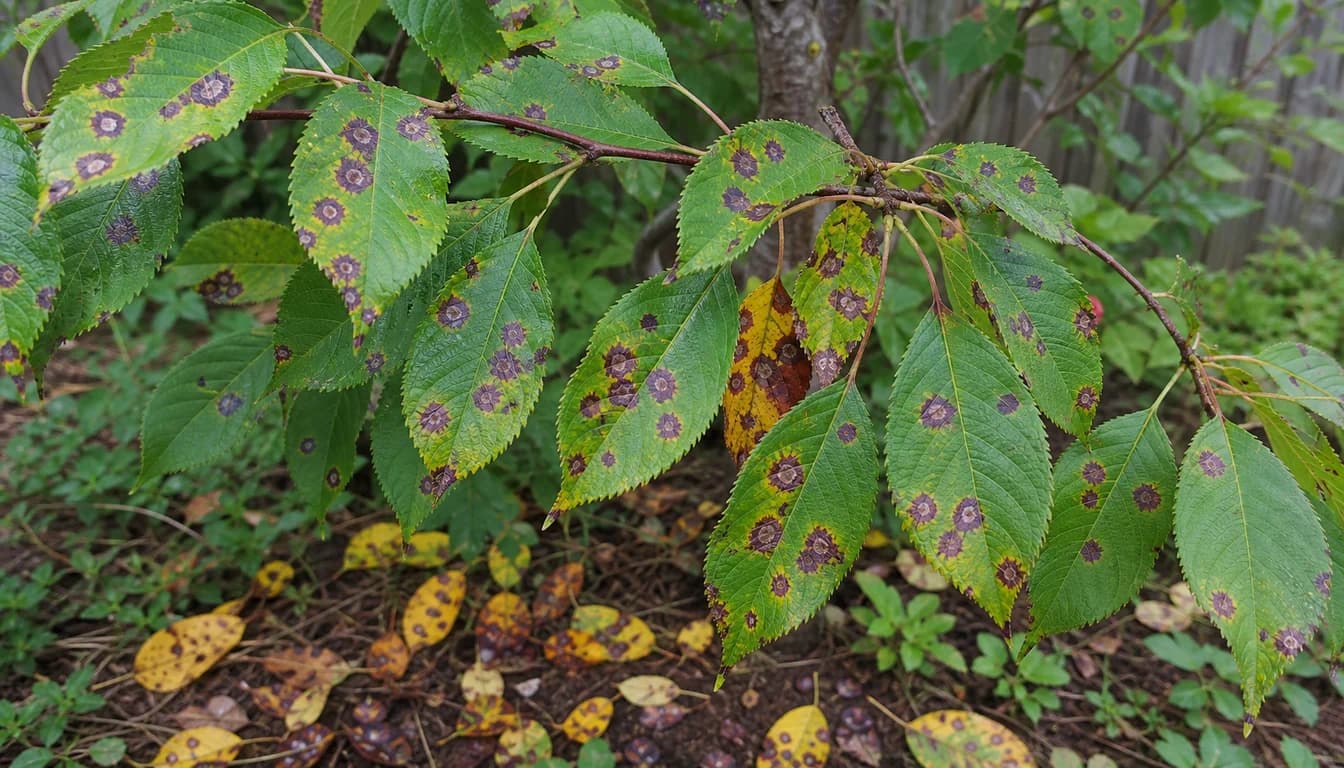
**Cherry Blossom** leaf spot is a wet-weather leaf disease pattern on ornamental Prunus trees. Look for small purple to reddish-brown spots, tan or brown centers, yellow halos, shot-hole areas, and early yellow leaf drop when spring or early-summer weather keeps foliage wet.

Cherry blossom branch with serrated green leaves showing purple-brown leaf spots, tan centers, and yellow halos.

Cherry blossom branch with serrated green leaves showing purple-brown leaf spots, tan centers, and yellow halos.

lightbulb
bolt

Quick Diagnosis

Most Likely Cause: Cherry leaf spot or shot-hole leaf spot on Prunus foliage.

If serrated Cherry Blossom leaves show purple-brown circular spots that later yellow, dry, drop out, or fall early, treat it as a leaf-spot problem. White powder, black shepherd's-crook shoots, or blossom collapse point to different diseases.

Jump to fix steps arrow_downward

Cherry Blossom trees in the Prunus group can develop leaf spot after wet spring weather. Common extension references tie classic cherry leaf spot to Blumeriella jaapii, while ornamental cherry shot-hole symptoms can also come from bacterial leaf spot; in the yard, the first job is reading the leaf pattern correctly.

The route-owned symptom is foliage damage, not sparse bloom. If the tree looks leafy but weakly flowered, compare poor flowering instead. If leaves have many purple-brown spots, yellow halos, and early drop, stay with this page.

The highest-payoff fixes are sanitation, faster leaf drying, and label-correct protection only when disease pressure is repeated. Start with Cherry Blossom tree care, then check whether the site gives full sun and good airflow or traps wet leaves for hours after rain.

menu_book
Guide - See AlsoAir Purifying Plants for Cleaner Indoor Air
chevron_right
psychology

How to tell leaf spot from other cherry problems

Leaf spot starts as spots on leaves. Powdery mildew looks like white coating; fire blight or bacterial shoot dieback blackens tender shoots; brown rot begins with blossoms and flower stems.

A few spotted leaves are usually cosmetic. Heavy spotting plus midsummer yellow leaf drop matters because repeated early defoliation weakens the tree and can reduce next year's growth.

Shot holes are not always insect feeding. On Prunus leaves, small round holes often form after infected tissue dries and falls out, especially in wet seasons.

If you already manage apple fungal leaf spots, the rhythm is familiar: reduce overwintering leaves, keep foliage dry, and protect only when repeated disease pressure justifies it.

thermostat

Environmental Baseline

Before diagnosing specific failures, confirm your Cherry Blossom Tree: Plant the Spring Show Where You Will Actually See It's environment matches its core care requirements.

forestCherry Blossom Tree: Plant the Spring Show Where You Will Actually See It Care Needs

  • Light: Full sun with open airflow
  • Water: Moderate; steady first years, then only during dry spells
  • Temp: Hardy to about ==**-20 F**== once established

homeTypical Indoor Home

  • Humidity: 30-50% (Low)
  • Temp: 65-72°F variable
  • Light: Often too dim or direct
biotech

Possible Causes

Sorted by likelihood

1. Cherry leaf spot or shot-hole pathogens

Likelihood: High

Fungal cherry leaf spot and related shot-hole leaf spot problems infect Prunus leaves during wet weather. Spots often start purple or reddish-brown, then leaves yellow and may drop early when infection is heavy.

Identification

  • remove_circle_outlineSmall purple, red-brown, or brown spots appear on leaf surfaces.
  • remove_circle_outlineSpots may develop tan centers, yellow halos, or dry centers that drop out.
  • remove_circle_outlineSeveral spots merge into larger dead patches on older leaves.
  • remove_circle_outlineHeavily spotted leaves turn yellow and fall before normal autumn drop.

The Fix

  1. 1Rake and remove infected fallen leaves so the disease cycle has less material to overwinter in.
  2. 2Bag badly diseased leaves or compost only if your pile runs hot and local guidance allows it.
  3. 3Avoid overhead irrigation that wets foliage.
  4. 4For valuable trees with repeated heavy defoliation, ask local extension about fungicides labeled for ornamental Prunus.
  5. 5Do not use fruit-tree spray advice on ornamental trees unless the product label matches your use.

2. Wet spring weather and slow leaf drying

Likelihood: Medium

Leaf spot spreads fastest when leaves stay wet. Dense branching, shade, low spots, frequent rain, and overhead sprinklers all stretch the leaf-wetness window and make infection more likely.

Identification

  • remove_circle_outlineSymptoms follow a rainy spring or repeated wet weeks.
  • remove_circle_outlineLower or interior leaves spot first because they dry slowly.
  • remove_circle_outlineThe tree sits in shade, a narrow side yard, or a low air pocket.
  • remove_circle_outlineNearby Prunus trees show similar spots at the same time.

The Fix

  1. 1Prune lightly during the appropriate season to improve airflow through crowded branches.
  2. 2Water at soil level and keep sprinklers off the canopy.
  3. 3Maintain a clean mulch ring so rain splash and turf competition are reduced.
  4. 4Keep the trunk flare clear; mulch piled against bark creates extra stress.
  5. 5If planting a new tree, choose an open site rather than a damp shaded corner.

3. Stressed or susceptible ornamental cherry

Likelihood: Low

A stressed Cherry Blossom tree tolerates defoliation poorly. Compacted soil, drought after disease, weak roots, or a susceptible cultivar can turn a mostly cosmetic leaf spot into a repeat vigor problem.

Identification

  • remove_circle_outlineLeaf spot returns heavily for several seasons.
  • remove_circle_outlineThe tree grows slowly the following spring after early defoliation.
  • remove_circle_outlineShoot growth is weak or branch tips thin after repeated disease years.
  • remove_circle_outlineThe site has compacted soil, turf competition, or poor drainage.

The Fix

  1. 1Water deeply during dry spells after the disease period so the tree can rebuild energy.
  2. 2Mulch 2-3 inches deep under the canopy, keeping mulch away from the trunk.
  3. 3Avoid high-nitrogen rescue feeding while the tree is stressed.
  4. 4Compare site needs with Japanese cherry and choose more locally proven cultivars when replacing.
  5. 5Remove severely declining trees if repeated defoliation combines with cankers, borers, or root damage.
menu_book
Guide - See AlsoBest Herbs to Grow Indoors for Real Harvests, Not Spindly Pots
chevron_right
potted_plant

Root Health Examination

A direct inspection of the root system distinguishes root rot from drought stress - saving weeks of guesswork.

check_circleHealthy Roots

  • Firm to the touch
  • White or light tan color
  • Earthy, pleasant smell

cancelCompromised Roots

  • Mushy or slimy texture
  • Dark brown or black color
  • Sour, rotting odor

Inspection Step: Gently slide the pot off while supporting the base of the stems. The outer root ball gives sufficient clues without disturbing all the soil.

gpp_bad
warning

When to Worry

A few yellow leaves are normal. If more than 20% of foliage turns yellow within a week, or new growth is affected, act immediately - check the roots first.

timeline

Recovery Protocols

Recovery takes time. Once the root cause is corrected, implement a 30-day stabilization window.

0-4 weeksLimit spread this season

Remove fallen infected leaves, stop wetting the canopy, and monitor new leaves. Existing spots will not heal, but cleaner new foliage means the pressure is slowing.

4-12 weeksSupport the tree

Water during dry spells, maintain a clean mulch ring, and avoid heavy pruning while the tree is stressed. Fungicides prevent new infections; they do not erase old spots.

Fall and winterBreak the carryover cycle

Rake leaf litter thoroughly, dispose of diseased debris, and plan light structural pruning for airflow. The next wet spring is the real test of sanitation and site correction.

menu_book
Guide - See AlsoBest Indoor Plants for Every Room and Light Level
chevron_right
shield

Preventing Future Issues

Prevent Cherry Blossom leaf spot by cleaning fallen leaves, avoiding overhead irrigation, spacing and pruning for airflow, and watching rainy springs closely. For leaf-litter handling, use safe composting habits. For broader small-tree care, compare ornamental trees with similar wet-weather disease pressure.

menu_book

Related Reads

menu_book
GuideAir Purifying Plants for Cleaner Indoor Air
chevron_right
menu_book
GuideBest Herbs to Grow Indoors for Real Harvests, Not Spindly Pots
chevron_right
menu_book
GuideBest Indoor Plants for Every Room and Light Level
chevron_right
menu_book
GuideWhat Do Japanese Beetles Eat In Your Yard
chevron_right
Cherry Blossom Tree: Plant the Spring Show Where You Will Actually See It (Prunus serrulata) - full care guidePrunus serrulata

Cherry Blossom Tree: Plant the Spring Show Where You Will Actually See It

Rosaceae Family

wb_sunny

Light

Full sun with open airflow

water_drop

Water

Moderate; steady first years, then only during dry spells

thermostat

Temp

Hardy to about ==**-20 F**== once established

yardFull Care Guide

On This Page

boltQuick DiagnosispsychologyUnderstandingthermostatEnvironment CheckbiotechPossible Causespotted_plantRoot ExamwarningWhen to WorrytimelineRecovery PlanshieldPreventionmenu_bookRelated Reads