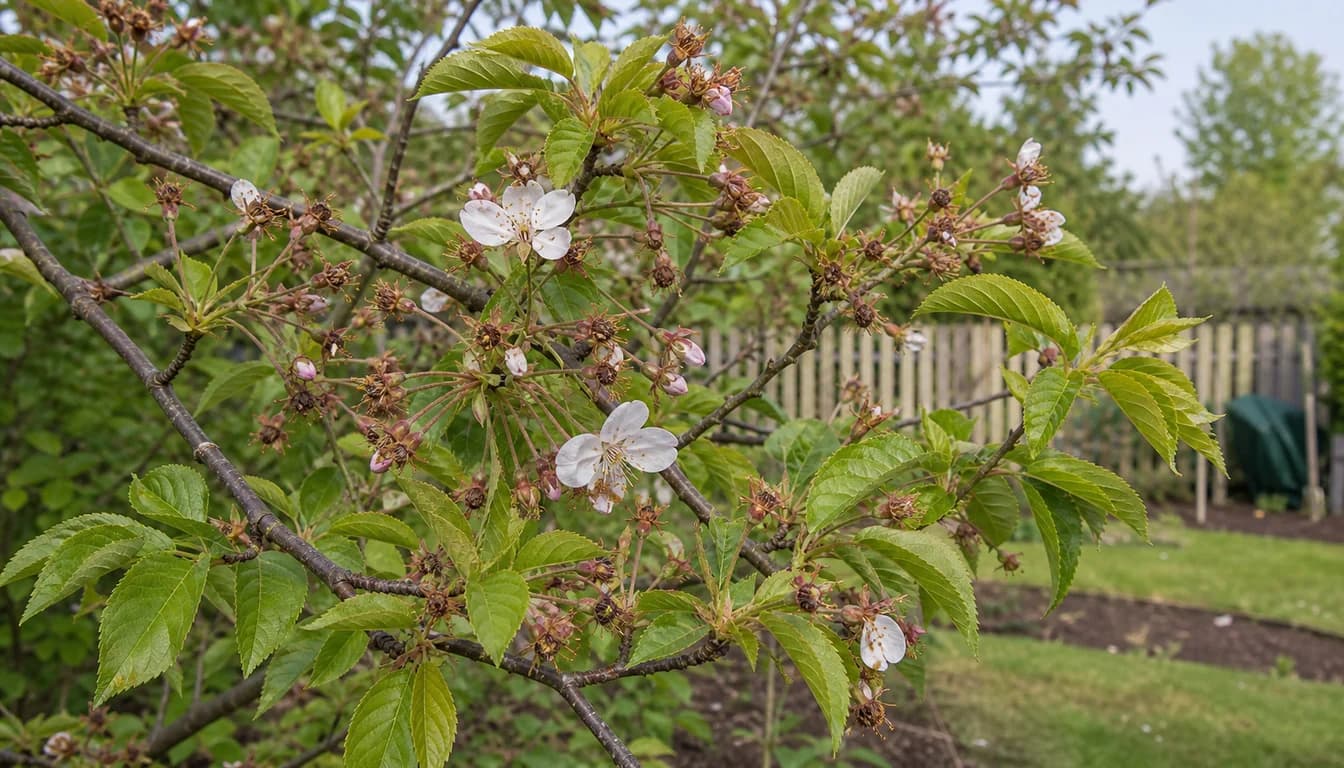
1. Late frost after buds swell
Likelihood: HighWarm late-winter weather can push flower buds out of dormancy. A hard freeze after that point can kill blossoms while leaf buds still survive, leaving a green tree with very few flowers.
Identification
- remove_circle_outlineBuds look black, brown, or water-soaked inside when cut open.
- remove_circle_outlineLeaves emerge normally but flowers are missing or sparse.
- remove_circle_outlineNearby early-blooming trees show similar bloom loss.
- remove_circle_outlineThe timing matches a freeze after several warm days.
The Fix
- 1Use local frost dates to judge whether protection is realistic for a small tree.
- 2Cover low branches or young trees with breathable frost cloth before a predicted freeze.
- 3Remove covers after the morning warms so buds dry.
- 4Avoid pruning live-looking flower spurs until you can see what survived.
- 5For repeat losses, choose a more sheltered site or later-blooming cultivar.