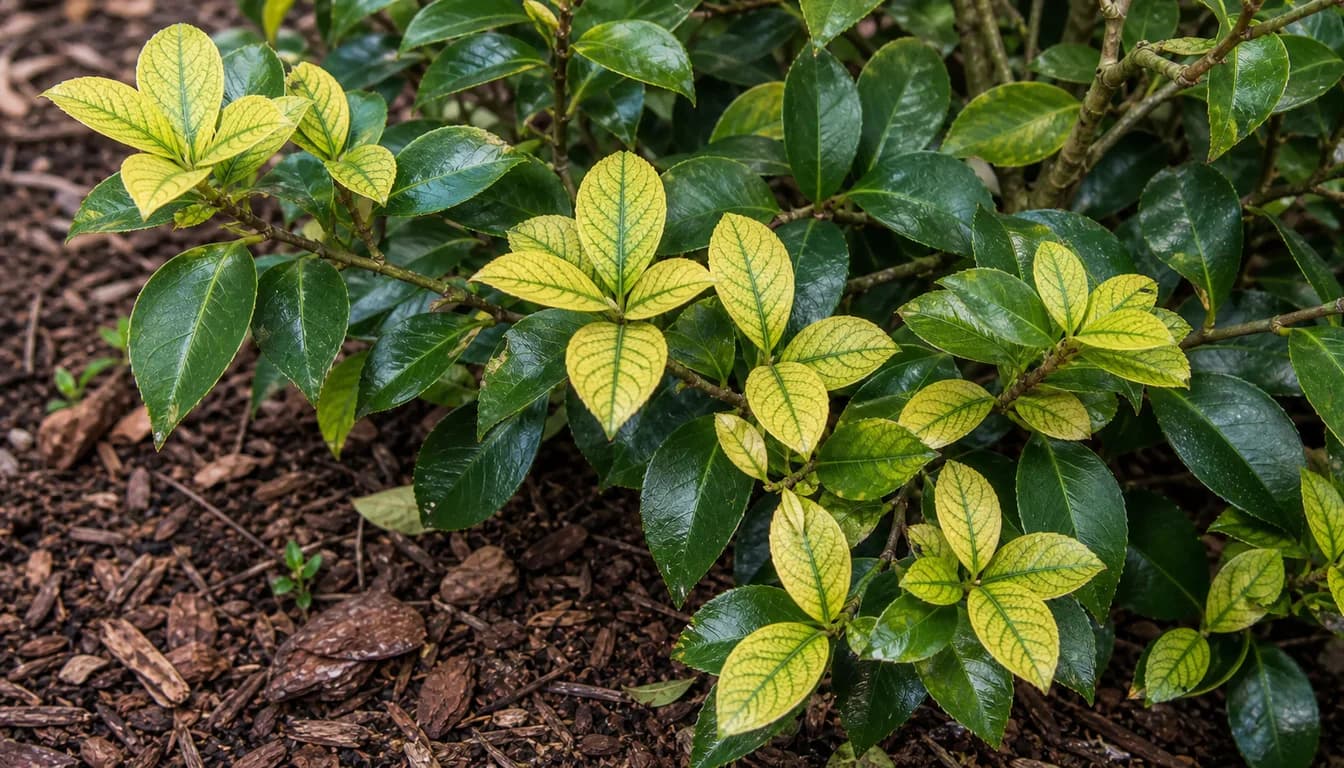
1. Iron chlorosis from high pH or compacted soil
Likelihood: HighCamellia needs an acidic root zone to access iron and other micronutrients. In alkaline, limed, or compacted soil, new leaves can turn pale yellow while veins stay darker green.
Identification
- remove_circle_outlineNew leaves show yellow tissue with darker green veins.
- remove_circle_outlineOlder leaves may stay darker while shoot tips look pale.
- remove_circle_outlineThe shrub is planted near concrete, lime-treated soil, or alkaline fill.
- remove_circle_outlineA soil test shows pH above the preferred range.
The Fix
- 1Test pH before adding amendments; aim near pH 5.5-6.5.
- 2Use a labeled iron chelate as a temporary correction if new leaves are strongly chlorotic.
- 3Acidify slowly with sulfur or acid-forming amendments according to soil-test guidance.
- 4Top-dress with pine bark fines, leaf mold, or acidic compost to improve root-zone structure.
- 5Avoid lime, wood ash, and concrete runoff near the shrub.