yard
KnowTheYard

databasePlant Database

Browse by category

potted_plant

Houseplants

Indoor & tropical species

nutrition

Vegetables

Edible garden crops

spa

Herbs

Culinary & medicinal

local_florist

Flowers

Ornamental blooms

water_drop

Succulents

Drought-tolerant species

park

Trees

Arboreal species

forest

Shrubs

Bushes & hedges

nature

Perennials

Garden flowers

grass

Lawn Grasses

Turf varieties

local_dining

Fruits

Fruit-bearing plants

Best Indoor Plantsarrow_forwardBest Shade Plantsarrow_forward

menu_bookGarden Guides

Step-by-step guides by task type

grass

Lawn Care

Seasonal checklists and year-round maintenance guides for a championship lawn.

yard

Planting

When, where, and how to plant — from seed to transplant for every garden type.

water_drop

Watering

Deep-watering techniques, schedules by plant type, and drought management.

compost

Fertilizing

Feeding schedules, NPK ratios, and organic vs synthetic options by plant.

pest_control

Pest Control

Identify, prevent, and treat common garden pests without harming beneficial insects.

content_cut

Pruning

Pruning timing, techniques, and tools for trees, shrubs, and flowering plants.

Popular Guides

parkFall Lawn Carelocal_floristSpring Lawn Carecalendar_monthFull Calendar
All Guidesarrow_forwardLawn Care Hubarrow_forward
ToolsCompareRegional GuidesPlant ProblemsPet SafetyAbout
searchPlant Finder
yardKnowTheYard

Published plant profiles, practical care guides, problem diagnosis pages, and side-by-side comparisons for home gardeners.

chatphoto_camera

databaseBrowse Plants

  • arrow_forwardHouseplants
  • arrow_forwardVegetables
  • arrow_forwardHerbs
  • arrow_forwardFlowers
  • arrow_forwardTrees

menu_bookResources

  • arrow_forwardGarden Tools
  • arrow_forwardRegional Guides
  • arrow_forwardPlant Problems
  • arrow_forwardPet Safety
  • arrow_forwardCare Calendar
  • arrow_forwardPlant Finder

infoCompany

  • arrow_forwardAbout Us
  • arrow_forwardOur Team
  • arrow_forwardMethodology
  • arrow_forwardEditorial Policy
  • arrow_forwardContact Us

mailEmail Updates

Join the list for new guides, seasonal notes, and launch updates.

No spam. Request removal anytime.

fact_check

Reviewed Pages

77 pages currently attributed to public review lanes

public

USDA Zone Coverage

Zone-aware recommendations and regional growing context

database

230 Published Plant Profiles

555 public pages across profiles, guides, comparisons, and problem pages

© 2026 KnowTheYard. All rights reserved.

Privacy PolicyTerms of ServiceContactSitemap
Home/herbs/Sweet Basil for Warm Climate Gardens/Yellow Leaves
scienceEditorial DiagnosisUpdated Feb 20, 2026

Yellow Leaves on Sweet Basil

Yellow leaves on **Sweet Basil** usually come from overwatering, lack of nitrogen, or cold stress. This page ranks those causes by how often they happen and walks you through checking and fixing each one step by step.

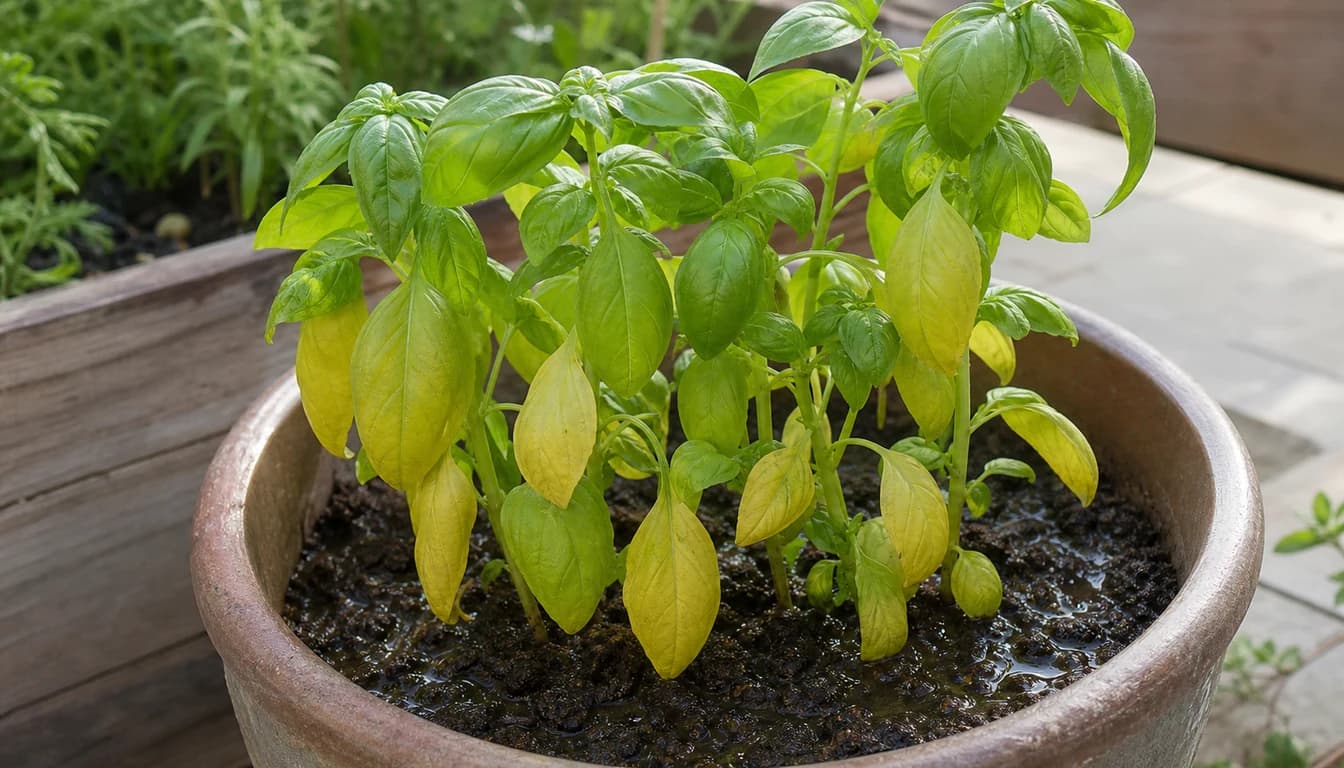
Sweet basil plant with yellow lower leaves, greener top growth, and damp potting soil in a patio container.

Sweet basil plant with yellow lower leaves, greener top growth, and damp potting soil in a patio container.

lightbulb
bolt

Quick Diagnosis

Most Likely Cause: Consistently wet soil and overwatering.

Constantly damp soil starves Sweet Basil roots of oxygen, so leaves yellow from the bottom up. Compare soil moisture near your basil to nearby vegetables like tomato plants; if basil soil feels wetter, watering is the problem.

Jump to fix steps arrow_downward

Herbs like Sweet Basil have much finer roots than woody plants, so they react faster to soggy soil than tougher herbs such as container rosemary bushes. That rapid response is why basil’s leaves yellow so quickly after heavy rain.

Outdoor basil in raised beds usually drains faster than tightly packed pots on a patio, so watering habits must change too. If you use the same schedule everywhere, reading a deep versus frequent watering guide can help reset expectations.

Because basil is treated as an annual in most zones, it rarely gets the second chances that perennials enjoy. A quick replant from starts, just like you might with backup tomato seedlings, is often easier than nursing a badly yellowed plant.

compare_arrows
Comparison - See AlsoBasil vs Cilantro
chevron_right
psychology

Why basil yellowing tricks gardeners

Sweet Basil grows fast, so roots, leaves, and stems all react quickly to changes in water, nutrients, or temperature. The same soft yellow color can signal very different problems, especially during peak summer growth.

Most people study the leaves and forget the root zone, but root condition tells the real story for yellowing basil. Gently loosening soil to inspect moisture and root color separates water stress from pure nutrient hunger.

Some yellow basil leaves will never fully green up again, even after you correct the cause. Watch new growth over the next two weeks, since fresh, deeper green leaves signal the plant is recovering and care is back on track.

thermostat

Environmental Baseline

Before diagnosing specific failures, confirm your Sweet Basil for Warm Climate Gardens's environment matches its core care requirements.

forestSweet Basil for Warm Climate Gardens Care Needs

  • Light: Full sun, 6-8 hours
  • Water: Moderate, keep evenly moist, never soggy
  • Temp: Best growth at 70-90°F, damaged below 50°F

homeTypical Indoor Home

  • Humidity: 30-50% (Low)
  • Temp: 65-72°F variable
  • Light: Often too dim or direct
biotech

Possible Causes

Sorted by likelihood

1. Overwatering and poor drainage

Likelihood: High

Yellowing that starts on older, lower basil leaves with limp stems usually means roots sit in soggy soil. Herbs grown near thirsty crops like peppers in beds often get watered more than they tolerate.

Identification

  • remove_circle_outlineLower leaves yellow first, then soften, while newest top growth stays light green
  • remove_circle_outlineSoil feels wet more than two inches down even several days after watering
  • remove_circle_outlineContainer or bed has no clear drainage holes or water pools around basil stems
  • remove_circle_outlineRoots appear tan or brown and smell sour when you gently dig near the crown

The Fix

  1. 1Check soil moisture two inches deep before watering and note how long it stays wet afterward.
  2. 2Skip watering until the top two inches feel dry, then water slowly until excess drains from holes.
  3. 3Improve drainage by loosening soil around plants and mixing in coarse compost or perlite lightly.
  4. 4If in pots, repot into fresh, well‑drained mix and a container with several open drain holes.
  5. 5Going forward, water basil only when the top one to two inches dry, never on a fixed schedule.

2. Nitrogen deficiency in lean or leached soil

Likelihood: Medium

Even, pale yellow Sweet Basil leaves with green veins on the newest growth point to low nitrogen. This often follows heavy rains, frequent harvests, or unfertilized containers near hungry crops like kale rows.

Identification

  • remove_circle_outlineNewer upper leaves turn pale green to yellow while oldest leaves stay only slightly faded
  • remove_circle_outlineLeaf veins stay somewhat greener than the tissue between, giving a washed‑out appearance
  • remove_circle_outlineStems stay thin, plants look spindly, and overall growth slows despite warm temperatures
  • remove_circle_outlineSoil has not received fertilizer or compost since planting and is very light or sandy

The Fix

  1. 1Inspect several plants and confirm newer leaves are paling evenly while veins stay slightly greener.
  2. 2Apply a balanced, basil‑safe fertilizer at half label rate, focusing on nitrogen content for foliage.
  3. 3Water thoroughly after feeding so nutrients soak six to eight inches into the basil root zone.
  4. 4Side‑dress with one half‑inch layer of compost around each plant base to provide slow nutrients.
  5. 5Repeat light feeding every three to four weeks, avoiding heavy doses that burn tender basil roots.

3. Cold stress and temperature swings

Likelihood: Low

Yellowing on Sweet Basil soon after a chilly night or cold rain means temperature stress, not soil issues. Sensitive basil planted out with hardy crops like early broccoli starts often shows this first.

Identification

  • remove_circle_outlineYellowing follows a night in the mid‑40s Fahrenheit with no watering change beforehand
  • remove_circle_outlineNewest leaves look slightly puckered or dull, sometimes with faint grayish or translucent areas
  • remove_circle_outlineLeaf edges may curl downward while soil moisture and drainage remain normal when checked
  • remove_circle_outlineNearby warm‑season plants also pause growth, yet cool‑tolerant vegetables continue growing well

The Fix

  1. 1Confirm recent low temperatures using a garden thermometer or local weather history before changing watering.
  2. 2Check soil moisture two inches deep to be sure conditions are not also soggy around basil roots.
  3. 3On forecasted cold nights, cover basil with fabric or a light sheet, avoiding plastic touching leaves.
  4. 4If plants are in containers, move them against a sheltered wall when temperatures drop below fifty degrees.
  5. 5Wait a week for new, healthy green leaves before pruning yellow ones, then plant basil later next season.
compare_arrows
Comparison - See AlsoBasil vs Rosemary
chevron_right
potted_plant

Root Health Examination

A direct inspection of the root system distinguishes root rot from drought stress - saving weeks of guesswork.

check_circleHealthy Roots

  • Firm to the touch
  • White or light tan color
  • Earthy, pleasant smell

cancelCompromised Roots

  • Mushy or slimy texture
  • Dark brown or black color
  • Sour, rotting odor

Inspection Step: Gently slide the pot off while supporting the base of the stems. The outer root ball gives sufficient clues without disturbing all the soil.

gpp_bad
warning

When to Worry

A few yellow leaves are normal. If more than 20% of foliage turns yellow within a week, or new growth is affected, act immediately - check the roots first.

timeline

Recovery Protocols

Recovery takes time. Once the root cause is corrected, implement a 30-day stabilization window.

Week 1–2Stop the Decline

Cut back any watering and let the top 1–2 inches of soil dry fully before you touch the hose. Remove the worst yellow leaves so you can track whether new foliage stays green in the following days.

Week 3–4Watch New Growth

Check the newest leaves near the tips every few days for richer green color and normal size. If growth still looks pale or stunted, repeat a light feeding or further improve drainage around the root zone.

Week 5–8Set New Routine

Once basil pushes several sets of healthy green leaves, settle into a watering pattern based on soil feel, not the calendar. Harvest lightly from vigorous stems so the plant keeps sending out thick, leafy new shoots.

menu_book
Guide - See AlsoAir Purifying Plants for Cleaner Indoor Air
chevron_right
shield

Preventing Future Issues

Use your finger as a moisture gauge, watering only when the top 1–2 inches of soil feel dry instead of following the weather forecast. Pair that habit with a light feeding every 3–4 weeks to keep basil foliage richly green.

menu_book

Related Reads

compare_arrows
ComparisonBasil vs Cilantro
chevron_right
compare_arrows
ComparisonBasil vs Rosemary
chevron_right
menu_book
GuideAir Purifying Plants for Cleaner Indoor Air
chevron_right
menu_book
GuideBest Herbs to Grow Indoors for Real Harvests, Not Spindly Pots
chevron_right
menu_book
GuideBest Indoor Plants for Every Room and Light Level
chevron_right
Sweet Basil for Warm Climate Gardens (Ocimum basilicum) - full care guideOcimum basilicum

Sweet Basil for Warm Climate Gardens

Lamiaceae Family

wb_sunny

Light

Full sun, 6-8 hours

water_drop

Water

Moderate, keep evenly moist, never soggy

thermostat

Temp

Best growth at 70-90°F, damaged below 50°F

yardFull Care Guide

On This Page

boltQuick DiagnosispsychologyUnderstandingthermostatEnvironment CheckbiotechPossible Causespotted_plantRoot ExamwarningWhen to WorrytimelineRecovery PlanshieldPreventionmenu_bookRelated Reads