yard
KnowTheYard

databasePlant Database

Browse by category

potted_plant

Houseplants

Indoor & tropical species

nutrition

Vegetables

Edible garden crops

spa

Herbs

Culinary & medicinal

local_florist

Flowers

Ornamental blooms

water_drop

Succulents

Drought-tolerant species

park

Trees

Arboreal species

forest

Shrubs

Bushes & hedges

nature

Perennials

Garden flowers

grass

Lawn Grasses

Turf varieties

local_dining

Fruits

Fruit-bearing plants

Best Indoor Plantsarrow_forwardBest Shade Plantsarrow_forward

menu_bookGarden Guides

Step-by-step guides by task type

grass

Lawn Care

Seasonal checklists and year-round maintenance guides for a championship lawn.

yard

Planting

When, where, and how to plant — from seed to transplant for every garden type.

water_drop

Watering

Deep-watering techniques, schedules by plant type, and drought management.

compost

Fertilizing

Feeding schedules, NPK ratios, and organic vs synthetic options by plant.

pest_control

Pest Control

Identify, prevent, and treat common garden pests without harming beneficial insects.

content_cut

Pruning

Pruning timing, techniques, and tools for trees, shrubs, and flowering plants.

Popular Guides

parkFall Lawn Carelocal_floristSpring Lawn Carecalendar_monthFull Calendar
All Guidesarrow_forwardLawn Care Hubarrow_forward
ToolsCompareRegional GuidesPlant ProblemsPet SafetyAbout
searchPlant Finder
yardKnowTheYard

Published plant profiles, practical care guides, problem diagnosis pages, and side-by-side comparisons for home gardeners.

chatphoto_camera

databaseBrowse Plants

  • arrow_forwardHouseplants
  • arrow_forwardVegetables
  • arrow_forwardHerbs
  • arrow_forwardFlowers
  • arrow_forwardTrees

menu_bookResources

  • arrow_forwardGarden Tools
  • arrow_forwardRegional Guides
  • arrow_forwardPlant Problems
  • arrow_forwardPet Safety
  • arrow_forwardCare Calendar
  • arrow_forwardPlant Finder

infoCompany

  • arrow_forwardAbout Us
  • arrow_forwardOur Team
  • arrow_forwardMethodology
  • arrow_forwardEditorial Policy
  • arrow_forwardContact Us

mailEmail Updates

Join the list for new guides, seasonal notes, and launch updates.

No spam. Request removal anytime.

fact_check

Reviewed Pages

77 pages currently attributed to public review lanes

public

USDA Zone Coverage

Zone-aware recommendations and regional growing context

database

230 Published Plant Profiles

555 public pages across profiles, guides, comparisons, and problem pages

© 2026 KnowTheYard. All rights reserved.

Privacy PolicyTerms of ServiceContactSitemap
Home/lawn grasses/Bahia Grass for Tough, Low-Input Lawns/Thin Lawn
scienceEditorial DiagnosisUpdated Feb 20, 2026

Bahia Grass Thin Lawn

Diagnosis and repair guidance for thin or sparse **Bahia grass** (Paspalum notatum) lawns. Practical checks, fixes, and seasonal plans to restore density across zones **3-11**.

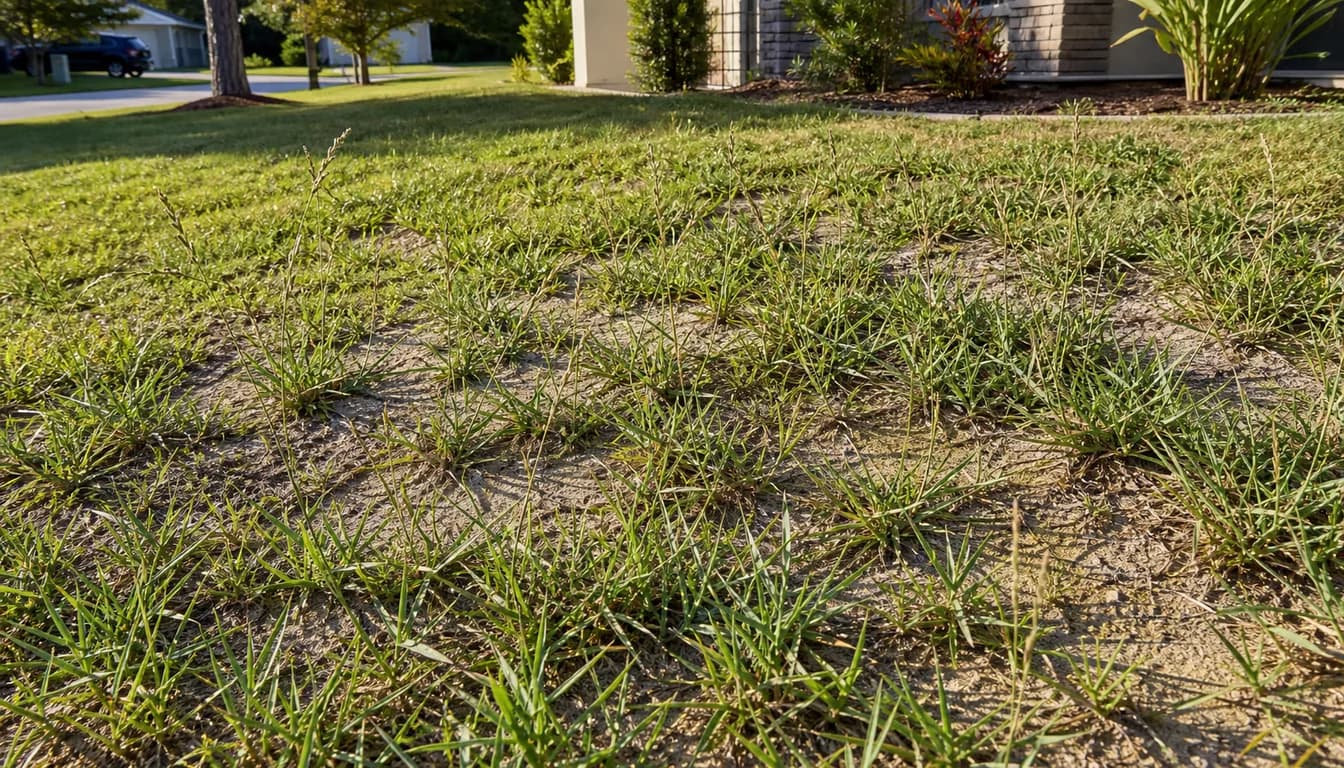
Thin Bahia grass lawn with coarse green clumps, seedhead stalks, and sandy soil gaps between sparse turf.

Thin Bahia grass lawn with coarse green clumps, seedhead stalks, and sandy soil gaps between sparse turf.

lightbulb
bolt

Quick Diagnosis

Most Likely Cause: Heat, drought stress, or improper mowing leading to weakened stands and slow recovery..

Bahia is a tough warm-season turf but thins when stressed by shallow watering, low mowing height, nutrient imbalance, compaction, or chronic shade; start with simple cultural fixes (mow, water, feed, aerate) before treating pests or reseeding, and use a quick visual weed and turf identification guide if weeds or patch patterns look unfamiliar.

Jump to fix steps arrow_downward

Bahia grass (Paspalum notatum) is a warm-season turfgrass known for coarse blades, drought tolerance, and slow early spring green-up. In a healthy stand across zones 3-11, it should form a low, open but continuous sward that tolerates poor soils and heat. Thinning shows as areas with visible soil between clumps, tufts of seedstalks, or patchy color rather than a fine, carpet-like turf.

Our goal is practical: diagnose whether thinning is reversible with cultural care, or whether overseeding or reestablishing is needed. Bahia responds well to correct mowing height, deeper infrequent watering, and modest nitrogen in summer. It resists heavy shade and prefers full sun to light shade; review basic species information for Bahia grass when planning recovery.

Before any pesticide or reseeding decision, ask these: Is thinning seasonal (winter dormancy, late-spring transition) or year-round? Are patches circular or irregular (pests/disease vs. traffic/compaction)? Has care changed recently-mower height, irrigation schedule, or fertilizer type?

menu_book
Guide - See AlsoBest Time to Aerate and Overseed for a Thicker Lawn
chevron_right
psychology

How thinning shows in Bahia grass and what to expect

Thinning often begins as reduced tiller density-fewer shoots per square inch-so you see soil between clumps and longer gaps after traffic or drought. Bahia naturally forms clumps rather than a fine sod, so the goal is a continuous stand rather than velvet-like density.

Temporary thinning during winter dormancy or the spring transition is normal; persistent thinning into the summer usually signals cultural issues (water, mow, feed) or chronic problems like compaction or shade. Quick wins come from correcting mowing and watering; deeper fixes like overseeding or resodding are last resorts.

If you suspect pests or disease, treat only after confirming signs because unnecessary pesticides waste money and delay recovery. Use the identification checklist below before applying insecticides or fungicides.

thermostat

Environmental Baseline

Before diagnosing specific failures, confirm your Bahia Grass for Tough, Low-Input Lawns's environment matches its core care requirements.

forestBahia Grass for Tough, Low-Input Lawns Care Needs

  • Light: Full sun to very light shade
  • Water: Low once established
  • Temp: Best growth **75–90°F**

homeTypical Indoor Home

  • Humidity: 30-50% (Low)
  • Temp: 65-72°F variable
  • Light: Often too dim or direct
biotech

Possible Causes

Sorted by likelihood

1. Shallow or infrequent deep watering / drought stress

Likelihood: High

Bahia survives drought but thins when roots are kept shallow by frequent light sprinkling or when summer droughts persist. Shallow watering favors surface roots and weak tillering.

Identification

  • remove_circle_outlineGrass tufts with dry, brown tips while lower canopy stays brittle
  • remove_circle_outlineSoil feels dry below 2-3 inches when checked with a trowel
  • remove_circle_outlineSparse areas follow sprinkler coverage gaps or slope/runoff patterns
  • remove_circle_outlineRecovery slows in summer heat without deeper moisture

The Fix

  1. 1Switch to deep, infrequent watering: 1-1.25 inches per week total, applied in 1-2 sessions depending on zone and soil
  2. 2Water early morning between 3-6 AM to reduce evaporation and disease risk
  3. 3Use a screwdriver or probe to check moisture at 3-4 inches; stop light daily sprinkler cycles
  4. 4Adjust schedule in hot zones (8-11) to slightly more frequent deep sessions during heat waves
  5. 5Consider irrigation repair if gaps align with thin patches

2. Improper mowing height or scalping

Likelihood: High

Cutting Bahia too short or scalping removes leaf area needed for photosynthesis and reduces tiller density. Frequent scalping in spring also exposes soil and encourages weeds.

Identification

  • remove_circle_outlineBlades cut below recommended height, exposing crowns or brown base
  • remove_circle_outlineGrass with many seedheads and thin leaf density after aggressive mowing
  • remove_circle_outlineNew growth is slow after a low mow and compaction is present
  • remove_circle_outlineThin, stripy areas correspond to recent mowing passes

The Fix

  1. 1Set mower to 3-4 inches for Bahia; never remove more than one-third of blade at a cut
  2. 2Raise height in summer heat to reduce stress and aid shading of soil
  3. 3Sharpen mower blades to avoid tearing which increases stress and disease susceptibility
  4. 4Mow more often at higher setting rather than infrequently at a low cut
  5. 5Leave clippings to return nutrients unless disease or heavy thatch exists

3. Nutrient imbalance or low nitrogen

Likelihood: Medium

Low available nitrogen or unbalanced soil pH can slow tiller production and give a thin, pale lawn. Bahia needs moderate summer N and tolerates poorer soils but still benefits from correct feeding.

Identification

  • remove_circle_outlineUniformly pale green or yellowing blades without obvious pests
  • remove_circle_outlineSlow lateral spread and few tillers despite correct watering and mowing
  • remove_circle_outlineSoil test shows low nitrogen or pH outside 6.0-7.0 range
  • remove_circle_outlineThin growth after long winter without spring starter or refeed

The Fix

  1. 1Get a soil test first; many fixes depend on pH and existing nutrients
  2. 2Apply a balanced slow-release fertilizer in late spring and again mid-summer following label rates for Bahia
  3. 3Avoid high-phosphorus mixes unless soil test shows deficiency
  4. 4Consider organic compost topdress at 1/4 inch to improve biology and structure
  5. 5Follow seasonal feeding recommendations for timing and rates
menu_book
Guide - See AlsoBest Time to Overseed a Midwest Lawn for Thick Turf
chevron_right
potted_plant

Root Health Examination

A direct inspection of the root system distinguishes root rot from drought stress - saving weeks of guesswork.

check_circleHealthy Roots

  • Firm to the touch
  • White or light tan color
  • Earthy, pleasant smell

cancelCompromised Roots

  • Mushy or slimy texture
  • Dark brown or black color
  • Sour, rotting odor

Inspection Step: Gently slide the pot off while supporting the base of the stems. The outer root ball gives sufficient clues without disturbing all the soil.

gpp_bad
warning

When to Worry

A few yellow leaves are normal. If more than 20% of foliage turns yellow within a week, or new growth is affected, act immediately - check the roots first.

timeline

Recovery Protocols

Recovery takes time. Once the root cause is corrected, implement a 30-day stabilization window.

0-2 weeksImmediate checks and fixes

Adjust mower height to **3-4 inches**, sharpen blades, start deep-watering schedule, and correct any broken irrigation heads. Run a quick soil moisture check and mark irrigation coverage gaps. You may see leaf color improve within days after feeding or watering.

3-8 weeksCultural response and tiller increase

With consistent deep watering, proper mowing, and balanced fertilizer, Bahia should begin producing more tillers and fill narrow gaps in 4-8 weeks during active growth. Expect faster results in warmer zones and slower recovery in cooler transition seasons.

9-16 weeksConsider overseeding or reseeding if poor response

If density hasn't improved after 3 months, evaluate soil compaction, shade, and pest damage. Aeration followed by overseeding can help; use Bahia seed where possible or compatible warm-season grasses in blends. Full reestablishment from seed may take 10-16 weeks to form an even stand.

menu_book
Guide - See AlsoBest Time to Overseed a Northeast Lawn for Thick Turf
chevron_right
shield

Preventing Future Issues

Prevent thinning by maintaining 3-4 inch mowing height, following a deep watering schedule, aerating annually, and doing a soil test every 3-4 years to guide fertilizer and lime; annual aeration paired with topdressing helps roots explore loosened soil, so include a short guide on aeration versus dethatching when planning fall or spring maintenance. Tip: If you see uniform thinning with no brown edges, suspect late-season heat stress or temporary drought; irregular patches suggest pests, disease, or soil issues.

menu_book

Related Reads

menu_book
GuideBest Time to Aerate and Overseed for a Thicker Lawn
chevron_right
menu_book
GuideBest Time to Overseed a Midwest Lawn for Thick Turf
chevron_right
menu_book
GuideBest Time to Overseed a Northeast Lawn for Thick Turf
chevron_right
menu_book
GuideGrow Strong St Augustine Grass in Shady Yards
chevron_right
menu_book
GuideWhen to Cut Grass After Overseeding Without Killing New Seed
chevron_right
Bahia Grass for Tough, Low-Input Lawns (Paspalum notatum) - full care guidePaspalum notatum

Bahia Grass for Tough, Low-Input Lawns

Poaceae Family

wb_sunny

Light

Full sun to very light shade

water_drop

Water

Low once established

thermostat

Temp

Best growth **75–90°F**

yardFull Care Guide

On This Page

boltQuick DiagnosispsychologyUnderstandingthermostatEnvironment CheckbiotechPossible Causespotted_plantRoot ExamwarningWhen to WorrytimelineRecovery PlanshieldPreventionmenu_bookRelated Reads