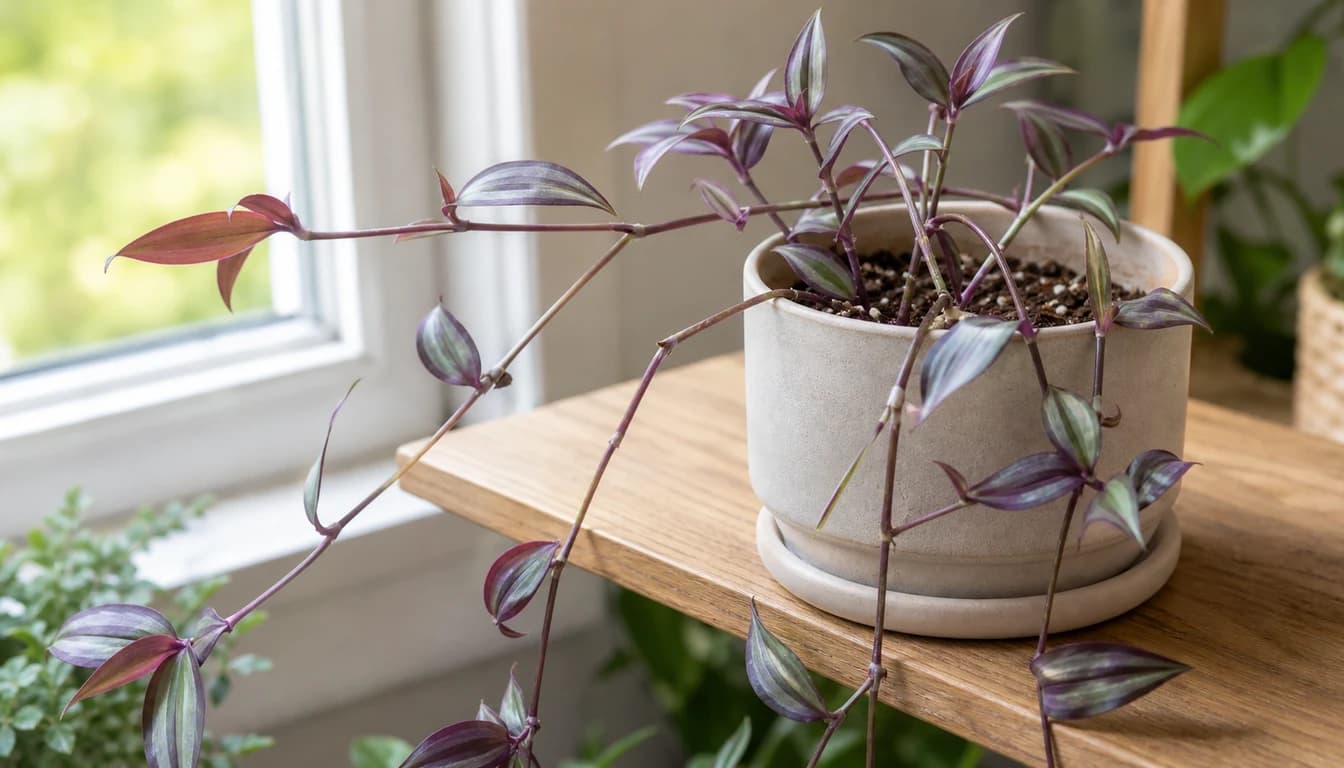
1. Insufficient light (Etiolation)
Likelihood: HighLow light is the most common cause of long, sparsely leaved stems. When Tradescantia senses shade it prioritizes stem extension to find brighter spots, producing longer internodes and smaller or paler leaves. Window placement matters - north-facing windows or shaded rooms often lack the intensity Wandering Jew needs.
Identification
- remove_circle_outlineStems elongated with long gaps between leaves (long internodes).
- remove_circle_outlineFoliage paler or washed out compared with typical variegation.
- remove_circle_outlineNew growth concentrated at stem tips while lower leaves drop.
- remove_circle_outlineLeggy appearance becomes more pronounced in winter or in rooms with no direct light.
The Fix
- 1Move the plant to a brighter spot with bright indirect light - an east or east-ish window works well.
- 2Rotate pot weekly so all sides receive light and stems don’t permanently lean.
- 3If natural light is limited, use a full-spectrum grow light 12-14 inches above the canopy for 10-14 hours daily to restore compact growth.
- 4Avoid sudden sun exposure on scorched leaves; acclimate to stronger light over a week.
- 5Reference grow-light placement for indoor species like timing your light and water routine when scheduling supplemental lighting.