yard
KnowTheYard

databasePlant Database

Browse by category

potted_plant

Houseplants

Indoor & tropical species

nutrition

Vegetables

Edible garden crops

spa

Herbs

Culinary & medicinal

local_florist

Flowers

Ornamental blooms

water_drop

Succulents

Drought-tolerant species

park

Trees

Arboreal species

forest

Shrubs

Bushes & hedges

nature

Perennials

Garden flowers

grass

Lawn Grasses

Turf varieties

local_dining

Fruits

Fruit-bearing plants

Best Indoor Plantsarrow_forwardBest Shade Plantsarrow_forward

menu_bookGarden Guides

Step-by-step guides by task type

grass

Lawn Care

Seasonal checklists and year-round maintenance guides for a championship lawn.

yard

Planting

When, where, and how to plant — from seed to transplant for every garden type.

water_drop

Watering

Deep-watering techniques, schedules by plant type, and drought management.

compost

Fertilizing

Feeding schedules, NPK ratios, and organic vs synthetic options by plant.

pest_control

Pest Control

Identify, prevent, and treat common garden pests without harming beneficial insects.

content_cut

Pruning

Pruning timing, techniques, and tools for trees, shrubs, and flowering plants.

Popular Guides

parkFall Lawn Carelocal_floristSpring Lawn Carecalendar_monthFull Calendar
All Guidesarrow_forwardLawn Care Hubarrow_forward
ToolsCompareRegional GuidesPlant ProblemsPet SafetyAbout
searchPlant Finder
yardKnowTheYard

Published plant profiles, practical care guides, problem diagnosis pages, and side-by-side comparisons for home gardeners.

chatphoto_camera

databaseBrowse Plants

  • arrow_forwardHouseplants
  • arrow_forwardVegetables
  • arrow_forwardHerbs
  • arrow_forwardFlowers
  • arrow_forwardTrees

menu_bookResources

  • arrow_forwardGarden Tools
  • arrow_forwardRegional Guides
  • arrow_forwardPlant Problems
  • arrow_forwardPet Safety
  • arrow_forwardCare Calendar
  • arrow_forwardPlant Finder

infoCompany

  • arrow_forwardAbout Us
  • arrow_forwardOur Team
  • arrow_forwardMethodology
  • arrow_forwardEditorial Policy
  • arrow_forwardContact Us

mailEmail Updates

Join the list for new guides, seasonal notes, and launch updates.

No spam. Request removal anytime.

fact_check

Reviewed Pages

77 pages currently attributed to public review lanes

public

USDA Zone Coverage

Zone-aware recommendations and regional growing context

database

230 Published Plant Profiles

555 public pages across profiles, guides, comparisons, and problem pages

© 2026 KnowTheYard. All rights reserved.

Privacy PolicyTerms of ServiceContactSitemap
Home/succulents/Sedum Groundcovers and Stonecrops/Leggy Growth
scienceEditorial DiagnosisUpdated Feb 20, 2026

Sedum Leggy Growth

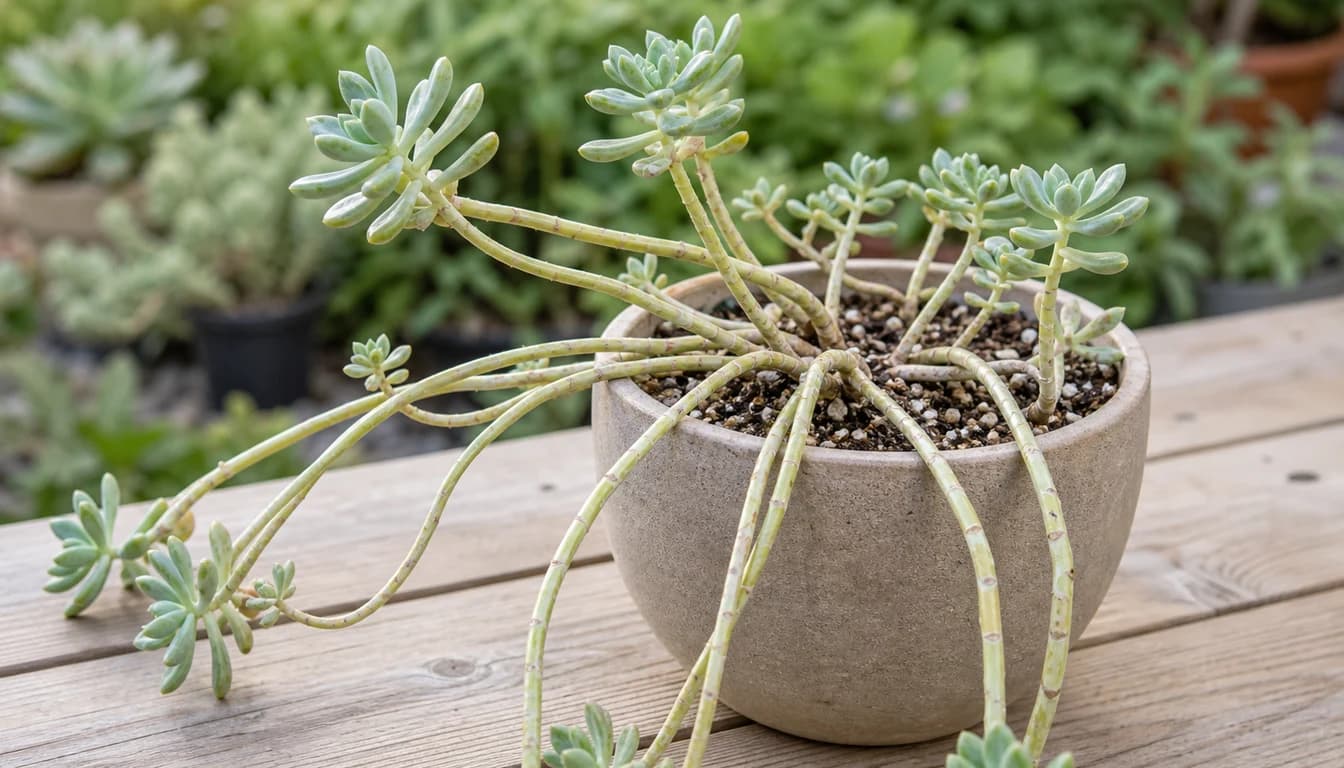
Leggy, stretched **Sedum** (stonecrop) is almost always a light problem called etiolation. This guide helps you diagnose etiolation vs. watering or pest issues, prune and re-root cuttings, and set light, soil, and watering targets so **Sedum** regains a compact habit across **zones 3-11**.

Sedum plant with stretched leaning stems and sparse leaves at the tips

Sedum plant with stretched leaning stems and sparse leaves at the tips

lightbulb
bolt

Quick Diagnosis

Most Likely Cause: Etiolation (insufficient light).

Look for long internodes (wide gaps between leaves), pale or washed-out color, and stems that lean toward a single light source. If the plant is soft, mushy, or yellow with brown roots, root rot from overwatering is more likely than etiolation. Run quick overwatering checks by inspecting soil moisture and watering history with overwatering checks.

Jump to fix steps arrow_downward

Leggy growth in Sedum (stonecrop) happens when the plant stretches to find light - a process called etiolation. In bright sun Sedum stays compact and fleshy; in low light it grows elongated, with larger spacing between leaves and thinner stems. This is especially common after moving a plant indoors for winter, placing it behind a north window, or crowding it on a shaded patio.

Our goal is practical: confirm etiolation, stop the stretch, and re-establish a bushy habit. That means short-term corrective pruning and propagation plus medium-term changes to light, substrate, and watering. Recovery speed varies with season: active recovery is fastest in spring-summer under bright light; expect slower results in dormancy or cool weather, and adjust timing using local zone 7 planting tips as a mid-range reference for timing and light expectations.

Many home fixes are simple: give Sedum at least 4-6 hours of direct sun if it's a sun-loving variety, or bright, direct morning light for potted varieties; move shaded plants to a brighter site; and re-root trimmed stems in a gritty, fast-draining mix. Growers who adjust watering to match seasonal shifts see fewer repeat stretch cycles. They also need sharp drainage to avoid root stress that compounds weak growth.

pest_control
Plant Problem - See AlsoSedum Overwatering
chevron_right
psychology

Understanding etiolation vs. other problems

Etiolation is a predictable response to low light: plants allocate energy to vertical growth to reach light instead of producing compact branching. This produces long internodes, small pale leaves on new growth, and a tendency to lean. Etiolation does not make tissue soft - if stems are mushy, suspect root or crown rot from overwatering.

Correcting etiolation requires more light plus removing the stretched sections. Pruning stimulates side shoots from nodes; re-rooting trimmed tips restores a full plant faster than trying to force a single leggy stem to branch.

Sedum behaves differently from some other succulents - many species prefer full sun and will never stay compact in indoor low light. If you need a low-light succulent, compare options in our guide about how Sedum compares with other succulents before committing to a spot.

thermostat

Environmental Baseline

Before diagnosing specific failures, confirm your Sedum Groundcovers and Stonecrops's environment matches its core care requirements.

forestSedum Groundcovers and Stonecrops Care Needs

  • Light: Full sun to light afternoon shade in extreme heat
  • Water: Low; deep soak only after dry-down
  • Temp: Best with warm days and dry crowns; protect tender types below 25°F

homeTypical Indoor Home

  • Humidity: 30-50% (Low)
  • Temp: 65-72°F variable
  • Light: Often too dim or direct
biotech

Possible Causes

Sorted by likelihood

1. Insufficient light (etiolation)

Likelihood: High

Sedum stretched toward a light source; stems lengthen, leaves space out and pale. This is the most common cause of a floppy, open habit in both container and in-ground plants when light is reduced.

Identification

  • remove_circle_outlineLong internodes with regular leaf spacing rather than random leaf loss.
  • remove_circle_outlinePaler leaf color on new growth; existing lower leaves often remain normal-colored.
  • remove_circle_outlineStems lean toward windows or light fixtures and recover slowly after sudden moves.
  • remove_circle_outlinefix

The Fix

  1. 1Move plant to a location with 4-6+ hours of direct sun (midday sun for outdoor beds; strong morning sun for potted plants) or provide a grow light about 12-18 inches above the canopy for 10-12 hours daily.
  2. 2Prune back leggy stems to a node and take healthy top cuttings for re-rooting (see pruning and propagation steps below).
  3. 3Repot into a sandy, gritty mix with quick drainage - amend potting soil with coarse sand, perlite, or pumice at roughly 50% by volume for potted plants.
  4. 4identification_end
  5. 5fix_end

2. Overwatering and poor drainage (root stress)

Likelihood: Medium

A heavy, waterlogged mix leads to root rot and collapse rather than true etiolation. Roots will be dark and mushy; above-ground tissue becomes soft, yellow, and may drop leaves.

Identification

  • remove_circle_outlineSoft, translucent leaves and stems; plant may smell musty or feel waterlogged.
  • remove_circle_outlinePull plant from pot to inspect roots - healthy roots are firm and white; rotted roots are brown/black and slimy.
  • remove_circle_outlineCollapse often follows a waterlogged period or planting in clay-heavy soil.
  • remove_circle_outlinefix

The Fix

  1. 1Stop watering and allow the mix to dry; trim away rotten roots with sterile shears and repot into a fresh, fast-draining sandy or gritty mix.
  2. 2If root rot is advanced, take stem cuttings from healthy tips and re-root them in a sterile gritty mix rather than trying to save the whole plant.
  3. 3Ensure pots have drainage holes and consider raising containers on pot feet to prevent puddling.
  4. 4identification_end
  5. 5fix_end

3. Pests (aphids and others) on stressed growth

Likelihood: Low

Aphids, mealybugs, or scale prefer weak, tender new growth and can appear on leggy stems, but pests are usually secondary. Treat pests, then fix light and water to restore vigor.

Identification

  • remove_circle_outlineSticky honeydew, visible small insects clustered on new growth, white cottony patches, or small brown bumps.
  • remove_circle_outlineDistorted leaves or stunted shoots in otherwise well-lit plants.
  • remove_circle_outlinefix
  • remove_circle_outlinefix

The Fix

  1. 1Spray affected growth with a strong stream of water to dislodge pests, or use insecticidal soap or diluted neem oil per label instructions.
  2. 2Remove heavily infested stems and re-root clean cuttings; monitor weekly until new growth is healthy.
  3. 3Avoid strong systemic insecticides on recently propagated cuttings; prefer gentle contact controls while plants re-establish.
  4. 4identification_end
  5. 5fix_end
menu_book
Guide - See AlsoAir Purifying Plants for Cleaner Indoor Air
chevron_right
potted_plant

Root Health Examination

A direct inspection of the root system distinguishes root rot from drought stress - saving weeks of guesswork.

check_circleHealthy Roots

  • Firm to the touch
  • White or light tan color
  • Earthy, pleasant smell

cancelCompromised Roots

  • Mushy or slimy texture
  • Dark brown or black color
  • Sour, rotting odor

Inspection Step: Gently slide the pot off while supporting the base of the stems. The outer root ball gives sufficient clues without disturbing all the soil.

gpp_bad
warning

When to Worry

A few yellow leaves are normal. If more than 20% of foliage turns yellow within a week, or new growth is affected, act immediately - check the roots first.

timeline

Recovery Protocols

Recovery takes time. Once the root cause is corrected, implement a 30-day stabilization window.

0-2 weeksImmediate steps and root initiation

After pruning and replanting cuttings you should see callusing within days and initial root hairs by week two in warm conditions. Keep cuttings in bright indirect light or filtered morning sun until roots form, and avoid overwatering-mist sparingly or bottom-water once the medium is dry.

3-8 weeksRoot establishment and new compact growth

Roots thicken and plants begin producing short side shoots within 3-8 weeks in peak growing season. Outdoor plants in **zones 6-9** often recover faster; colder zones may need a full season. If new growth is still stretched, increase light or add supplemental lighting.

2-6 monthsFull habit recovery and grooming

Expect a visibly fuller, bushier habit within 2-6 months after a program of pruning, re-rooting, and improved light. For in-ground plants, full restoration can take a season of active growth; potted cuttings rooted in summer often fill their pots by autumn.

menu_book
Guide - See AlsoBest Herbs to Grow Indoors for Real Harvests, Not Spindly Pots
chevron_right
shield

Preventing Future Issues

Prevent repeat etiolation by giving Sedum consistent bright light (aim for 4-6 hours direct sun or a stable supplemental grow light), using a sandy/gritty fast-draining mix, watering only after the top 1-2 inches of substrate dry, and pruning yearly to encourage compact branching; if you need a rule of thumb, follow sensible watering frequency guidance. During winter dormancy reduce water and maintain the brightest practical light to avoid spring stretch. Etiolation is the most common cause of leggy Sedum. It happens when the plant can’t get enough light, so it grows tall to reach what it needs. Check for pale stems and a loose overall silhouette.

menu_book

Related Reads

pest_control
Plant ProblemSedum Overwatering
chevron_right
menu_book
GuideAir Purifying Plants for Cleaner Indoor Air
chevron_right
menu_book
GuideBest Herbs to Grow Indoors for Real Harvests, Not Spindly Pots
chevron_right
menu_book
GuideBest Indoor Plants for Every Room and Light Level
chevron_right
Sedum Groundcovers and Stonecrops (Sedum spp.) - full care guideSedum spp.

Sedum Groundcovers and Stonecrops

Crassulaceae Family

wb_sunny

Light

Full sun to light afternoon shade in extreme heat

water_drop

Water

Low; deep soak only after dry-down

thermostat

Temp

Best with warm days and dry crowns; protect tender types below 25°F

yardFull Care Guide

On This Page

boltQuick DiagnosispsychologyUnderstandingthermostatEnvironment CheckbiotechPossible Causespotted_plantRoot ExamwarningWhen to WorrytimelineRecovery PlanshieldPreventionmenu_bookRelated Reads