yard
KnowTheYard

databasePlant Database

Browse by category

potted_plant

Houseplants

Indoor & tropical species

nutrition

Vegetables

Edible garden crops

spa

Herbs

Culinary & medicinal

local_florist

Flowers

Ornamental blooms

water_drop

Succulents

Drought-tolerant species

park

Trees

Arboreal species

forest

Shrubs

Bushes & hedges

nature

Perennials

Garden flowers

grass

Lawn Grasses

Turf varieties

local_dining

Fruits

Fruit-bearing plants

Best Indoor Plantsarrow_forwardBest Shade Plantsarrow_forward

menu_bookGarden Guides

Step-by-step guides by task type

grass

Lawn Care

Seasonal checklists and year-round maintenance guides for a championship lawn.

yard

Planting

When, where, and how to plant — from seed to transplant for every garden type.

water_drop

Watering

Deep-watering techniques, schedules by plant type, and drought management.

compost

Fertilizing

Feeding schedules, NPK ratios, and organic vs synthetic options by plant.

pest_control

Pest Control

Identify, prevent, and treat common garden pests without harming beneficial insects.

content_cut

Pruning

Pruning timing, techniques, and tools for trees, shrubs, and flowering plants.

Popular Guides

parkFall Lawn Carelocal_floristSpring Lawn Carecalendar_monthFull Calendar
All Guidesarrow_forwardLawn Care Hubarrow_forward
ToolsCompareRegional GuidesPlant ProblemsPet SafetyAbout
searchPlant Finder
yardKnowTheYard

Published plant profiles, practical care guides, problem diagnosis pages, and side-by-side comparisons for home gardeners.

chatphoto_camera

databaseBrowse Plants

  • arrow_forwardHouseplants
  • arrow_forwardVegetables
  • arrow_forwardHerbs
  • arrow_forwardFlowers
  • arrow_forwardTrees

menu_bookResources

  • arrow_forwardGarden Tools
  • arrow_forwardRegional Guides
  • arrow_forwardPlant Problems
  • arrow_forwardPet Safety
  • arrow_forwardCare Calendar
  • arrow_forwardPlant Finder

infoCompany

  • arrow_forwardAbout Us
  • arrow_forwardOur Team
  • arrow_forwardMethodology
  • arrow_forwardEditorial Policy
  • arrow_forwardContact Us

mailEmail Updates

Join the list for new guides, seasonal notes, and launch updates.

No spam. Request removal anytime.

fact_check

Reviewed Pages

77 pages currently attributed to public review lanes

public

USDA Zone Coverage

Zone-aware recommendations and regional growing context

database

230 Published Plant Profiles

555 public pages across profiles, guides, comparisons, and problem pages

© 2026 KnowTheYard. All rights reserved.

Privacy PolicyTerms of ServiceContactSitemap
Home/shrubs/Rhododendron: Spring Buds, Acid Roots, and Shade Balance/Leaf Scorch
scienceEditorial DiagnosisUpdated Feb 20, 2026

Rhododendron Leaf Scorch

Marginal browning and crisping of **Rhododendron** leaves usually comes from environmental stress and moisture imbalance. Confirm true leaf scorch, rule out pests or disease, and protect the shrub with steady root moisture, filtered light, and ==**2-3 inches**== of mulch.

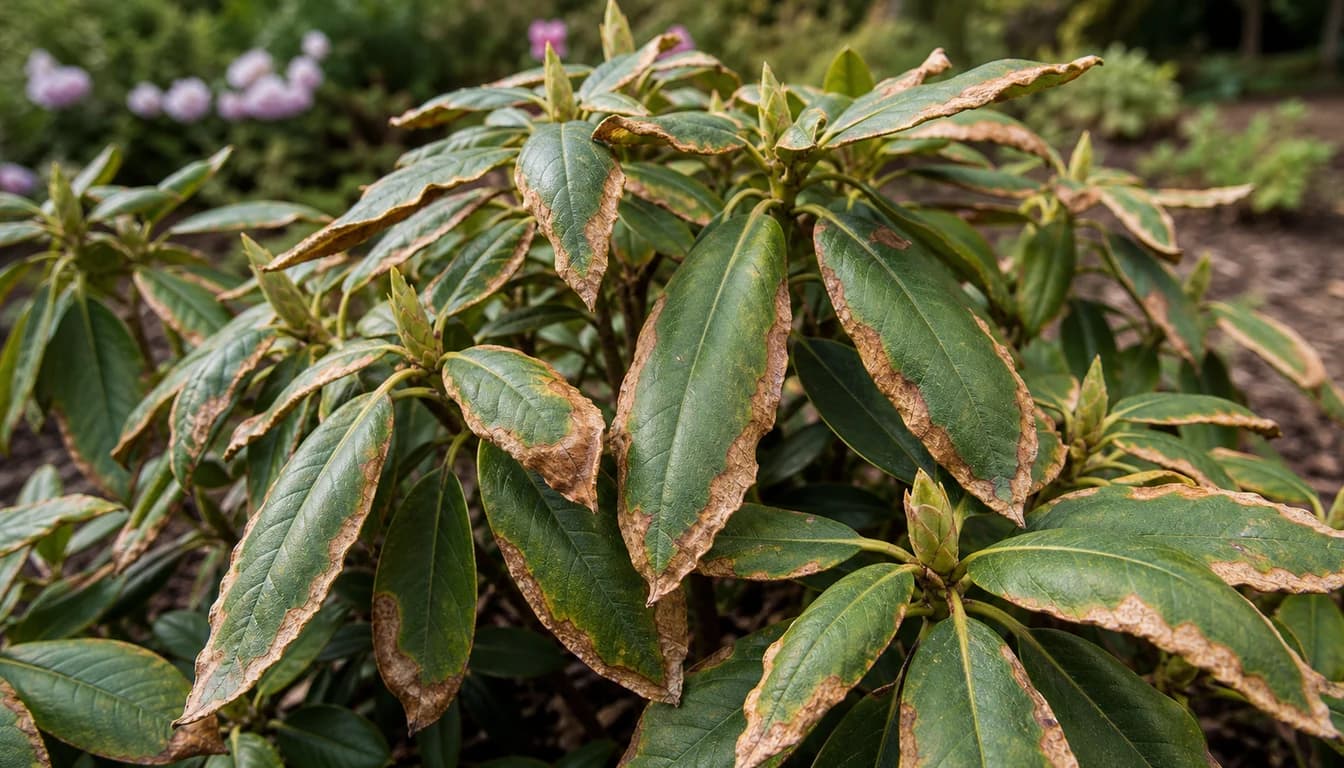
Rhododendron leaves with brown crispy margins and curled scorched edges

Rhododendron leaves with brown crispy margins and curled scorched edges

lightbulb
bolt

Quick Diagnosis

Most Likely Cause: Leaf scorch (marginal browning) due to moisture stress, sun/wind exposure, or sudden temperature swings..

Leaves show brown or gray-brown edges that progress inward while midribs often remain green; newest growth may be less affected. Scorch usually appears after heat, drought, transplanting, or winter desiccation and is not typically a fungal leaf-spot pattern.

Jump to fix steps arrow_downward

Rhododendron spp. belong to the Ericaceae family and include evergreen and deciduous shrubs grown for spring flowers and year-round structure. Their care and winter needs overlap with azaleas, but azalea and Rhododendron differences matter when you choose an exposed site.

Scorch is a symptom, not a single disease: it signals that roots or leaf tissues cannot meet water demand. That breakdown can come from too little water, too much water, poor root health, high light, drying wind, or sudden freezes across zones 3-11.

Because Rhododendron roots prefer cool, moist, acidic soils, small shifts in irrigation, exposure, or soil chemistry can quickly produce marginal browning.

When you inspect a plant, document the pattern, timing, and severity: note which branches and leaves are affected, recent weather events, any irrigation changes, and nearby construction or salt/chemical exposure; those observations tell you whether the problem is environmental scorch or something else and guide practical fixes and whether you should escalate to lab testing or a pro.

pest_control
Plant Problem - See AlsoRhododendron Bud Blast
chevron_right
psychology

Understanding Rhododendron leaf scorch

Leaf scorch is not a single pathogen - it’s a physiological response where leaf cells die because water delivery can’t keep pace with water loss. In rhododendrons (Ericaceae) you commonly see marginal browning that begins at the leaf edge and moves inward, while the center and midrib may stay green longer.

Differentiating scorch from pests and disease matters: fungal leaf spots create irregular blotches or concentric rings, and insects like lace bugs produce stippling or underside insect signs. If you see uniform marginal browning without fungal fruiting bodies, or insect cast skins, treat as scorch first and adjust irrigation and microclimate before applying fungicides or insecticides.

Tools that help diagnosis include a soil probe or trowel to test moisture, a hand lens to check leaf undersides, and a moisture meter if you prefer numbers. When in doubt about root disease, collect samples after consulting a local extension office or professional diagnostician.

thermostat

Environmental Baseline

Before diagnosing specific failures, confirm your Rhododendron: Spring Buds, Acid Roots, and Shade Balance's environment matches its core care requirements.

forestRhododendron: Spring Buds, Acid Roots, and Shade Balance Care Needs

  • Light: Part shade, morning sun with afternoon shade
  • Water: Moderate, evenly moist, never soggy
  • Temp: Prefers cool summers, protection from harsh winter wind

homeTypical Indoor Home

  • Humidity: 30-50% (Low)
  • Temp: 65-72°F variable
  • Light: Often too dim or direct
biotech

Possible Causes

Sorted by likelihood

1. Environmental stress: sun, wind, and heat

Likelihood: High

High afternoon sun, hot reflective surfaces, or persistent drying wind increase transpiration and heat load. Rhododendron shrubs adapted to filtered light will scorch when suddenly exposed or during heatwaves.

Identification

  • remove_circle_outlineBrowning concentrated on sun-exposed margins or windward sides of the shrub.
  • remove_circle_outlineNewer leaves lower on the plant less affected while exposed outer leaves are brown and dry.
  • remove_circle_outlineTiming corresponds to heat waves, sudden sun exposure after pruning, or a loss of sheltering canopy.
  • remove_circle_outlineLeaf pattern lacks circular necrotic spots typical of many fungal diseases.

The Fix

  1. 1Provide temporary shade during heat spells with shade cloth or light burlap in late afternoon.
  2. 2Improve windbreaks: plant buffer shrubs or install fencing to reduce persistent drying winds.
  3. 3Avoid late-summer pruning that exposes previously shaded interior leaves to full sun.
  4. 4Use deep watering and mulch to cool the root zone.
  5. 5Consider transplanting to a site with morning sun and afternoon shade for long-term relief.

2. Soil moisture imbalance: drought or waterlogging

Likelihood: High

Both underwatering and poor drainage can cause scalloped browning on Rhododendron leaf margins. Dry roots cannot supply water during hot conditions, while saturated roots suffer oxygen loss and may slide toward Rhododendron root rot.

Identification

  • remove_circle_outlineSoil feels bone-dry several inches below surface after several days of warm weather indicates drought stress.
  • remove_circle_outlineSoggy, poorly draining soil or standing water after rains indicates potential root oxygen stress.
  • remove_circle_outlineOverall plant slump or brittle roots when inspected during repotting/transplanting suggests root decline rather than foliar disease.
  • remove_circle_outlineNew growth may be stunted if roots are compromised by rot or drought.

The Fix

  1. 1Perform a moisture check: dig down 2-4 inches near root zone to judge moisture before watering.
  2. 2Deep-water slowly until soil is moist 6-12 inches down; repeat weekly in drought until recovery.
  3. 3If poorly drained, improve soil by adding organic matter and installing raised beds or improving grading for runoff.
  4. 4Avoid frequent shallow sprinkling; prefer slow deep soak with a soaker hose or drip line to encourage deep roots.
  5. 5For waterlogged plants, reduce irrigation, improve drainage, and consider root inspection for rot; remove dead roots and replant in raised soil if necessary.

3. Winter desiccation and freeze-thaw damage

Likelihood: Medium

Cold air combined with dry soil causes water loss from leaves that roots cannot replace in frozen ground. This produces marginal browning in winter or early spring, especially on exposed evergreens.

Identification

  • remove_circle_outlineDamage shows after prolonged cold, or early warm spells followed by freeze; browning concentrated on exposed tips.
  • remove_circle_outlineSoil around roots was frozen during cold snaps or showed no moisture at time of thaw.
  • remove_circle_outlineSymptoms appear on last year's leaves before new spring growth begins.
  • remove_circle_outlineOther cold damage signs - split stems or bud damage - may be present if temperatures were extreme.

The Fix

  1. 1Apply 2-3 inches of organic mulch over root zone before winter to insulate and preserve soil moisture.
  2. 2Provide winter wind screens for exposed plantings and avoid pruning late in the season.
  3. 3Water thoroughly before the ground freezes if the soil is dry to reduce winter desiccation risk.
  4. 4Replace heavily damaged sections in spring after new growth starts, rather than stripping all brown leaves immediately.
  5. 5Select hardier Rhododendron varieties for exposed sites or provide shelter in colder zones.
menu_book
Guide - See AlsoAir Purifying Plants for Cleaner Indoor Air
chevron_right
potted_plant

Root Health Examination

A direct inspection of the root system distinguishes root rot from drought stress - saving weeks of guesswork.

check_circleHealthy Roots

  • Firm to the touch
  • White or light tan color
  • Earthy, pleasant smell

cancelCompromised Roots

  • Mushy or slimy texture
  • Dark brown or black color
  • Sour, rotting odor

Inspection Step: Gently slide the pot off while supporting the base of the stems. The outer root ball gives sufficient clues without disturbing all the soil.

gpp_bad
warning

When to Worry

A few yellow leaves are normal. If more than 20% of foliage turns yellow within a week, or new growth is affected, act immediately - check the roots first.

timeline

Recovery Protocols

Recovery takes time. Once the root cause is corrected, implement a 30-day stabilization window.

Immediate (0-2 weeks)Stabilize the plant

Stop stressors: begin deep-watering to moisten the root zone ==**6-12 inches**== deep, add ==**2-3 inches**== of mulch around the root zone, and provide temporary shade or wind protection. Avoid fertilizing until the plant shows recovery.

Short-term (2-8 weeks)Regrowth and reduced symptoms

New leaves emerging in spring or summer should show healthier margins if roots recover. Continue consistent deep watering once weekly during dry periods and monitor for new browning. Prune only dead branches and avoid heavy cutting.

Medium-term (2-6 months)Root and canopy recovery

With corrected moisture and site adjustments, root health should improve, supporting fuller canopy recovery the next growing season. Replace severely sunburned plants or relocate to a shadier site if repeated scorch occurs.

menu_book
Guide - See AlsoBest Herbs to Grow Indoors for Real Harvests, Not Spindly Pots
chevron_right
shield

Preventing Future Issues

Prevent future scorch by matching site to Rhododendron needs: provide morning sun and afternoon shade, keep 2-3 inches of organic mulch, and water slowly at the best time to water for your climate. Scorch follows stress periods like drought, heat, wind, or winter desiccation.

menu_book

Related Reads

pest_control
Plant ProblemRhododendron Bud Blast
chevron_right
menu_book
GuideAir Purifying Plants for Cleaner Indoor Air
chevron_right
menu_book
GuideBest Herbs to Grow Indoors for Real Harvests, Not Spindly Pots
chevron_right
menu_book
GuideBest Indoor Plants for Every Room and Light Level
chevron_right
Rhododendron: Spring Buds, Acid Roots, and Shade Balance (Rhododendron spp.) - full care guideRhododendron spp.

Rhododendron: Spring Buds, Acid Roots, and Shade Balance

Ericaceae Family

wb_sunny

Light

Part shade, morning sun with afternoon shade

water_drop

Water

Moderate, evenly moist, never soggy

thermostat

Temp

Prefers cool summers, protection from harsh winter wind

yardFull Care Guide

On This Page

boltQuick DiagnosispsychologyUnderstandingthermostatEnvironment CheckbiotechPossible Causespotted_plantRoot ExamwarningWhen to WorrytimelineRecovery PlanshieldPreventionmenu_bookRelated Reads