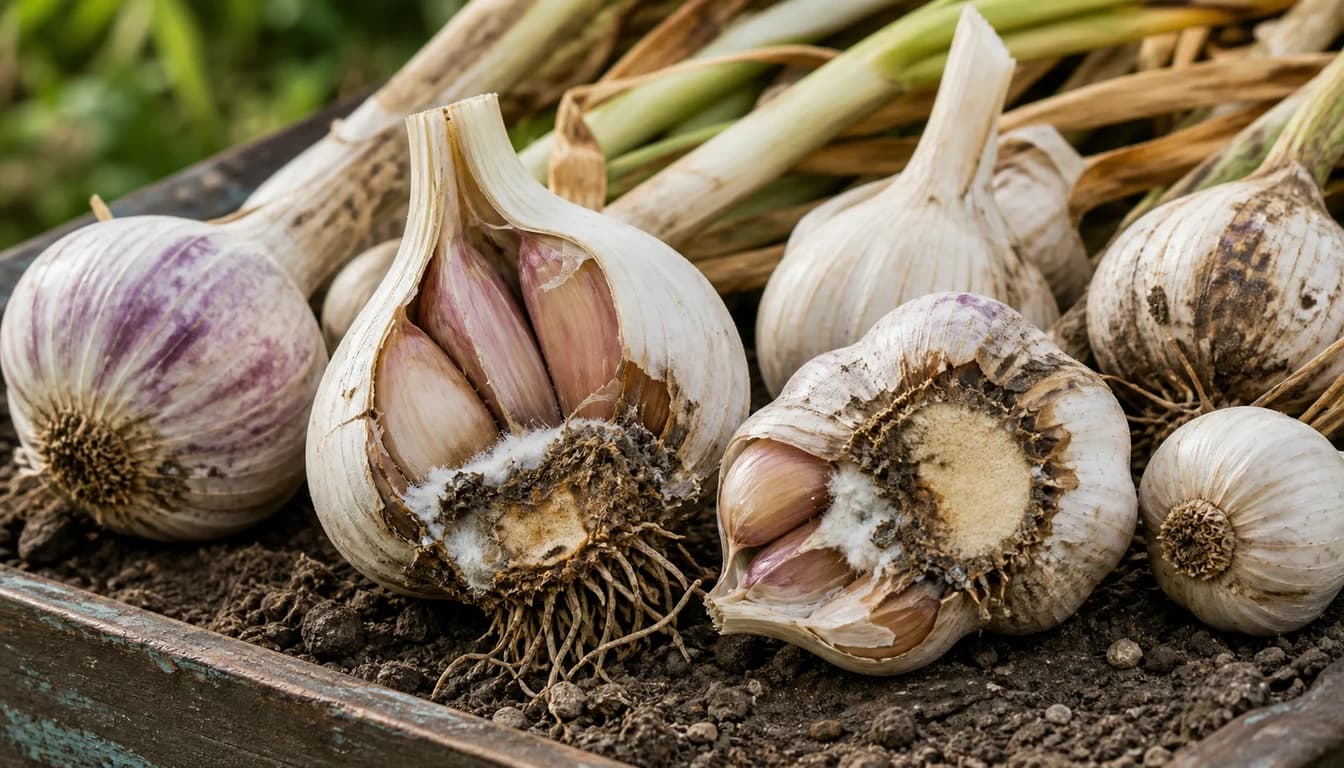
1. White rot
Likelihood: HighWhite rot, caused by Sclerotium cepivorum, is the most serious long-term Garlic rot because it forms small black sclerotia that can survive in soil and reinfect alliums.
Identification
- remove_circle_outlineWhite, cottony fungal growth appears around the basal plate or under outer bulb scales.
- remove_circle_outlineTiny black seed-like sclerotia form in the rotted tissue or nearby soil.
- remove_circle_outlinePlants may yellow, stunt, and collapse in cool, moist weather.
- remove_circle_outlineSeveral bulbs in one bed show similar basal decay.
The Fix
- 1Remove affected plants carefully and keep contaminated soil from spreading to clean beds.
- 2Do not compost bulbs with white fungal growth or sclerotia.
- 3Avoid planting Garlic, onions, leeks, or other alliums in that bed for a long rotation window.
- 4Use clean seed stock for future plantings; do not save cloves from suspect bulbs.
- 5Sanitize tools, harvest trays, and boots after working in the affected bed.