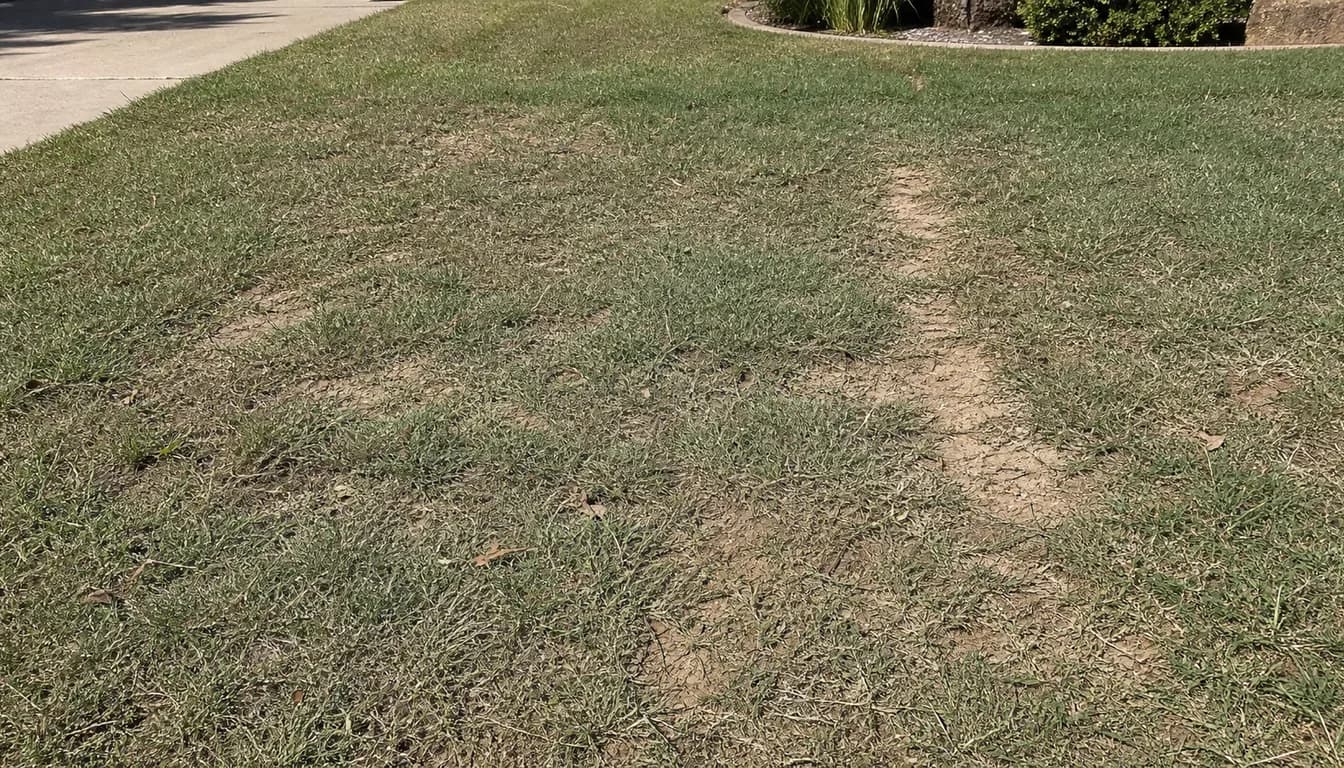
1. Water stress and drought
Likelihood: MediumBuffalo tolerates dry spells but extended drought or inconsistent watering causes blades to brown and stolons to die back, creating thin, brittle patches. Shallow, frequent watering encourages weak shallow roots and uneven density.
Identification
- remove_circle_outlineBrown, dry patches after hot, windy weather with crisp edges.
- remove_circle_outlineThinning concentrated on south- and west-facing slopes or exposed ridges.
- remove_circle_outlineSoil feels dry an inch below the surface when tested after a dry spell.
- remove_circle_outlineBlades are short, brittle, and snap rather than bend when pulled.
The Fix
- 1Move to deep, infrequent watering: apply 1 inch of water once per week during the growing season, adjusting for rainfall and soil type.
- 2Water early morning (before 9 AM) to reduce evaporation and disease risk; follow seasonal shift guidance from deep watering versus frequent watering.
- 3Monitor soil moisture an inch below surface; increase frequency slightly on sandy soils or sloped sites that drain quickly.
- 4Repair thin spots after improving irrigation so new plugs or seed establish with consistent moisture.
- 5For lawns in low rainfall regions accept some summer dormancy but target irrigation to keep high-use areas green.