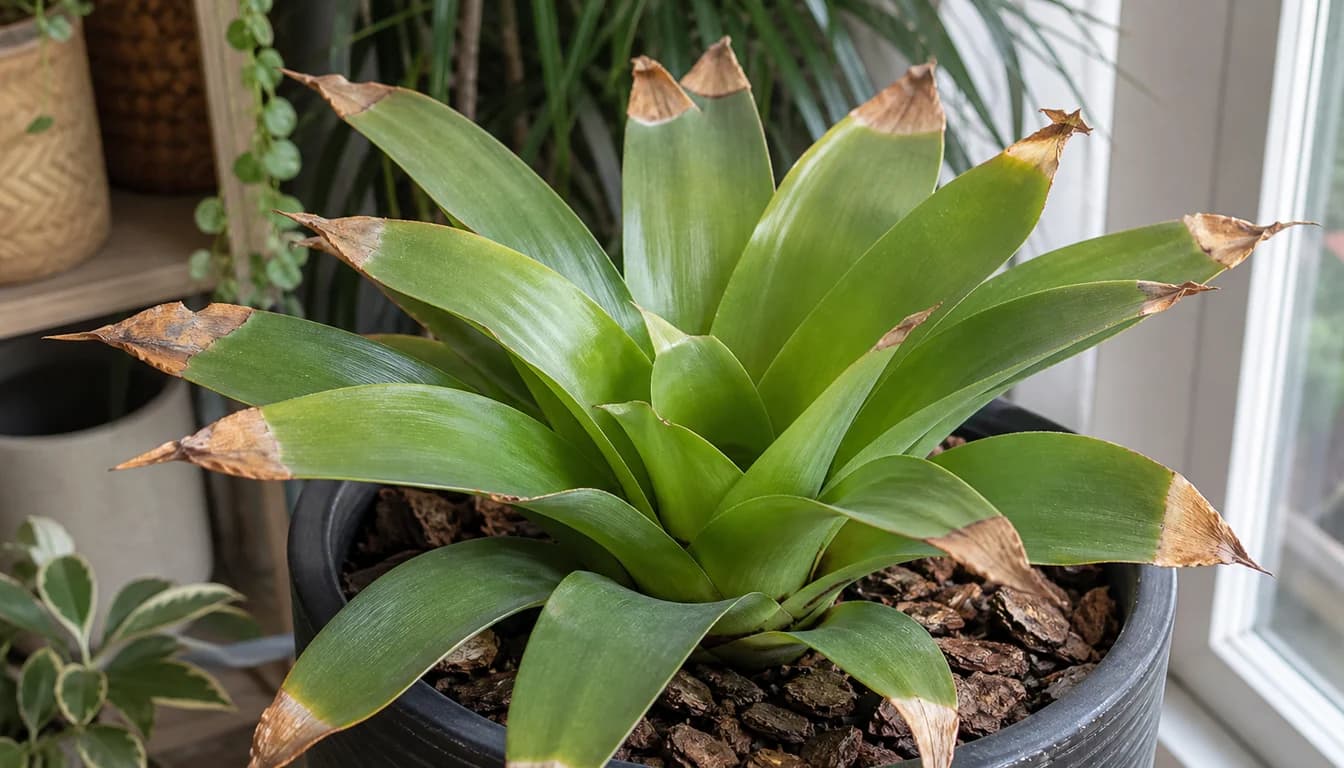
1. Low humidity and dry indoor air
Likelihood: HighLow ambient humidity dries tips first, producing crisp brown edges across many leaves at once. This is most obvious in winter or near vents. Look for evenly spread tip browning on older and newer leaves and dry, papery leaf ends.
Identification
- remove_circle_outlineBrown starts at tips of multiple leaves rather than the central cup.
- remove_circle_outlineLeaves feel papery and dry when you run a finger along the edge.
- remove_circle_outlineHome humidity below 40%, especially near heat vents or windows.
- remove_circle_outlineDamage is dry and firm, not wet or sour-smelling at the center cup.
The Fix
- 1Raise humidity to 50-70% using a humidifier or by grouping plants together to create a microclimate.
- 2Use a humidity tray with pebbles and water that does not touch the pot base; refill weekly.
- 3Mist occasionally for a short-term boost, but avoid constant leaf wetness that invites rot.
- 4Move the plant away from heat vents, cold glass, or harsh direct sun that accelerates tip drying.
- 5Trim only fully dead tip tissue with clean scissors, following the natural leaf shape.