yard
KnowTheYard

databasePlant Database

Browse by category

potted_plant

Houseplants

Indoor & tropical species

nutrition

Vegetables

Edible garden crops

spa

Herbs

Culinary & medicinal

local_florist

Flowers

Ornamental blooms

water_drop

Succulents

Drought-tolerant species

park

Trees

Arboreal species

forest

Shrubs

Bushes & hedges

nature

Perennials

Garden flowers

grass

Lawn Grasses

Turf varieties

local_dining

Fruits

Fruit-bearing plants

Best Indoor Plantsarrow_forwardBest Shade Plantsarrow_forward

menu_bookGarden Guides

Step-by-step guides by task type

grass

Lawn Care

Seasonal checklists and year-round maintenance guides for a championship lawn.

yard

Planting

When, where, and how to plant — from seed to transplant for every garden type.

water_drop

Watering

Deep-watering techniques, schedules by plant type, and drought management.

compost

Fertilizing

Feeding schedules, NPK ratios, and organic vs synthetic options by plant.

pest_control

Pest Control

Identify, prevent, and treat common garden pests without harming beneficial insects.

content_cut

Pruning

Pruning timing, techniques, and tools for trees, shrubs, and flowering plants.

Popular Guides

parkFall Lawn Carelocal_floristSpring Lawn Carecalendar_monthFull Calendar
All Guidesarrow_forwardLawn Care Hubarrow_forward
ToolsCompareRegional GuidesPlant ProblemsPet SafetyAbout
searchPlant Finder
yardKnowTheYard

Published plant profiles, practical care guides, problem diagnosis pages, and side-by-side comparisons for home gardeners.

chatphoto_camera

databaseBrowse Plants

  • arrow_forwardHouseplants
  • arrow_forwardVegetables
  • arrow_forwardHerbs
  • arrow_forwardFlowers
  • arrow_forwardTrees

menu_bookResources

  • arrow_forwardGarden Tools
  • arrow_forwardRegional Guides
  • arrow_forwardPlant Problems
  • arrow_forwardPet Safety
  • arrow_forwardCare Calendar
  • arrow_forwardPlant Finder

infoCompany

  • arrow_forwardAbout Us
  • arrow_forwardOur Team
  • arrow_forwardMethodology
  • arrow_forwardEditorial Policy
  • arrow_forwardContact Us

mailEmail Updates

Join the list for new guides, seasonal notes, and launch updates.

No spam. Request removal anytime.

fact_check

Reviewed Pages

77 pages currently attributed to public review lanes

public

USDA Zone Coverage

Zone-aware recommendations and regional growing context

database

230 Published Plant Profiles

555 public pages across profiles, guides, comparisons, and problem pages

© 2026 KnowTheYard. All rights reserved.

Privacy PolicyTerms of ServiceContactSitemap
Home/houseplants/Boston Fern: Classic Arching Indoor Fern/Brown Tips
scienceEditorial DiagnosisUpdated Feb 20, 2026

Boston Fern Brown Tips

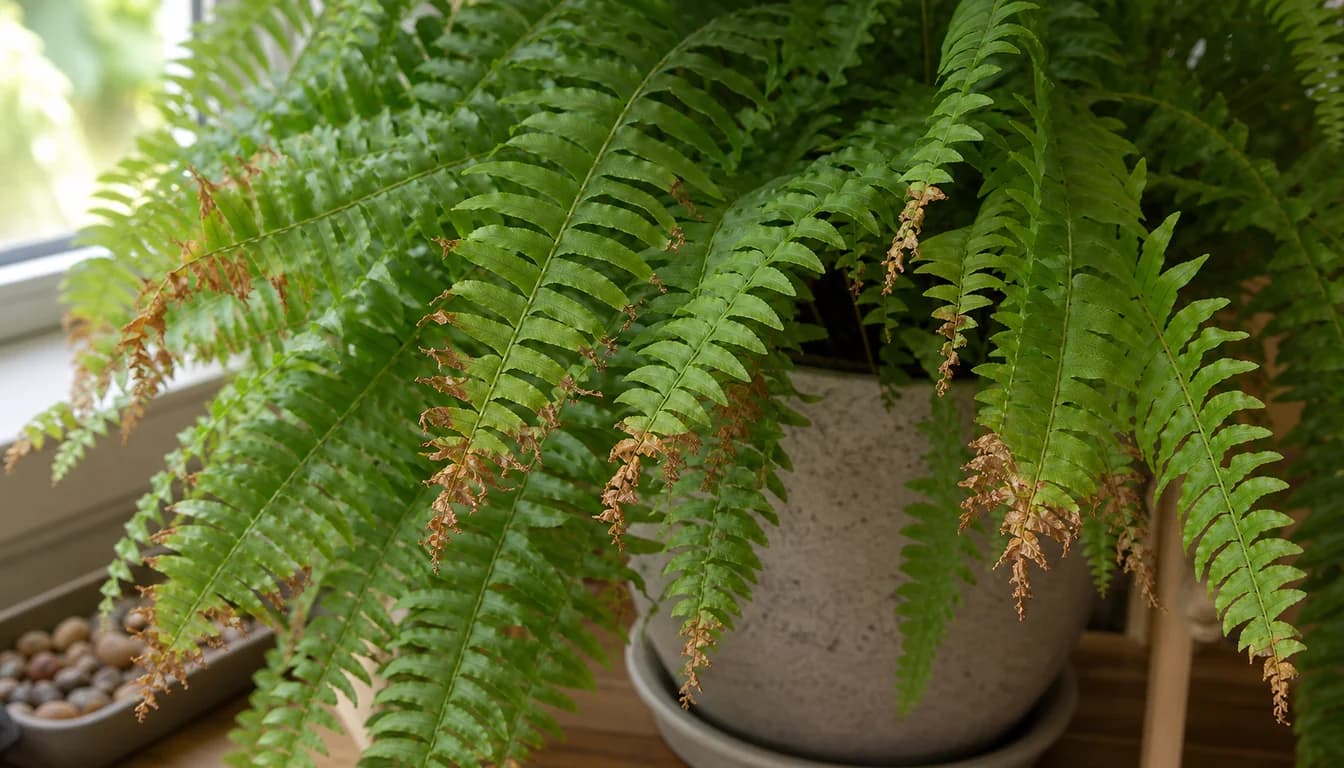
Practical troubleshooting for brown frond tips on **Boston fern** (Nephrolepis exaltata, including Bostoniensis). Covers likely causes-low humidity, underwatering, and fertilizer/salt buildup-plus watering routines, humidity fixes, pruning, repotting cues, pest checks, and season-specific care so you can restore a healthy, green outline to the fronds.

Potted Boston fern with green arching fronds showing dry brown tips on several leaflets near a softly lit window.

Potted Boston fern with green arching fronds showing dry brown tips on several leaflets near a softly lit window.

lightbulb
bolt

Quick Diagnosis

Most Likely Cause: Low humidity or inconsistent moisture.

Look at the tip texture before you change the whole care routine. If tips are brown but centers stay green and soil is dry between checks, start with humidity and watering changes. If browning is crispy with white crust on soil, suspect fertilizer salts or water-quality issues, and compare symptoms with an overwatered plant checklist to rule out excess moisture as the cause.

Jump to fix steps arrow_downward

With Boston fern, brown tips are usually the first complaint, not the last stage of decline. Ideal room temperatures sit between 60-75 F (15-24 C). Because Boston ferns evolved in humid understories, brown tips are usually an environmental stress signal rather than an immediate disease.

Check recent changes first: moved plant closer to a sunny window, turned on forced-air heat, or skipped regular misting? Those small shifts commonly trigger tip browning. If you keep the pot on a sunny sill, protect it from direct rays; Boston ferns prefer filtered light and steady moisture to avoid frond-edge scorch.

Water quality and salts matter: repeated use of mineral-rich tap water or a routine of heavy feeding without leaching builds salts that scorch frond tips over time. Growers who use dilute fertilizer rates reduce salt buildup and see fewer brown tips. For examples of tropicals that need the same humid baseline, compare care notes for tropical plants with similar humidity needs to match routines.

pest_control
Plant Problem - See AlsoBoston Fern Yellow Fronds
chevron_right
psychology

Understanding brown tips and related problems

Brown tips are a symptom, not a single diagnosis-use context to choose fixes. If browning is widespread across aging fronds but new growth is healthy, trims and humidity fixes often restore appearance. If browning spreads inward from margins with yellow halos, inspect for nutrient or salt issues and adjust feeding and water quality.

Rootbound conditions reduce water-holding capacity and cause repeat tip browning despite regular surface watering. Pull the plant gently from its pot if water soaks the soil too quickly or roots circle densely; that’s a cue to repot into a pot one size larger with fresh, well-draining mix.

Pests like scale and mealybugs are less common but still cause browning when sap is removed from fronds. Check the undersides of fronds and the crown for sticky residue, clusters, or cottony deposits. If pests appear, treat with a targeted approach such as dilute neem oil following manufacturer directions and isolate the plant until clear.

thermostat

Environmental Baseline

Before diagnosing specific failures, confirm your Boston Fern: Classic Arching Indoor Fern's environment matches its core care requirements.

forestBoston Fern: Classic Arching Indoor Fern Care Needs

  • Light: Bright, indirect; light shade outdoors in warm climates
  • Water: Keep evenly moist, never soggy; high humidity
  • Temp: 60-75°F ideal; suffers below 50°F

homeTypical Indoor Home

  • Humidity: 30-50% (Low)
  • Temp: 65-72°F variable
  • Light: Often too dim or direct
biotech

Possible Causes

Sorted by likelihood

1. Low humidity

Likelihood: High

Boston ferns demand consistently high humidity. Indoor air from heating or air conditioning drops humidity below ideal levels and causes the frond tips to dry and brown while the rest of the frond stays green.

Identification

  • remove_circle_outlineCrisp, dry brown tips across many fronds with no yellow banding beneath the brown.
  • remove_circle_outlineSoil feels otherwise slightly moist-plant is watered but air is dry.
  • remove_circle_outlineOther houseplants nearby also show dry edges or curled leaves.
  • remove_circle_outlineHeating vents or drafty windows nearby increase likelihood.

The Fix

  1. 1Increase ambient humidity: use a humidifier set to 45-60% around the plant for steady results.
  2. 2Group plants together or place the pot on a tray with wet pebbles so evaporation raises local humidity.
  3. 3Mist fronds in a pinch but prioritize consistent humidifier use over only misting, which gives a temporary effect.
  4. 4Move the fern away from heat registers and cold drafts to stabilize moisture loss.
  5. 5Monitor humidity with a small gauge near the plant and track improvement over 2-4 weeks.

2. Inconsistent watering or underwatering

Likelihood: Medium

Boston ferns prefer evenly moist soil. Letting the pot dry out between waterings or alternating drought and soaking causes tip browning and frond stress. Underwatering is especially likely in winter when tops of pots feel dry but roots are still thirsty.

Identification

  • remove_circle_outlineSoil dries out fully before next watering and fronds appear limp before tips brown.
  • remove_circle_outlineOlder fronds brown at the tips and may curl; new fronds are smaller or slow to unfurl.
  • remove_circle_outlinePlant is in a small pot or warm drafty spot where soil evaporates quickly.
  • remove_circle_outlineFinger-test top 1-2 inches of soil; bone-dry indicates underwatering risk.

The Fix

  1. 1Adopt an even-watering routine: check soil moisture 2-3 times weekly and water when the top 1 inch is just beginning to dry.
  2. 2Water thoroughly until excess drains out the bottom, then empty the saucer to avoid root rot.
  3. 3Use a well-draining potting mix and a container with drainage holes to balance moisture retention and aeration.
  4. 4In winter, reduce frequency but never allow the root ball to dry completely-short, shallow waterings can be worse than slightly less frequent thorough waterings.
  5. 5Consider moving to a slightly larger pot if the plant dries out much faster than before.

3. Fertilizer salts or tap-water fluoride

Likelihood: Low

Salt accumulation from frequent fertilizing without leaching, or chemical content in tap water (fluoride, chlorine, minerals) can cause tips to brown and look scorched. Salt damage often leaves white crust on the soil rim or yellowing before browning.

Identification

  • remove_circle_outlineWhite crust or buildup on the soil surface or pot lip.
  • remove_circle_outlineTips brown but frond base stays green; new growth looks stunted.
  • remove_circle_outlineYou fertilize regularly at full strength or use hard tap water with high mineral content.
  • remove_circle_outlineBrown tips appear after repeated feedings, not immediately after a single application.

The Fix

  1. 1Flush the pot: water slowly until water runs clear from the drainage hole, repeat three times to leach salts.
  2. 2Switch to distilled, rain, or filtered water if you suspect fluoride or high mineral content from tap water.
  3. 3Cut fertilizer strength to one-quarter to one-half the label rate and feed only during active growth (spring-summer).
  4. 4Top-dress with fresh, well-draining potting mix when repotting to reset the root environment if salts persist.
  5. 5If salt damage is severe, remove the top 1 inch of crusted soil before flushing to improve leaching.
menu_book
Guide - See AlsoAir Purifying Plants for Cleaner Indoor Air
chevron_right
potted_plant

Root Health Examination

A direct inspection of the root system distinguishes root rot from drought stress - saving weeks of guesswork.

check_circleHealthy Roots

  • Firm to the touch
  • White or light tan color
  • Earthy, pleasant smell

cancelCompromised Roots

  • Mushy or slimy texture
  • Dark brown or black color
  • Sour, rotting odor

Inspection Step: Gently slide the pot off while supporting the base of the stems. The outer root ball gives sufficient clues without disturbing all the soil.

gpp_bad
warning

When to Worry

A few yellow leaves are normal. If more than 20% of foliage turns yellow within a week, or new growth is affected, act immediately - check the roots first.

timeline

Recovery Protocols

Recovery takes time. Once the root cause is corrected, implement a 30-day stabilization window.

0-2 weeksImmediate steps and visible stabilization

Stop the main stressor: raise humidity, adjust watering, or flush salts. You should see limp fronds perk within a few days to two weeks once humidity and soil moisture are consistent. New watering routine and a humidifier produce fastest visible stabilizing effects.

3-6 weeksFrond health and new growth

New fronds should begin to unfurl and look fuller after 3-6 weeks if conditions are corrected. Brown tips on existing fronds won’t reverse; plan to trim them for a neater look once new growth is evident and the plant is holding steady.

6-12 weeksFull recovery and maintenance

After 2-3 months regular watering, humidity, and corrected feeding, the plant will show steadier growth and fewer new brown tips. If issues persist beyond this, consider repotting to address rootbound conditions or persistent salt accumulation.

menu_book
Guide - See AlsoBest Herbs to Grow Indoors for Real Harvests, Not Spindly Pots
chevron_right
shield

Preventing Future Issues

Prevent brown tips with consistent humidity (aim for 45-60%), a predictable watering routine that keeps the top 1 inch of soil slightly moist, occasional pot flushing to remove fertilizer salts, and seasonal adjustments; reduce but don't stop watering in winter, and avoid cold drafts or direct afternoon sun. Use distilled or filtered water if your tap is high in minerals and fertilize lightly during active growth only. For steady humidity gains, group the fern with other indoor plants for grouping that tolerate moist microclimates and maintain your humidifier schedule rather than relying on occasional misting. Hint: Brown tips often signal stress from dry air or inconsistent watering. Use a moisture check and humidity baseline before changing light.

menu_book

Related Reads

pest_control
Plant ProblemBoston Fern Yellow Fronds
chevron_right
menu_book
GuideAir Purifying Plants for Cleaner Indoor Air
chevron_right
menu_book
GuideBest Herbs to Grow Indoors for Real Harvests, Not Spindly Pots
chevron_right
menu_book
GuideBest Indoor Plants for Every Room and Light Level
chevron_right
menu_book
GuideBest Time to Water Indoor Plants for Healthy Growth
chevron_right
Boston Fern: Classic Arching Indoor Fern (Nephrolepis exaltata) - full care guideNephrolepis exaltata

Boston Fern: Classic Arching Indoor Fern

Nephrolepidaceae Family

wb_sunny

Light

Bright, indirect; light shade outdoors in warm climates

water_drop

Water

Keep evenly moist, never soggy; high humidity

thermostat

Temp

60-75°F ideal; suffers below 50°F

yardFull Care Guide

On This Page

boltQuick DiagnosispsychologyUnderstandingthermostatEnvironment CheckbiotechPossible Causespotted_plantRoot ExamwarningWhen to WorrytimelineRecovery PlanshieldPreventionmenu_bookRelated Reads